

Poor lighting drains budgets and kills productivity. We at PacLights know that the right fixtures transform both your bottom line and your workspace atmosphere.
LED cylinder wall lights deliver exactly that-cutting energy costs while adding contemporary style to commercial spaces. This guide walks you through why they work, where to install them, and how to pick the perfect fit for your facility.
LED Cylinder Wall Lights Cut Costs and Look Professional
LED cylinder wall lights slash energy consumption compared to fluorescent and incandescent alternatives. A 10-watt LED cylinder produces roughly 800 lumens while replacing a 50-watt incandescent fixture, delivering about 75 to 80 percent less power draw. In commercial hallways alone, fixed lighting typically costs facilities around $8,000 to $12,000 annually. Switching to dimmable LED cylinder systems with motion sensors reduces that to $4,000 to $6,000 per year, cutting expenses by 40 to 50 percent. Motion sensors ramp brightness to full output within seconds when movement is detected, then dial back to 30 to 40 percent during low-traffic periods. Photocell daylight harvesting pushes savings even further, contributing an additional 15 to 25 percent reduction.
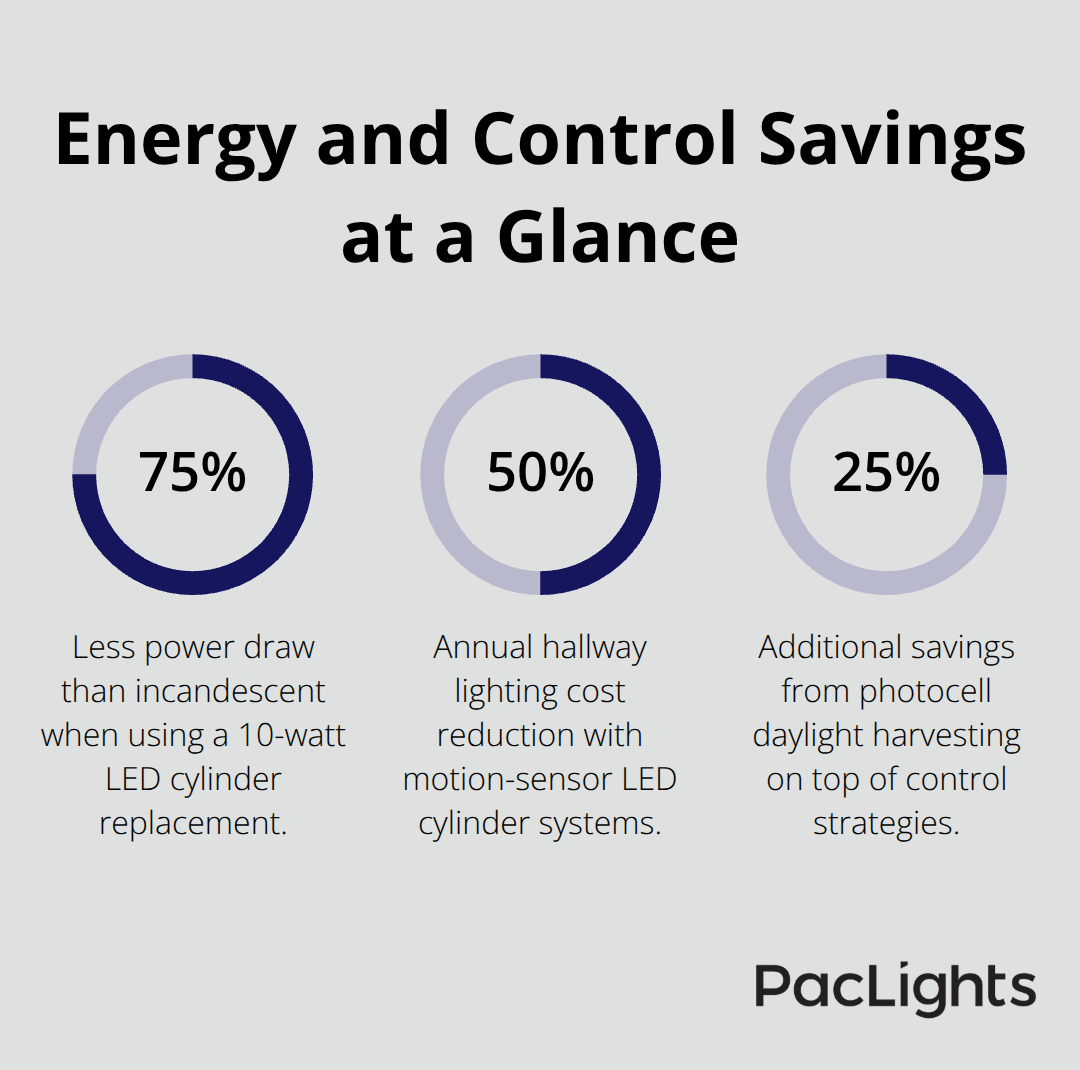
Over a 2 to 3 year payback period, energy savings alone justify the upgrade, and that’s before accounting for productivity gains from improved lighting quality.
Durability Reduces Replacement Cycles
LED cylinder fixtures built with quality construction last over 25,000 hours, dramatically reducing maintenance labor and replacement costs. Aluminum housings with powder-coated finishes handle interior and covered entryway environments without premature corrosion. For spaces near saltwater or high-humidity areas, 304-grade stainless steel fixtures cost about 40 percent more upfront but eliminate frequent replacements that plague cheaper materials. Standard painted steel fails quickly in wet or corrosive conditions, making material selection a practical ROI decision rather than an aesthetic one. Durable LEDs with proper thermal management, active cooling fins, and adequate ventilation extend fixture life further.
Contemporary Aesthetics for Modern Workspaces
Cylinder wall lights project a contemporary, intentional aesthetic that complements modern and transitional office interiors without looking industrial or dated. The cylindrical form suits both sleek minimalist spaces and traditional commercial environments, available in finishes like matte black and oil-rubbed bronze. Mounting them 5 to 6 feet above the floor and spacing them 6 to 8 feet apart on each wall creates even, shadow-free illumination without over-installing fixtures. A 40-foot hallway with 10-foot ceilings needs roughly five fixtures per wall instead of eight or ten, reducing visual clutter while maintaining professional appearance. Warm color temperatures around 2700 to 3000 Kelvin create welcoming atmospheres in commercial spaces, while cooler 4000 to 5000 Kelvin options support focus in task-heavy areas. The dual-beam design (upward and downward) adds depth and eliminates harsh shadows that make corridors feel cramped or unwelcoming to visitors and staff.
Control Features Optimize Performance
Advanced lighting controls transform cylinder fixtures from static installations into adaptive systems. Motion sensors detect occupancy and adjust output automatically, while daylight harvesting reduces brightness when natural light enters the space. Dimmable LED drivers compatible with 0–10V or networked controls allow facility managers to fine-tune brightness across multiple zones from a central system. These features work together to maximize energy savings without sacrificing visibility or comfort.
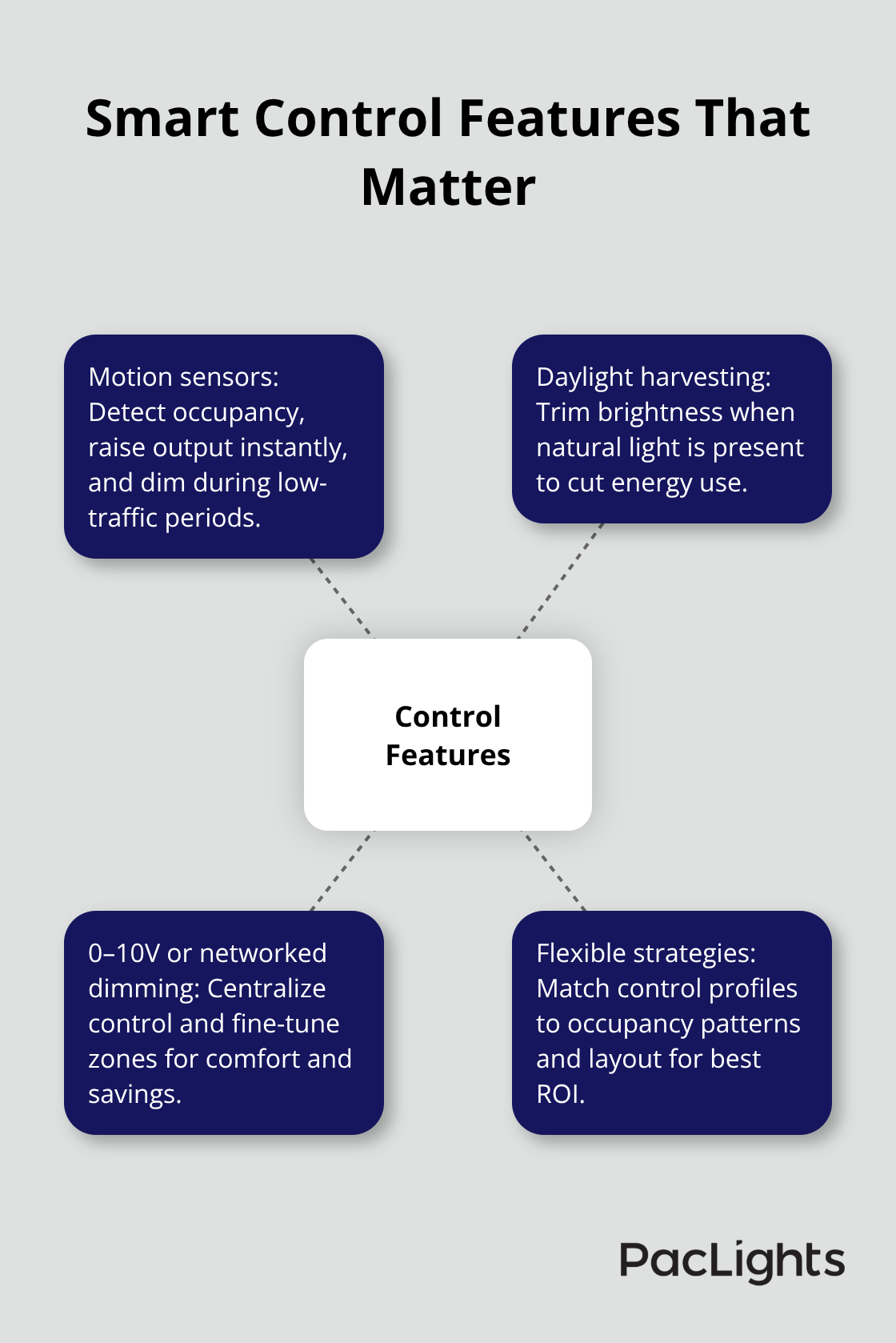
The right control strategy depends on your facility’s occupancy patterns and layout, which is why selecting fixtures with flexible control options matters from the start.
Understanding where and how to install these fixtures determines whether your investment delivers full value. The next section covers installation considerations and best practices for maximum impact.
Applications and Installation Considerations
Mounting height and spacing determine whether cylinder fixtures deliver even illumination or create dead zones that waste energy. Install fixtures 5 to 6 feet above the floor on hallway walls, which positions light at eye level and prevents harsh shadows on floors and lower walls. Space them 6 to 8 feet apart depending on ceiling height and wall reflectance-a 40-foot hallway with 10-foot ceilings needs roughly five fixtures per wall, not eight or ten. The dual-beam design concentrates light at 40 to 45 degrees on each side, so you avoid over-installing and reduce fixture counts by 20 to 30 percent compared to traditional downlights.
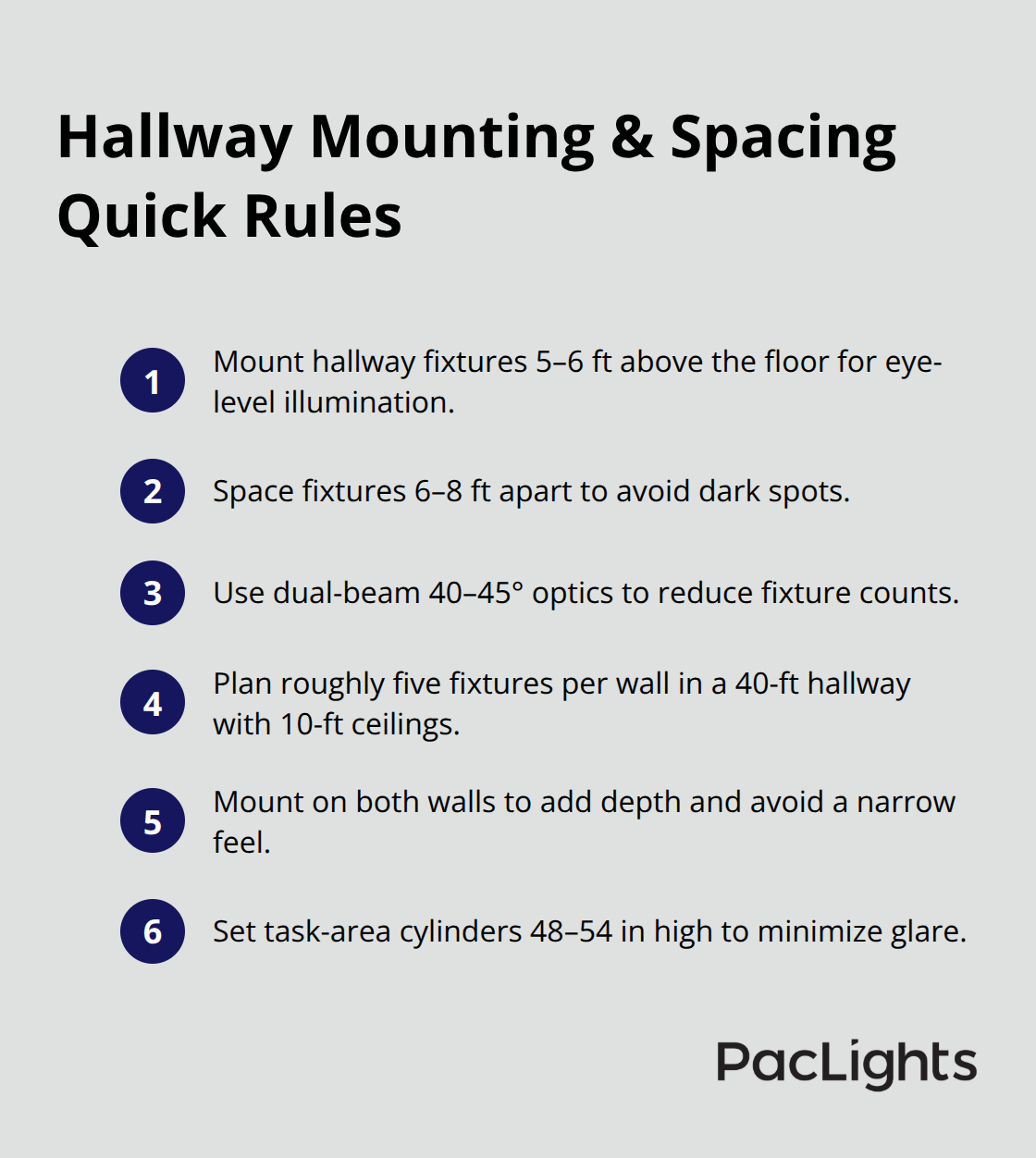
This precision matters financially: fewer fixtures mean lower installation labor, reduced electrical runs, and less ongoing maintenance. Mounting them on both walls creates depth and eliminates the cramped, narrow feeling that single-wall installations produce. For task-heavy areas like workstations or inspection zones, position cylinders closer to work surfaces-around 48 to 54 inches high-to minimize glare on screens and paperwork while maintaining adequate brightness for detailed tasks.
Best Mounting Locations for Maximum Impact
Different workspace zones demand different mounting strategies. Hallways benefit from wall-mounted cylinders spaced 6 to 8 feet apart at 5 to 6 feet high, creating even illumination without dark spots. Task areas require lower mounting (48 to 54 inches) to direct light onto work surfaces and reduce screen glare. Break rooms and lounges work well with warmer color temperatures (2700 to 3000 Kelvin) mounted at standard heights to create welcoming atmospheres. Mounting fixtures on both walls rather than one side adds visual depth and prevents the narrow, institutional feeling that single-wall lighting produces. The 40 to 45 degree beam angle on each side concentrates light efficiently, so you install fewer fixtures overall and cut installation costs significantly.
Electrical Integration Determines Installation Speed and Cost
Most facilities retrofit cylinder lights into existing electrical systems without major rewiring, but specifications matter before you purchase. Hardwired installations offer cleaner aesthetics and integrate seamlessly with building automation systems that manage motion sensors, daylight harvesting, and dimming across multiple zones. Plug-in options provide flexibility for temporary installations or spaces where running new circuits proves expensive, though they limit integration with advanced controls. Dimmable LED drivers compatible with 0–10V or networked controls allow you to fine-tune brightness and coordinate lighting across hallways, task areas, and break zones from a central panel. Verify driver compatibility with your existing electrical infrastructure before ordering-incompatible dimming systems waste money and force costly replacements.
Material Selection for Your Environment
For facilities near saltwater or high-humidity environments where corrosion accelerates fixture failure, 304-grade stainless steel housings cost about 40 percent more upfront but eliminate frequent replacements that plague standard materials. Aluminum with powder-coated finishes work perfectly for interior and covered entryways, keeping costs reasonable while delivering durability. Choose finishes like matte black or oil-rubbed bronze that suit your workspace aesthetic while hiding dust and fingerprints better than shiny metallics. These material choices directly impact your long-term maintenance budget and fixture lifespan.
Color Temperature Matches Workspace Function
Warm color temperatures around 2700 to 3000 Kelvin create welcoming commercial atmospheres in hallways and common areas. Cooler 4000 to 5000 Kelvin options support focus in task-intensive areas where employees perform detailed work. Select color temperature based on each zone’s primary function rather than defaulting to one temperature across all spaces. This targeted approach optimizes both productivity and energy efficiency while maintaining visual consistency throughout your facility. The next section covers how to evaluate lumens, beam angles, and budget to select fixtures that match your specific workspace requirements.
How to Choose the Right LED Cylinder Wall Lights
Calculate Lumens Based on Workspace Function
Lumens and color temperature form the foundation of any fixture selection, yet many facility managers guess rather than calculate. For commercial hallways, try 200 to 400 lumens per fixture-this delivers adequate visibility without wasting energy on over-illumination. Task-heavy areas like workstations demand 500 to 800 lumens to ensure employees can read documents and see screen details without eye strain. The Illuminating Engineering Society provides specific footcandle recommendations for different workplace environments, so pull those guidelines before ordering. Request technical datasheets showing lumen output, beam angle, and color rendering index (CRI above 90 ensures accurate color rendering for signage, graphics, and detailed tasks).
Match Color Temperature to Each Zone’s Purpose
Color temperature drives both productivity and atmosphere more than most people realize. Warmer 2700 to 3000 Kelvin light in hallways and break rooms creates inviting spaces where visitors form positive impressions, while cooler 4000 to 5000 Kelvin temperatures in task areas sharpen focus and reduce errors on detailed work. The mistake most facilities make is selecting one color temperature across all zones-this wastes energy and creates visual inconsistency. Instead, specify warm light for circulation spaces and cool light for work zones, then use dimmable controls to adjust output during low-occupancy periods.
Evaluate Beam Angle to Reduce Fixture Counts
Beam angle determines how many fixtures you actually need, and this number directly impacts your installation budget and ongoing maintenance costs. Cylinder wall lights deliver 40 to 45 degrees per side, which means you install 20 to 30 percent fewer fixtures than traditional downlights require for the same illumination level. A 40-foot hallway needs roughly five fixtures per wall instead of eight, eliminating unnecessary electrical runs and reducing labor during installation.
Calculate Your Actual ROI
Most cylinder wall light retrofits pay for themselves in 2 to 3 years through energy savings alone. Calculate your actual ROI by adding energy savings, reduced fixture counts, and lower maintenance labor, then divide by total project cost to find your payback period. This approach reveals that any productivity gains or reduced absenteeism from better lighting quality represent pure financial upside beyond the basic energy calculation.
Final Thoughts
LED cylinder wall lights transform commercial spaces while cutting energy costs by 40 to 50 percent and paying for themselves within 2 to 3 years. The combination of reduced fixture counts, lower maintenance labor, and measurable energy savings creates a financial case that stands on its own, without relying on productivity claims or intangible benefits. Material selection and color temperature choices matter significantly-aluminum works for interior spaces while stainless steel handles corrosive environments, and warm 2700 to 3000 Kelvin light suits welcoming areas while cooler 4000 to 5000 Kelvin supports focused work.
Start by identifying your highest-cost lighting zones (hallways typically consume $8,000 to $12,000 annually) and evaluate whether cylinder fixtures match your space requirements and aesthetic goals. The 75 to 80 percent energy reduction compared to incandescent alternatives compounds over a fixture’s 25,000-hour lifespan, delivering both environmental and financial impact simultaneously. Material durability and control options determine whether your investment delivers full value across years of operation.
We at PacLights provide free lighting layout designs and ROI assessments to help you calculate actual energy savings and determine optimal fixture placement for your facility. Our team works with you to identify control strategies that match your occupancy patterns and space requirements. Contact us to explore how LED cylinder wall lights can brighten your workspace while strengthening your bottom line.
Disclaimer: PacLights is not responsible for any actions taken based on the suggestions and information provided in this article, and readers should consult local building and electrical codes for proper guidance.