

Corridors are high-traffic areas where poor lighting creates real safety risks. Falls and navigation problems cost facilities thousands in liability and lost productivity each year.
Wrap fixtures for corridors solve this problem with even illumination, lower installation costs, and sleek aesthetics. At PacLights, we’ve designed these fixtures to deliver both safety and efficiency in hallway applications.
Why Wrap Fixtures Win for Corridor Lighting
Wrap fixtures deliver uniform illumination across the entire corridor width without the dark spots that plague traditional ceiling-mounted options. The wraparound lens design directs light downward and outward, eliminating shadows along walls and corners where people trip. A 4-foot wrap fixture typically produces 2,500 to 3,500 lumens depending on wattage, covering a 12-foot-wide corridor evenly with minimal hot spots. This consistent light distribution matters in facilities like hospitals, schools, and warehouses where navigation speed matters and liability for falls is high. Installing a single wrap fixture every 8 to 10 feet along a corridor achieves better coverage than spacing multiple smaller fixtures at the same intervals, reducing installation labor by roughly 30 percent compared to traditional recessed lighting layouts.
Installation and Retrofit Simplicity
Wrap fixtures mount directly to existing ceiling surfaces without requiring drop-ceiling grids or complex rework. Most corridors with standard 2.4- to 3.6-meter ceilings accept 4-foot wraps as direct replacements for outdated fluorescent fixtures, cutting retrofit costs significantly. A facility upgrading a 100-meter hallway from fluorescent to LED wraps typically saves 15 to 20 percent on labor because technicians replace fixtures in place rather than modify the ceiling structure.
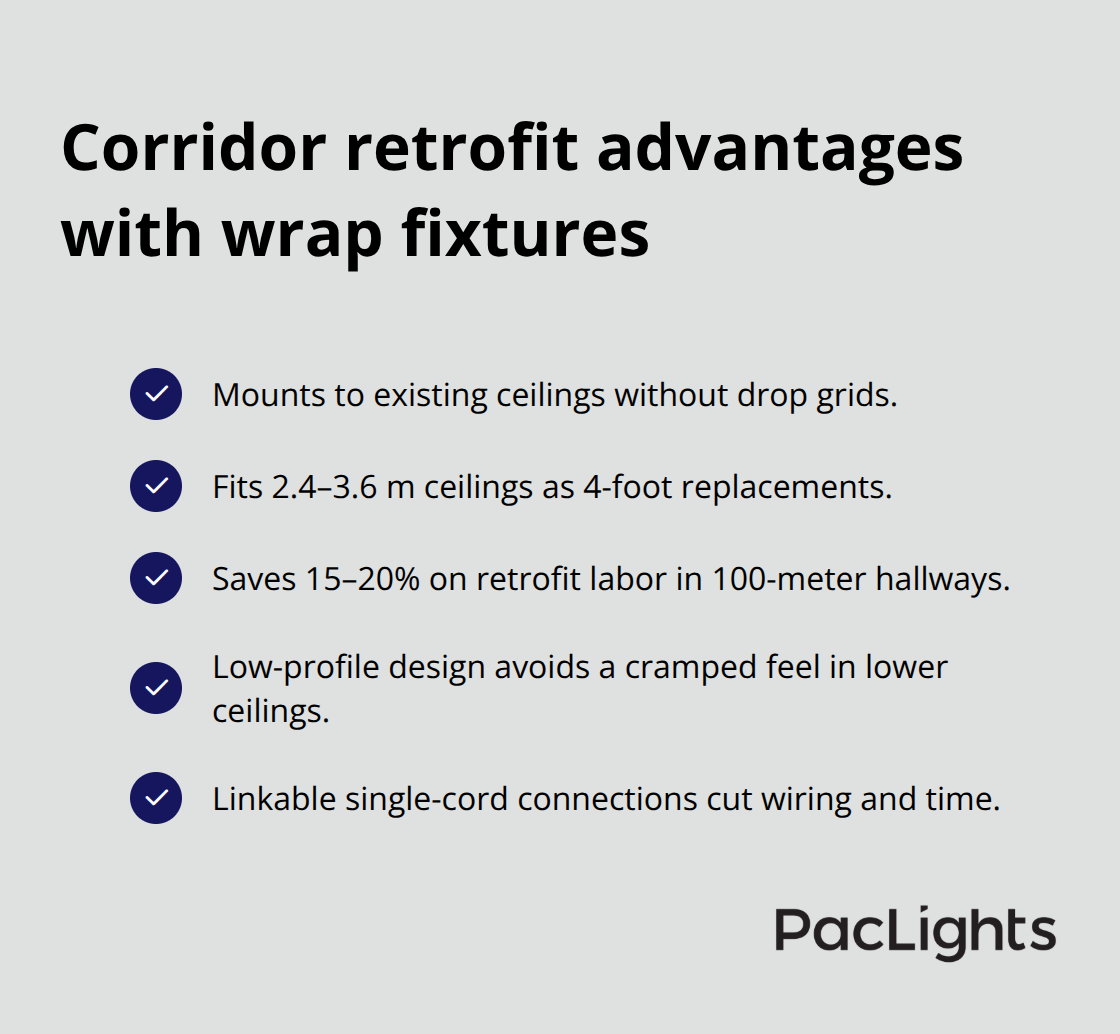
The low-profile design prevents that cramped feeling in corridors with lower ceilings. Linkable fixtures with single power cord connections further reduce wiring complexity and installation time, making projects faster and less disruptive to building operations.
Durability and Aesthetic Impact
LED wrap fixtures last 50,000 to 100,000 hours, eliminating the frequent bulb replacements that plague older lighting systems. A corridor lit with wraps maintains consistent brightness across its entire lifespan, whereas fluorescent tubes gradually dim over time, forcing premature replacements. The sleek, modern appearance of wrap fixtures enhances building aesthetics without drawing attention to the infrastructure, creating professional environments in offices and retail spaces. Color temperature options from 3,500K to 5,000K let facilities match lighting to their brand or functional needs (warmer tones for hospitality corridors, cooler tones for clinical environments where alertness matters). This combination of longevity, appearance, and performance makes wrap fixtures the practical choice for facilities serious about corridor safety and efficiency.
Safety and Navigation Benefits
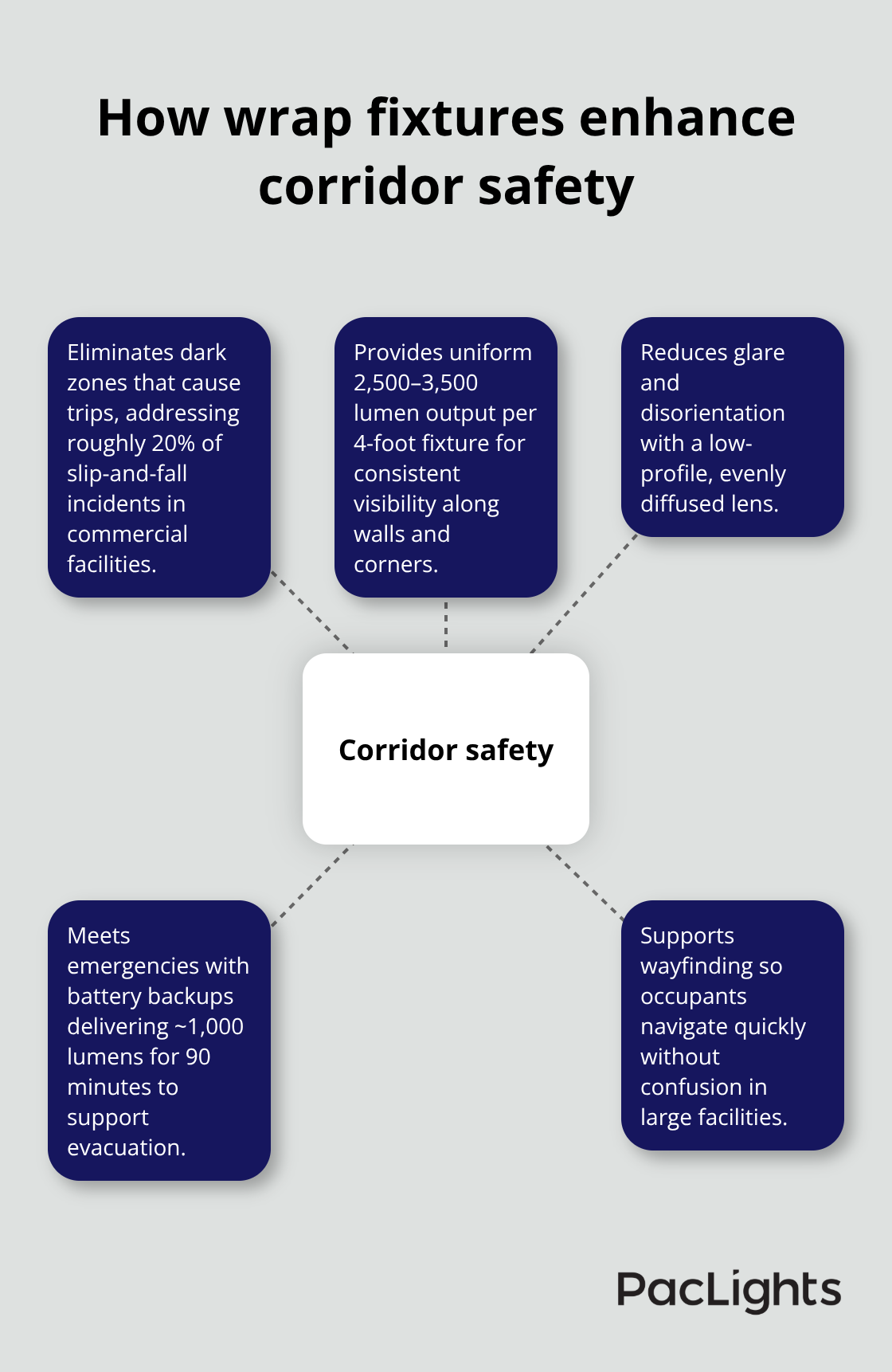
Even illumination prevents the dark pockets that create trip hazards in high-traffic areas. Wrap fixtures eliminate shadows along walls and corners, helping occupants move confidently through hallways at night or in dim conditions. Consistent light distribution also supports wayfinding in large facilities, allowing people to navigate quickly without confusion or hesitation. These safety improvements directly reduce liability costs and lost productivity that facilities face when falls and navigation problems occur.
How Wrap Fixtures Prevent Falls and Aid Emergency Response
Eliminating Dark Zones That Cause Trips
Wrap fixtures eliminate the dark zones that cause trips and falls in corridors. The uniform light distribution across the entire corridor width means no shadows along walls, corners, or intersections where people misstep. Poor corridor lighting contributes to roughly 20 percent of slip-and-fall incidents in commercial facilities, with costs averaging $20,000 to $30,000 per incident in medical treatment and liability. Wrap fixtures deliver 2,500 to 3,500 lumens per 4-foot fixture, creating consistent illumination that reduces trip hazards significantly.
Facilities upgrading from fluorescent or recessed lighting to wrap fixtures report fewer fall-related incidents within the first year of installation.
Reducing Glare and Disorientation
The low-profile design prevents glare and harsh shadows that disorient occupants in hallways, particularly older employees or visitors unfamiliar with the space. Wrap fixtures wrap light around the fixture body, distributing illumination evenly rather than creating hot spots that strain eyes or cast confusing shadows. This even distribution matters in high-traffic areas where people move quickly and cannot afford to pause and adjust to lighting changes. Occupants navigate corridors with confidence when light levels remain consistent from one end to the other.
Meeting Emergency Lighting Requirements
Emergency lighting integration matters equally in corridor safety planning. Wrap fixtures equipped with battery backup drivers provide approximately 1,000 lumens for 90 minutes during power outages, meeting NFPA 101 Life Safety Code requirements for safe evacuation routes. This means occupants can navigate corridors clearly during emergencies without relying on external lighting or flashlights, which slows evacuation and increases panic. A 100-meter hallway with standard wrap fixtures spaced 8 to 10 feet apart maintains safe illumination levels during evacuation scenarios, allowing people to exit buildings quickly and confidently.
Supporting Navigation in Large Facilities
Consistent illumination supports navigation in large facilities where people move through multiple corridors daily. Hospitals, office complexes, and warehouses benefit from predictable lighting patterns that help occupants orient themselves without confusion. Color temperature selection enhances this effect: cooler tones around 4000K to 5000K improve alertness and help people read signage accurately, while warmer tones around 3500K reduce eye strain during prolonged corridor use. Facilities that implement tunable or color-selectable wrap fixtures can adjust lighting throughout the day to support circadian rhythms and maintain occupant alertness.
Adaptive Lighting for Varying Usage Patterns
Motion sensors paired with wrap fixtures add another layer of practical benefit. These sensors activate lights only when corridors are in use, reducing energy waste in low-traffic areas while maintaining safety during occupied hours. This adaptive approach works particularly well in office buildings and schools where corridor usage varies by time of day and season. The result is a lighting system that handles both routine navigation and emergency scenarios without compromise, positioning wrap fixtures as the practical standard for any facility serious about occupant safety and operational efficiency.
How Wrap Fixtures Cut Energy Bills and Maintenance Costs
Dramatic Electricity Savings That Hit Your Bottom Line
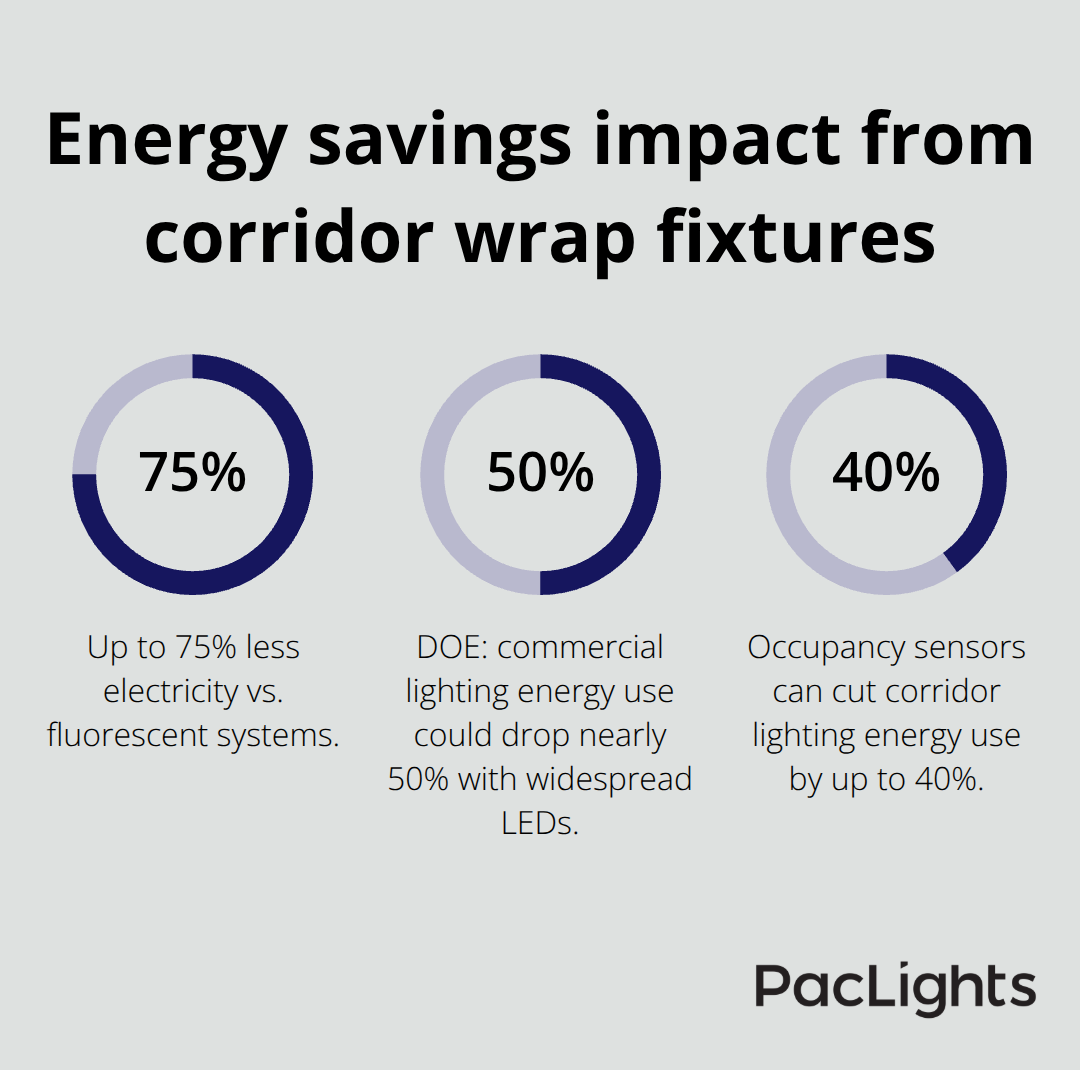
LED wrap fixtures consume 50 to 75 percent less electricity than fluorescent systems they replace, translating directly to facility operating budgets. A 100-meter corridor lit with traditional 40-watt fluorescent wraps draws roughly 8 kilowatts continuously when occupied. Upgrading to 20 to 25-watt LED wraps reduces that load to 2 to 3 kilowatts, cutting annual electricity costs by $3,000 to $5,000 depending on local utility rates and operating hours. The U.S. Department of Energy reports that widespread adoption of LED lighting could cut commercial lighting energy use in the U.S. by nearly 50 percent, and corridor retrofits demonstrate this potential at the facility level.
Most facilities recover their retrofit investment within 3 to 5 years through energy savings alone, making the business case straightforward for any facility manager evaluating corridor upgrades.
Extended Lifespan Eliminates Constant Replacement Cycles
Extended lifespan eliminates the constant replacement burden that fluorescent systems impose. A fluorescent wrap typically lasts 15,000 to 20,000 hours before dimming noticeably and requiring replacement, which means a corridor operating 12 hours daily needs new fixtures every 4 to 5 years. LED wraps deliver 50,000 to 100,000 hours of operation, extending replacement intervals to 10 to 20 years in the same usage scenario. This longevity matters operationally: facilities avoid disruption to building operations, reduce labor costs associated with fixture replacement, and eliminate the administrative overhead of managing frequent maintenance cycles.
Smart Controls Amplify Your Savings Further
Motion sensors and daylight harvesting controls amplify these savings further. These systems dim or deactivate lights during unoccupied periods, reducing actual operating hours and extending fixture life even beyond manufacturer ratings. Office buildings and schools with variable corridor usage patterns see energy reductions of 30 to 40 percent when pairing wrap fixtures with occupancy sensing, particularly in hallways that see heavy traffic during business hours and minimal use overnight. Daylight harvesting in corridors near windows provides additional savings (adjusting brightness automatically as natural light changes throughout the day). These controls require minimal wiring complexity when integrated into wrap fixture installations, making them cost-effective additions that deliver measurable returns on investment within 2 to 3 years. At PacLights, we offer optional daylight and motion control features that facilities can add to their wrap fixture systems, allowing managers to optimize energy use without major infrastructure changes.
Final Thoughts
Wrap fixtures for corridors deliver measurable safety and efficiency gains that justify their adoption in any facility serious about occupant protection and operational cost control. Even illumination eliminates trip hazards, emergency backup systems support safe evacuation, and energy savings of 50 to 75 percent reduce operating budgets year after year. A facility upgrading a 100-meter hallway from fluorescent to LED wraps recovers its investment within 3 to 5 years through electricity savings alone, while extended lifespans of 50,000 to 100,000 hours eliminate the constant replacement cycles that drain maintenance budgets and disrupt building operations.
Lower installation costs compared to traditional recessed lighting, reduced labor during retrofits, and minimal maintenance requirements compound into substantial savings over a decade of operation. Motion sensors and daylight harvesting controls amplify these benefits further, cutting energy use by an additional 30 to 40 percent in facilities with variable corridor usage patterns. The long-term financial case is straightforward and compelling for any facility manager evaluating corridor upgrades.
We at PacLights understand that corridor lighting is not a secondary concern but a fundamental component of facility safety and operational efficiency. Our wrap fixtures tailored to diverse corridor applications include optional daylight and motion control features that let facility managers optimize energy use without major infrastructure changes. Visit PacLights to explore wrap fixture solutions designed for your facility’s safety and budget requirements.
Disclaimer: PacLights is not responsible for any actions taken based on the suggestions and information provided in this article, and readers should consult local building and electrical codes for proper guidance.