

Ceiling lighting shapes how people work, shop, and move through spaces. At PacLights, we’ve seen wrap light ceiling mounts become the standard for facilities that need clean, reliable illumination without the bulk of traditional fixtures.
Modern buildings demand fixtures that perform and look good. Wrap lights deliver both, which is why they’re transforming commercial environments across industries.
What Wrap Lights Actually Are
The Basic Design and How They Work
Wrap light ceiling mounts are surface-mounted fixtures that wrap around the ceiling with a diffused cover, delivering uniform light across large areas without the shadows and glare that plague older fluorescent systems. An integrated LED module sits inside a housing, covered by a frosted or clear acrylic lens that softens the light output. The low-profile design, typically under 5 cm thick on newer models, preserves headroom in spaces where ceiling height matters. This straightforward construction makes wrap lights reliable workhorses in real buildings.
Why Wrap Lights Replace Older Technology
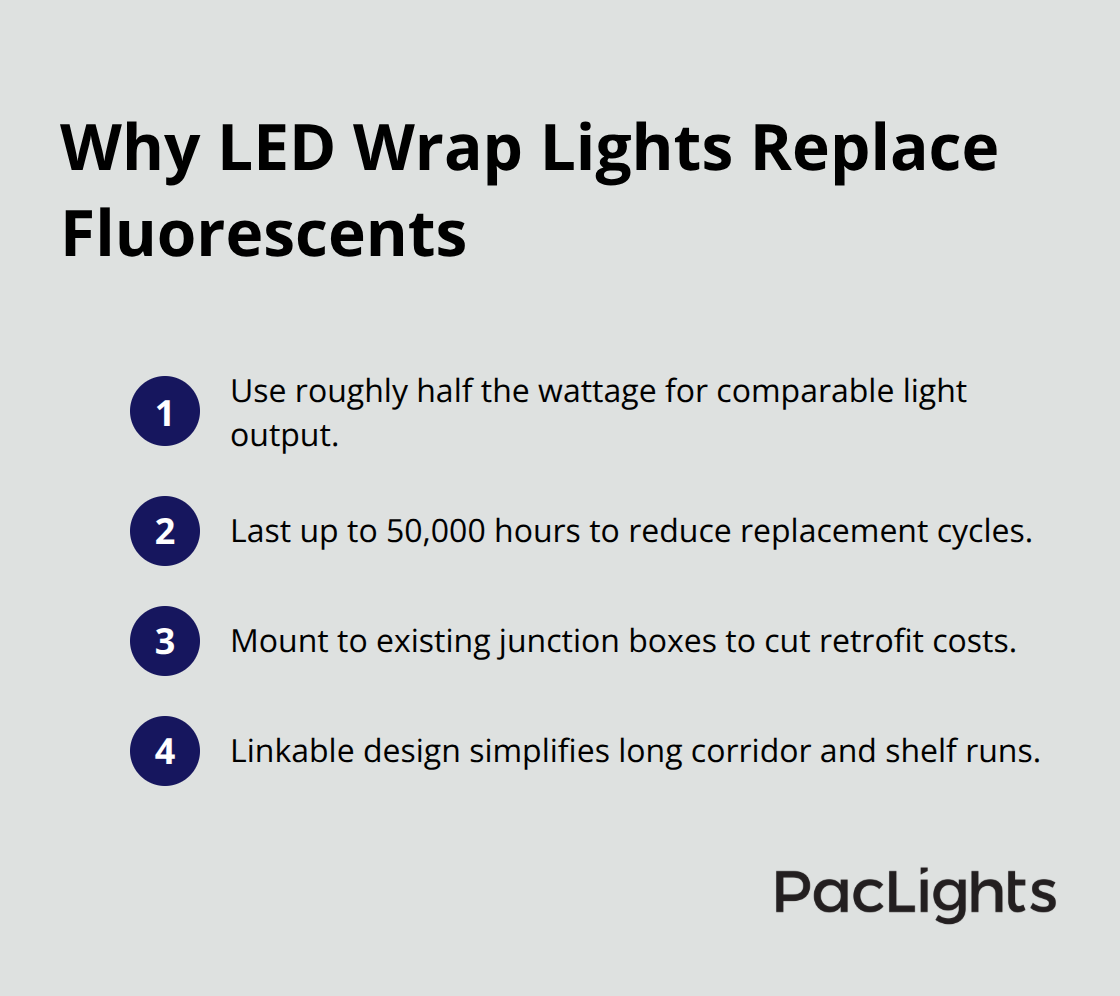
A typical 40W fluorescent fixture can be replaced by a 20–25W LED wraparound, cutting energy consumption nearly in half while eliminating the heat that traditional systems pump into climate-controlled spaces. Most wrap lights reach 50,000 hours of lifespan, meaning facilities replace them far less often than older technology. The fixtures mount directly to the ceiling with a multi-hole junction box design, reducing retrofit costs because existing electrical infrastructure stays in place instead of exposing wiring everywhere. Many models are linkable, allowing end-to-end connections with a single power cord, which simplifies long runs in corridors or along warehouse shelving.
Size and Configuration Options
The 4 ft model dominates the market because it strikes the right balance between light output, installation ease, and cost. Available in 2 ft, 4 ft, and 8 ft lengths, wrap lights adapt to different space requirements without forcing compromises. Some models include selectable wattage and lumen options, so facilities don’t over-light small spaces or under-light large ones. This flexibility means one fixture type covers multiple applications within the same building.
Performance Across Different Environments
Offices benefit from color temperature options between 3500K and 5000K, letting teams match lighting to work tasks without installing multiple fixture types. Retail showrooms use the same fixtures to highlight merchandise while keeping energy bills reasonable. Warehouses and industrial facilities rely on wrap lights because they deliver high lumen output (some 4 ft models produce 8000 lumens) and many carry IP54 ratings or higher, handling dust and humidity without degrading. The diffuse acrylic lens minimizes LED pixelation and light leaks, which matters when creating professional, finished spaces rather than industrial-looking ones.
Smart Controls and Ceiling Height Considerations
Motion and daylight sensors integrate directly into many fixtures, automating operation and reducing energy waste when spaces sit empty. 0–10V dimming compatibility enables flexible control for task lighting and occupancy-based adjustments. For low ceilings between 2.4 and 3.6 meters, wrap lights work better than linear high bays because they sit flush without consuming vertical space. For high ceilings above 6 meters, linear high bays become the preferred solution due to their higher lumen output and better throw distance. Understanding these performance boundaries helps facilities select the right fixture for their specific ceiling height and lighting demands.
Why Wrap Lights Win on Installation and Performance
Fast Installation Cuts Downtime in Commercial Facilities
Wrap lights install in hours instead of days, which matters when you’re managing downtime in commercial facilities. The multi-hole junction box design connects to existing electrical infrastructure without forcing contractors to expose wiring or cut new pathways through ceilings, keeping retrofit costs low and disruption minimal. A licensed electrician mounts a 4 ft wrap light directly to the ceiling, wires it by color code (black to hot, white to neutral, green or bare to ground), and has it operational the same day. The linkable end-to-end connection system means long corridor runs need only one power cord instead of multiple circuits, reducing labor and electrical complexity.
Maintenance That Doesn’t Drain Your Budget
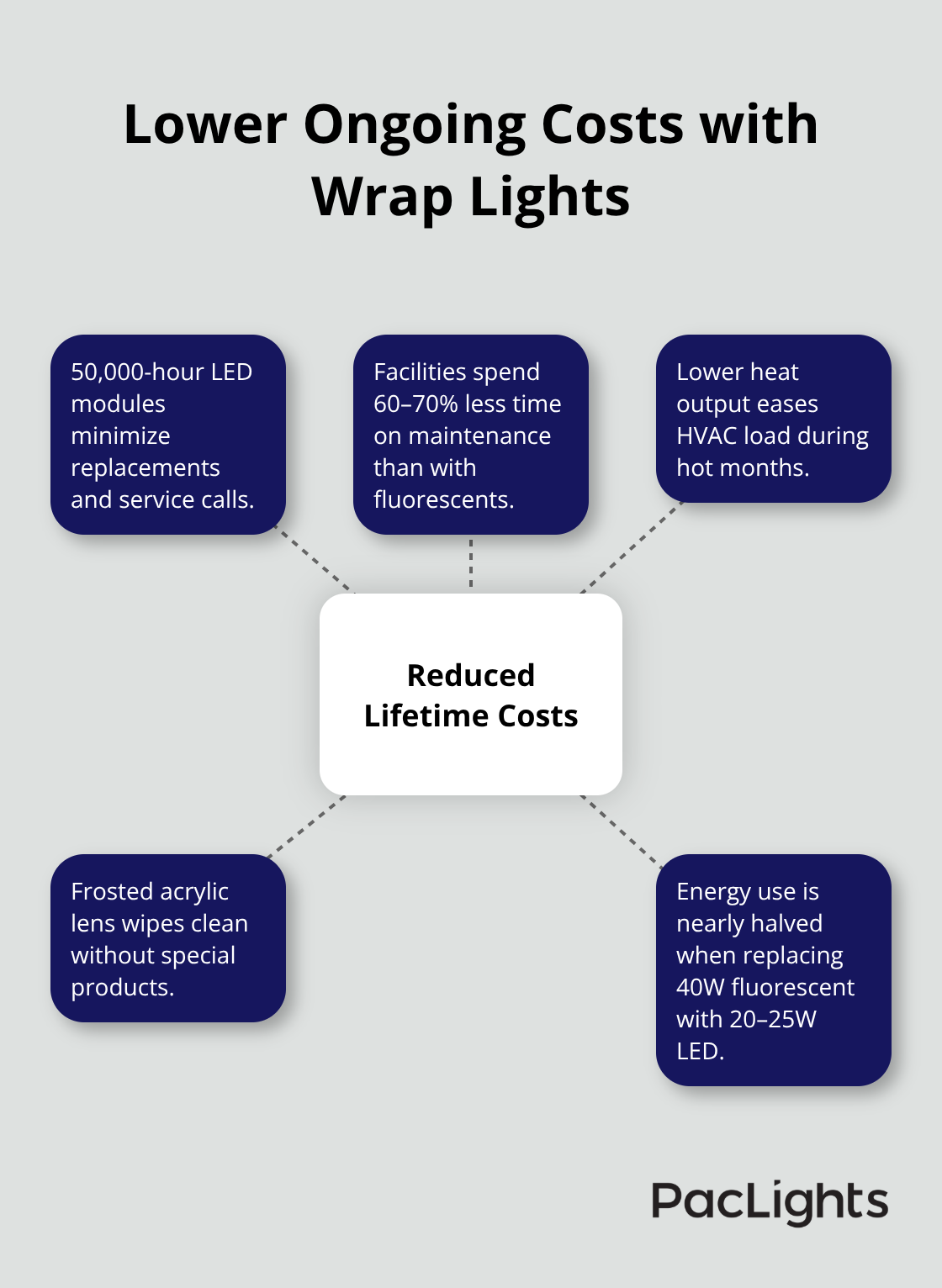
LED modules in wrap lights eliminate frequent bulb changes since they reach 50,000 hours of lifespan, and the frosted acrylic lens wipes clean without special products. Facilities report spending 60–70% less time on maintenance compared to fluorescent systems, which translates directly to lower ongoing labor costs. When you replace a 40W fluorescent fixture with a 20–25W LED wrap light, you cut energy consumption nearly in half while eliminating the heat discharge that forced air conditioning systems to work harder during summer months.
Uniform Light Coverage Without Shadows
The diffuse acrylic lens in wrap lights creates uniform illuminance across the entire ceiling without the dark corners and shadow bands that plague older recessed or linear fixtures. A 4 ft model producing 5600 to 8000 lumens floods large areas evenly, so warehouse managers no longer need to install extra fixtures to compensate for coverage gaps. The frosted lens reduces glare significantly, preventing the harsh brightness that causes eye strain in offices and retail environments where customers spend extended time. Clear lenses deliver higher brightness for spaces like garages that prioritize output over comfort, but frosted remains the standard choice for occupied commercial areas.
Design Flexibility Across Different Environments
Wrap lights preserve headroom in ways that pendant fixtures and chandeliers cannot, keeping low-ceiling spaces (2.4–3.6 meters) from feeling cramped or cluttered. The low-profile housing, typically under 5 cm thick on current models, creates a clean, finished appearance that works equally well in corporate offices, retail showrooms, and industrial warehouses. Selectable color temperatures between 3500K and 5000K let facility managers match lighting to space function without installing multiple fixture types: 4000K works for focused office tasks, 3500K suits retail displays, and 5000K handles detailed warehouse inventory work. The white housing standard pairs with optional nickel, black, or gray finishes for design flexibility without requiring custom orders or long lead times. Integrated motion and daylight sensors sit flush within the housing, avoiding the bulky external sensor boxes that detract from modern interior design while automating brightness adjustments based on occupancy and natural light levels.
What Determines Success in Your Facility
The real test of any lighting fixture comes down to how it performs in your specific space. Wrap lights handle this challenge because they adapt to different ceiling heights, room sizes, and work requirements without forcing compromises on aesthetics or energy efficiency. Whether you’re retrofitting an existing corridor or lighting a new warehouse, the combination of fast installation, low maintenance, and uniform coverage makes wrap lights the practical choice. Understanding how these fixtures perform in real conditions helps you move forward with confidence when planning your next lighting upgrade.
Where Wrap Lights Perform Best
Corporate Offices: Focus Without Fatigue
Corporate offices with 9 to 12 foot ceilings rely on 4 ft models at 4000K color temperature to maintain focus during extended work hours without the harsh glare that linear fixtures create. A typical office retrofit replaces 40W fluorescent troffers with 20–25W LED wrap lights, cutting energy consumption nearly in half while improving light quality. Employees report less eye strain and better task visibility when wrap lights replace older systems. The uniform coverage eliminates the shadow bands that plague recessed fixtures, so conference rooms and open workspaces maintain consistent brightness from wall to wall.
Retail Showrooms: Warmth Meets Efficiency
Retail showrooms use the same 4 ft fixtures tuned to 3500K to warm merchandise displays and create inviting shopping environments. The real advantage appears in the energy bill: a 5000 square foot retail space switching from fluorescent to LED wrap lights saves approximately 8000 to 12000 kilowatt-hours annually (depending on operating hours). The frosted acrylic lens reduces glare on product displays, preventing the harsh brightness that fatigues customers during extended shopping trips. Wrap lights preserve headroom in retail spaces, keeping ceilings from feeling cramped while delivering the lumen output that highlights merchandise effectively.
Warehouses and Industrial Facilities: Output Meets Durability
Warehouse and industrial facilities demand different specifications entirely. A 4 ft wrap light producing 8000 lumens floods large areas evenly without the shadow bands that plague older systems, and IP54 ratings handle dust and humidity without degradation. Facilities managers prefer wrap lights over linear high bays in spaces with ceilings between 2.4 and 3.6 meters because the low-profile design preserves headroom while delivering sufficient output for picking operations and inventory management. The diffuse lens minimizes LED pixelation, creating a finished appearance rather than an industrial look.
Sensors and Controls Reduce Waste Across All Environments
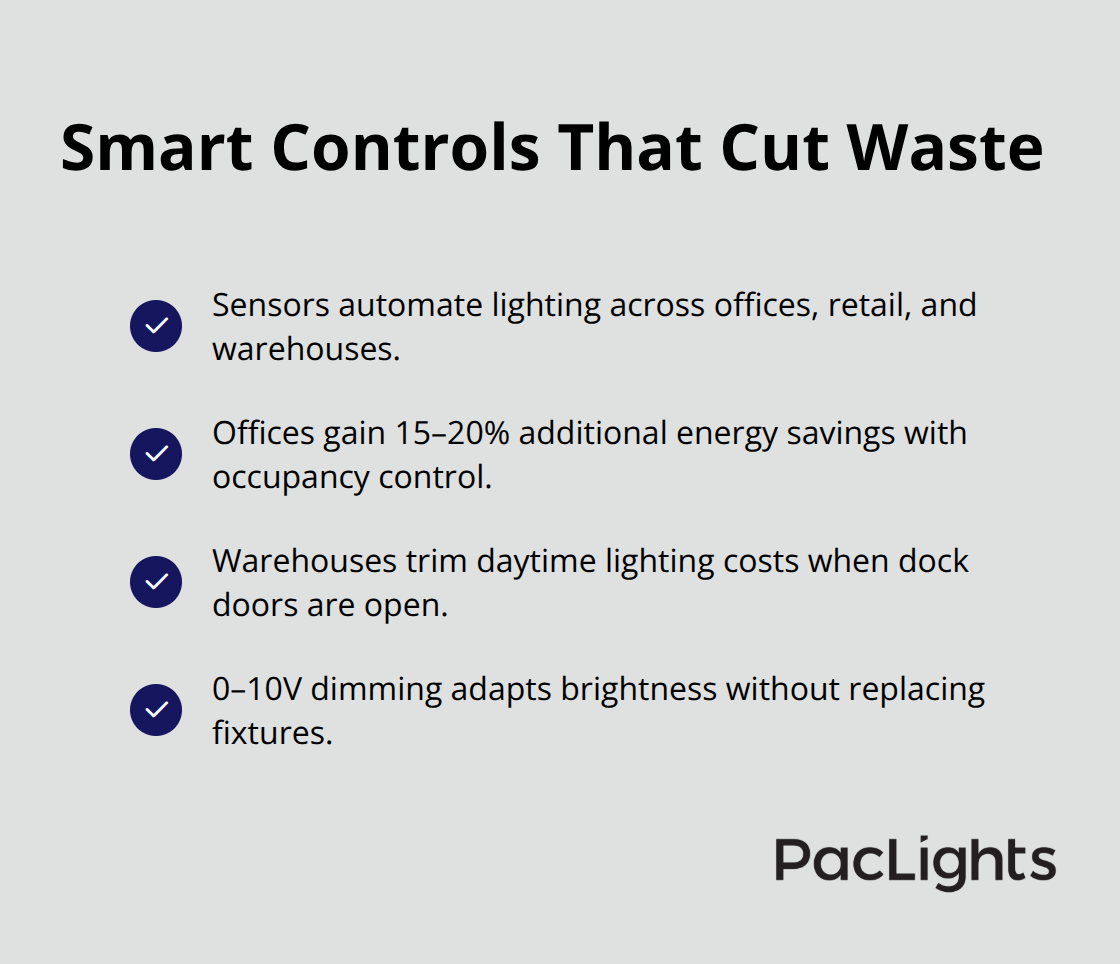
Motion and daylight sensors integrated directly into wrap light housings automate operation across all three environments, eliminating wasted energy in conference rooms that sit empty for hours or corridors where natural light supplements artificial illumination. Office buildings see 15–20% additional energy savings when sensors manage lighting based on occupancy, while warehouse managers reduce lighting costs during daytime hours when dock doors remain open. The 0–10V dimming compatibility means facility operators adjust brightness without replacing fixtures, adapting to seasonal changes or shifting work schedules without capital expenditure.
Retrofit Speed and Inventory Simplification
Retrofit installations complete faster in all three sectors because existing electrical infrastructure accommodates wrap light junction boxes, avoiding the ceiling demolition and rewiring that linear high bay conversions typically require. Color temperature flexibility across 3500K, 4000K, and 5000K options means one fixture type handles multiple spaces within the same facility-corporate offices, break rooms, and parking structures all use identical hardware with different settings rather than maintaining separate inventory. This standardization reduces procurement complexity and simplifies maintenance protocols across diverse building types.
Final Thoughts
Wrap light ceiling mounts have fundamentally changed how commercial facilities approach lighting. The combination of fast installation, minimal maintenance, and uniform coverage eliminates the compromises that older fluorescent systems forced on building managers. A 40W fluorescent fixture replaced by a 20–25W LED wrap light cuts energy consumption nearly in half, and the 50,000-hour lifespan means fewer replacement cycles and lower labor costs over time.
Motion and daylight sensors integrated into wrap light housings automate operation based on occupancy and natural light levels, creating additional energy reductions of 15–20% in office environments. The low-profile design preserves headroom in spaces with 2.4 to 3.6 meter ceilings, preventing the cramped feeling that pendant fixtures and linear high bays create. Color temperature flexibility between 3500K and 5000K means one fixture type handles multiple spaces within the same building, simplifying procurement and maintenance protocols across diverse areas.
Retrofitting to wrap lights makes financial sense because existing electrical infrastructure accommodates the multi-hole junction box design, avoiding the ceiling demolition and rewiring that other fixture conversions require. Contact PacLights for a free lighting layout and ROI assessment to understand the financial impact of switching to wrap light ceiling mounts for your facility. Our team evaluates your current system, calculates energy savings specific to your space, and recommends the right fixture specifications to deliver measurable results.
Disclaimer: PacLights is not responsible for any actions taken based on the suggestions and information provided in this article, and readers should consult local building and electrical codes for proper guidance.