

Moisture and corrosion destroy industrial lighting faster than almost anything else. When fixtures fail in food processing plants, chemical facilities, or outdoor parking areas, production stops and safety risks multiply.
Vapor tight LED housing is the difference between fixtures that last years and those that fail in months. At PacLights, we’ve seen firsthand how the right sealed design protects your investment and keeps operations running smoothly.
Why Vapor Tight Housing Stops Moisture Before It Destroys Your Fixtures
Silicone Gaskets Create an Impenetrable Barrier
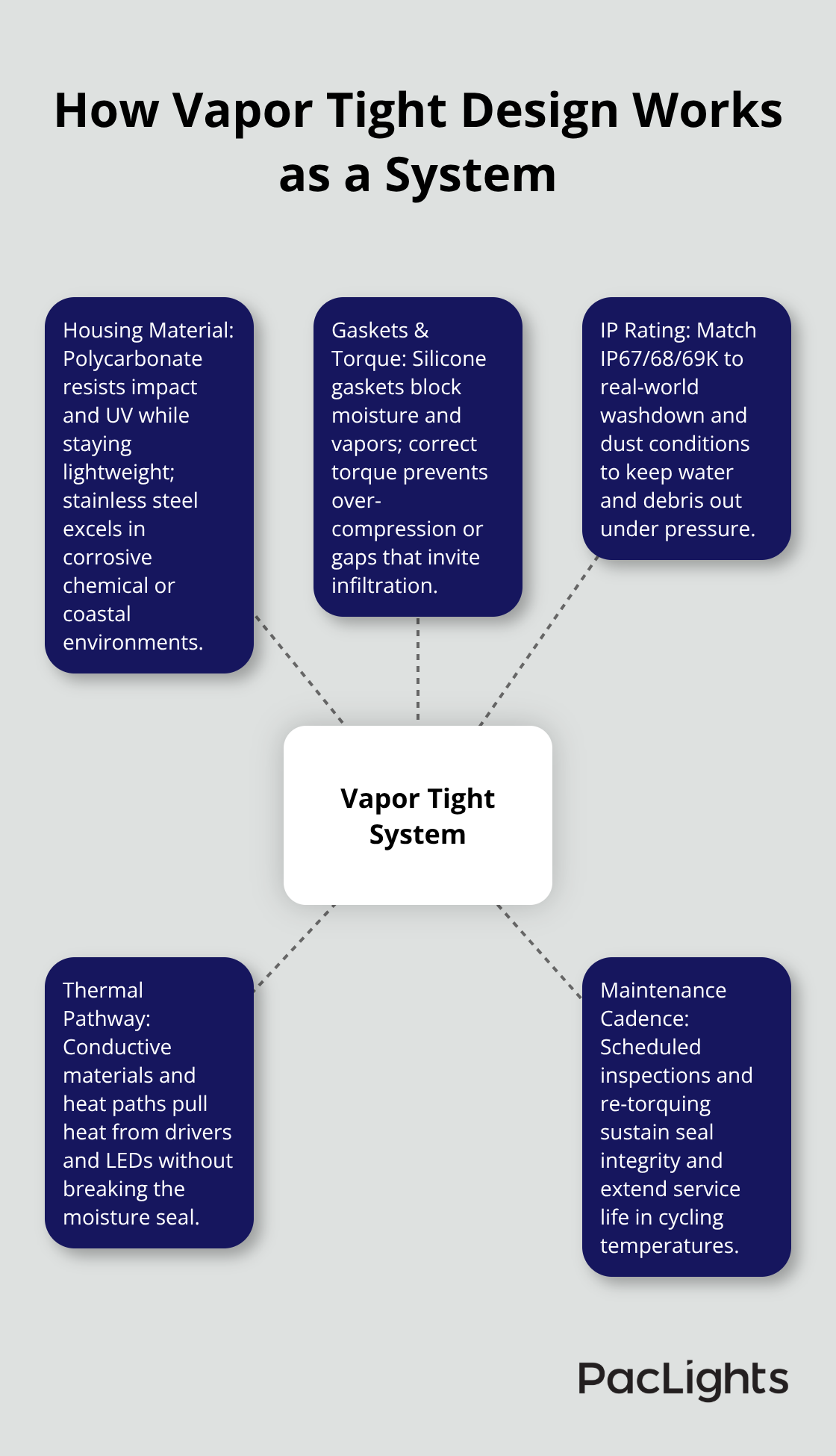
Water and corrosive chemicals attack every component simultaneously. Silicone gasket seals in vapor tight housings create a physical barrier that keeps moisture, dust, and vapors out entirely. When you properly torque and maintain gaskets, they prevent the internal degradation that causes LED drivers and heat sinks to fail. IP67-rated housings withstand immersion in water up to one meter for 30 minutes, while IP68 and IP69K ratings offer even greater protection for extreme wash-down environments.
Food processing plants operating at temperatures near freezing experience gasket degradation from thermal cycling, which is why regular gasket inspection and re-torquing must become part of your preventive maintenance schedule. Stainless steel and polycarbonate housings resist corrosion in chemical plants where standard aluminum would fail within months. The sealed design also prevents salt spray and humidity from reaching solder joints and electrical connections-a critical factor in outdoor parking structures and coastal industrial facilities.
Without vapor tight protection, fixture failure rates in harsh environments exceed 40% within the first three years, according to industry data on moisture-related LED failures.
Thermal Management Prevents Component Failure
Sealed housings create a thermal challenge: heat generated by LEDs must escape without allowing moisture in. Thermally conductive polycarbonate grades like Makrolon TC8030 enable lighter, more efficient heat sinks that dissipate warmth while maintaining the seal’s integrity. Poor thermal management causes LED driver failures and premature lumen depreciation, reducing fixture lifespan from 50,000 hours to 30,000 hours or less.
Industrial facilities operating vapor tight fixtures continuously for 12 to 16 hours daily see significantly better long-term performance when thermal management is properly engineered into the housing design. Cold storage facilities present the opposite problem: condensation forms on the exterior when warm air meets cold surfaces, making gasket maintenance even more critical in these environments.
Maintenance Schedules Protect Your Investment
Vapor tight LED fixtures rated for 50,000-hour lifespans and backed by proper thermal design eliminate the constant replacement cycles that drain maintenance budgets. When a fixture fails in a food processing plant, production stops and contamination risks increase immediately. Facilities that upgrade to vapor tight LED systems report maintenance cost reductions of 60% to 70% over five years compared to older technologies, primarily because sealed designs prevent the environmental damage that causes premature failures.
NSF certification on vapor tight fixtures confirms they meet food processing safety standards, which means compliance and durability work together. The upfront cost of quality vapor tight housings recovers within three to four years through reduced energy consumption and eliminated replacement labor. Understanding which housing materials and IP ratings match your specific environment determines whether your fixtures deliver decades of reliable performance or require constant repairs.
What Separates High-Quality Vapor Tight Housings From Inferior Options
Housing Materials Define Performance in Extreme Conditions
Polycarbonate and stainless steel housings dominate vapor tight LED design because they deliver what aluminum cannot: sustained protection in extreme conditions. Polycarbonate resists impact, UV degradation, and thermal stress without the weight penalty of stainless steel, which adds 30 to 40 percent more mass to fixtures. The material choice directly affects your maintenance burden. Covestro’s Makrolon polycarbonate grades, used in industrial vapor tight fixtures, maintain optical clarity for 15 years or more in outdoor environments without yellowing or haze that reduces light output. Stainless steel housings excel in coastal facilities and chemical plants where salt spray and corrosive vapors attack standard materials within months. Your facility’s specific environment determines whether polycarbonate delivers the best value or whether stainless steel’s superior corrosion resistance justifies the weight trade-off.
Gasket Materials and Torque Specifications Control Moisture Infiltration
Silicone gaskets handle temperature swings from minus 40 degrees Fahrenheit in freezers to 120 degrees Fahrenheit in outdoor summer conditions without cracking or losing compression. Temperature cycling degrades inferior gasket compounds within two seasons, creating pathways for moisture infiltration that destroy internal components. Proper gasket torque specifications prevent over-compression, which hardens gaskets prematurely, and under-compression, which allows vapor migration. Most manufacturers specify re-torquing every 18 months in thermal cycling environments like cold storage facilities.
IP Ratings Determine Protection Against Water and Dust
IP67 ratings represent the minimum acceptable standard for industrial vapor tight fixtures, meaning dust-tight sealing and immersion protection to one meter for 30 minutes. Food processing plants operating washdown protocols demand IP68 or IP69K ratings because high-pressure water jets penetrate standard IP67 seals within months. The IP rating you select must match your actual operational conditions, not just your facility’s general classification.
Thermal Management Separates Long-Life Fixtures From Premature Failures
Thermal management separates fixtures that last 50,000 hours from those that degrade to 30,000 hours. Makrolon TC8030 and similar thermally conductive polycarbonate grades conduct heat away from LED drivers and solder joints at rates comparable to aluminum while maintaining vapor-tight integrity. Poor thermal design causes internal temperatures to exceed 85 degrees Celsius, accelerating LED driver failures and capacitor degradation. Industrial facilities operating vapor tight fixtures 12 to 16 hours daily see lumen depreciation rates of 0.3 percent annually with proper thermal management, versus 0.8 percent annually in poorly designed housings.
Integration of All Components Creates System Reliability
The housing material, gasket specification, IP rating, and thermal pathway must work together as an integrated system. Selecting a polycarbonate housing with premium gaskets but inadequate heat dissipation creates a false economy that fails within three years. When you evaluate vapor tight fixtures, assess how each component supports the others rather than treating them as independent choices. This integrated approach determines whether your facility receives decades of reliable performance or faces constant repairs and unexpected downtime that disrupts operations and strains budgets.
Where Vapor Tight Housing Proves Its Worth
Food Processing Plants Demand IP69K Protection
Food processing plants operate in conditions that destroy standard fixtures within months. Temperature swings from minus 40 degrees Fahrenheit in freezer zones to 120 degrees Fahrenheit in packaging areas create constant thermal stress on gaskets and seals. High-pressure washdown protocols at 80 to 100 PSI spray water directly onto overhead lights multiple times daily, which is why IP69K-rated vapor tight fixtures are mandatory rather than optional in these facilities. A poultry processing plant that upgraded from fluorescent vapor tight housings to LED vapor tight fixtures with proper thermal management reduced maintenance labor by 12 to 15 hours monthly because sealed polycarbonate housings withstand washdown cycles without degradation, while older gasket materials crack within two seasons.
Cold storage facilities present a different challenge: condensation forms constantly on exterior surfaces when warm ambient air meets subfreezing equipment temperatures, making gasket inspection every six months non-negotiable rather than the standard 18-month interval. NSF certification on vapor tight fixtures confirms compliance with food safety regulations, so selecting NSF-certified housings eliminates the risk of regulatory violations that halt production and create liability exposure.
Chemical Plants Require Stainless Steel Housings
Chemical plants and wet industrial environments demand stainless steel vapor tight housings because polycarbonate fails under prolonged exposure to certain solvents, acids, and alkaline compounds. Coastal chemical facilities and salt-spray environments see standard aluminum housings corrode through within 18 to 24 months, while stainless steel housings maintain structural integrity for 10 years or longer without surface degradation. The material choice directly impacts your maintenance burden and long-term operational costs.
Parking Garages and Outdoor Industrial Areas Face Corrosion Threats
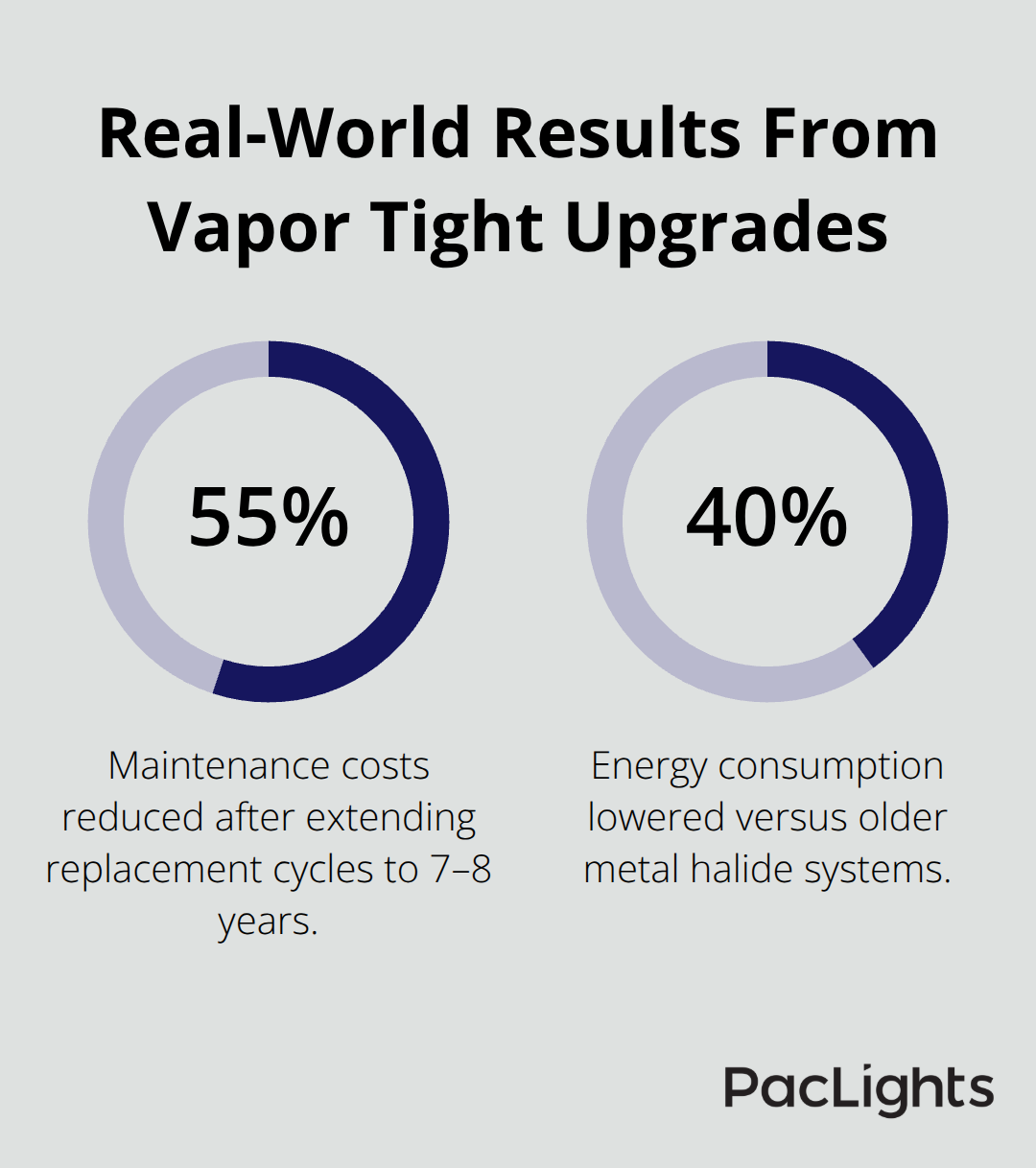
Parking garages and outdoor industrial areas face salt spray from deicing chemicals, humidity cycling, and temperature extremes that accelerate corrosion in non-sealed fixtures. A three-level parking structure that upgraded to IP67-rated vapor tight LED housings with silicone gaskets reduced fixture replacement frequency from every three years to every seven to eight years, cutting maintenance costs by 55 percent while simultaneously lowering energy consumption by 40 percent compared to older metal halide systems.
Outdoor industrial yards storing materials near saltwater environments or chemical processing areas require vapor tight fixtures with stainless steel hardware and polycarbonate lenses that resist UV degradation without yellowing that reduces light output over time.
Selecting the Right Housing Material for Your Environment
The choice between polycarbonate and stainless steel housings depends entirely on your specific chemical exposure profile. In all three application categories-food processing, chemical plants, and outdoor industrial areas-vapor tight sealing prevents the moisture infiltration and corrosion that cause premature failure and unexpected downtime that disrupts operations. Polycarbonate resists impact and thermal stress without the weight penalty of stainless steel (which adds 30 to 40 percent more mass to fixtures), while stainless steel excels where chemical resistance matters most. Your facility’s specific environment determines whether polycarbonate delivers the best value or whether stainless steel’s superior corrosion resistance justifies the weight trade-off.
Final Thoughts
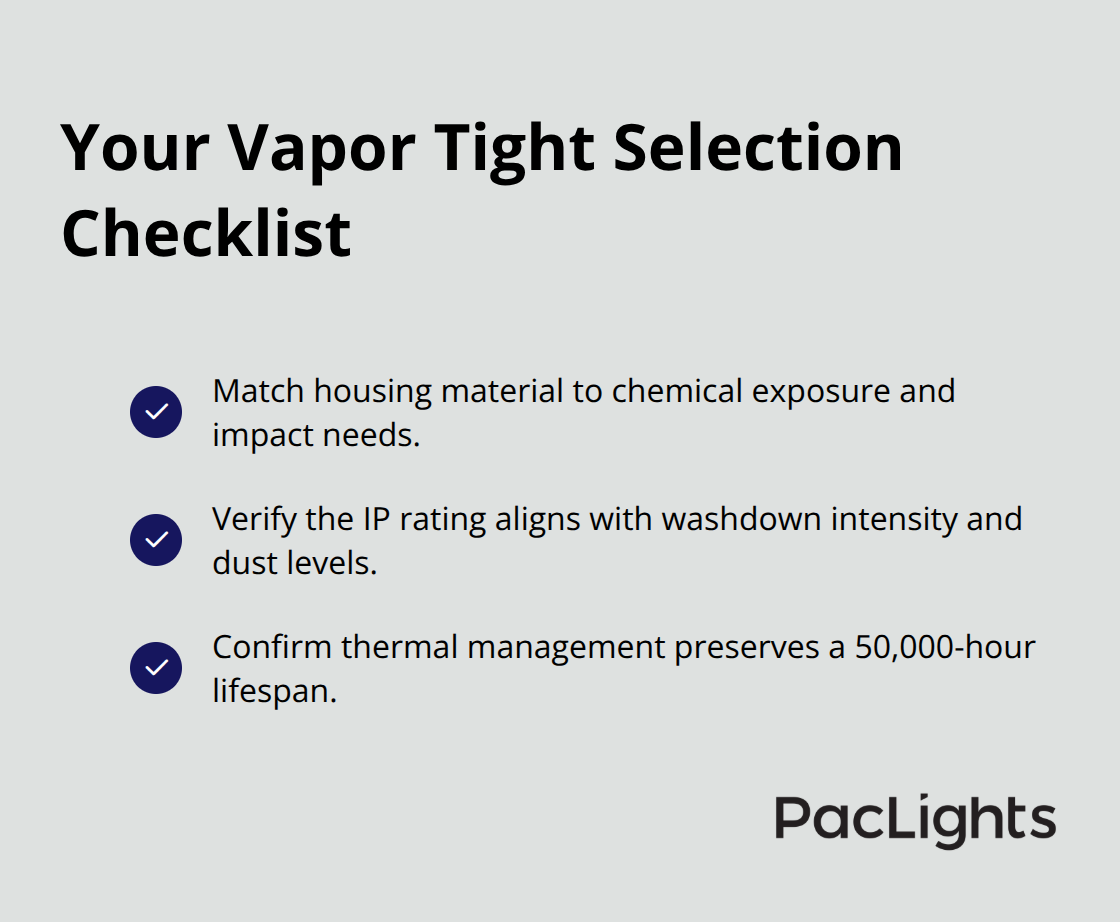
Vapor tight LED housing stops being optional the moment your facility operates in moisture-heavy, chemically aggressive, or temperature-cycling environments. Match your housing material to chemical exposure (polycarbonate for impact resistance, stainless steel for corrosive vapors), verify your IP rating matches washdown intensity, and confirm thermal management maintains 50,000-hour lifespans instead of degrading to 30,000 hours. These three factors determine whether your maintenance team spends hours replacing failed components or focuses on strategic upgrades that improve operations.
The financial case for vapor tight housing is straightforward: facilities upgrading to quality vapor tight LED systems report maintenance cost reductions of 60 to 70 percent over five years while cutting energy consumption by 40 percent compared to older technologies. Your upfront investment recovers within three to four years through eliminated replacement labor and reduced energy bills. Food processing plants, chemical facilities, and outdoor industrial areas all share one reality-standard fixtures fail fast, while vapor tight housings deliver years of reliable performance without unexpected downtime that disrupts production schedules.
We at PacLights design fixtures specifically for harsh industrial environments where vapor tight LED housing protects your investment and reduces operational costs. Contact us for free lighting layout designs and ROI assessments that show exactly how the right sealed fixtures optimize energy use while delivering the reliability your facility demands.
Disclaimer: PacLights is not responsible for any actions taken based on the suggestions and information provided in this article, and readers should consult local building and electrical codes for proper guidance.