

Selecting the right outdoor linear lighting fixtures can transform your exterior spaces while providing reliable illumination for years. Poor choices lead to frequent replacements, higher energy costs, and inadequate lighting performance.
We at PacLights understand that the market offers countless options, making the selection process overwhelming. This guide breaks down the essential factors you need to consider before making your investment.
What Application Will Your Lights Serve
Your lighting application determines every other decision in your fixture selection process. Security lighting requires different specifications than architectural accent lighting, and pathway illumination needs distinct features from wall washing applications. The American Society of Landscape Architects reports that 36% of homeowners prioritize outdoor lighting as their primary yard enhancement, which makes application-specific selection even more important.

Define Your Primary Lighting Purpose
Start with your main objective before you consider aesthetics or energy efficiency. Security applications need fixtures that produce 200-800 lumens per linear foot with wide 45-60 degree beam angles for maximum coverage. Architectural accent lighting performs better with narrow 15-30 degree beams that create focused effects on building features. Pathway lighting requires lower lumen outputs but consistent spacing (no more than 20 feet apart) for safe navigation in high-traffic areas.
Calculate Required Coverage Areas
Measure your installation area precisely and factor in mounting height to determine total linear footage needed. Each 300-watt transformer supports approximately 200-250 feet of LED strip lights, so calculate your power requirements early in the planning process. Consider your electrical capacity before installation since many homes need additional low-voltage transformers for linear LED installations.
Evaluate Environmental Demands
Environmental conditions dictate your minimum protection ratings. IP65 works for most outdoor applications, but coastal areas with salt exposure or regions with heavy snow need IP67 or IP68 ratings. Temperature ratings between -40°F to 140°F prevent LED degradation and color shifts that reduce fixture lifespan. Stainless steel hardware and silicone gaskets eliminate corrosion failures in harsh climates and extend fixture life significantly beyond standard aluminum housings.
Once you understand your specific application requirements, you can focus on the technical features that will deliver optimal performance for your installation.
Key Features to Look for in Outdoor Linear Fixtures
Your fixture’s technical specifications determine performance, longevity, and total cost of ownership. The most expensive mistake you can make is to select fixtures based on price alone while you ignore the features that prevent failures and reduce maintenance costs over time.
Protection Ratings That Actually Work
IP65 represents the absolute minimum protection for outdoor linear fixtures, but this baseline won’t survive harsh conditions. Coastal installations with salt exposure require IP67 or IP68 ratings to prevent moisture infiltration that kills LED drivers within two years. The IP system tests fixtures under specific conditions, and IP65 fixtures fail quickly in areas with heavy rain or snow accumulation.
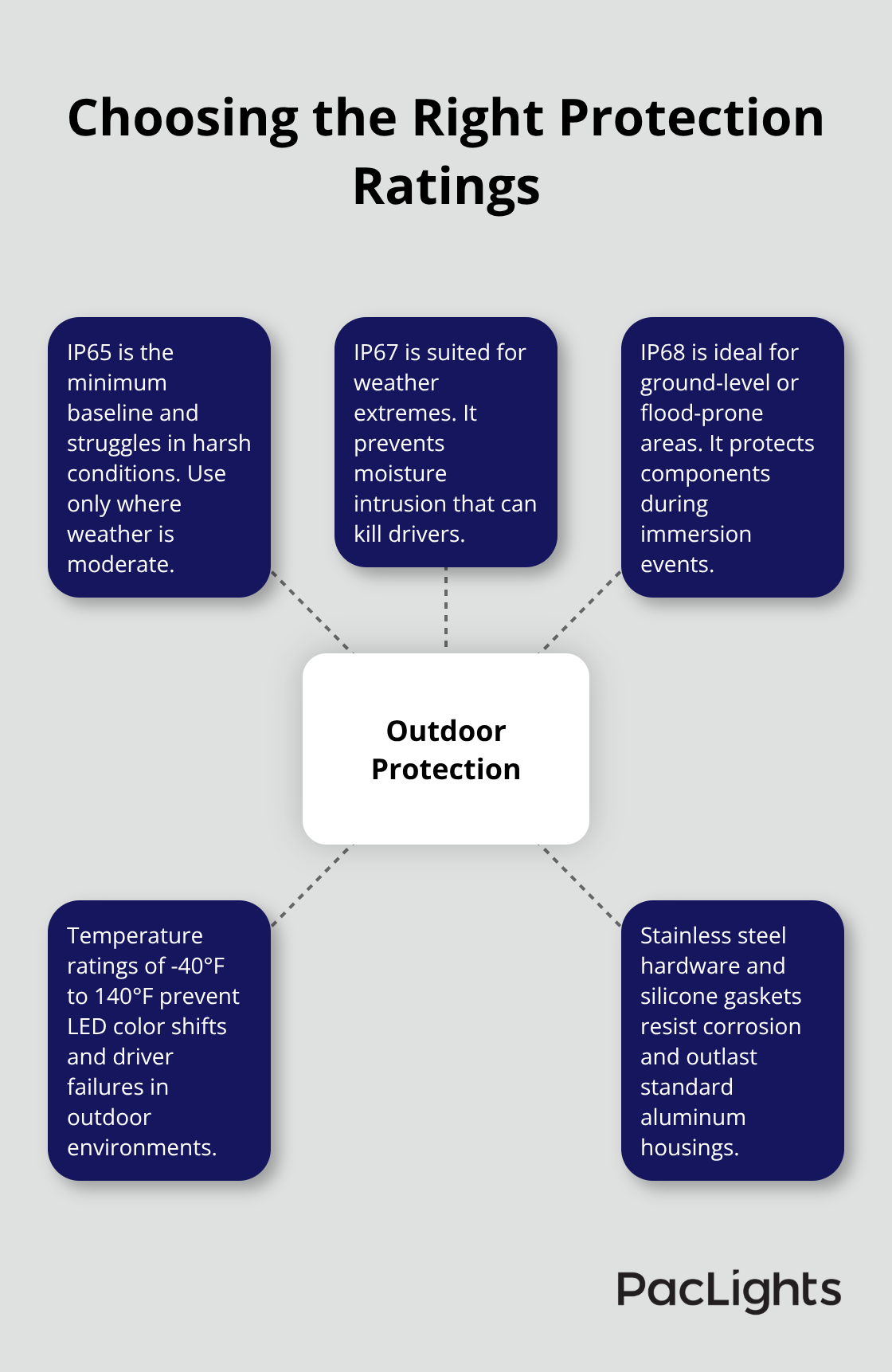
Choose IP67 for installations that face weather extremes and IP68 for ground-level applications where floods occur. Temperature ratings between -40°F to 140°F prevent LED color shifts and driver failures that plague cheaper fixtures. Stainless steel hardware and silicone gaskets eliminate the corrosion failures that force premature replacements in aluminum housings.
LED Efficiency Standards
Modern LED linear fixtures should deliver at least 126 lumens per watt to meet federal FEMP guidelines, with the best models that exceed 136 lumens per watt for pole-mounted applications. The Federal Energy Management Program reports that FEMP-designated models save an average of $295 over the fixture’s lifespan compared to less efficient alternatives.
Color temperature selection affects both aesthetics and functionality: warm 2700K creates inviting atmospheres for entry areas while cooler 4000K improves visibility in security zones. The best available LED models provide improved light uniformity and longer system life compared to traditional options.
Control Systems and Smart Integration
Advanced control systems with dimming capabilities increase energy savings by 30-50% through occupancy sensors and daylight harvesting. Smart controls that connect individual fixtures enable real-time optimization based on environmental conditions, which reduces operational costs significantly beyond basic timer systems.
Automatic controls can increase energy savings by turning lights off in unoccupied areas (a feature that maximizes efficiency). The Design Lights Consortium verifies LED product performance, which helps users make informed choices about control compatibility and energy performance.
These technical specifications work together with proper installation methods to deliver the performance and reliability your project demands.
Installation and Maintenance Considerations
Professional installation starts with proper trench depth and electrical plans that prevent costly failures. Dig trenches 18-24 inches deep for low-voltage landscape cables to protect them from frost heave damage that destroys connections within two years. Position transformers on north-facing walls or shaded areas to avoid overheating that reduces lifespan by 40%.
Each 300-watt transformer supports approximately 200-250 feet of LED strip lights or 15-20 in-ground fixtures (depending on wattage requirements). Test each run before you backfill trenches to identify connection issues early and avoid expensive excavation repairs. Install GFCI protection on all transformer circuits to manage ground faults in wet conditions and protect LED drivers from moisture damage.
Electrical Code Requirements That Matter
Federal agencies must purchase ENERGY STAR-qualified or FEMP-designated outdoor fixtures under federal law, with minimum luminaire efficacy ratings of 126 lumens per watt for wall-mounted fixtures and 136 lumens per watt for pole-mounted applications. Local codes require specific heights and spacing requirements that vary by jurisdiction, so verify regulations before installation begins.
Professional expertise becomes necessary for complex designs with multiple zones or existing electrical integrations where DIY mistakes create fire hazards and code violations.
Maintenance Plans That Extend Fixture Life
Regular maintenance, such as cleaning the panel to remove dust and debris, keeps systems at peak performance and increases property values by 15-20% according to real estate industry data. Clean fixture lenses monthly and inspect connections annually to maintain long-term performance and prevent water infiltration that kills LED drivers.

DIY installations can save homeowners $3,000-5,000 on labor costs for simple designs, but complex installations require licensed electricians to avoid safety hazards and warranty violations that void manufacturer protection. Well-designed linear landscape systems can reduce nighttime accidents by up to 75% (according to insurance industry data) when properly maintained.
Final Thoughts
Your choice of outdoor linear lighting fixtures affects performance, costs, and safety for years to come. Application requirements drive every decision from beam angles to protection ratings. Security installations demand wide coverage with 200-800 lumens per linear foot, while architectural accents work better with focused narrow beams.
Technical specifications determine long-term value and reliability. IP67 or IP68 ratings prevent moisture damage in harsh conditions, while temperature ratings from -40°F to 140°F stop LED color shifts. Modern fixtures must deliver at least 126 lumens per watt to meet federal standards (with advanced controls boosting energy savings by 30-50%).
Professional installation with proper depth trenches and GFCI protection stops expensive failures before they start. Quality outdoor linear lighting fixtures cut nighttime accidents by up to 75% while delivering substantial energy savings over their lifetime. We at PacLights provide energy-efficient solutions with advanced controls and free layout designs to maximize your investment. Define your specific needs first, then work with professionals for complex installations.
Disclaimer: PacLights is not responsible for any actions taken based on the suggestions and information provided in this article, and readers should consult local building and electrical codes for proper guidance.