

Large industrial spaces demand lighting that can handle moisture, chemicals, and extreme temperatures without failing. A vapor tight high bay system is built specifically for these harsh conditions, protecting your facility from equipment damage and worker safety risks.
At PacLights, we’ve seen firsthand how the wrong lighting choice costs businesses thousands in replacements and downtime. This guide walks you through what makes vapor tight high bays essential, their real benefits, and how to select the right system for your operation.
What Vapor Tight High Bays Actually Do
How Sealed Construction Protects Your Facility
Vapor tight high bay fixtures are sealed, gasketed lighting systems that operate in spaces where moisture, dust, chemicals, or extreme temperatures would destroy standard equipment. The sealed construction prevents water, corrosive fumes, and debris from reaching internal wiring and components-a protection that standard open-frame designs simply cannot offer. Manufacturers build these fixtures with die-cast aluminum housings and impact-resistant polycarbonate lenses rather than exposed components, which means your facility avoids the electrical failures and safety hazards that plague traditional systems in harsh conditions.
Understanding IP Ratings and Performance Standards
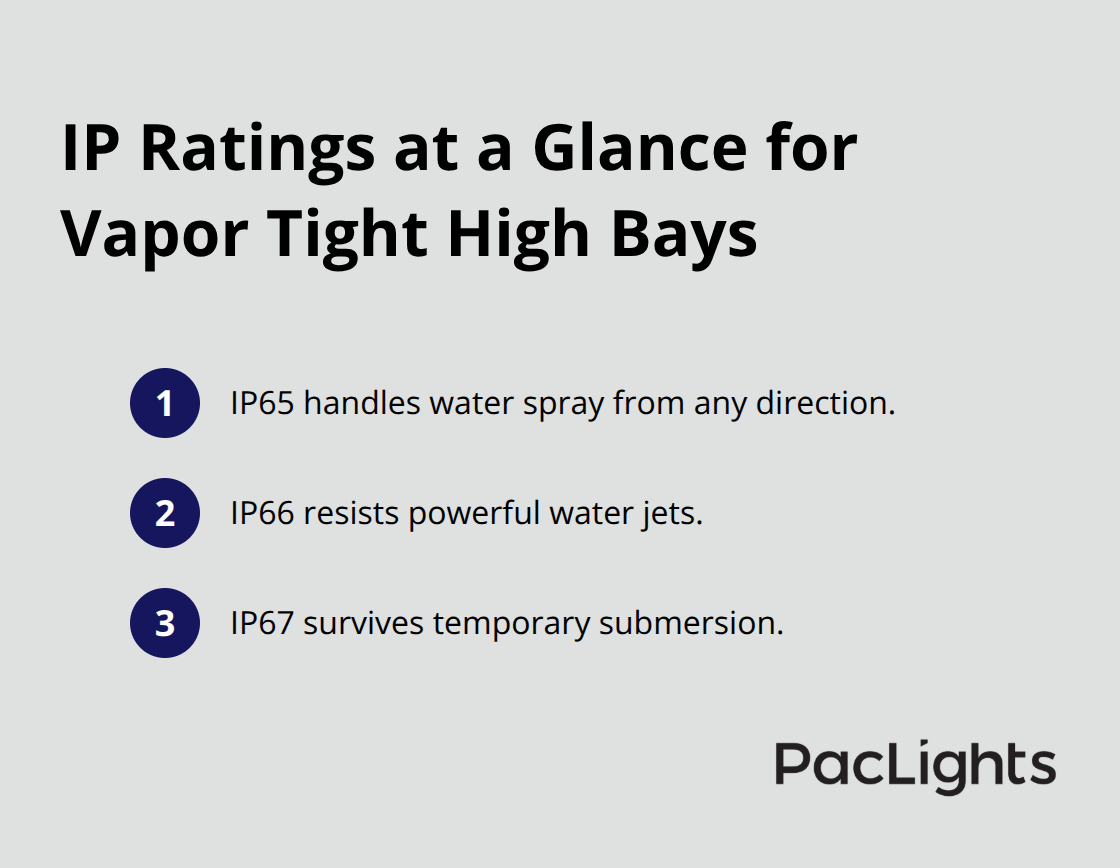
Most vapor tight high bays carry IP ratings of IP65, IP66, or IP67, meaning they resist dust and water spray at minimum, with IP67 models handling full immersion. These ratings matter because they tell you exactly what environmental threats the fixture can withstand-IP65 handles water spray from any direction, IP66 resists powerful water jets, and IP67 survives temporary submersion. Facilities managers can match the IP rating to their specific environment, whether that’s a car wash, parking garage, cold storage warehouse, food processing plant, or loading dock.
Lifespan Advantages Over Traditional Technology
LED vapor tight high bays commonly run 50,000 to over 100,000 hours at L70, compared to the 15,000 to 25,000 hour lifespan of older HID technology. This difference translates directly to fewer replacement cycles and lower labor costs for your operation. A facility that replaces fixtures every two years with HID systems can extend that interval to five years or longer with LED vapor tight models, which reduces both material expenses and the disruption of maintenance work in active spaces.
Why Standard High Bays Fail in Demanding Environments
Standard high bays fail in demanding environments because they lack sealed construction, allowing moisture to reach ballasts and wiring and cause electrical failures. The polycarbonate lenses on standard fixtures also degrade faster under UV exposure and chemical spray, requiring frequent replacement that adds up quickly. A food processing facility running washdown operations will see standard high bays fail in under two years due to moisture infiltration; vapor tight models rated NSF and UL Wet Location survive these conditions reliably and maintain performance across multiple seasons.
Calculating True Cost of Ownership
Selecting vapor tight fixtures requires calculating total cost of ownership, which includes the higher upfront price offset by dramatically reduced maintenance, longer replacement cycles, and zero unplanned downtime in critical operations. When you factor in labor costs for replacing failed fixtures, emergency repairs, and lost productivity from equipment failures, the initial investment in vapor tight technology pays for itself within the first few years. Understanding these real costs helps you make decisions based on actual financial impact rather than sticker price alone, which is why many facility managers now prioritize sealed, durable systems for their most demanding spaces.
Why Vapor Tight High Bays Deliver Real Financial Returns
Energy Savings That Add Up Fast
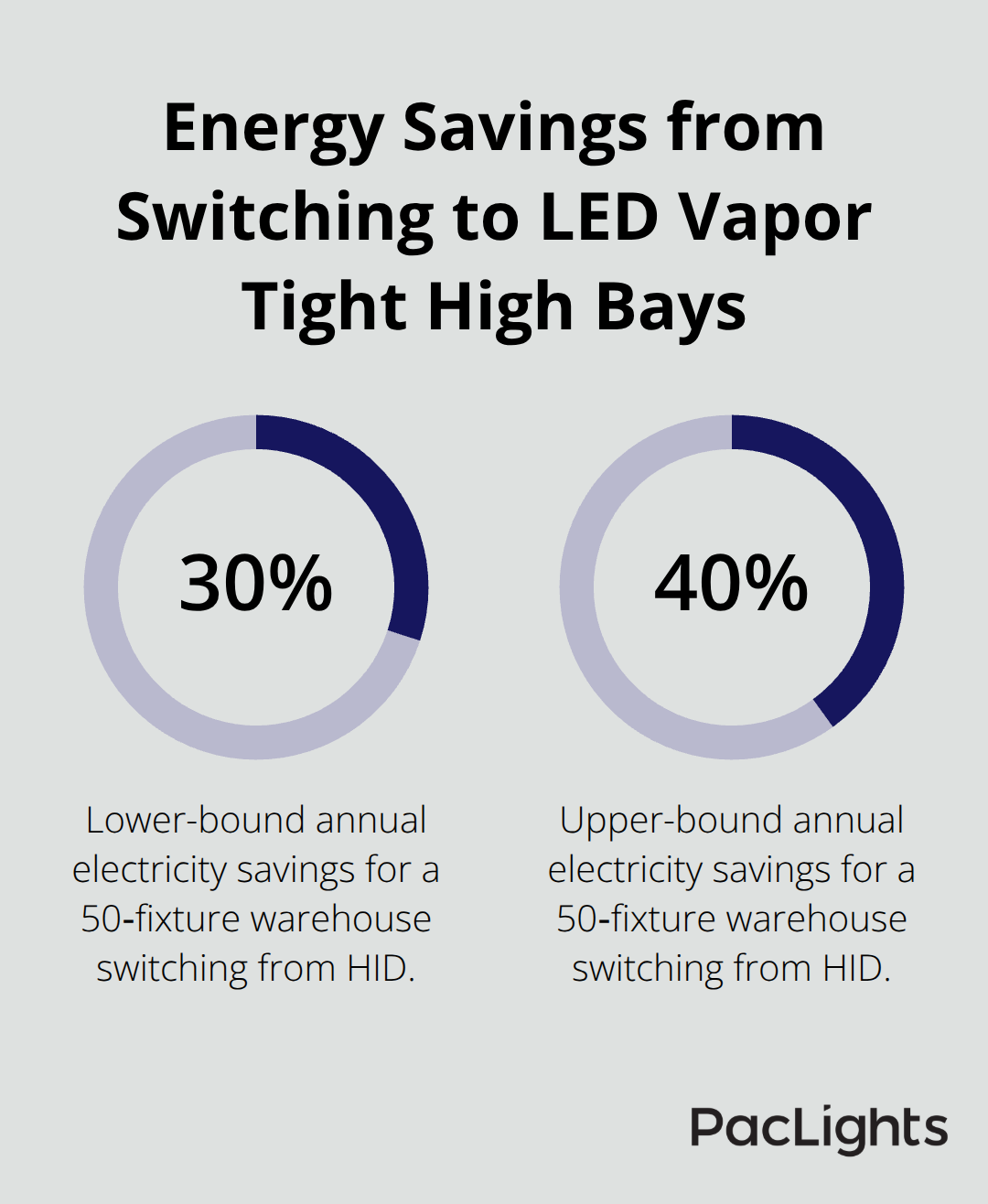
LED vapor tight high bays generate measurable cost savings that extend far beyond energy consumption. A typical 4-foot fixture delivers 34,000 to 42,000 lumens while consuming 100 to 255 watts, depending on the model and wattage configuration you select. Older HID systems consumed 250 to 400 watts for similar output, making the energy advantage clear: switching a warehouse with 50 high bay fixtures to LED vapor tight models reduces annual electricity costs by 30 to 40 percent. That translates to savings of $3,000 to $6,000 per year in a mid-sized facility, money that accumulates quickly over time.
Eliminating Unexpected Repair Costs
The sealed, gasketed construction eliminates emergency service calls that plague standard fixtures. Moisture and corrosive fumes that would destroy standard fixtures in food processing plants or car washes cannot reach the internal components, so you avoid the $800 to $1,500 repair or replacement cost that comes with sudden failures. Facilities running 24/7 operations cannot afford unexpected downtime, and vapor tight technology removes that risk entirely.
Extending Replacement Intervals and Reducing Labor
The durability advantage compounds over time because LED vapor tight fixtures rated at 50,000 to 100,000 hours L70 mean replacement intervals stretch to five years or longer instead of the two-to-three-year cycle common with HID technology. A facility manager overseeing a 40-fixture installation avoids replacing 20 to 30 fixtures every few years, which saves on labor, materials, and operational disruption. This extended lifespan directly reduces the total cost of ownership across your facility’s operational lifetime.
Improving Worker Safety Through Consistent Illumination
Worker safety improves measurably because sealed fixtures maintain consistent lumen output in harsh environments where standard systems degrade rapidly. Polycarbonate lenses on vapor tight models resist UV damage and chemical spray, so visibility remains uniform across your workspace without the dark spots and flickering that compromise safety in factories and loading docks. NSF-listed and UL Wet Location rated models deliver reliable illumination in food processing facilities and car washes where washdown operations occur daily, protecting workers from the hazards created by poor lighting in wet, slippery conditions.
Making the Financial Case for Vapor Tight Systems
The upfront cost is higher than standard high bays, but when you calculate total cost of ownership across five years, vapor tight systems cost significantly less than replacing cheaper fixtures repeatedly. The financial case for vapor tight technology becomes impossible to ignore once you factor in energy savings, eliminated emergency repairs, extended replacement cycles, and improved worker safety. Understanding these real numbers helps you move forward with confidence when selecting the right fixtures for your operation.
Selecting the Right Fixture for Your Environment
Match IP Ratings to Your Actual Operating Conditions
Start with the IP rating that fits your specific operational conditions, not a generic industry category. A food processing facility with daily washdown operations needs IP67 protection, while a dry warehouse with occasional moisture exposure may perform adequately with IP65. The difference matters financially because IP67 fixtures cost 15 to 25 percent more upfront, so overshooting your actual environmental demands wastes capital. Document the moisture levels, chemical exposure, temperature ranges, and dust conditions in your space for a full year before specifying fixtures. This data prevents costly mistakes where you either select inadequate protection and face premature failures, or overspend on ratings you do not need.
IP65 handles water spray from any direction and suits parking garages and loading docks. IP66 resists high-pressure jets common in car washes. IP67 survives temporary immersion in cold storage and food processing environments where equipment sits in standing water during deep cleaning cycles.
Calculate Lumen Output Based on Task Requirements
Lumen output directly impacts your labor productivity and worker safety, so calculate this requirement precisely rather than defaulting to industry estimates. A 4-foot vapor tight fixture typically delivers 34,000 to 42,000 lumens depending on wattage configuration, while 2-foot models range from 13,000 to 25,000 lumens. Measure your ceiling height and facility dimensions, then use foot-candle requirements specific to your task-food processing and assembly work require 50 foot-candles minimum according to OSHA guidelines, while general warehouse operations need 20 to 30 foot-candles.
A 60-foot by 100-foot warehouse with 16-foot ceilings typically needs 40 to 50 fixtures spaced evenly to eliminate dark zones where accidents occur. Consult a lighting professional for a free layout design and photometric analysis before purchasing, because oversized installations waste energy while undersized systems create safety liabilities that cost far more than proper upfront planning. Color temperature selection matters in food processing and quality control environments where color rendering accuracy affects product inspection; select 4000K to 5000K with CRI above 80 if workers need to identify color variations or defects under the lights.
Verify Voltage Compatibility and Control Options
Voltage compatibility determines installation feasibility and electrical costs. Standard facilities operate on 120–277V circuits, but industrial plants and heavy manufacturing often use 347V or 480V systems. Verify your facility’s available voltage before specifying fixtures, because retrofitting electrical infrastructure to accommodate mismatched fixtures costs thousands in labor and materials.
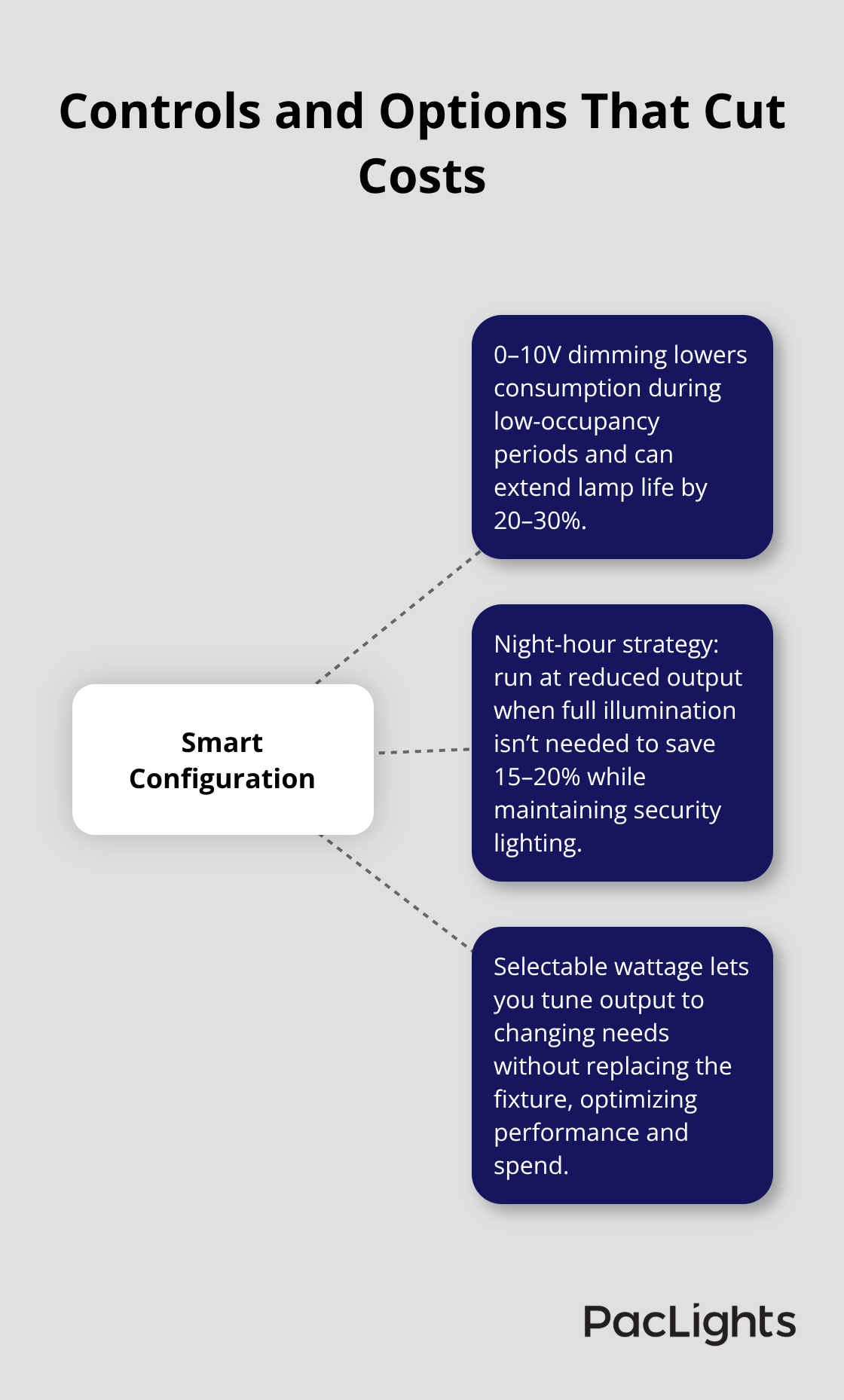
Most vapor tight high bays support 0–10V dimming, which reduces energy consumption during low-occupancy periods and extends lamp life by 20 to 30 percent according to LED manufacturers’ data. A warehouse operating 24 hours daily but requiring full illumination only during the 8-hour shift can reduce energy use 15 to 20 percent (dimming to 50 percent during night hours when security lighting needs are present). Select fixtures with selectable wattage options-many manufacturers offer 100W, 150W, 200W, and 250W configurations in identical housings, allowing you to optimize performance without replacing the entire fixture if operational needs change.
Choose Mounting, Warranty, and Compliance Standards
Mounting options matter for installation speed and future maintenance access; surface-mounted fixtures install faster than suspended chain or cable systems, but suspended installations provide better access for cleaning in dusty environments and allow easier repositioning if your facility layout changes.
Warranty length signals manufacturer confidence in durability, and most reputable vapor tight fixtures carry 5-year warranties covering defects and premature failure. Do not select fixtures based on price alone when warranty terms differ significantly; a $2,000 fixture with a 5-year warranty and proven reliability outperforms a $1,500 fixture with a 2-year warranty when you factor in replacement labor costs and operational disruption.
DLC Premium certification qualifies your installation for local utility rebates that offset 20 to 30 percent of fixture costs in many regions, so verify DLC status before finalizing your purchase. NSF listing and UL Wet Location ratings become mandatory if your facility handles food products or operates in wet environments, because non-compliant fixtures create liability exposure and fail routine facility inspections. PacLights offers free lighting layout designs and ROI assessments to help you specify the exact fixtures your operation needs, eliminating guesswork and ensuring your investment delivers measurable returns from day one.
Final Thoughts
Vapor tight high bay lighting fundamentally changes how industrial and commercial facilities manage durability and costs. The sealed, gasketed construction protects your operation from moisture, chemicals, and extreme temperatures that destroy standard fixtures within months, while LED technology delivers energy savings of 30 to 40 percent compared to older HID systems. These advantages compound over time through extended replacement intervals, eliminated emergency repairs, and improved worker safety in harsh environments.
The financial case for vapor tight systems becomes clear when you calculate total cost of ownership across five years or longer. A facility switching 50 fixtures to LED vapor tight models saves $3,000 to $6,000 annually in electricity alone, while avoiding the $800 to $1,500 repair costs that accompany unexpected failures in standard systems (and the operational disruption they create). The durability advantage means replacement cycles stretch from two to three years to five years or longer, reducing labor disruption and material expenses significantly.
Selecting the right vapor tight high bay system requires matching IP ratings to your actual environmental conditions, calculating lumen output based on task requirements, and verifying voltage compatibility with your facility’s electrical infrastructure. We at PacLights offer free lighting layout designs and ROI assessments to help you specify the exact fixtures your operation needs, ensuring your investment delivers measurable returns from installation forward.
Disclaimer: PacLights is not responsible for any actions taken based on the suggestions and information provided in this article, and readers should consult local building and electrical codes for proper guidance.