

Hazardous locations demand lighting that meets strict safety standards. At PacLights, we know that selecting the right vapor tight fixture rating can mean the difference between a compliant facility and a costly violation.
This guide walks you through the standards, classifications, and practical steps needed to protect your workplace.
What Makes a Vapor Tight Fixture Different
Construction and Sealing Requirements
A vapor tight fixture prevents flammable vapors, gases, or combustible dusts from entering the lighting enclosure. The National Electrical Code specifies construction requirements that exceed standard commercial lighting standards. The fixture must have a gasketed or sealed design that blocks vapors at every entry point-around the ballast, through wire entries, and at the lens. This approach differs fundamentally from waterproof design; it creates a barrier against explosive atmospheres instead.
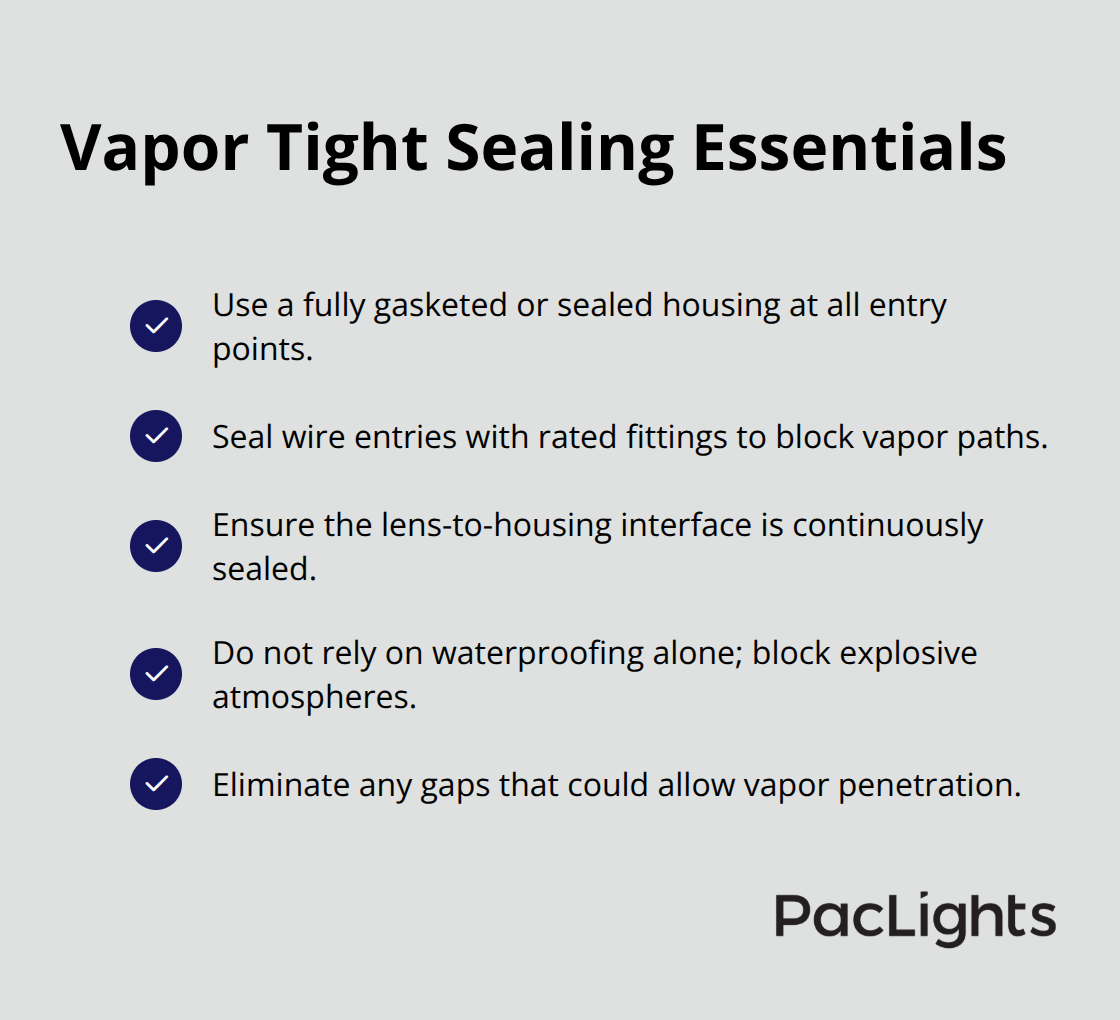
A single gap large enough for vapors to penetrate transforms a compliant fixture into a liability in a classified hazardous location.
Testing and Certification Standards
UL 844 sets the testing protocols for hazardous location lighting and establishes the real specifications beyond NEC Article 500’s framework. Manufacturers must prove their fixtures withstand pressurized vapor exposure without allowing vapors to enter the enclosure. The certification process demands rigorous testing that simulates real-world hazardous conditions. Underwriters take these ratings seriously because a mislabeled fixture in a Class I Division 1 location represents genuine explosion risk. Fixtures that meet these standards perform reliably under actual operating conditions, not just on paper.
Real-World Performance and Facility Protection
Facilities operating in classified locations face regulatory pressure from OSHA and the EPA, but equipment failure or incidents create the actual cost burden. A petrochemical plant or grain handling operation cannot afford fixtures that fail under vapor exposure. The vapor tight rating tells operators exactly what atmospheric conditions a fixture handles safely (this specificity eliminates guesswork). Selecting fixtures rated for your exact hazardous location classification protects both workers and operational continuity. Facilities that cut corners with standard fixtures face penalties ranging from thousands to millions of dollars, making proper fixture selection a financial imperative alongside safety requirements.
Understanding these standards positions your facility to make informed decisions about which fixtures meet your specific needs. The next section examines how hazardous locations are classified and what each classification demands from your lighting equipment.
Hazardous Location Classifications and Requirements
Understanding Class I, II, and III Locations
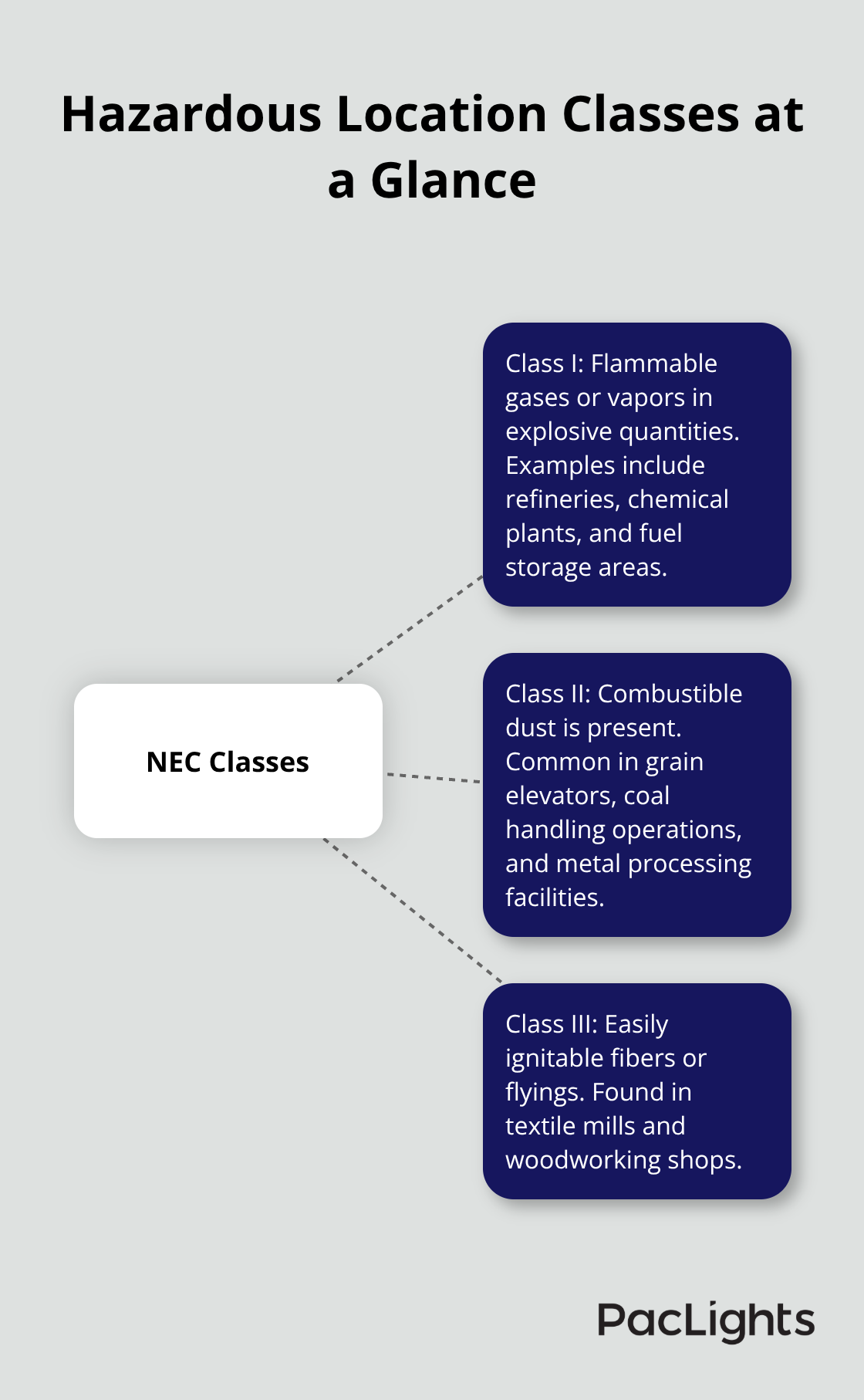
The NEC divides hazardous locations into three classes based on what’s present in your facility, and this classification determines which vapor tight fixtures you actually need. Class I locations contain flammable gases or vapors in sufficient quantities to cause explosions, which includes refineries, chemical plants, and fuel storage areas. Class II locations have combustible dust present, typically in grain elevators, coal handling operations, and metal processing facilities. Class III locations contain easily ignitable fibers or flyings like those in textile mills or woodworking shops.
Your facility’s classification isn’t optional or negotiable-OSHA requires you to identify it during a hazard assessment, and the wrong fixture choice in a misidentified location creates immediate liability. The EPA enforces these classifications under the Process Safety Management standard for chemical facilities, making accurate identification non-negotiable for compliance.
Division 1 and Division 2: Risk Levels That Matter
Within each class, Division 1 and Division 2 designations further specify risk levels and directly impact which fixtures will work. Division 1 means hazardous materials exist under normal operating conditions or during frequent maintenance, demanding the highest-rated fixtures with maximum sealing and construction standards. Division 2 means hazardous materials are present only during abnormal conditions or in enclosed containers that rarely leak, allowing fixtures with slightly less stringent ratings but still requiring vapor tight construction. A grain elevator’s working areas where dust accumulates daily is Division 1, while a storage room above the processing floor is Division 2. This distinction matters financially because Division 1-rated fixtures cost significantly more, so specifying Division 2 where appropriate reduces capital expenses without compromising safety. OSHA citations for incorrect classifications have reached tens of thousands of dollars per violation, making this distinction worth getting right during your initial hazard assessment.
Certification and Compliance Standards
UL 844 certification and NEC Article 500 establish the actual testing and construction requirements that manufacturers must meet, and you need to verify compliance before purchasing. Fixtures must carry the UL mark with specific Class and Division ratings printed directly on the label-anything less specific is a red flag. The American Petroleum Institute’s Recommended Practice 500 provides additional guidance for oil and gas operations, and the National Fire Protection Association’s NFPA 70 is the official source for NEC requirements. Facilities should request certification documentation from manufacturers before purchasing and verify ratings against your site-specific hazard assessment. A facility operating Class I Division 1 equipment with Division 2-rated fixtures faces explosion risk and regulatory penalties that dwarf any cost savings from cheaper fixtures.
The next section covers the practical steps for selecting and installing the right fixtures for your specific hazard classification.
Selecting and Installing Vapor Tight Fixtures
Verifying Fixture Specifications Before Purchase
Selecting a vapor tight fixture requires verifying three critical specifications before purchase: the UL 844 certification mark, the exact Class and Division rating, and the specific hazardous material classification your facility contains. A fixture rated for Class I Division 2 will not protect workers in a Class I Division 1 environment, and manufacturers print this distinction clearly on labels. Check the fixture documentation for the hazardous location rating, the maximum ambient temperature range it handles, and the specific gases or dusts it’s rated against-Class I fixtures handle different vapor pressures than Class II fixtures rated for dust. Request the manufacturer’s UL certification document before committing to a purchase order; this takes two business days maximum and eliminates guesswork about whether a fixture actually meets your needs. NFPA 70 Article 501 specifies construction details like maximum surface temperatures and arcing protection, so cross-reference these against your hazard assessment findings. Facilities often make the mistake of purchasing fixtures based on price alone, then discover during installation that they lack the correct ratings-this creates delays, safety risks, and replacement costs that dwarf any initial savings.
Installation Procedures That Protect Sealing Integrity
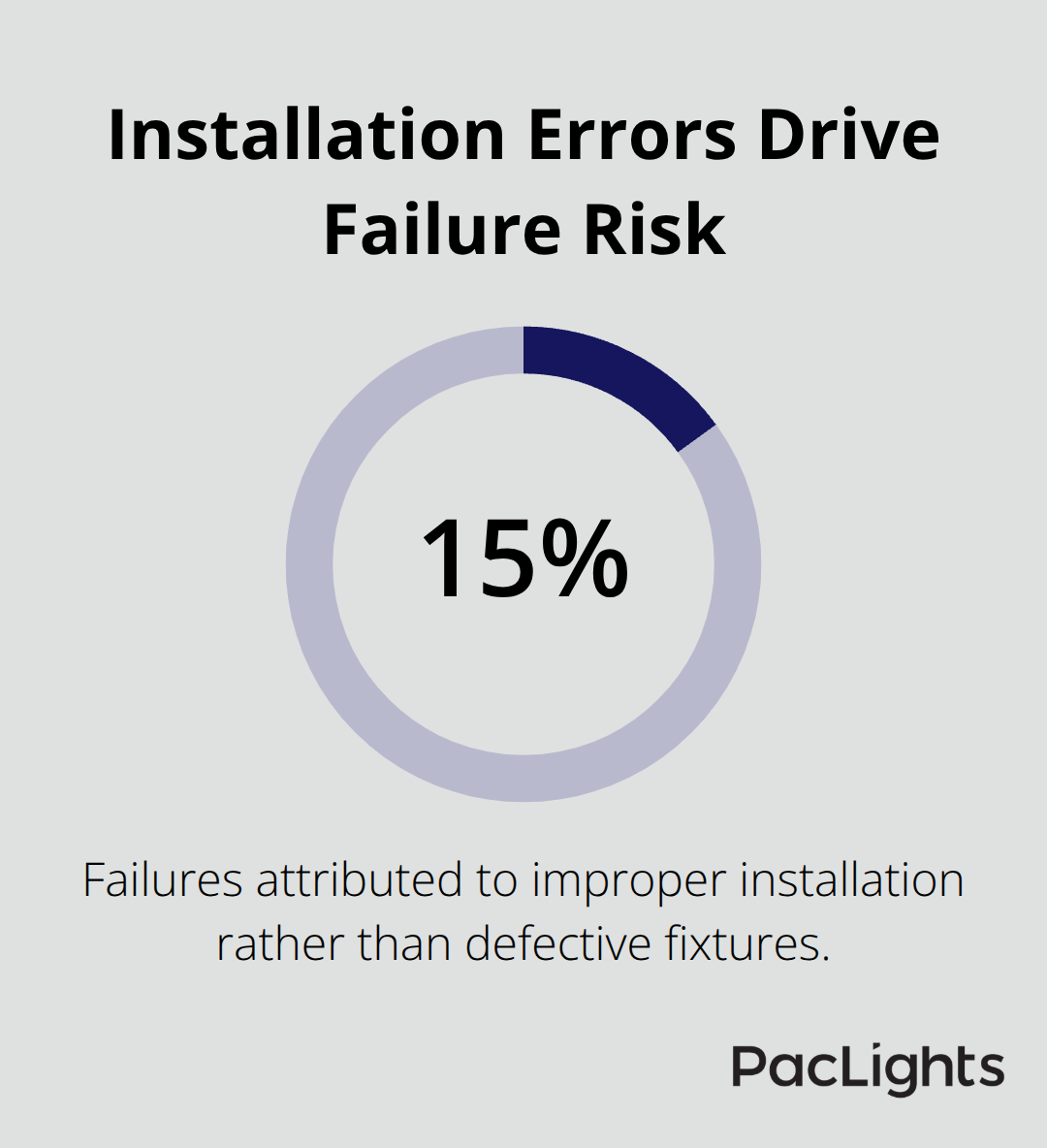
Installation in hazardous locations demands precision that standard commercial lighting does not require. Mount vapor tight fixtures exactly as the manufacturer specifies in the installation manual, because deviations compromise the sealing integrity that creates the hazardous location protection. Tighten all gaskets and seals to the torque specifications listed in documentation; under-tightening creates gaps that allow vapors to enter, while over-tightening damages gaskets and defeats their purpose. OSHA inspection records show that approximately 15 percent of hazardous location lighting failures result from improper installation rather than defective fixtures, making installation procedure compliance non-negotiable.
Maintenance and Inspection Protocols
Schedule quarterly inspections of all vapor tight fixtures to check gasket condition, corrosion on seals, and any visible damage to the enclosure. Replace gaskets every three to five years depending on environmental exposure; gasket degradation happens invisibly until a facility failure occurs. Document all maintenance activities with dates and inspector names, because OSHA requires this documentation during compliance audits. Facilities operating in corrosive environments like coastal petrochemical plants should inspect fixtures every two months rather than quarterly, since salt air accelerates gasket and seal deterioration significantly faster than standard industrial conditions.
Final Thoughts
Vapor tight fixture ratings form the foundation of hazardous location compliance, and your facility’s safety depends on selecting fixtures that match your exact Class and Division classification. Verify UL 844 certification before purchase, install fixtures according to manufacturer specifications, and maintain sealing integrity through quarterly inspections and gasket replacement every three to five years. Cutting corners on fixture selection creates genuine explosion risk alongside regulatory penalties that reach into the millions of dollars.
OSHA enforces these requirements rigorously, and facilities that operate with incorrect or degraded fixtures face citations, operational shutdowns, and worker injury liability. Your hazard assessment determines which fixtures you need, and that assessment must be accurate from the start. Conduct or update your facility’s hazard assessment to confirm Class and Division classifications, source fixtures from manufacturers who provide complete UL certification documentation, and establish a maintenance schedule with documentation for OSHA compliance audits.
We at PacLights specialize in hazardous location lighting designed to meet these demanding standards, and our vapor tight fixtures are engineered for the exact conditions your facility faces. We provide the certification documentation and technical support you need for confident purchasing decisions, plus free lighting layout designs and ROI assessments to help you optimize your facility’s lighting while maintaining full compliance. Explore PacLights hazardous location lighting solutions to find fixtures rated for your specific classification and start your facility assessment today.
Disclaimer: PacLights is not responsible for any actions taken based on the suggestions and information provided in this article, and readers should consult local building and electrical codes for proper guidance.