

Facility managers know that lighting costs add up fast. The difference between a fixture that lasts five years and one that lasts fifteen can mean thousands in savings.
At PacLights, we’ve helped countless facilities understand what actually drives cylinder lighting lifespan. Material quality, installation, and maintenance matter far more than most managers realize.
What Really Determines How Long Your Cylinder Pendants Last
Material Quality Sets the Foundation
Material quality separates fixtures that fail after five years from those performing reliably for fifteen. Aluminum housings resist corrosion far better than steel in humid or chemical-heavy environments, while proper thermal management inside the fixture prevents premature LED degradation. According to the U.S. Department of Energy, high-quality LED fixtures maintain over 70% of their initial brightness after 50,000 hours of operation, but this only happens when the fixture itself handles heat dissipation effectively. Cheap construction shortcuts, like undersized heatsinks or poor internal ventilation, cause LEDs to fail at 20,000 to 30,000 hours instead.
When you evaluate cylinder pendant options, inspect the fixture housing for sealed connections, robust mounting hardware, and documented thermal specifications. Fixtures rated for IC (insulation contact) environments cost slightly more upfront but prevent fire risk and extend lifespan in enclosed ceiling cavities where heat accumulates faster.
Operating Environment Demands Proper Design
Your operating environment matters just as much as the fixture itself. Warehouses running lights twelve hours daily see much faster payback on LED retrofits than offices operating eight hours daily, but they also demand fixtures rated for industrial duty cycles. Fluctuating temperatures, dust, and moisture in manufacturing spaces accelerate degradation if the fixture isn’t designed for those conditions.
High-use spaces with dense pendant installations generate cumulative heat that shortens lifespan unless ventilation is adequate. Facilities with voltage fluctuations face additional stress on electrical components, making surge protection and thermal management essential features to verify before purchase.
Maintenance Practices Extend Real Lifespan
Maintenance practices determine whether you get the full rated lifespan or fall short by years. Dust accumulation on fixtures reduces light output and traps heat, forcing LEDs to work harder and degrade faster. A simple quarterly cleaning schedule can extend lifespan by two to three years in dusty environments.
Electrical connections require annual inspection for corrosion or loose terminals, especially in facilities with voltage fluctuations. Magnetic dimmers are known culprits for LED flicker and shortened lifespan; upgrading to electronic dimmers before retrofit installation prevents this entirely.
Documentation Drives Strategic Planning
Documentation matters too. Track when fixtures were installed, record any maintenance performed, and note any performance changes like dimming or color shift. This data helps facility managers identify problem fixtures early and plan replacements strategically rather than reactively. With this foundation in place, you’re ready to compare how different lighting technologies actually perform over time and what real cost differences emerge between LED and traditional options.
Why LED Cylinder Pendants Outperform Traditional Fixtures
The Lifespan Advantage Is Undeniable
The numbers here are stark enough that facility managers should stop comparing and start upgrading. LED cylinder pendants rated for 50,000 hours operate roughly 25 to 50 times longer than incandescent bulbs, which max out around 750 to 2,000 hours. Fluorescent cylinders stretch to about 10,000 hours, still a fraction of what LEDs deliver. For a facility running lights 12 hours daily, an LED pendant lasts over 11 years while an incandescent fails in under three months.
The practical impact is massive: fewer replacement cycles mean fewer maintenance windows, less labor cost, and less disruption to operations. You avoid the constant churn of bulb swaps that drain your maintenance budget and pull technicians away from other priorities.
Energy Savings That Compound Year After Year
According to the U.S. Department of Energy, LED lighting uses at least 75% less energy than incandescent lighting, directly cutting your energy bills. A facility running 20 cylinder fixtures 12 hours daily might spend $400 to $600 annually on traditional lighting but only $100 to $200 with LEDs-a gap that compounds year after year.
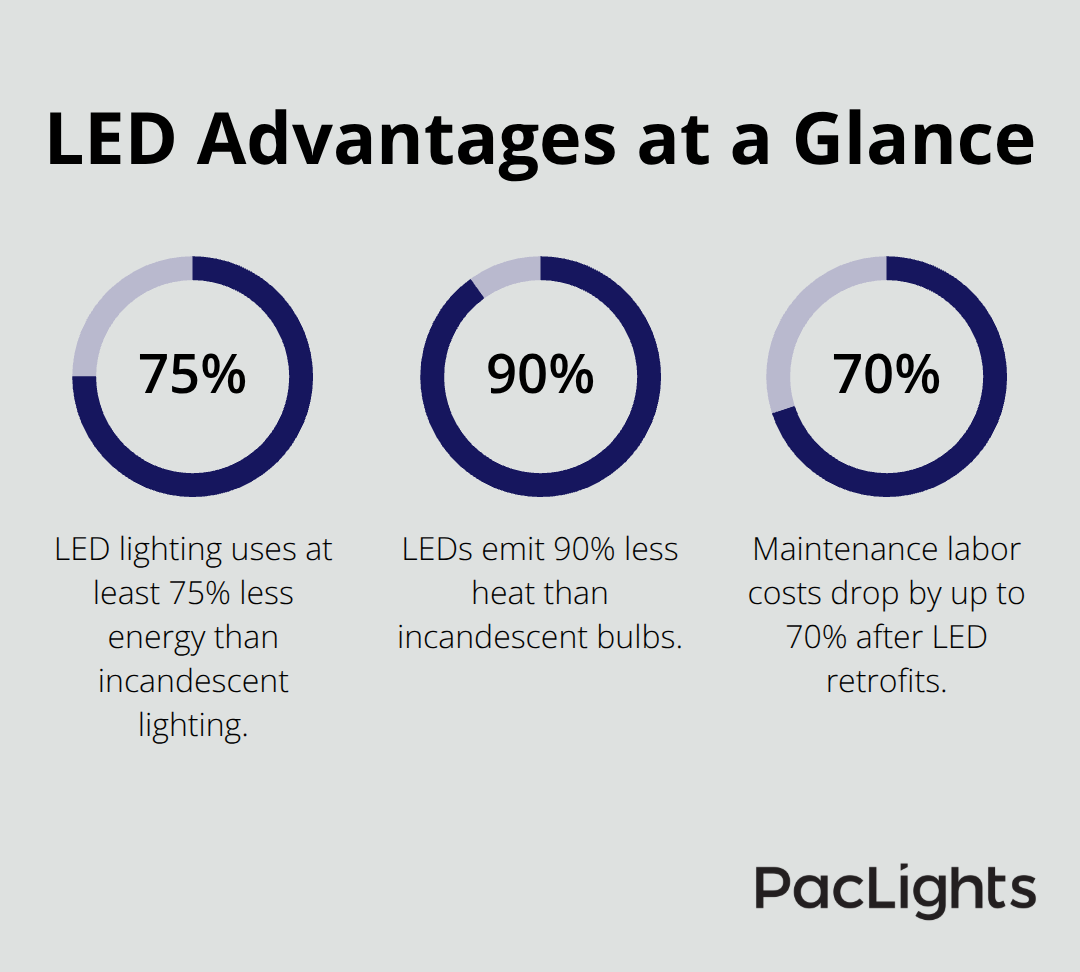
That energy difference translates to immediate financial advantage, especially in high-use spaces where payback periods hit 18 to 24 months. Maintenance labor costs drop by up to 70% after retrofit because LEDs fail far less frequently and need minimal attention beyond occasional cleaning. You recover your investment faster and then pocket the savings for years to come.
The Hidden Cooling Benefit
LEDs emit 90% less heat than incandescent bulbs, which means your HVAC system works less hard to cool spaces with dense pendant installations, creating a hidden efficiency gain many managers miss. Traditional lighting converts most energy to waste heat; LEDs convert it to light.
This thermal advantage alone can reduce cooling loads by 10 to 20%, according to Department of Energy data. Mercury elimination in LED systems removes disposal liabilities that plague fluorescent fixtures. Long-term lifecycle costs favor LED so decisively that choosing anything else for new installations or retrofits is simply poor financial stewardship.
Real Results From Real Facilities
A commercial office building case study showed 60% energy reduction and 75% fewer maintenance calls in the first year after LED retrofit. Industrial warehouses extended maintenance intervals from every six months to over three years while cutting energy bills in half. These aren’t outliers; they’re standard outcomes when you move from traditional to LED technology in cylinder pendant applications.
The transition to LED isn’t just about replacing bulbs-it’s about fundamentally changing how your facility operates. With lifespan, energy, and maintenance advantages this substantial, the next step is understanding how to maximize your investment through proper installation and control systems.
Getting Installation and Maintenance Right From Day One
Professional Installation Sets the Stage for Success
Installation quality determines whether your LED cylinder pendants reach their rated 50,000-hour lifespan or fail prematurely at 20,000 to 30,000 hours. A professional crew retrofits 20 fixtures in a single night when work happens during off-peak hours with 15 to 30 minute circuit shutdowns, so you can schedule retrofit projects strategically to minimize operational disruption. Before installation starts, shut off power at the breaker, inspect all wiring for damage, and confirm that electrical connections match kit specifications exactly. This verification step takes 30 minutes but prevents incompatibility issues that surface weeks later as flicker or premature failure.
Map your circuits to specific spaces in advance so technicians know which areas go dark during work windows. Adequate ventilation around enclosed fixtures matters enormously because heat accumulation in tight ceiling cavities accelerates LED degradation, so verify that housing allows proper airflow before sealing anything up.
Dimmer Compatibility Prevents Early Failure
Magnetic dimmers cause LED flicker and dramatically shorten lifespan, so upgrade to electronic dimmers before retrofit installation if brightness control is required. After installation, test brightness and uniformity across all fixtures; any flicker indicates dimmer incompatibility that requires immediate adjustment. This incompatibility issue catches many facility managers off guard, but the fix is straightforward once you identify it.
Maintenance Schedules Protect Your Investment
Maintenance schedules should start with quarterly cleaning in dusty environments because dust accumulation reduces light output and traps heat, forcing LEDs to work harder and shortening lifespan by two to three years. Annual electrical inspections catch corrosion or loose terminals before they cause failures, especially critical in facilities with voltage fluctuations. These routine tasks cost far less than emergency replacements and keep your fixtures performing at rated specifications.
Control Systems Optimize Energy and Performance
Occupancy sensors reduce energy use by 30 to 50% in spaces with variable occupancy, delivering savings that compound over the fixture lifespan. Daylight harvesting systems cut lighting energy further by automatically dimming pendant fixtures when natural light is sufficient, and smart controls enable real-time monitoring that alerts your maintenance team to performance issues before occupants notice dimming or color shifts.
Different spaces demand different sensor strategies; offices need occupancy sensors in individual zones while warehouses benefit from motion detection across larger areas. Start with a thorough lighting audit to identify which spaces waste the most energy, then prioritize control system installation where daily operating hours exceed 12 hours. PacLights offers free lighting layout designs and ROI assessments that quantify payback timelines and energy savings so you can phase upgrades strategically and fund later stages with savings from earlier installations.
Final Thoughts
Cylinder lighting lifespan depends on three factors that work together: material quality, maintenance discipline, and technology choice. LED fixtures rated for 50,000 hours outlast traditional options by decades, cut maintenance labor costs by up to 70%, and reduce energy bills by 60 to 80%. A facility running 20 fixtures 12 hours daily recovers retrofit costs in 18 to 24 months, then operates with minimal maintenance for over a decade.
Your facility’s lighting strategy should prioritize spaces running 12 or more hours daily, where energy and maintenance savings compound fastest. Start with a lighting audit to identify which areas waste the most energy, then phase upgrades strategically so early savings fund later installations. This approach spreads capital costs while delivering immediate operational benefits (and positions your facility for long-term efficiency gains).
We at PacLights understand that facility managers need reliable data to make informed decisions about cylinder lighting lifespan and retrofit investments. Contact PacLights for a customized lighting assessment that quantifies payback timelines and energy savings specific to your facility’s needs.
Disclaimer: PacLights is not responsible for any actions taken based on the suggestions and information provided in this article, and readers should consult local building and electrical codes for proper guidance.