

Linear light fixtures have transformed how we illuminate commercial and industrial spaces. These sleek, elongated lighting solutions deliver consistent brightness across large areas while consuming significantly less energy than traditional alternatives.
At PacLights, we’ve seen businesses reduce their lighting costs by up to 60% after switching to linear LED systems. The versatility of these fixtures makes them perfect for everything from retail stores to manufacturing facilities.
Which Linear Fixture Type Fits Your Space
LED Strip Lights for Continuous Illumination
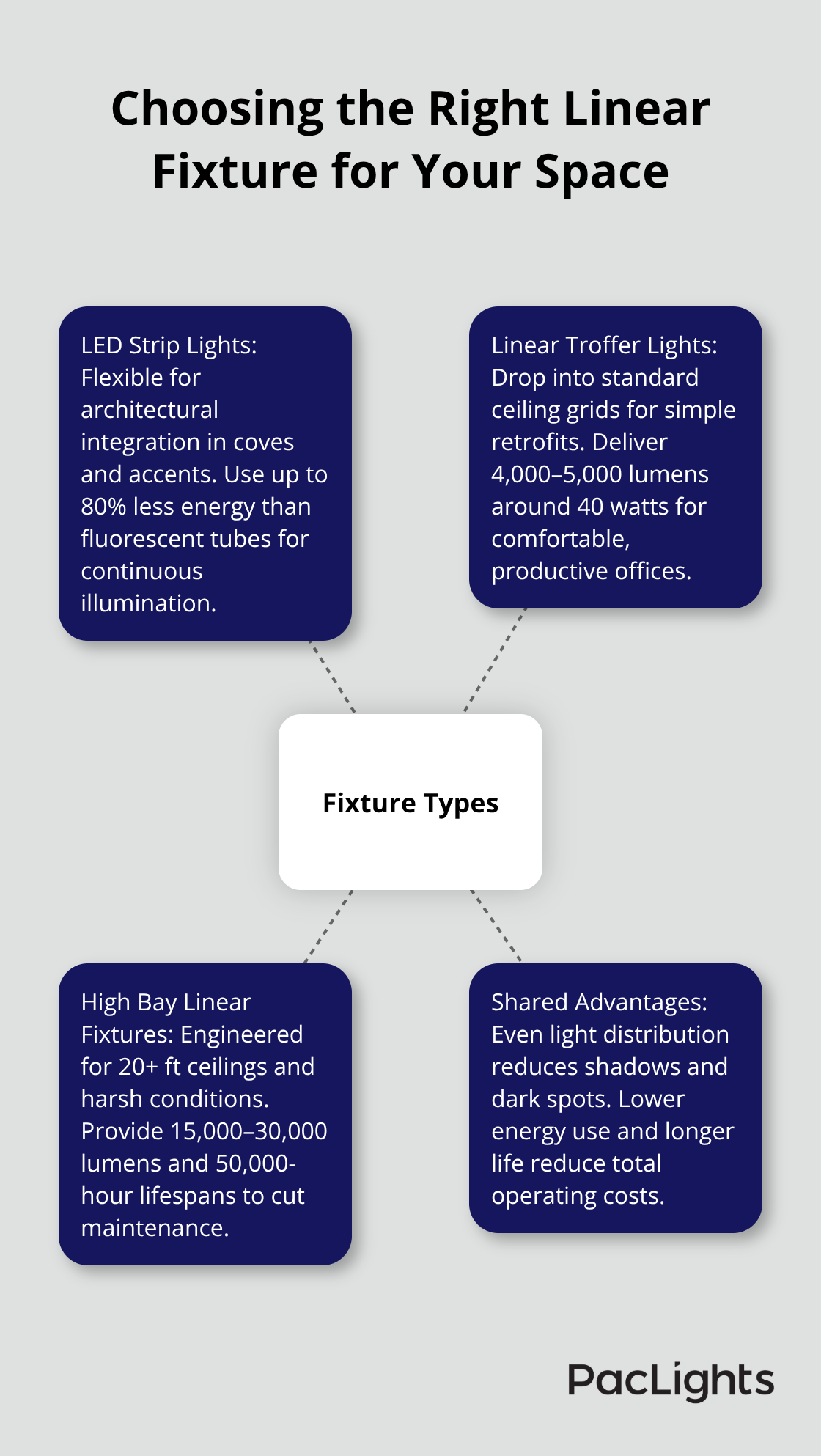
LED strip lights lead the continuous illumination market because they offer unmatched flexibility for architectural integration. These fixtures consume 80% less energy than traditional fluorescent tubes (according to the Department of Energy), which makes them the smart choice for accent lighting and cove installations. Retail environments benefit from their consistent product visibility that drives sales, while hospitality spaces use them to create the perfect ambiance. Their ability to bend around corners and follow architectural lines eliminates dark spots and shadows completely.
Linear Troffer Lights for Office Environments
Linear troffer lights set the gold standard for office environments as they replace outdated fluorescent panels with superior LED technology. These fixtures fit directly into standard ceiling grids, which makes retrofits simple and cost-effective. Modern troffers produce 4,000 to 5,000 lumens while they draw only 40 watts, compared to 80 watts for equivalent fluorescent models. Office managers choose them because they provide consistent overhead illumination that reduces eye strain and improves productivity.
High Bay Linear Fixtures for Industrial Applications
High bay linear fixtures tackle industrial challenges where ceiling heights exceed 20 feet and traditional lighting fails. These powerhouse units generate 15,000 to 30,000 lumens and withstand harsh conditions including temperature fluctuations, dust, and vibration. Manufacturing facilities select them because they reduce maintenance costs by lasting 50,000 hours compared to 15,000 hours for metal halide alternatives. The uniform light distribution eliminates dangerous shadows in warehouses where safety depends on clear visibility.
Each fixture type serves specific needs, but they all share common advantages that make linear lighting the preferred choice for modern facilities.
Why Linear Fixtures Deliver Superior Performance
Energy Efficiency Transforms Operating Costs
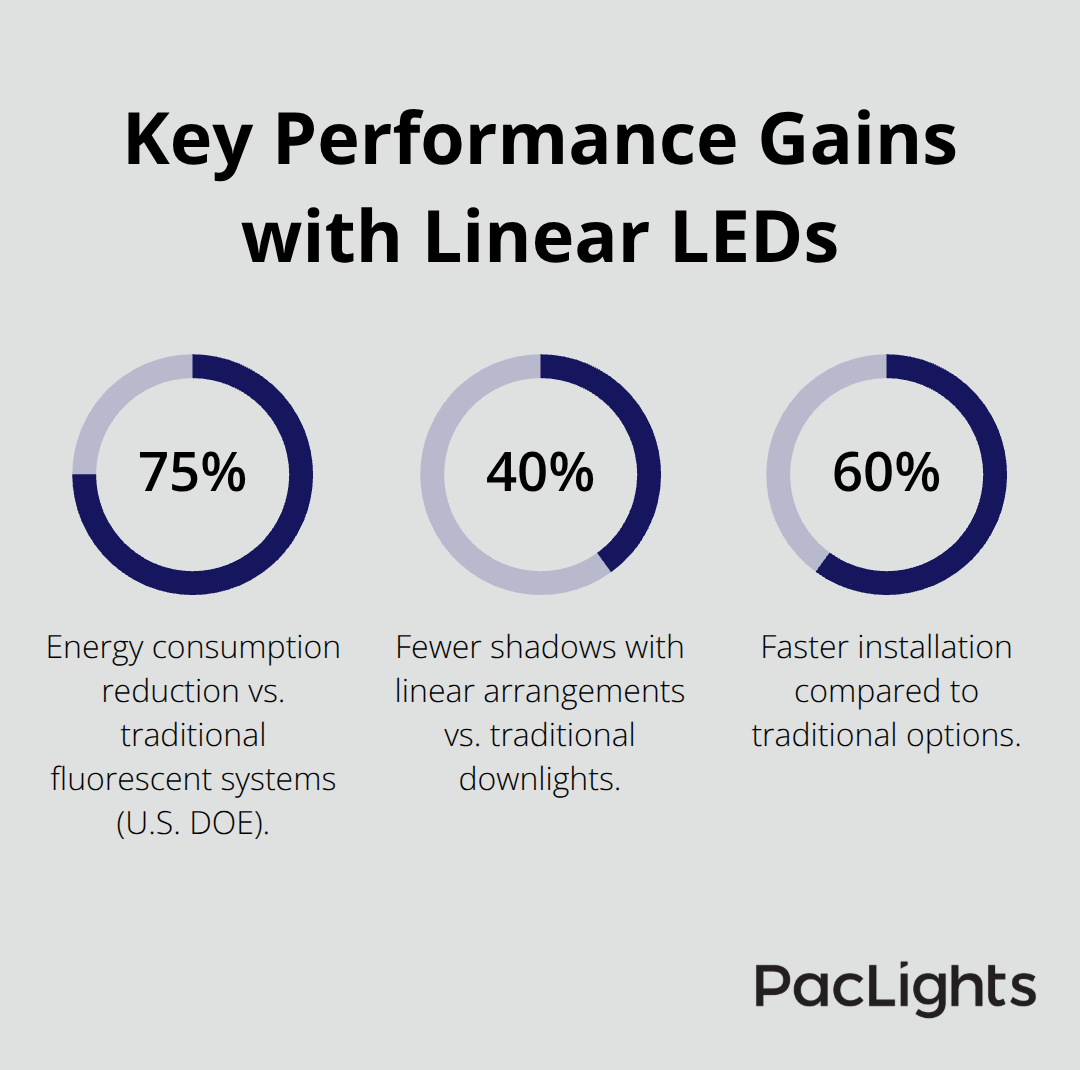
Linear LED fixtures cut energy consumption by 75% compared to traditional fluorescent systems according to the U.S. Department of Energy. A typical 4-foot linear LED draws 32 watts while it produces the same 3,200 lumens as a 64-watt fluorescent tube. This creates $180 in annual savings per fixture based on commercial electricity rates of 12 cents per kWh. Facilities with 100 linear fixtures save $18,000 yearly on electricity alone.
The 50,000-hour lifespan means replacement costs drop dramatically since traditional fluorescents need replacement every 15,000 hours.
Perfect Light Distribution Eliminates Problem Areas
Linear fixtures spread light evenly across surfaces because their elongated design covers more area than point sources. The Illuminating Engineering Society reports that linear arrangements reduce shadows by 40% compared to traditional downlights spaced at standard intervals. Manufacturing floors benefit from consistent 500-lux illumination that meets OSHA safety standards without dark zones between fixtures. Retail displays receive uniform product illumination that prevents customers from struggling to see merchandise details. Office environments achieve recommended 300-500 lux levels across entire workspaces without the hot spots and shadows that cause eye strain and reduce productivity.
Installation Speed Cuts Project Time
Modern linear systems install 60% faster than traditional options because they require fewer connection points and hardware. A single 8-foot linear fixture replaces three 2-foot fluorescent tubes, which reduces installation labor from 45 minutes to 15 minutes per equivalent coverage area. Retrofit projects benefit from fixtures designed to fit existing ceiling grids without structural modifications. Maintenance intervals extend from quarterly fluorescent tube replacements to annual inspections (freeing facility staff for other priorities while reducing service call expenses).
These performance advantages make linear fixtures the foundation for successful commercial and industrial applications across multiple sectors.
Where Linear Fixtures Excel Across Industries
Retail Spaces Drive Sales Through Strategic Illumination
Retail environments demand fixtures that showcase products while they create an inviting atmosphere for customers. Linear fixtures above merchandise aisles provide consistent 750-lux illumination that eliminates shadows on product displays (according to the Retail Industry Leaders Association). Grocery stores install linear strips under refrigerated cases to maintain 500-lux levels that help customers distinguish between similar products. Fashion retailers use linear pendant lights above racks to create uniform illumination that prevents color distortion when customers examine fabrics. Department stores report 12% sales increases when they replace fluorescent systems with linear LEDs because products appear more vibrant and appealing. The continuous light distribution from linear fixtures eliminates the striped shadow patterns that traditional point sources create on vertical displays.

Manufacturing Facilities Prioritize Safety and Productivity
Industrial warehouses require robust solutions that withstand harsh conditions while they maintain safety standards. Linear high bay fixtures at 25-30 foot heights deliver 400-500 lux at floor level, which meets OSHA requirements for safe material operations. Automotive plants install linear systems that provide consistent illumination across assembly lines where workers perform precision tasks. Food processors choose IP65-rated linear fixtures that resist moisture and chemicals while they maintain 540-lux levels required by FDA regulations. Distribution centers benefit from linear arrangements that eliminate dark zones between storage racks where forklifts operate. The uniform light distribution reduces accident rates by 23% compared to traditional metal halide systems (according to the National Safety Council).
Educational Buildings Balance Performance and Budget
Office spaces and schools need systems that support productivity while they control energy costs. Educational institutions install linear troffers in classrooms to achieve 300-500 lux levels that support tasks without glare on whiteboards. Universities report 15% improvements in student test scores after upgrades to linear LED systems that provide flicker-free illumination. Corporate offices use linear pendant lights in conference rooms to create professional environments with even facial illumination for video calls. Open office layouts benefit from linear fixtures in grid patterns that provide consistent desk-level brightness without shadows between workstations. School districts save $2.50 per square foot annually on energy costs after conversion to linear LED systems from fluorescent options.
Final Thoughts
Linear light fixtures deliver the future of commercial and industrial illumination through their combination of energy efficiency, superior light distribution, and reduced maintenance requirements. These systems cut energy consumption by 75% compared to traditional options while their 50,000-hour lifespan minimizes replacement expenses. Modern facilities eliminate shadows and dark zones that compromise safety and productivity across retail, manufacturing, and office environments.
Facilities must match fixture output to space requirements, consider mounting options, and evaluate environmental conditions when they select the right linear system. High bay fixtures serve industrial applications with harsh conditions, while troffers integrate seamlessly into office environments. Strip lights offer maximum flexibility for architectural integration and accent applications.
Smart controls and improved color rendering capabilities will drive the next generation of linear technology as integration with building management systems optimizes energy consumption based on occupancy and daylight levels (creating even greater operational savings). We at PacLights help facilities maximize their investments through comprehensive linear solutions. Our team provides expert guidance to reduce operational costs while improving illumination quality.
Disclaimer: PacLights is not responsible for any actions taken based on the suggestions and information provided in this article, and readers should consult local building and electrical codes for proper guidance.