

Office lighting directly impacts employee productivity and workplace satisfaction. Studies show that proper lighting can boost performance by up to 23% while reducing eye strain and fatigue.
Linear suspension fixtures have become the go-to solution for modern offices, offering both functional illumination and sleek design. We at PacLights help businesses select the right fixtures that balance aesthetics, efficiency, and employee comfort.
What Are Linear Suspension Fixtures and Why Do Offices Need Them
Linear suspension fixtures are LED systems that hang from the ceiling on cables or rods, delivering direct downlight and often indirect uplight through a linear form factor. These fixtures typically measure between 2 to 8 feet in length and connect in continuous runs to create seamless illumination across large spaces. The suspended design allows precise height adjustment, with most installations positioned 7 to 9 feet above the floor for optimal light distribution in standard office environments.
The Technology That Powers Linear Suspension Performance
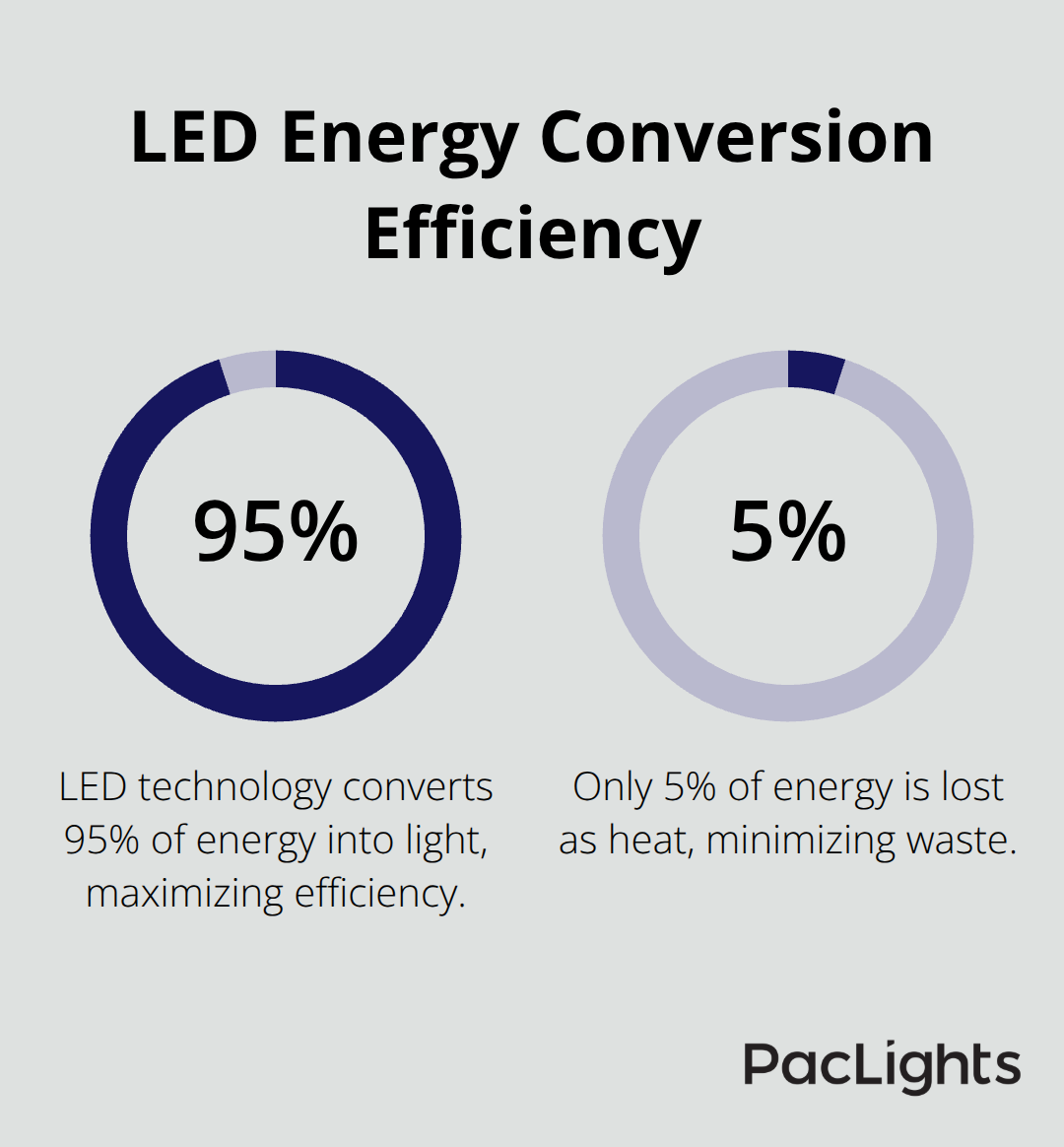
Modern linear suspension fixtures use LED technology that converts 95% of energy into light rather than heat, lasting up to 50 times longer than traditional incandescent bulbs. The fixtures incorporate advanced optics that distribute light evenly across workspaces while they minimize glare through specialized lens designs. Color temperatures between 4000K and 5000K provide the optimal balance for office productivity, with research from the Illuminating Engineering Society showing that this range enhances alertness and focus. Most quality fixtures deliver 100-150 lumens per watt, significantly outperforming fluorescent alternatives that typically achieve 60-80 lumens per watt.
Office Applications That Drive Performance Results
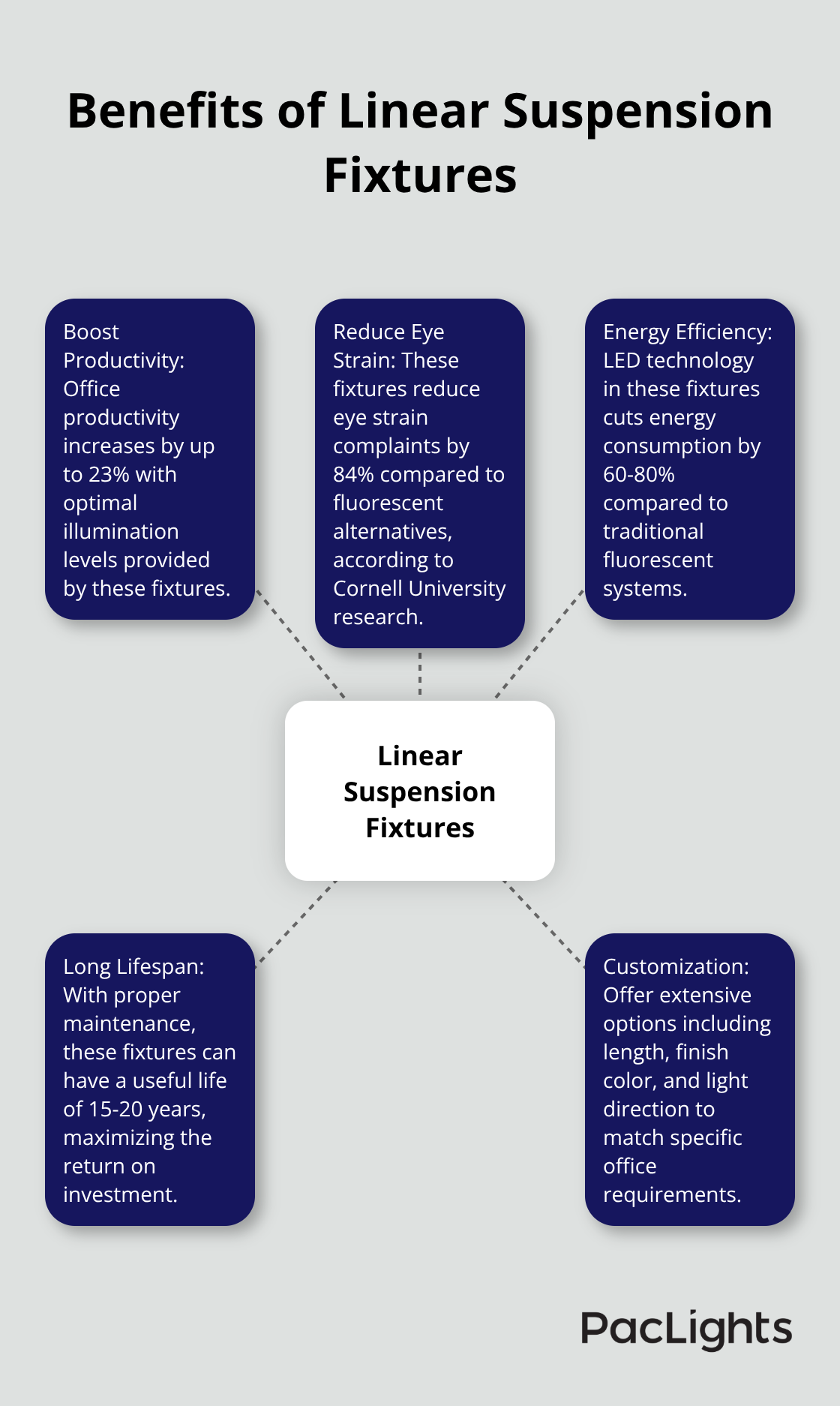
Linear suspension fixtures excel in open-plan offices where traditional recessed lights create harsh shadows and uneven illumination. The suspended design provides both task illumination for individual workstations and ambient light for collaborative areas, which reduces the need for multiple fixture types. Offices that use linear suspension systems report 84% fewer complaints about eye strain and headaches compared to spaces with standard fluorescent options (according to Cornell University research). These fixtures work particularly well above conference tables, reception desks, and workstation clusters where consistent, high-quality light is essential for productivity and visual comfort.
Design Flexibility That Adapts to Modern Workspaces
Linear suspension fixtures offer extensive customization options including length, finish color, lens type, and light direction to match specific office requirements. Architects can create continuous runs that form seamless geometric configurations across spaces, while adjustable cable suspension options accommodate sloped ceilings and unique architectural designs. The fixtures come in various styles from minimalist to decorative designs, allowing offices to maintain their aesthetic vision while achieving optimal illumination. This adaptability makes linear suspension fixtures suitable for everything from traditional corporate environments to contemporary co-working spaces.
Understanding these fundamental aspects of linear suspension fixtures sets the foundation for making informed decisions about your office illumination needs, but selecting the right fixtures requires careful consideration of several key factors specific to your workspace.
Which Specifications Matter Most for Your Office Space
Ceiling height determines everything about your linear suspension fixture selection, and most offices get this wrong from the start. Standard 8-foot ceilings require fixtures positioned 7 feet above the floor to avoid head clearance issues, while 10-foot ceilings allow optimal placement at 8.5 feet for better light distribution. The Illuminating Engineering Society recommends maintaining at least 18 inches between the fixture and ceiling for proper air circulation and heat dissipation. Spaces with 12-foot or higher ceilings benefit from multiple fixture layers or higher-output models to prevent dark spots in work areas.
Light Output Requirements That Actually Work
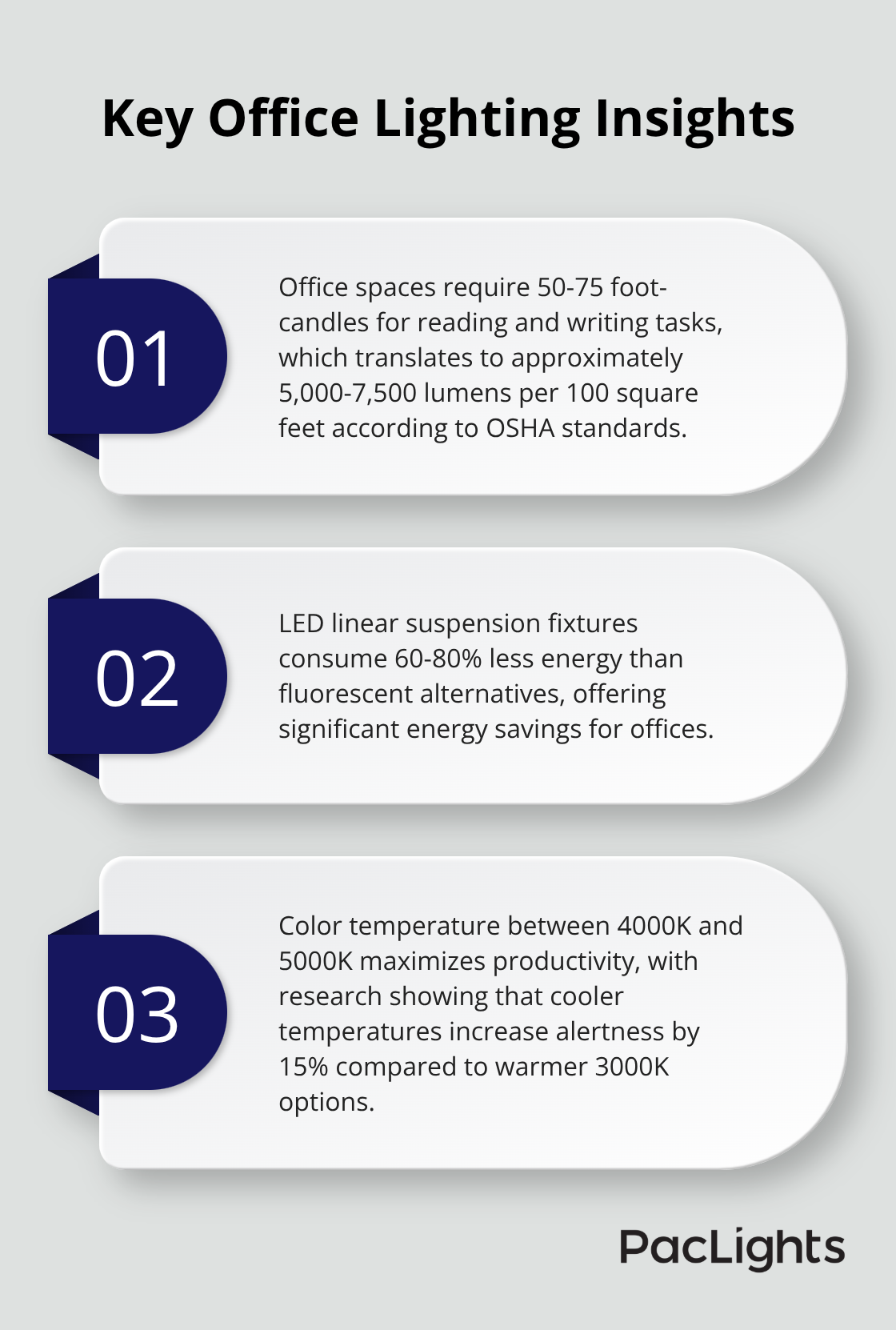
Office spaces need 50-75 foot-candles for reading and writing tasks, which translates to approximately 5,000-7,500 lumens per 100 square feet according to OSHA standards. Computer workstations require lower levels at 20-50 foot-candles to reduce screen glare, while conference rooms need adjustable output between 30-100 foot-candles for different meeting types. Color temperature between 4000K and 5000K maximizes productivity, with research showing that cooler temperatures increase alertness by 15% compared to warmer 3000K options. Fixtures that deliver 100-150 lumens per watt provide the efficiency needed for all-day operation without excessive energy consumption.
Energy Costs That Impact Your Bottom Line
LED linear suspension fixtures consume 60-80% less energy than fluorescent alternatives, with quality models lasting 50,000 hours compared to 10,000 hours for traditional options. A typical 4-foot linear LED fixture uses 40-60 watts while it delivers the same illumination as a 120-watt fluorescent system (saving approximately $180 annually per fixture in energy costs). Motion sensors and daylight controls can reduce consumption by an additional 30-50% in offices with variable occupancy patterns. The initial investment of $200-800 per fixture pays back within 2-3 years through reduced energy bills and maintenance costs.
Color Temperature Selection for Peak Performance
Different office zones require specific color temperatures to optimize employee performance and comfort. Reception areas benefit from warmer 3000K-3500K temperatures that create welcoming atmospheres, while task-oriented workspaces perform best with 4000K-5000K cooler temperatures that enhance focus and alertness. Conference rooms need tunable white fixtures that adjust from 2700K for relaxed discussions to 5000K for detailed presentations (providing flexibility for various meeting types). Research from Cornell University shows that proper color temperature selection reduces eye strain complaints by 84% compared to standard fluorescent installations.
Once you understand these specification requirements, the next step involves proper installation techniques and maintenance practices that protect your investment and maintain optimal performance over time.
How Should You Install Linear Suspension Fixtures
Electrical work for linear suspension fixtures requires licensed professionals due to high-voltage connections and structural requirements that exceed typical DIY capabilities. Most installations need dedicated 20-amp circuits to handle power loads of continuous runs, with junction boxes rated for at least 50 pounds per fixture to support weight safely. OSHA mandates that installations above 8 feet require proper scaffolding or lift equipment, and workers must follow lockout-tagout procedures when they connect electrical systems. Professional installers test each connection point for proper grounding and verify that hardware meets local codes before they energize the system.
Spacing Calculations That Prevent Dark Spots
Fixture spacing follows the 1.5-to-1 rule where distance between fixtures should not exceed 1.5 times the height above the work surface. For fixtures mounted 8 feet above desks, maximum spacing is 12 feet center-to-center to maintain uniform illumination without dark zones. The American National Standards Institute recommends that light patterns overlap by 20-30% to eliminate shadows and provide consistent foot-candle levels across workspaces. Corner installations require fixtures positioned within 3 feet of walls to prevent peripheral darkness, while conference rooms need fixtures centered over tables with 6-inch minimum clearance on all sides. Proper installation starts with careful planning and measuring the space to mark ceiling attachment points that align with structural supports.
Maintenance Schedules That Maximize Performance
LED linear suspension fixtures require cleaning every 6 months to maintain optimal light output, as dust accumulation reduces efficiency by up to 15% annually (according to Department of Energy studies). Replace any flickering fixtures immediately since this indicates driver failure that can damage other components in the circuit. Annual inspections should check cable tension, hardware, and electrical connections for signs of wear or looseness. Most quality fixtures include 5-year warranties that cover LED degradation below 70% of initial output, but proper maintenance extends useful life to 15-20 years with minimal performance loss.
Final Thoughts
Linear suspension fixtures transform office environments when you select models that deliver 100-150 lumens per watt with 4000K-5000K color temperatures. Professional installation with proper spacing ratios eliminates dark spots while quality LED systems provide 50,000-hour lifespans that recover costs within 2-3 years. These fixtures reduce eye strain complaints by 84% compared to fluorescent alternatives (according to Cornell University research).
Office productivity increases by up to 23% when employees work under optimal illumination levels of 50-75 foot-candles. Linear suspension fixtures excel at providing both task and ambient light across open-plan spaces without the harsh shadows created by recessed alternatives. The suspended design allows precise height adjustment that adapts to different ceiling configurations and workspace layouts.
Energy-efficient LED technology cuts consumption by 60-80% compared to traditional fluorescent systems while advanced controls optimize performance based on occupancy patterns. Modern linear suspension fixtures offer extensive customization options including length, finish color, and light direction to match specific office requirements. We at PacLights help businesses select optimal fixtures through comprehensive lighting assessments that reduce operational costs and enhance workplace satisfaction.
Disclaimer: PacLights is not responsible for any actions taken based on the suggestions and information provided in this article, and readers should consult local building and electrical codes for proper guidance.