

Industrial workspaces demand lighting that performs under pressure. Poor illumination leads to safety hazards, reduced productivity, and higher operational costs.
We at PacLights understand that industrial linear lighting transforms how facilities operate. The right system delivers consistent brightness, cuts energy expenses, and creates safer work environments across warehouses, manufacturing floors, and distribution centers.
Which Linear Lighting Types Work Best
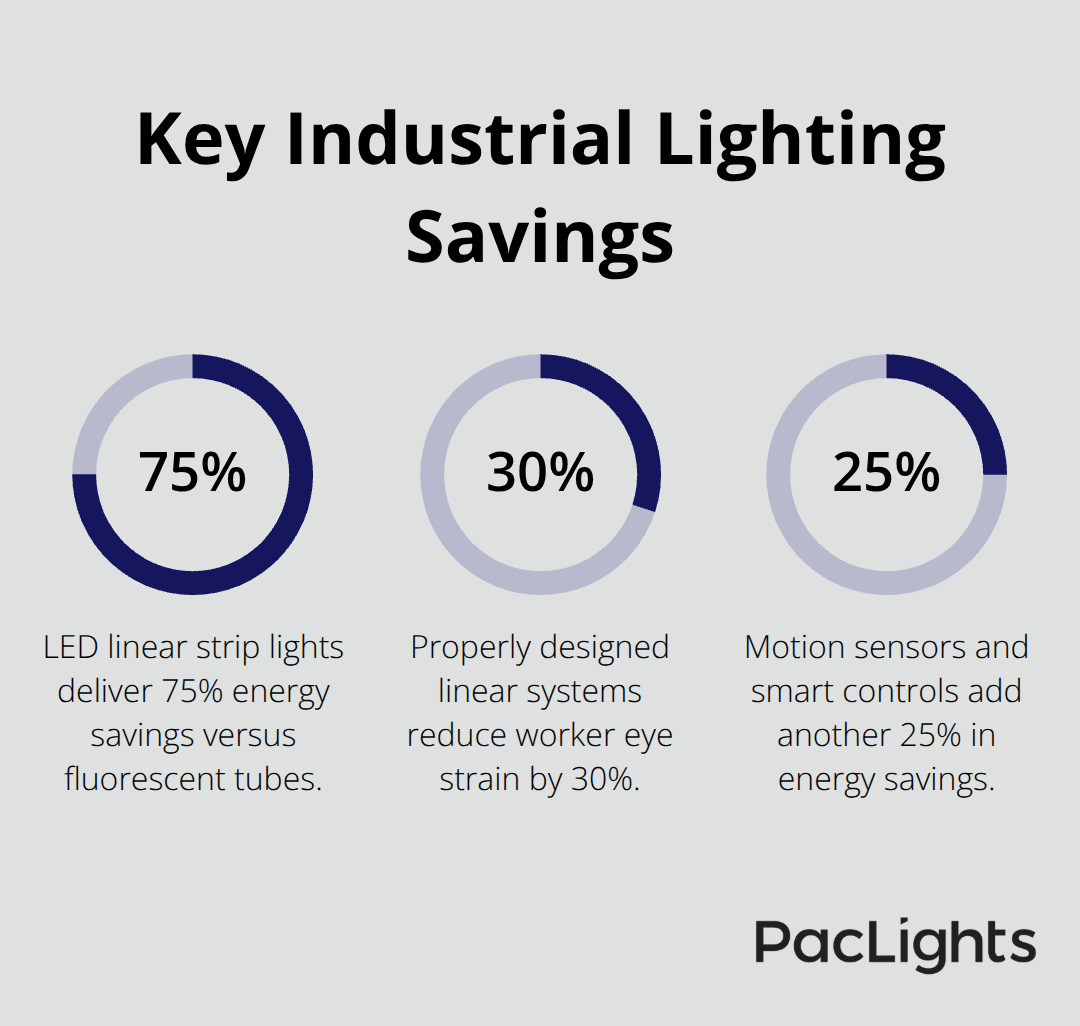
Industrial facilities require different approaches based on their specific operations. LED linear strip lights provide continuous illumination along production lines and corridors, delivering 75% energy savings compared to fluorescent tubes according to the U.S. Department of Energy. These fixtures excel in spaces that need uniform light distribution, like assembly areas where workers require consistent visibility across extended surfaces. Manufacturing plants typically install 4-foot or 8-foot strips at 8-foot intervals to achieve optimal coverage without dark spots between fixtures.
High Bay Solutions for Vertical Spaces
Linear high bay lights handle warehouse environments with heights between 15 and 40 feet. These fixtures produce 15,000 to 50,000 lumens while they maintain efficiency ratings above 130 lumens per watt. Distribution centers see productivity gains when high bays replace metal halide systems, as LED technology eliminates the warm-up time that previously left workers in dim conditions for 10-15 minutes after power interruptions. The National Renewable Energy Laboratory found that proper high bay placement reduces eye strain by 30% compared to centralized overhead systems.
Wrap Lights for General Applications
Wrap lights serve multi-purpose industrial areas where durability matters more than specialized optics. These enclosed fixtures protect LED arrays from dust, moisture, and impact damage while they deliver 3,000 to 8,000 lumens. Maintenance shops and storage areas benefit from wrap lights because they withstand harsh conditions and provide 50,000+ hour lifespans (often exceeding traditional alternatives). Smart controls integration allows these fixtures to adjust brightness based on occupancy, which creates additional energy savings of 25% in spaces with variable activity levels.
Strip Light Configurations
Strip lights adapt to various industrial layouts through flexible installation options. Facilities can mount these fixtures individually or connect them in continuous rows for seamless illumination. The modular design allows maintenance teams to replace individual sections without disrupting entire lighting systems (reducing downtime costs). Workers experience better visual comfort when strip lights operate at consistent color temperatures between 4000K and 5000K throughout their shifts.
Each type serves specific operational needs, but the real value comes from selecting fixtures that match your facility’s unique requirements and control preferences.
Why Linear Lighting Delivers Superior Industrial Performance
Industrial linear LED lighting systems generate measurable returns that traditional lighting cannot match. Facilities that switch to LED linear systems see energy cost reductions between 40-60%, which translates to annual savings of $3,000 to $5,000 for typical 10,000 square foot operations according to the U.S. Department of Energy. These systems consume up to 75% less energy than fluorescent tubes while they maintain higher light output levels.
Energy Efficiency Transforms Operating Costs
Motion sensor integration adds another 25% in energy savings when lights activate only in occupied spaces. Smart controls with daylight harvesting technology automatically adjust brightness based on natural light availability, which prevents energy waste during peak daylight hours when artificial lighting becomes unnecessary. Companies that implement these advanced control systems report immediate reductions in monthly electricity bills (often seeing payback periods under two years).
Consistent Illumination Eliminates Productivity Barriers
Linear fixtures create uniform light distribution that eliminates the dark spots and shadows that plague traditional point-source lighting. The Lighting Research Center found that properly spaced linear systems reduce eye strain by 30% compared to centralized overhead fixtures. Workers experience fewer visual disruptions when linear lights maintain consistent color temperatures between 4000K and 5000K throughout facilities.
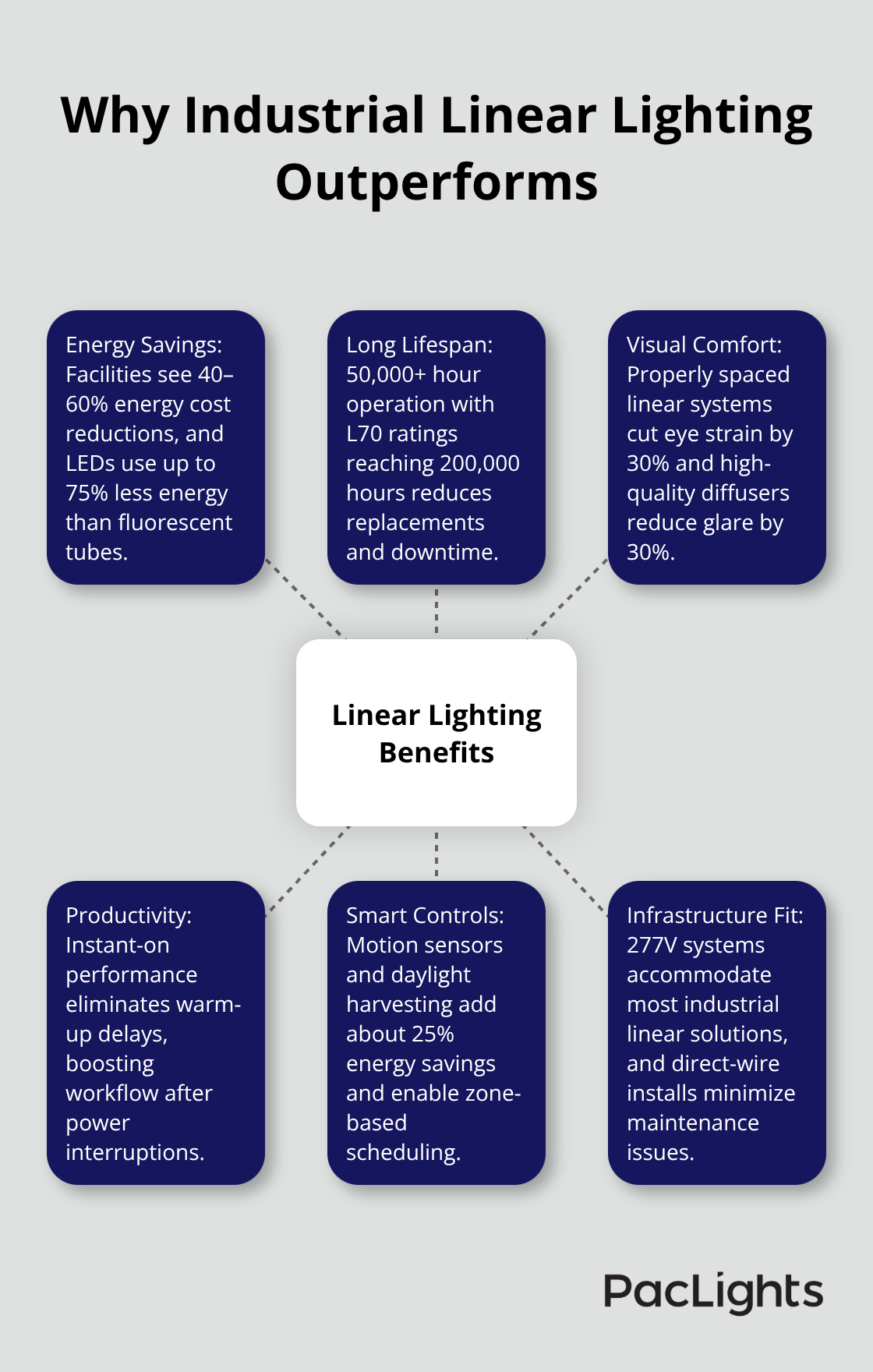
High-quality diffusers reduce glare by 30%, which creates comfortable visual environments that support extended work periods without fatigue. Manufacturing facilities report fewer quality control errors when linear lighting provides consistent illumination across assembly lines and inspection areas.
Built for Industrial Punishment
Modern linear fixtures withstand harsh industrial conditions that destroy conventional lighting within months. LED linear systems operate for 50,000+ hours with L70 ratings that reach 200,000 hours, which eliminates frequent replacement cycles that interrupt operations. These fixtures resist vibration, temperature fluctuations, and moisture exposure while they maintain consistent performance.
Maintenance costs drop significantly because linear systems require replacement every 10-15 years instead of annual fluorescent tube changes. Solid-state LED technology eliminates breakage risks and mercury contamination concerns that create safety hazards in industrial environments.
The performance advantages become clear when you evaluate your specific facility requirements and installation options.
How Do You Select the Perfect Linear System
Successful linear system selection requires precise measurements and specific performance targets rather than general estimates. Calculate your facility’s foot-candle requirements with IES recommended levels: 50-75 foot-candles for detailed work areas, 30-50 for general manufacturing, and 20-30 for storage zones. Ceiling height directly impacts lumen requirements – spaces above 20 feet need fixtures that produce 20,000+ lumens, while areas under 15 feet perform well with 8,000-15,000 lumen outputs.

Space Assessment Drives Equipment Decisions
Wall color affects efficiency by up to 50%, so light-colored surfaces require fewer fixtures than dark industrial finishes. Measure your facility’s dimensions accurately because incorrect calculations lead to over-lit or under-lit conditions that waste energy or compromise safety. Document existing electrical infrastructure since 277V systems accommodate most industrial linear LED lighting solutions without transformers (which reduces installation complexity and costs).
Smart Controls Generate Maximum Returns
Motion sensors and daylight harvesting systems create the biggest impact on operational costs after LED conversion. Occupancy sensors reduce energy consumption by 25% in variable-use areas like break rooms and storage sections, while daylight harvesting prevents waste when natural light provides adequate illumination. Networked controls allow zone-based management where different areas operate on independent schedules – production floors stay bright during shifts while administrative areas dim automatically.
Retrofit Strategy Determines Timeline Success
Existing electrical infrastructure shapes your retrofit approach and completion speed. Fluorescent-to-LED conversions typically require ballast bypass procedures that qualified electricians complete in 15-20 minutes per fixture. Direct-wire installations eliminate compatibility issues and future maintenance complications that arise from ballast failures. Plan retrofit projects during scheduled downtime because power cuts to production areas cost more than installation labor.
Control Features Maximize Operational Flexibility
Field-selectable wattage options provide flexibility without equipment changes, letting facility managers adjust 20-40-60 watt outputs based on seasonal needs or operational changes. Advanced controls integrate with building management systems to coordinate environmental controls and optimize energy consumption patterns throughout facilities.
Final Thoughts
Industrial linear lighting delivers measurable improvements that transform facility operations. Energy savings of 40-60% reduce operational costs by thousands annually, while 50,000+ hour lifespans eliminate frequent maintenance disruptions. Workers benefit from 30% less eye strain and consistent illumination that prevents quality control errors.
Safety improvements become immediate when uniform light distribution eliminates dark spots and shadows that cause accidents. The 75% energy reduction compared to fluorescent systems creates substantial cost savings that justify upgrade investments within two years. Smart controls and motion sensors add another 25% in energy savings while they provide operational flexibility through zone-based management.
These systems integrate with existing infrastructure to optimize performance across different facility areas (making upgrades straightforward for most operations). We at PacLights help facilities evaluate their specific needs and select appropriate fixtures for their unique requirements. Our team works with companies to identify the most effective solutions that improve working conditions and maximize operational returns.
Disclaimer: PacLights is not responsible for any actions taken based on the suggestions and information provided in this article, and readers should consult local building and electrical codes for proper guidance.