

Industrial spaces demand lighting that can handle constant wear and harsh conditions. An industrial cylinder ceiling light delivers exactly that-built tough for warehouses, factories, and loading docks where standard fixtures fail.
At PacLights, we’ve seen firsthand how the right fixture transforms a facility’s safety and efficiency. This guide walks you through what makes these lights different and how to pick the best one for your space.
Why Cylinder Lights Outlast and Outperform Standard Fixtures
Industrial cylinder ceiling lights are built from materials and designs that standard fixtures simply cannot match. The housing typically uses 18–20 gauge steel or heavy-duty aluminum with powder-coated finishes rated for 10–15 years of durability, while cheaper alternatives fail in 2–3 years. Stainless steel variants excel in aggressive washdown environments where corrosion would destroy standard housings. The thermal management is equally critical-aluminum heat sinks and thermally rated LED drivers preserve lumen output across 50,000+ hour lifespans, which translates to roughly 5–10 years of operation in most facilities.
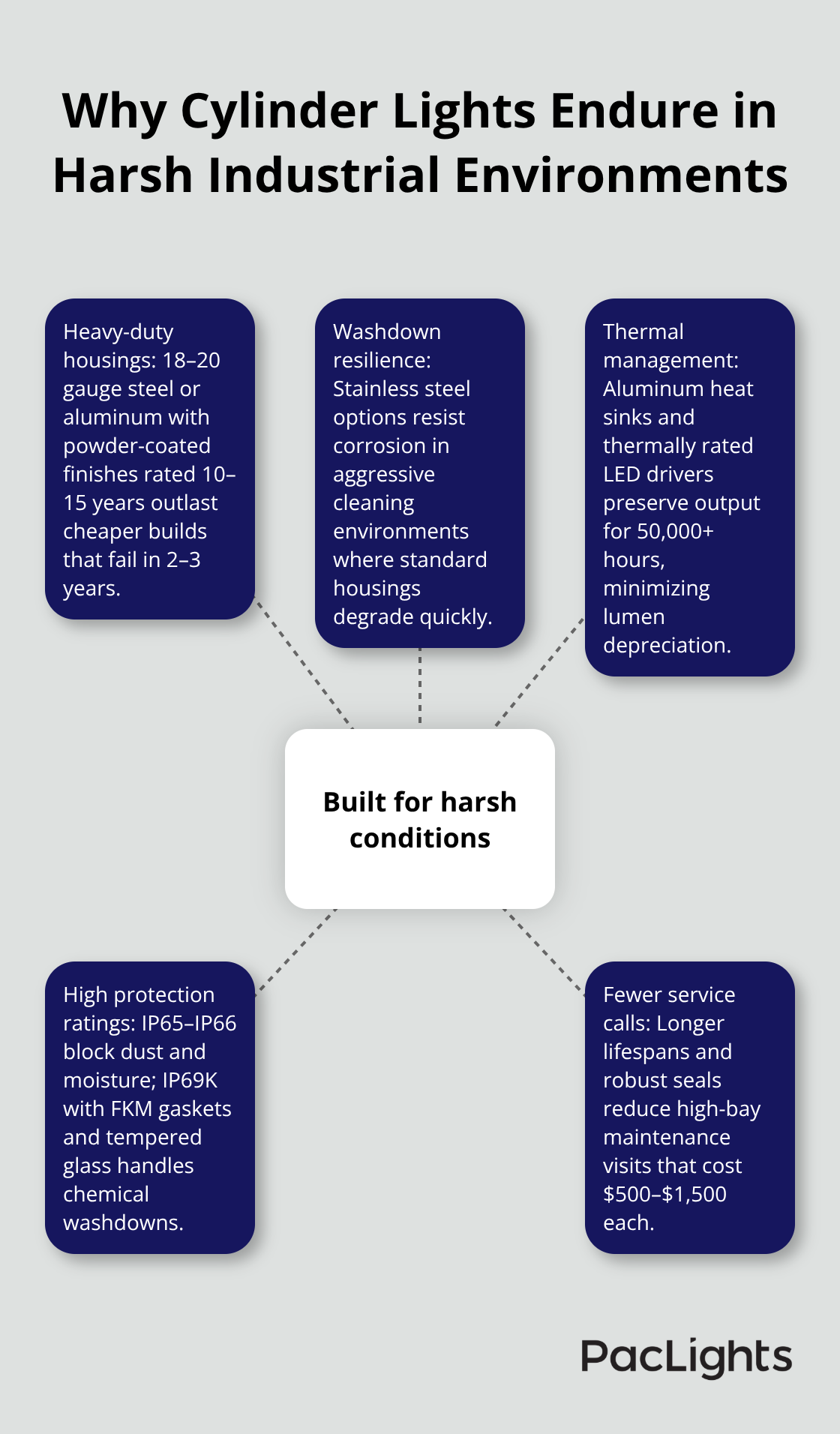
This matters because a single maintenance visit to a high-bay space can cost $500–$1,500 due to equipment rental and downtime; fewer replacements mean real money saved. The protection ratings tell the story too-IP65–IP66 baselines protect against dust and moisture, while IP69K ratings handle aggressive washdowns with FKM gaskets and tempered glass that resist chemicals and frequent cleaning. When you specify a fixture, demand precise details: coating thickness in microns, housing gauge, and temperature ratings. Vague durability claims are worthless.
Light Distribution That Reduces Dead Zones and Shadows
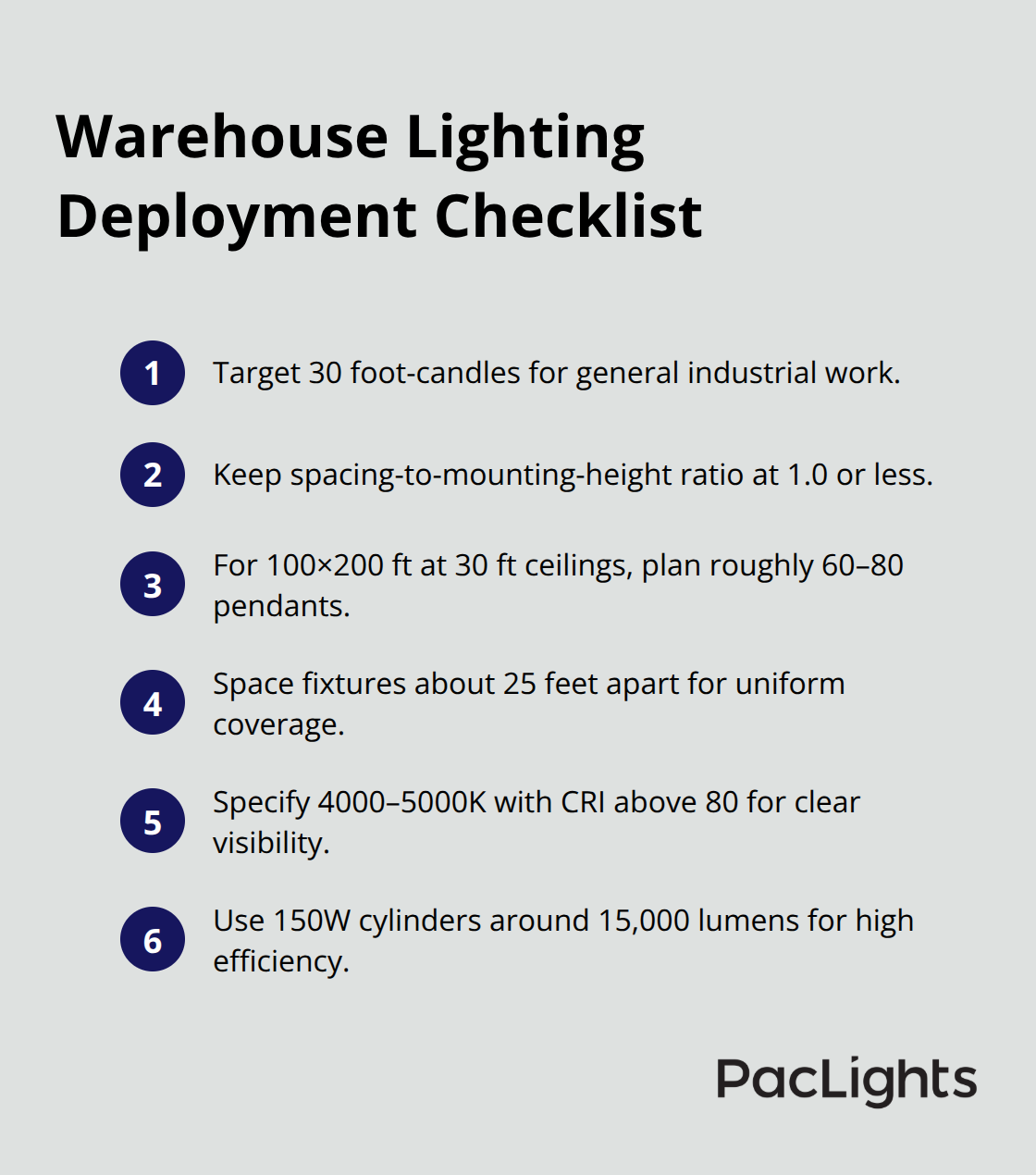
Cylinder pendants spread light multidirectionally across large areas, which eliminates the dead zones and shadows common with standard HID or fluorescent fixtures. The Illuminating Engineering Society recommends 30 foot-candles for general industrial work, and cylinder pendants deliver this uniform illumination efficiently. In a typical 100-foot by 200-foot warehouse with 30-foot ceilings, you would deploy roughly 60–80 pendants spaced about 25 feet apart using a spacing-to-mounting-height ratio of 1.0 or less. This spacing ratio prevents energy waste and ensures consistent brightness across the floor. For manufacturing floors where defect detection matters, specify color temperature at 4000–5000K with a color rendering index above 80 to improve visibility and reduce eye strain over long shifts. A 150-watt LED cylinder fixture outputs around 15,000 lumens-far higher efficiency than the 400-watt metal halide equivalents that once dominated warehouses. This concentrated, focused illumination on work surfaces drives immediate productivity gains and fewer safety incidents the moment new fixtures go live.
Energy Savings That Compound Over Years
LED cylinder pendants cut energy consumption by 50–70% compared with HID lamps, according to the U.S. Department of Energy. A 100,000-square-foot warehouse running 24/7 with older HID or fluorescent fixtures costs $50,000–$80,000 annually for lighting alone; upgrading to LED cylinders can slash that by $25,000–$56,000 per year. For facilities operating 12–16 hours daily, the energy savings typically pay back the upgrade investment in 2–4 years. Motion sensors and daylight harvesting cut energy use by an additional 20–60%, and the economics become undeniable.
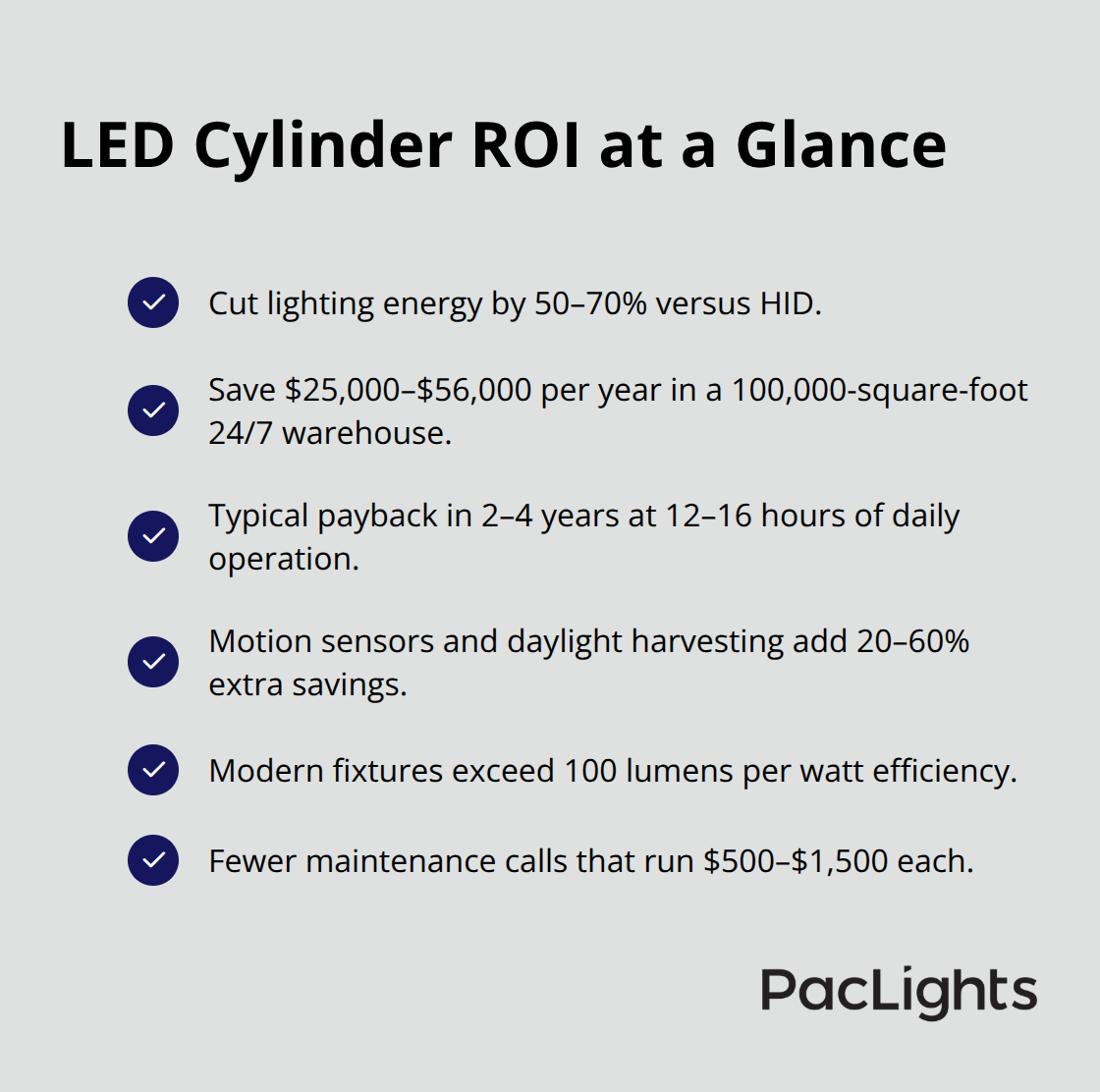
Modern LED fixtures deliver over 100 lumens per watt, compared to far lower efficiency from older technologies. The long lifespan eliminates the constant replacement cycle that drains labor budgets and creates unplanned downtime. Energy costs represent 17–20% of operating expenses in industrial facilities, making lighting one of the few controllable costs where you can see immediate, measurable returns. Utility rebates and incentives for upgrading to energy-efficient fixtures often offset a portion of initial capital costs, further improving the financial picture.
Selecting the Right Fixture for Your Facility
The specifications you choose determine whether your upgrade delivers real results or falls short. Start with a lighting audit to measure your current space-ceiling height, floor dimensions, and ambient temperature all shape which fixtures work best. PacLights offers free lighting layout designs and ROI assessments that quantify exact savings based on your hours of operation and energy rates. Insist on precise technical details from any supplier: coating thickness in microns, housing gauge, temperature ratings, and lumen output per watt. Vague marketing language hides poor performance. For warehouses, try 4000–5000K color temperature with CRI above 80 to support both general visibility and task accuracy. In high-temperature environments (70–80°C), verify that LED drivers and capacitors carry thermal ratings; heavy-duty aluminum heat sinks extend lifespan toward the full 50,000+ hours. Protection ratings matter too-IP65–IP66 handles most indoor industrial spaces, while IP69K protects against washdown chemicals and frequent cleaning. The spacing-to-mounting-height ratio of 1.0 or less prevents dead zones and energy waste across your facility.
Where Cylinder Lights Win in Real Industrial Spaces
Warehouses and Distribution Centers: Cutting Costs and Eliminating Dark Zones
Warehouses and distribution centers operate around the clock, and lighting costs eat into margins fast. A 100,000-square-foot facility running 24/7 with older HID or fluorescent fixtures spends $50,000–$80,000 annually on lighting alone. Upgrading to LED cylinders cuts that by $25,000–$56,000 per year, according to the U.S. Department of Energy. The real advantage extends beyond energy savings. Cylinder pendants spaced 25 feet apart at 30-foot ceilings eliminate the dark corners and shadows where accidents happen and inventory gets misplaced. Uniform 30 foot-candles across the entire floor means forklifts move faster, staff spot damaged goods immediately, and you avoid the costly rework that comes from poor visibility. In high-temperature warehouse environments, IP65–IP66 rated cylinders with aluminum heat sinks maintain full lumen output even when ambient temperatures climb toward 70–80°C, where cheaper fixtures dim and fail.
Manufacturing Floors: Precision Lighting for Defect Detection
Manufacturing floors demand even stricter performance. Defect detection on assembly lines requires 4000–5000K color temperature with CRI above 80-standard fixtures simply cannot deliver this clarity. A single preventable accident costs $40,000–$100,000 in medical bills, downtime, and fines, making proper lighting a non-negotiable investment. Cylinder pendants reduce maintenance labor costs dramatically: a high-bay maintenance visit runs $500–$1,500 due to equipment rental and downtime, but a 50,000-hour LED lifespan means you avoid the constant replacement cycle that plagues HID systems.
Parking Garages and Loading Docks: Durability Under Extreme Conditions
For parking garages and loading docks, the durability story becomes even more critical. Vibration from heavy truck traffic, temperature swings, and moisture exposure destroy standard fixtures within years. Industrial-grade cylinder housings with 18–20 gauge steel or heavy-duty aluminum and powder-coated finishes rated 10–15 years handle these conditions without failure. Loading docks especially benefit from IP69K ratings and FKM gaskets that resist the pressure washdowns and chemical exposure that corrode weaker alternatives. The focused, multidirectional light spread means you need fewer fixtures to cover the same area, cutting installation complexity and ongoing maintenance burden.
These real-world performance gains across warehouses, manufacturing, and high-traffic zones reveal why selecting the right fixture specifications matters so much. The next section walks you through the exact features that separate fixtures that deliver results from those that disappoint.
What Specifications Actually Matter When Buying Cylinder Lights
Housing Materials and Coating Quality Set the Foundation
Demand precision from your supplier, and you’ll get fixtures that perform for a decade. Accept vague marketing claims, and you’ll replace dead units every three years. Housing gauge and coating thickness in microns separate industrial-grade cylinders from cheap knockoffs. Specify 18–20 gauge steel or heavy-duty aluminum with powder-coated finishes rated for 10–15 years of durability; cheaper alternatives use thinner gauge housings and finishes that degrade to bare metal in 2–3 years. Stainless steel options cost more but survive aggressive washdown environments where standard coatings corrode.
Ask suppliers for specific coating thickness measurements and temperature test reports, not marketing language about durability. A vague durability claim hides poor performance and masks the real lifespan you’ll experience in your facility.
Temperature Ratings and Thermal Management Preserve Output
Temperature ratings matter equally in high-temperature spaces (70–80°C). LED drivers and capacitors must carry thermal certifications, and aluminum heat sinks must be oversized to maintain full lumen output across the entire 50,000-hour lifespan. Without proper thermal management, fixtures dim and fail long before their rated life ends.
A 150-watt LED cylinder outputs roughly 15,000 lumens at over 100 lumens per watt efficiency. This delivers the brightness needed for both general warehouse lighting and detailed assembly work without excessive power draw. For manufacturing floors where defect detection drives safety, specify 4000–5000K color temperature with color rendering index above 80, which the Illuminating Engineering Society recognizes as critical for task accuracy and eye comfort over long shifts.
Protection Ratings Control Maintenance Costs
Protection ratings translate directly to maintenance frequency and total cost of ownership. IP65–IP66 ratings handle moisture and dust in most indoor industrial spaces, while IP69K ratings are mandatory for loading docks and washdown areas where pressure cleaning and chemical exposure occur regularly. Verify that gaskets use FKM material and glass is tempered to resist thermal shock and corrosive cleaners.
A single maintenance visit to a high-bay space costs $500–$1,500 due to equipment rental and downtime. Proper protection ratings reduce these visits dramatically over the fixture’s life.
Installation Flexibility and Maintenance Access
Installation flexibility determines whether your retrofit fits your ceiling constraints or requires expensive structural modifications. Adjustable suspensions accommodate ceilings above 25 feet, and 3–8 inch diameter options fit varied mounting situations. Modular LED drivers and serviceable components reduce downtime when problems occur, while sealed units force complete fixture replacement.
Spacing-to-mounting-height ratios of 1.0 or less prevent dead zones and energy waste. In a 100-foot by 200-foot warehouse with 30-foot ceilings, this ratio means deploying roughly 60–80 pendants spaced 25 feet apart to hit the recommended 30 foot-candles uniformly.
Quantify Savings Before You Commit Capital
Request free layout designs and ROI assessments from suppliers to verify exact fixture counts and energy savings before you commit capital. These assessments quantify real returns based on your specific hours of operation and local energy rates, eliminating guesswork from the purchasing decision. PacLights provides these assessments to help you understand the exact financial impact of an upgrade tailored to your facility’s needs.
Final Thoughts
Industrial cylinder ceiling lights deliver measurable advantages that standard fixtures cannot match: 50–70% energy savings, 50,000-hour lifespans that eliminate constant replacement cycles, and uniform illumination that reduces safety incidents and boosts productivity. The durability story is equally compelling-18–20 gauge steel or heavy-duty aluminum housings with 10–15 year powder-coated finishes outperform cheaper alternatives that fail in 2–3 years. When you factor in the $500–$1,500 cost of each high-bay maintenance visit, the financial case for upgrading becomes undeniable.
Choosing the right fixture requires precision, not marketing language. Demand specific details: coating thickness in microns, housing gauge, temperature ratings for LED drivers and capacitors, and lumen output per watt. Verify protection ratings match your environment-IP65–IP66 for most indoor spaces, IP69K for washdown areas-and confirm that color temperature sits at 4000–5000K with CRI above 80 for manufacturing floors where defect detection matters.
The upgrade path starts with a lighting audit of your facility’s ceiling height, floor dimensions, and operating hours. We at PacLights provide free lighting layout designs and ROI assessments that quantify exact savings based on your specific energy rates and usage patterns, eliminating guesswork from the decision.
Disclaimer: PacLights is not responsible for any actions taken based on the suggestions and information provided in this article, and readers should consult local building and electrical codes for proper guidance.