

Modular cooling units are becoming standard in data centers, server rooms, and industrial facilities. But lighting these compact, temperature-controlled spaces presents real challenges that most operators overlook.
At PacLights, we’ve seen firsthand how poor lighting integration leads to safety risks, maintenance headaches, and wasted energy. This guide walks you through selecting, installing, and optimizing lighting solutions that actually work in these demanding environments.
What Makes Lighting Different in Modular Cooling Units
The Unique Constraints of High-Density Thermal Environments
Modular cooling units operate in environments that demand precision from every component. These self-contained systems manage heat in data centers, server rooms, and industrial facilities where traditional HVAC infrastructure either doesn’t exist or can’t keep pace with equipment density. The cooling unit itself occupies minimal floor space while handling intense thermal loads, often in rack configurations exceeding 10 kW per rack. This density creates a fundamentally different lighting problem than standard commercial spaces. You cannot simply install fixtures designed for offices or warehouses and expect them to perform. The temperature fluctuations, limited clearance, and integration requirements mean lighting must work within strict physical and thermal constraints while maintaining visibility for maintenance technicians who need reliable illumination to diagnose and repair equipment quickly.
Why Heat Generation Matters More Than You Think
The real challenge isn’t just fitting a fixture into a tight space-it’s managing heat generation at a time when every watt of cooling capacity matters. Traditional fluorescent and HID lighting convert up to 90% of consumed energy into heat, which means they actively work against your cooling system by forcing it to work harder. LED fixtures solve this problem dramatically, using up to 80% less energy than older technologies while producing minimal ambient heat.
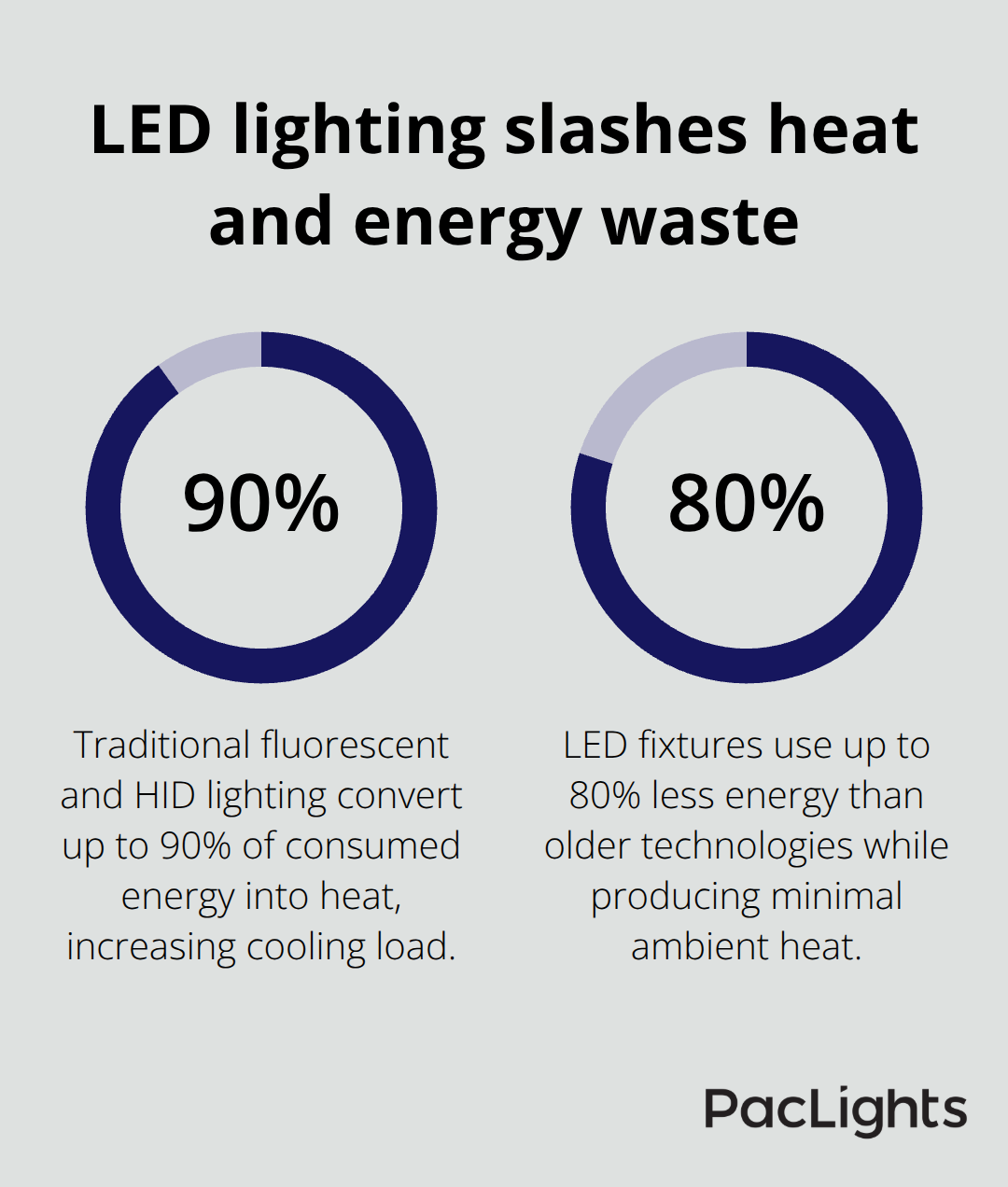
In high-density environments, lighting can account for 3-5% of non-IT energy use, making it a legitimate lever for reducing operational costs.
Transforming Lighting from Liability to Asset
LED heat is convective rather than radiant, which means HVAC systems can manage it instead of simply adding to room temperature. Research from Energy and Buildings found that integrating LED lighting with HVAC heat recovery achieved removal rates of 70.3% in summer conditions, reducing indoor cooling loads by 7.5% while simultaneously lowering heating demands. This integration approach transforms lighting from a thermal liability into a thermal asset. For modular cooling units, this distinction matters enormously.
Selecting Fixtures Built for High-Density Performance
Fixtures with passive thermal management and robust heat dissipation through aluminum heat sinks and metal-core boards prevent hotspots near your cooling equipment. Standardized modular fixtures with identical mounting interfaces and connector types simplify future expansions without forcing costly retrofits. The goal is straightforward: deploy LED fixtures designed for high-density thermal environments from the start, then layer in smart controls like motion sensors and daylight harvesting to cut non-IT energy use by 40-60% according to DOE guidance. This combination of efficient fixtures plus adaptive controls means modular cooling units operate at their intended efficiency rather than fighting against lighting that generates unnecessary heat and complexity.
With the right fixtures in place, your attention shifts to how you install and optimize them for maximum performance.
Choosing LED Fixtures That Actually Perform in High-Density Environments
Passive Thermal Management as the Foundation
LED fixtures designed for modular cooling units must handle temperature swings, tight clearances, and thermal constraints that standard commercial lighting cannot manage. The critical specification is passive thermal management through aluminum heat sinks and metal-core boards that conduct heat away from the LED junction without relying on active cooling fans. Active cooling adds complexity, noise, and failure points you simply cannot afford in these environments. Fixtures with junction temperatures above 85°C degrade faster and lose light output, so thermal performance directly impacts lifespan and reliability.
When you select fixtures, verify that the manufacturer provides thermal resistance ratings and actual junction temperature data under worst-case conditions, not marketing claims. In high-density racks exceeding 10 kW per rack, passive thermal management becomes non-negotiable because every watt of heat your lighting generates forces your cooling system to work harder. Quality fixtures with robust heat dissipation ensure that thermal load stays minimal while maintaining the brightness levels technicians need for safe maintenance work.
Standardization Prevents Costly Retrofit Traps
Standardized modular fixtures with identical mounting interfaces, connector types, and electrical specifications prevent the retrofit trap that catches most operators. When you standardize across your facility from day one, future expansions cost 3-5 times less than retrofitting mismatched fixtures into existing infrastructure. Quick-release fasteners on quality fixtures cut maintenance downtime during reconfigurations, which matters enormously when you need to swap equipment quickly.
This standardized approach scales across multiple sites and edge deployments, enabling rapid upgrades without disruptive retrofits that pull technicians away from core operations.
Smart Controls Multiply Efficiency Gains
Smart controls integrated at installation time multiply the efficiency gains from LED hardware alone. Motion sensors and daylight harvesting cut non-IT energy use by 40-60% according to DOE guidance, but only if you deploy them alongside the fixture selection process rather than bolting them on later. Networked lighting controls let you align lighting schedules with cooling cycles and workload patterns, automatically adjusting zones as capacity grows without manual intervention.
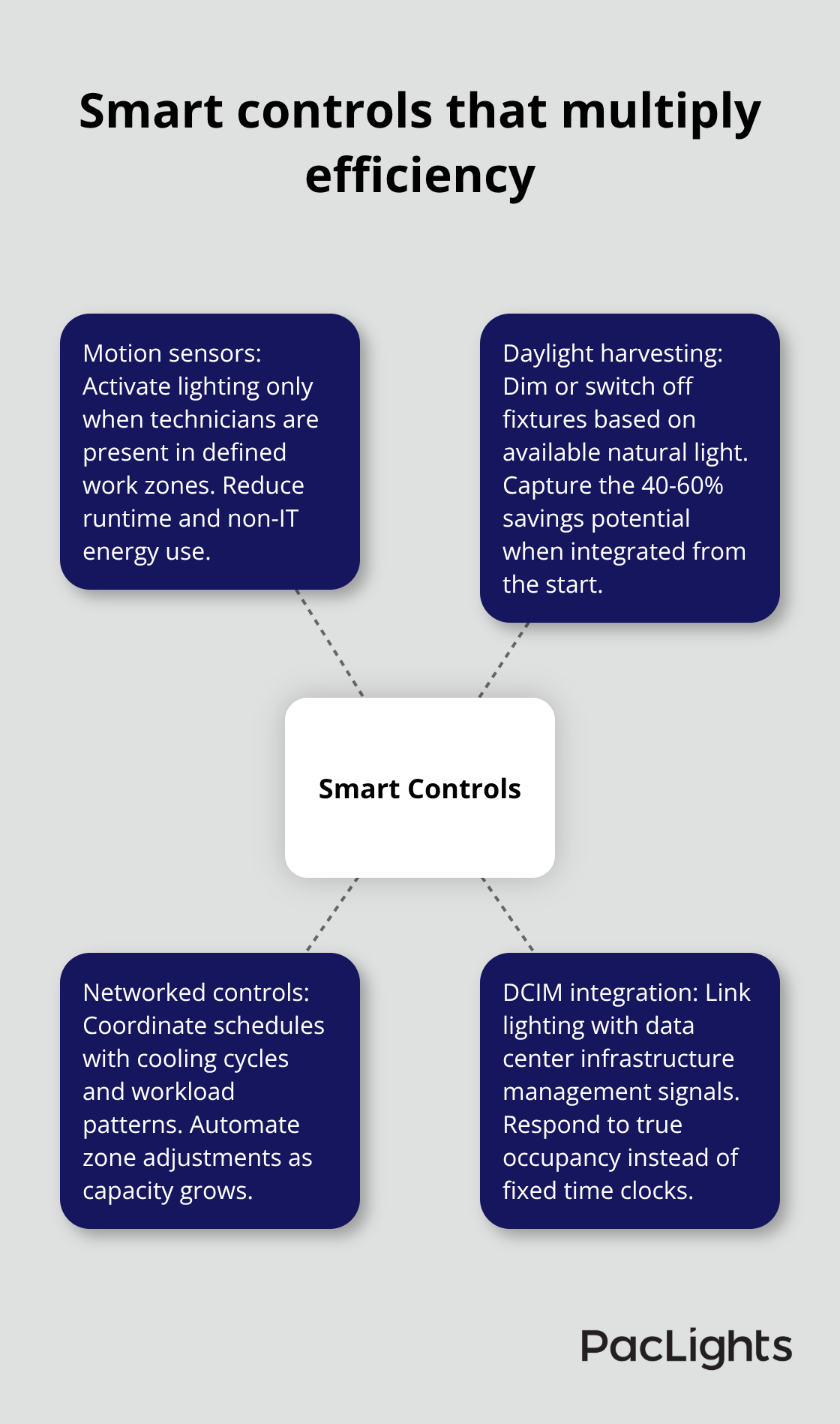
Integrating controls with your data center infrastructure management system means your lighting responds to actual occupancy rather than running on fixed schedules that waste energy during off-peak hours. This integration approach transforms lighting from a thermal liability into an asset that supports your cooling system’s efficiency targets.
Planning Your Control Strategy
The combination of efficient LED fixtures with passive thermal management plus adaptive smart controls creates a foundation for reliable operation. Your next step involves planning how you’ll actually install these fixtures and optimize their placement to maximize coverage while minimizing wasted light in corridors and server aisles.
Installing and Optimizing Lighting for Real-World Performance
Measure Before You Install
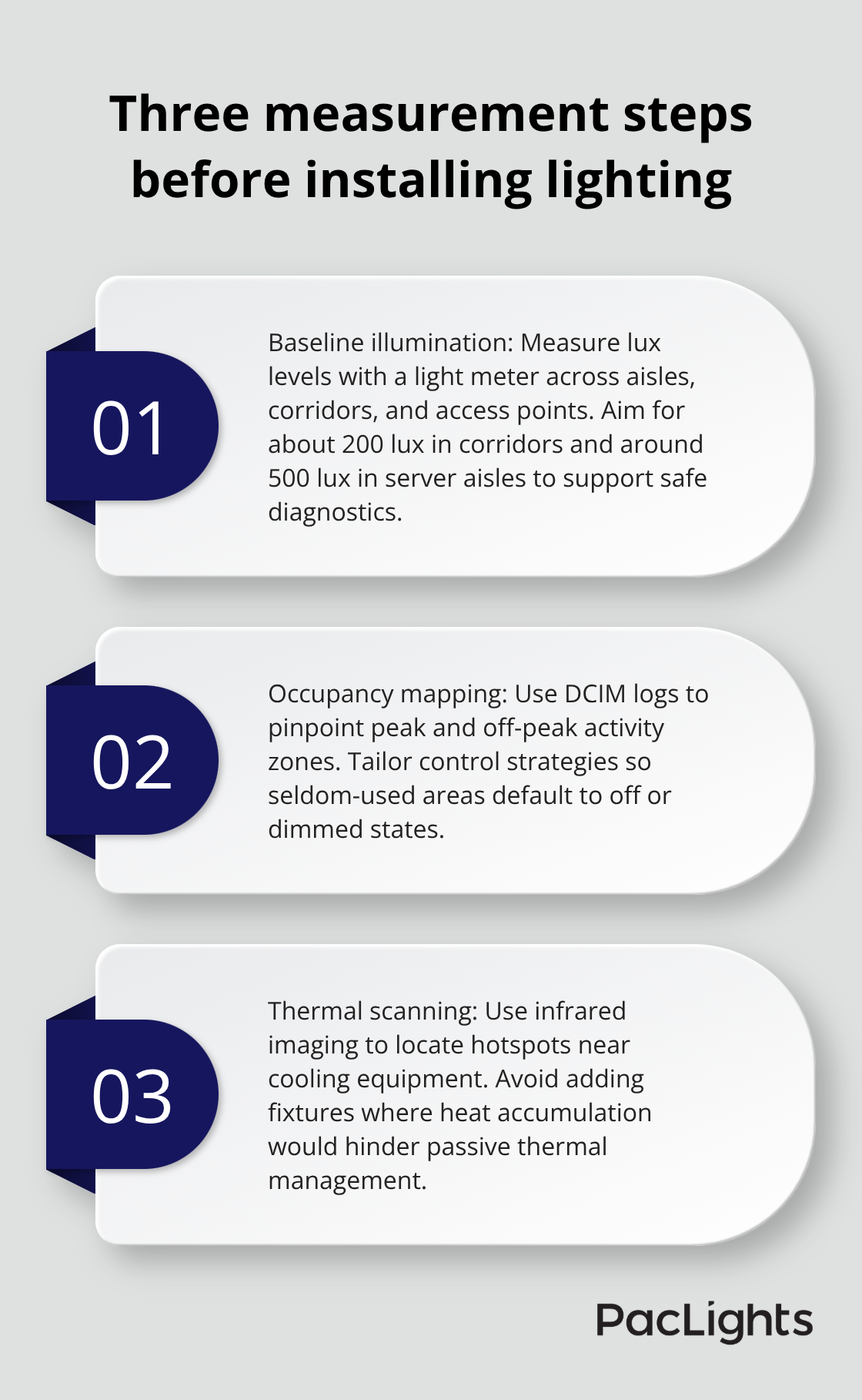
Start your installation with a baseline audit of your modular cooling unit’s actual lighting requirements. Measure illumination levels in server aisles, corridors, and equipment access points using a light meter, not estimates. You’ll likely find that corridors need 200 lux instead of the 500+ lux many facilities default to, while server aisles serving maintenance work require 500 lux for safe diagnostics. This measurement step identifies fast payback targets immediately.
Map your facility’s occupancy patterns using data center infrastructure management logs to understand when technicians actually access different zones. A 24/7 continuously occupied facility demands different control strategies than one with peak-hour patterns, and mismatching your approach wastes energy and money. Use thermal imaging alongside occupancy mapping to identify heat hotspots near cooling equipment where you should avoid adding any unnecessary fixtures or where passive thermal management becomes absolutely critical. These three data points-illumination levels, occupancy patterns, and thermal zones-form the foundation for placement decisions that actually work.
Deploy Controls During Initial Installation
Networked lighting controls must go in during initial installation, not as an afterthought retrofit. Motion sensors and daylight harvesting integrated from day one achieve the 40-60% energy reductions that DOE guidance documents, but retrofitting controls into existing fixtures costs significantly more and often delivers worse results. Position motion sensors to cover actual work zones where technicians need reliable illumination, not empty corridors where motion detection becomes a liability.
Integrate your lighting controls with your cooling system’s scheduling logic so that lighting automatically adjusts as thermal loads change throughout the day. This synchronization prevents the common problem where lighting runs at full brightness during low-capacity periods while cooling equipment idles, wasting both systems’ efficiency potential.
Maintain Sensor Performance Over Time
For modular cooling units with standardized fixture interfaces, networked controls simplify maintenance dramatically because fixture replacements maintain compatible protocols without requiring system reconfiguration. Establish a maintenance schedule that includes quarterly checks of sensor responsiveness and daylight harvesting calibration, since dust accumulation on sensors degrades performance faster than most operators expect.
When you upgrade or reconfigure your modular unit, your standardized approach means lighting adapts quickly to new rack layouts without the retrofit costs that plague mismatched installations. Dust and thermal cycling affect sensor accuracy over months, so regular calibration keeps your energy savings on track and prevents the gradual performance drift that catches most facilities off guard.
Final Thoughts
Select LED fixtures with passive thermal management and standardized interfaces from day one to avoid retrofit costs that multiply by 3-5 times later. Deploy smart controls during initial installation rather than afterward, since networked motion sensors and daylight harvesting achieve the 40-60% energy reductions that DOE guidance documents only when integrated from the start. Baseline your facility with actual measurements of illumination levels, occupancy patterns, and thermal zones before placing a single fixture, and these three decisions compound measurably over time.
LED fixtures reduce lighting energy use by up to 80% compared with fluorescent and HID systems while generating minimal heat that forces your cooling equipment to work harder. In high-density environments where lighting accounts for 3-5% of non-IT energy use, this efficiency translates directly to lower electricity bills and extended equipment lifespan. Standardized modular cooling units lighting with compatible controls means future expansions happen without disruptive retrofits, keeping your technicians focused on core operations.
We at PacLights help facilities move from planning to implementation through free lighting layout designs and ROI assessments that quantify your specific savings potential. Our energy-efficient LED fixtures include optional daylight and motion controls plus advanced networked lighting controls tailored to modular cooling environments. Contact PacLights to discuss your facility’s lighting requirements and receive a customized assessment.
Disclaimer: PacLights is not responsible for any actions taken based on the suggestions and information provided in this article, and readers should consult local building and electrical codes for proper guidance.