

Architectural track lights have transformed how we illuminate spaces, offering unmatched flexibility for both commercial and residential applications. These versatile systems adapt to changing needs through adjustable fixtures, modular configurations, and advanced controls.
We at PacLights see growing demand for lighting solutions that evolve with spaces rather than constraining them. Modern track systems deliver this adaptability while maintaining professional aesthetics and energy efficiency.
How Do Architectural Track Lights Actually Work
Architectural track lights operate through a continuous electrical rail system that powers individual fixtures positioned anywhere along its length. The track contains multiple conductors that carry low-voltage or line-voltage electricity to specialized adapters on each light fixture. This design allows users to add, remove, or reposition fixtures without rewiring, which makes it superior to traditional fixed installations.
Core System Components
The track itself serves as both a mount and electrical conductor, typically available in 4-foot and 8-foot sections that connect seamlessly. Modern systems use three-circuit tracks that enable independent control of different fixture groups. Track heads contain the actual light sources and attach via twist-lock or magnetic connectors.
Power feeds supply electricity to the track through end feeds, center feeds, or flexible feeds that accommodate various installation scenarios. Quality tracks feature aluminum construction with copper conductors rated for 20-amp circuits (supporting up to 2,400 watts of power). Professional-grade systems maintain consistent electrical contact even when fixtures move along the track.
Voltage and Power Options
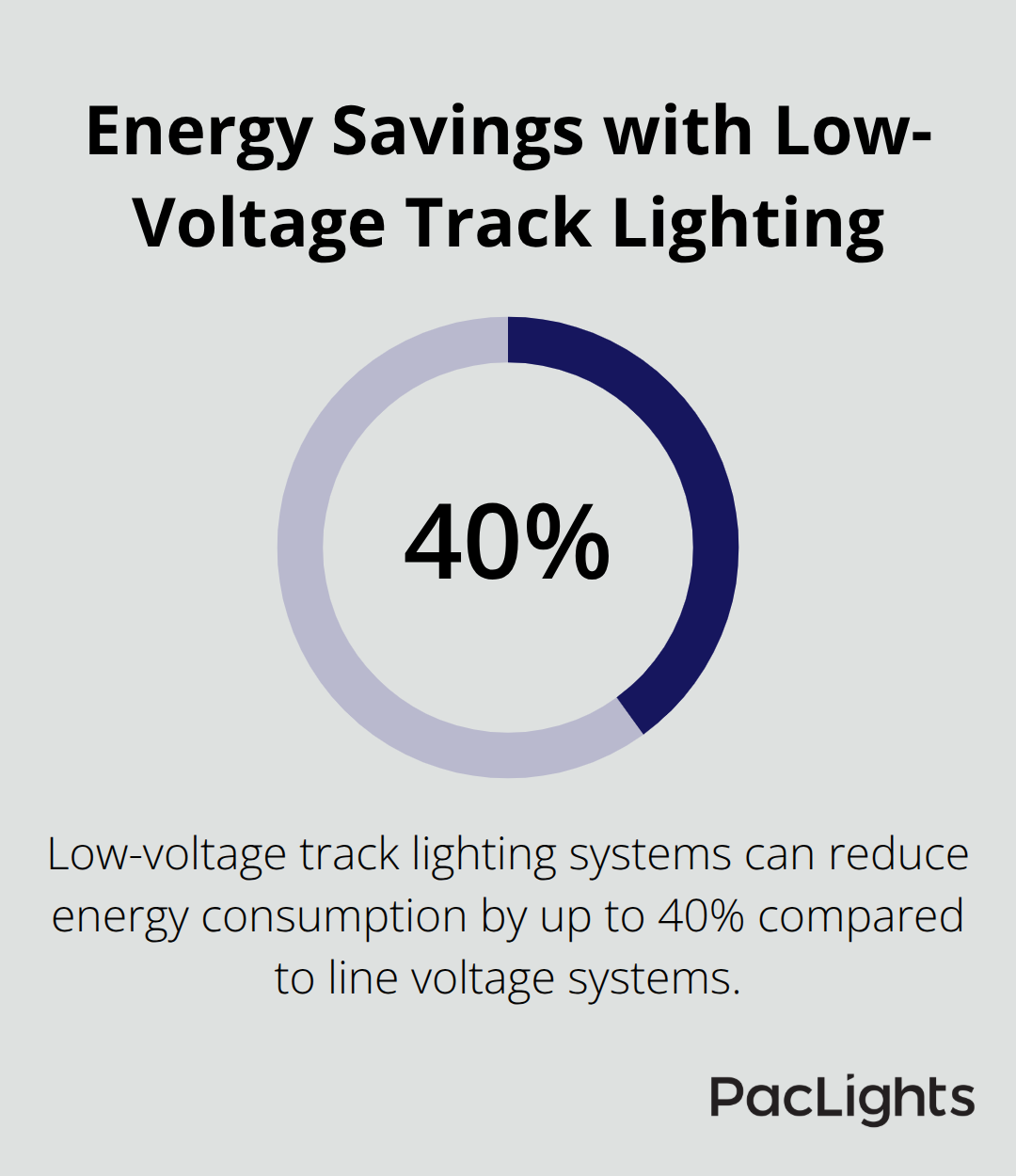
Most residential systems operate on standard 120-volt power, while commercial installations often use 277-volt feeds for greater efficiency. Low-voltage options (12V or 24V) provide enhanced safety and reduce energy consumption by up to 40% compared to line voltage systems. The Texas Medical Center reported significant cost savings after upgrading to energy-efficient track systems.
Commercial vs Residential Applications
Commercial track systems prioritize durability and load capacity, often supporting 50+ fixtures per circuit with robust hardware rated for continuous operation. These systems typically span 20-foot sections without sagging and handle fixture densities up to 100 watts per linear foot.
Residential applications favor lighter-weight tracks with decorative finishes and lower power requirements (20-30 watts per linear foot). Home systems focus on aesthetics and ease of adjustment rather than maximum load capacity.
The modular nature of these systems creates endless possibilities for customization, which leads us to explore the specific adaptability features that make modern track systems so versatile.
What Makes Track Lighting So Adaptable
Modern track systems deliver exceptional adaptation through precise directional control and sophisticated dimming capabilities. Track lights can be easily repositioned and accommodate various styles of bulbs, with fixtures that rotate 360 degrees horizontally and tilt up to 90 degrees vertically. This allows pinpoint illumination of artwork, merchandise, or architectural features. Professional track heads achieve beam angles from narrow 15-degree spots to wide 60-degree floods, with some adjustable models that offer variable beam spreads through integrated lens systems. Smart track systems now integrate color temperature adjustment from warm 2700K to cool 6500K, which matches circadian rhythms or specific task requirements throughout the day.
Advanced Control Integration
Contemporary track systems feature individual fixture addressing through wireless controls or smartphone apps, which enables users to create custom scenes for different activities. Linear track lights can be equipped with dimmers, allowing you to easily adjust brightness to suit different activities or moods while extending fixture lifespan and reducing energy consumption by up to 75% according to the U.S. Department of Energy. High-end systems support 0.1% dimming precision and maintain consistent color quality even at minimal output levels. Magnetic track systems allow instant fixture repositioning without tools, while modular tracks connect seamlessly to create custom configurations that span entire rooms.

Modular Configuration Flexibility
Track systems accommodate diverse fixture types on single runs and mix spotlights, floodlights, and linear fixtures as needed. Standard 4-foot and 8-foot track sections connect through invisible joints, with corner and flexible connectors that enable complex layouts following architectural elements. Three-circuit tracks support independent control zones (allowing different fixture groups to operate on separate switches or dimming circuits). Quality systems maintain electrical integrity across 100-foot continuous runs and support fixture densities up to 100 watts per linear foot for demanding commercial applications.
Smart Technology Integration
Modern track systems incorporate wireless mesh networks that connect fixtures to building automation systems. Voice control compatibility through Alexa and Google Assistant provides hands-free operation for residential users. Commercial installations benefit from daylight harvesting sensors that automatically adjust output based on natural light levels (reducing energy consumption by an additional 30-40%). These intelligent features make track systems particularly valuable in dynamic environments where lighting needs change frequently throughout the day.
Where Do Track Lights Work Best
Track lights excel in retail environments where merchandise displays change frequently and require precise control. Major retailers like Target and Best Buy use track systems to highlight featured products with narrow 15-degree beam angles while they provide ambient light through wider 60-degree floods on the same circuit. These systems reduce energy costs by 30-40% compared to traditional fluorescent fixtures (according to the U.S. Department of Energy), while they enable staff to reposition fixtures without electricians when store layouts change. Grocery stores benefit from track systems that deliver 50-75 foot-candles on produce displays while they maintain 20-30 foot-candles in aisles, with color temperatures adjusted to 3000K for food areas and 4000K for general merchandise.
Art Galleries Demand Precision Control
Museums and galleries require track systems that prevent UV damage while they provide accurate color rendition with CRI ratings above 95. The Metropolitan Museum of Art uses low-voltage track systems that generate minimal heat, protect sensitive artwork while they deliver precise angles. Professional gallery tracks support fixture densities up to 100 watts per linear foot and accommodate specialized museum lenses that eliminate hot spots. These installations typically operate on 12V or 24V systems to reduce electromagnetic interference with security systems, while wireless controls allow curators to adjust brightness remotely during exhibitions.
Office Applications Focus on Task Performance
Modern office buildings use track systems in conference rooms and collaborative spaces where needs vary throughout the day. Research shows that proper conditions improve productivity by 23% and reduce eye strain complaints by 51% (according to the Research Center). Track systems in offices typically combine 4000K task light at 500 lux for computer work with 2700K ambient light at 200 lux for meetings. Three-circuit tracks enable independent control of presentation features, general illumination, and accent elements, while daylight sensors automatically adjust output based on natural light levels to maintain consistent workspace conditions.

Hospitality Venues Require Flexible Ambiance
Hotels and restaurants use track systems to create different moods throughout the day without rewiring. Fine establishments adjust color temperature from warm 2700K during dinner service to neutral 3500K for lunch periods. Track fixtures rotate 360 degrees and tilt up to 90 degrees, which allows precise accent on artwork or architectural details while they provide general room illumination simultaneously.
Final Thoughts
Architectural track lights represent the future of adaptive illumination, with adjustable beam angles, modular configurations, and smart controls that deliver unmatched flexibility. These systems reduce energy consumption by up to 75% while they provide precise directional control that traditional fixtures cannot match. The technology transforms how spaces adapt to different activities throughout the day.
The industry moves toward wireless mesh networks and AI-powered automation that responds to occupancy patterns and natural light levels. Color-tunable LEDs become standard features that enable circadian rhythm support in commercial spaces. Magnetic systems eliminate tools for fixture repositioning (making adjustments effortless for facility managers).
Commercial applications require 20-amp capacity with aluminum construction, while residential installations benefit from decorative finishes and lower power densities. Smart integration capabilities prepare systems for future expansion and enhanced control options. We at PacLights provide professional lighting solutions that include advanced controls and energy-efficient options to complement track systems in comprehensive facility designs.
Disclaimer: PacLights is not responsible for any actions taken based on the suggestions and information provided in this article, and readers should consult local building and electrical codes for proper guidance.