

Emergency egress lighting codes aren’t optional-they’re the difference between a safe building and a liability. At PacLights, we’ve seen too many facilities overlook these requirements, only to face costly violations or worse, put occupants at risk.
This guide breaks down what you actually need to know to stay compliant, from understanding the standards to fixing common installation mistakes.
Understanding Emergency Egress Lighting Requirements
What Emergency Egress Lighting Actually Does
Emergency egress lighting serves one purpose: it gives people a clear, illuminated path to exit a building when normal power fails. This isn’t about comfort or convenience. It’s about survival. The National Fire Protection Association reports that roughly 3,500 people die in building fires annually in the United States, and many of those deaths occur in smoke-filled environments where visibility drops to zero. Without proper emergency lighting, occupants cannot locate exits, stairwells, or corridors. They panic. They move slower. Some don’t make it out. Federal, state, and local fire codes mandate emergency egress lighting because the consequences of failure are not fines or violations-they’re fatalities. Every fixture installed functions as a literal lifeline, which is why proper design and installation matter far more than most facility managers realize.
The Regulatory Framework Behind Emergency Egress Lighting
The International Building Code and the National Fire Protection Association’s NFPA 101 Life Safety Code form the primary regulatory framework for emergency egress lighting. Most jurisdictions adopt one of these standards, though some states add their own requirements. The International Building Code requires that every occupied space have a path to exit that is marked and illuminated with a minimum of 1 foot-candle of light at floor level. Stairwells demand even more-typically 1 foot-candle at each step. Emergency lighting systems must function for a minimum of 90 minutes on battery backup during a power outage, according to NFPA 101.
Exit Signs Versus Emergency Lighting: A Critical Distinction
Exit signs and emergency lighting serve different functions, yet many facility managers treat them as interchangeable. Exit signs must be illuminated to at least 5 foot-candles of light on the sign itself, whether internally lit or illuminated by external fixtures. Emergency lighting, by contrast, illuminates the floor and pathways where people actually walk during evacuation. An exit sign tells occupants where to go, but emergency lighting lets them see how to get there. Many facilities meet code for exit signage while failing on floor-level illumination, or vice versa. Local fire marshals frequently cite buildings for having adequate exit signs but inadequate emergency lighting coverage.
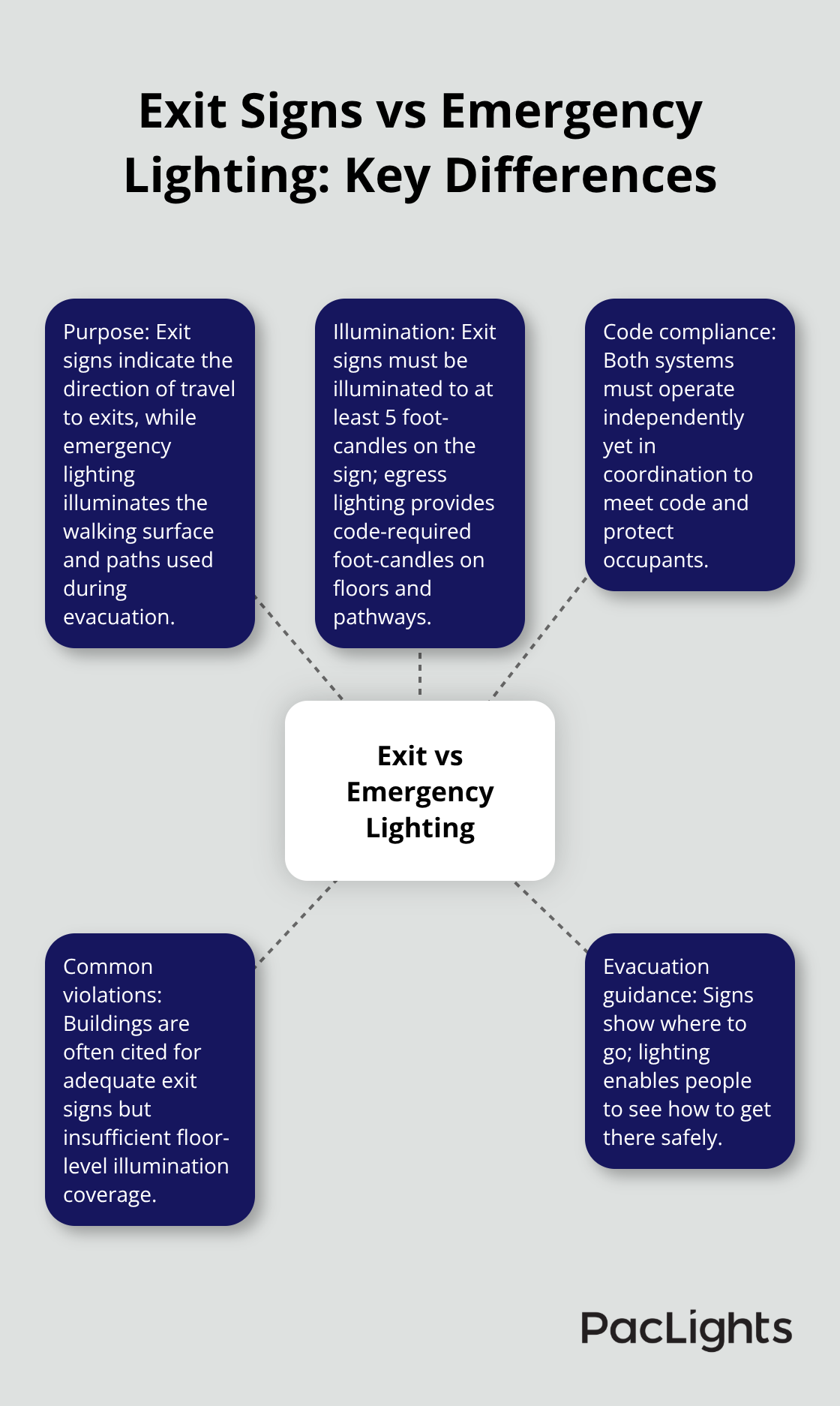
You need both systems working independently and in coordination to satisfy code requirements and protect occupants during an actual emergency.
Common Compliance Mistakes and How to Avoid Them
Inadequate Illumination Levels
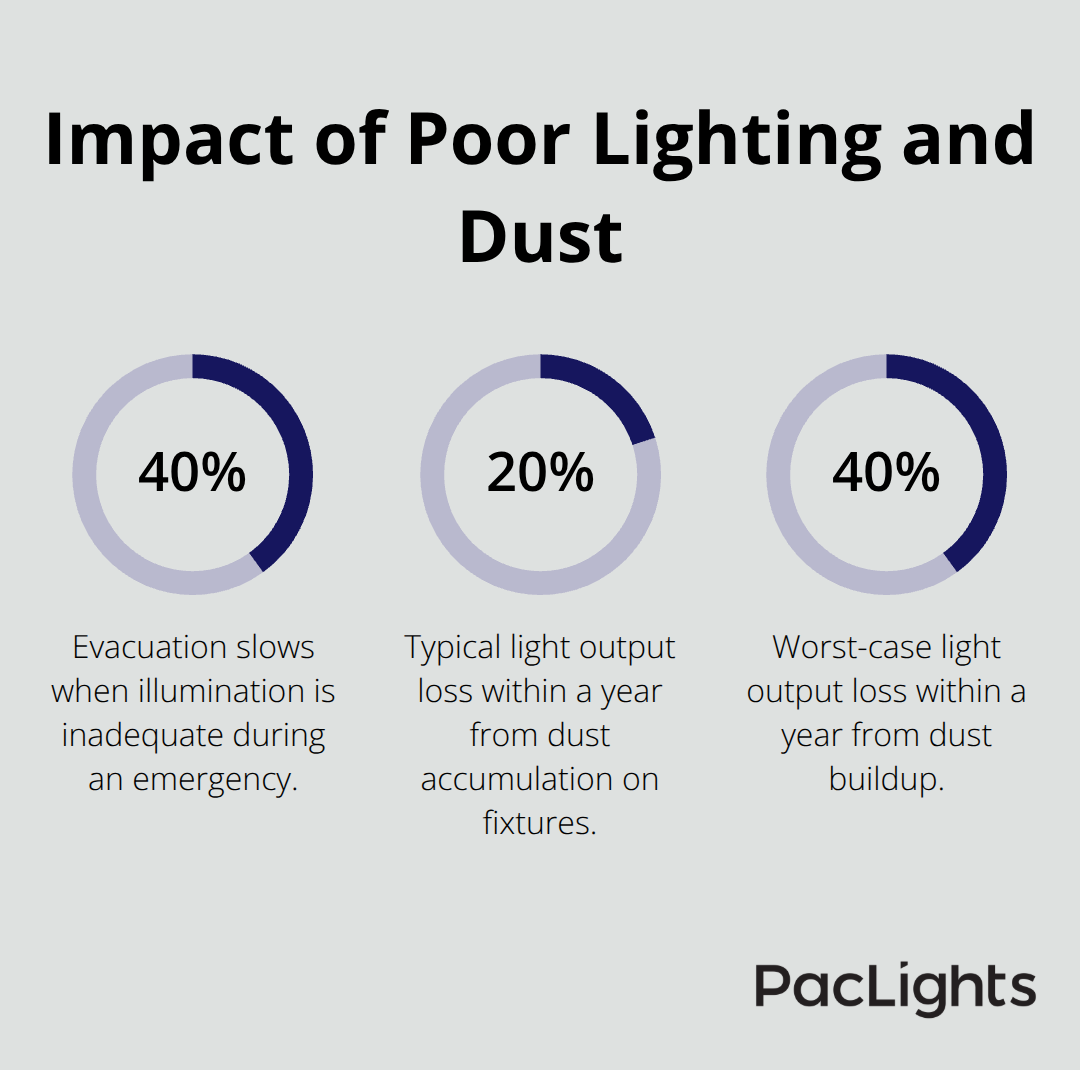
Most facilities fail emergency egress lighting compliance not because they lack understanding, but because they install systems without measuring actual illumination levels on the floor. The International Building Code requires 1 foot-candle minimum at floor level along the entire exit path, yet many installers place fixtures based on visual judgment rather than photometric data. Use a light meter during installation to verify you meet these minimums in every corridor, stairwell, and exit route. Test at multiple points along each path, not just near fixtures. The National Fire Protection Association has documented that inadequate illumination causes occupants to move 40 percent slower during evacuation, directly increasing risk.
Placement and Coverage Errors
Placement mistakes compound illumination problems significantly. Exit signs positioned above doorways leave the floor beneath them dark, and fixtures mounted too high create shadowed zones where people actually walk. Stairwells present the highest stakes scenario. NFPA 101 requires illumination at each step, meaning you cannot rely on ceiling-mounted fixtures alone. Wall-mounted or step-edge lighting becomes essential in these areas.
Testing and Documentation Gaps
Many facilities install emergency lighting but never verify it actually activates during a power loss. Your battery backup system could be failing silently for months. The code mandates 90 minutes of operation, but you must conduct monthly functional tests and annual full-load tests where systems run on battery power for their complete rated duration. Document everything. Fire marshals cite facilities regularly for having no testing records, even when systems would have performed adequately.
Maintenance and Degradation Issues
Maintenance failures represent the largest compliance gap in the field. Dust accumulation on fixtures reduces light output by 20 to 40 percent within a year, pushing you below code minimums without any actual equipment failure. Replace batteries every 3 to 5 years depending on your system type. LED emergency fixtures require less maintenance than older technologies, but they still need quarterly cleaning and annual professional inspection to remain code-compliant.
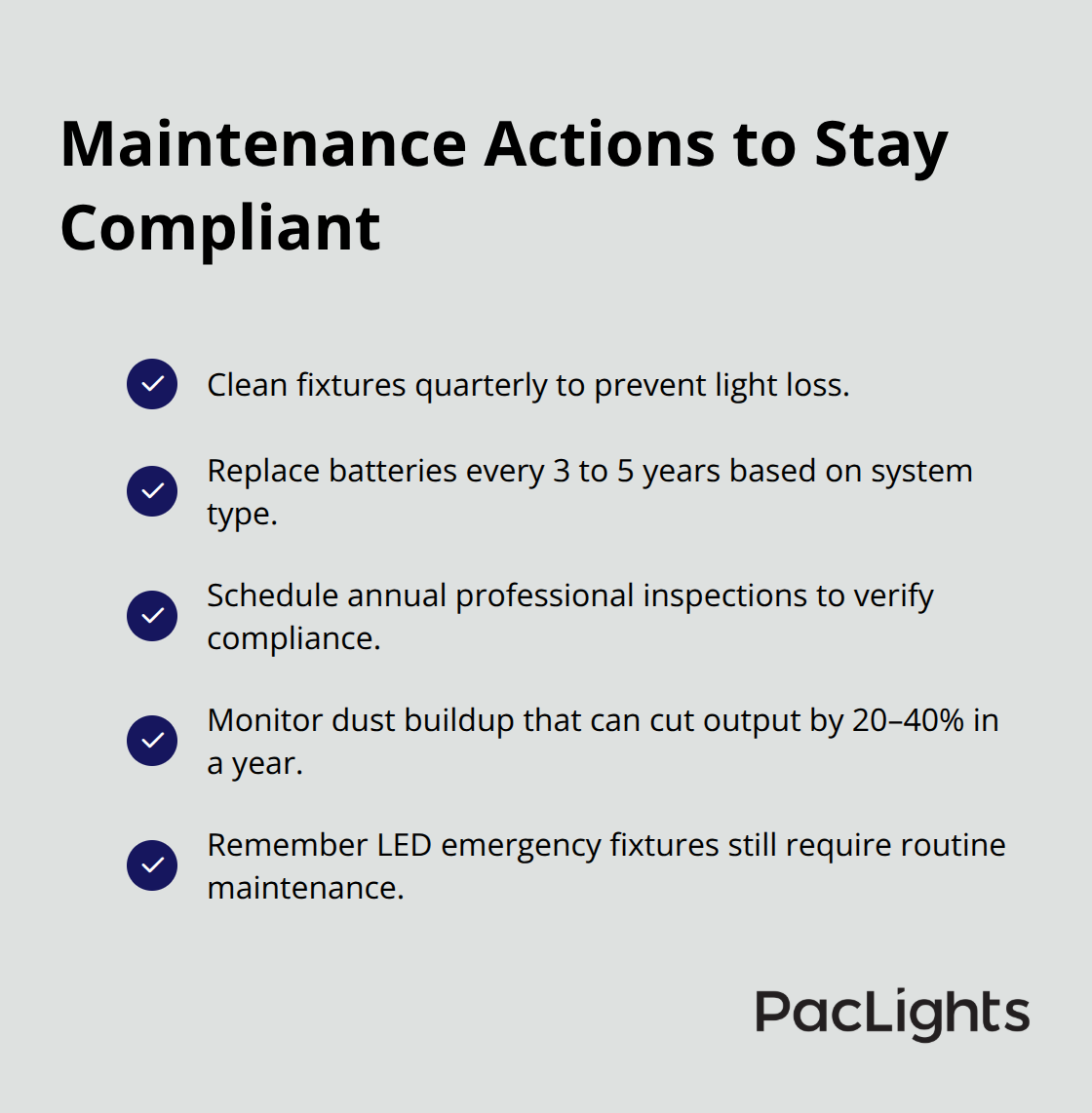
These preventive steps directly determine whether your system protects occupants when it matters most.
Best Practices for Emergency Egress Lighting Installation
Selecting the Right Fixtures for Your Facility
Fixture selection requires moving beyond generic products and matching specifications to your actual building layout. Start by calculating the foot-candle requirements for each space using photometric data, not guesswork. For corridors, you need 1 foot-candle minimum at floor level across the entire exit path. Stairwells demand the same, but measured at each step edge. High-ceiling spaces like warehouses or manufacturing facilities need different fixture types than standard office corridors.
LED emergency fixtures outperform older incandescent or fluorescent units significantly, offering 50,000-hour lifespans compared to 10,000 hours for traditional technology, which means fewer replacement cycles and lower long-term costs. When you select fixtures, verify the manufacturer provides photometric testing data specific to your mounting height and room dimensions. Many facilities make the mistake of buying fixtures based on wattage alone, then discover after installation that illumination levels fall short of code requirements.
Request sample installations in similar spaces before you commit to a large order. Test actual output with a light meter to confirm the fixtures deliver the foot-candles your building needs.
Integration with Building Management Systems
Integration with your building management system prevents the silent failures that plague most facilities. A networked emergency lighting system sends real-time alerts when battery voltage drops below acceptable thresholds, when a fixture fails, or when the system hasn’t received testing recently. This monitoring eliminates the common scenario where batteries degrade for months without anyone noticing.
Redundancy in backup power separates compliant systems from mediocre ones. Install dual battery systems in critical areas so one battery bank can fail without leaving your emergency lighting dark. For larger facilities, consider a centralized battery backup system serving multiple zones rather than individual battery packs in each fixture, reducing maintenance burden and improving reliability.
Testing, Documentation, and Verification
Test your complete system under full load quarterly, not just monthly functional checks. Run the system on battery power for its entire rated duration to confirm actual performance, not theoretical capacity. Document every test result with dates, times, and any deficiencies found. Fire marshals reviewing your records can immediately determine whether your facility takes compliance seriously.
If your current system lacks monitoring capabilities, upgrading to networked controls now prevents future violations and gives you concrete data showing you meet code requirements.
Final Thoughts
Emergency egress lighting codes exist because buildings fail people when the power goes out. You now understand the regulatory framework, the difference between exit signs and floor-level illumination, and the specific mistakes that land facilities in violation. Your facility likely has gaps-most do-and the question is whether you identify them before a fire marshal does or before an actual emergency exposes them.
Start by scheduling a professional assessment of your current system. Have someone measure actual foot-candle levels at floor height throughout your exit routes using a light meter, check your battery backup documentation, and verify your last full-load test occurred within the past year. LED technology has made compliance far more affordable than it was five years ago, with fixtures lasting 50,000 hours and requiring minimal maintenance compared to older systems.
We at PacLights offer free lighting layout designs and ROI assessments to help you evaluate your current system and plan upgrades that fit your budget. Our LED fixtures and networked lighting controls give you the reliability emergency egress lighting codes demand while reducing energy costs across your entire facility. Visit PacLights to explore how we can support your compliance goals and facility safety.
Disclaimer: PacLights is not responsible for any actions taken based on the suggestions and information provided in this article, and readers should consult local building and electrical codes for proper guidance.