

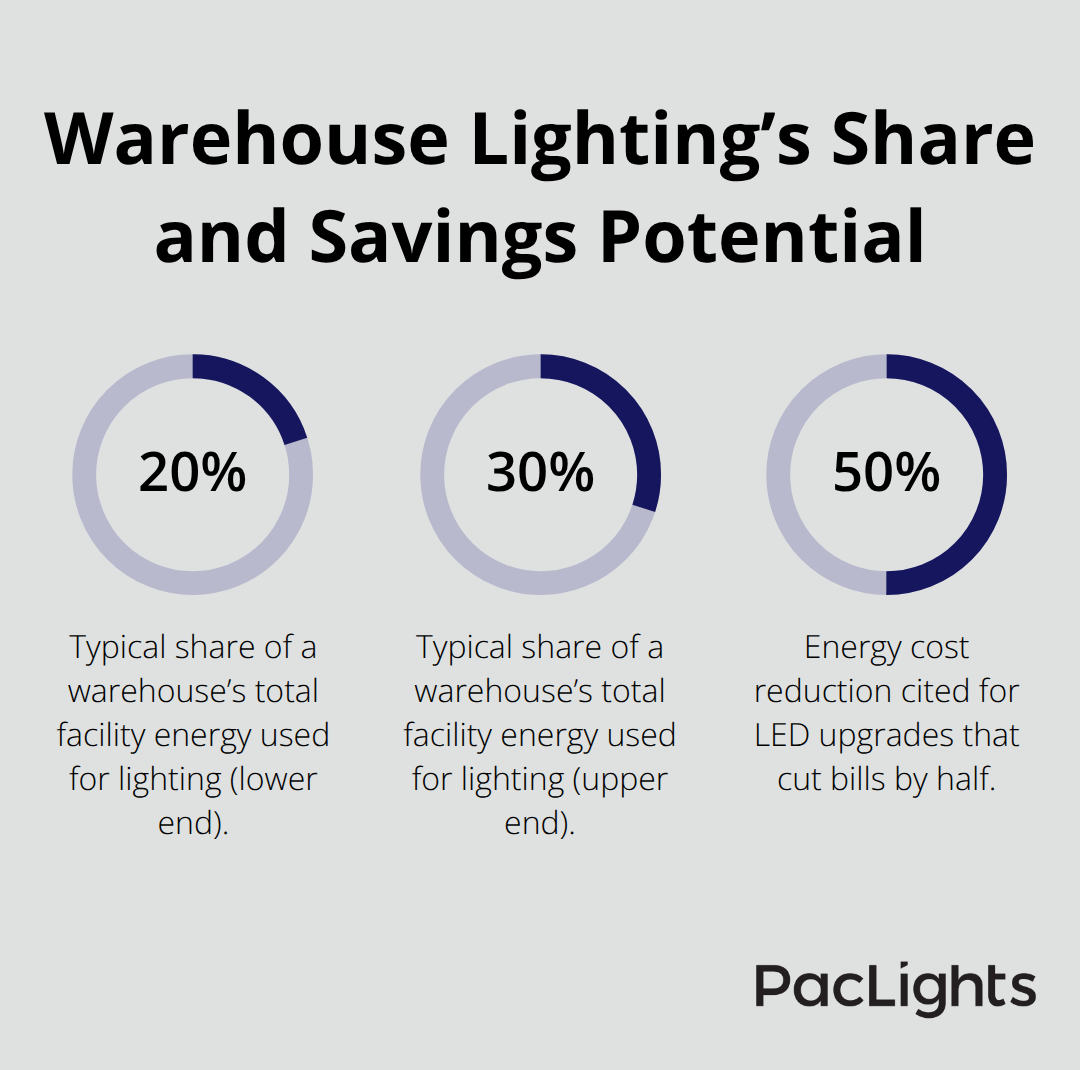
Warehouse lighting typically accounts for 20-30% of total facility energy consumption, yet most warehouses still rely on outdated fixtures that waste power and money. At PacLights, we’ve seen firsthand how energy efficient warehouse lighting upgrades transform operations, cutting energy costs by half while reducing emissions.
The good news is that switching to LED technology and adding smart controls isn’t complicated. This guide walks you through the upgrades that deliver real savings.
Why Your Warehouse Lights Drain Money
Outdated Fixtures Waste Enormous Energy
Most warehouses operate with lighting systems installed 15 to 20 years ago, and those fixtures were never designed for efficiency. Metal halide and high-pressure sodium lamps dominated warehouse lighting during that era, consuming enormous amounts of electricity to produce adequate illumination. A 400-watt metal halide fixture that lights a warehouse high bay today could be replaced with a 100-watt LED fixture delivering superior brightness and color quality.
The problem compounds because older systems lack any form of automation or controls. Lights run at full capacity regardless of whether the space is occupied or whether daylight is available. Many warehouse managers inherited these systems from previous operators and simply never questioned whether upgrades were worthwhile, treating warehouse lighting as a fixed cost rather than an opportunity for dramatic savings.
Mismatched Lighting Design Multiplies Waste
Poor lighting design makes the energy waste worse. Warehouses built decades ago often have uneven light distribution, with some areas over-lit while others remain dim, requiring higher wattage overall to meet minimum brightness standards across the facility. When a warehouse adds inventory racks or reorganizes storage zones, the lighting layout becomes even more mismatched to actual operational needs.
Most facilities run 30 to 40 percent more lighting power than necessary to achieve their actual illumination requirements. The absence of controls means a warehouse lighting system operates on an all-or-nothing basis: lights turn on when the building opens and stay on until closing, even in areas used only occasionally or during shifts when natural daylight provides sufficient illumination.
Why Controls Matter
Motion sensors and daylight harvesting controls remain uncommon in older warehouses, so energy is wasted lighting empty aisles and offices on sunny days when windows already provide adequate light. These gaps in automation represent the biggest opportunity for immediate savings. Upgrading to LED fixtures paired with smart controls addresses both problems at once, which is why the next section examines how this combination transforms warehouse energy consumption.
How LED Fixtures Slash Energy Bills
The Math Behind LED Energy Savings
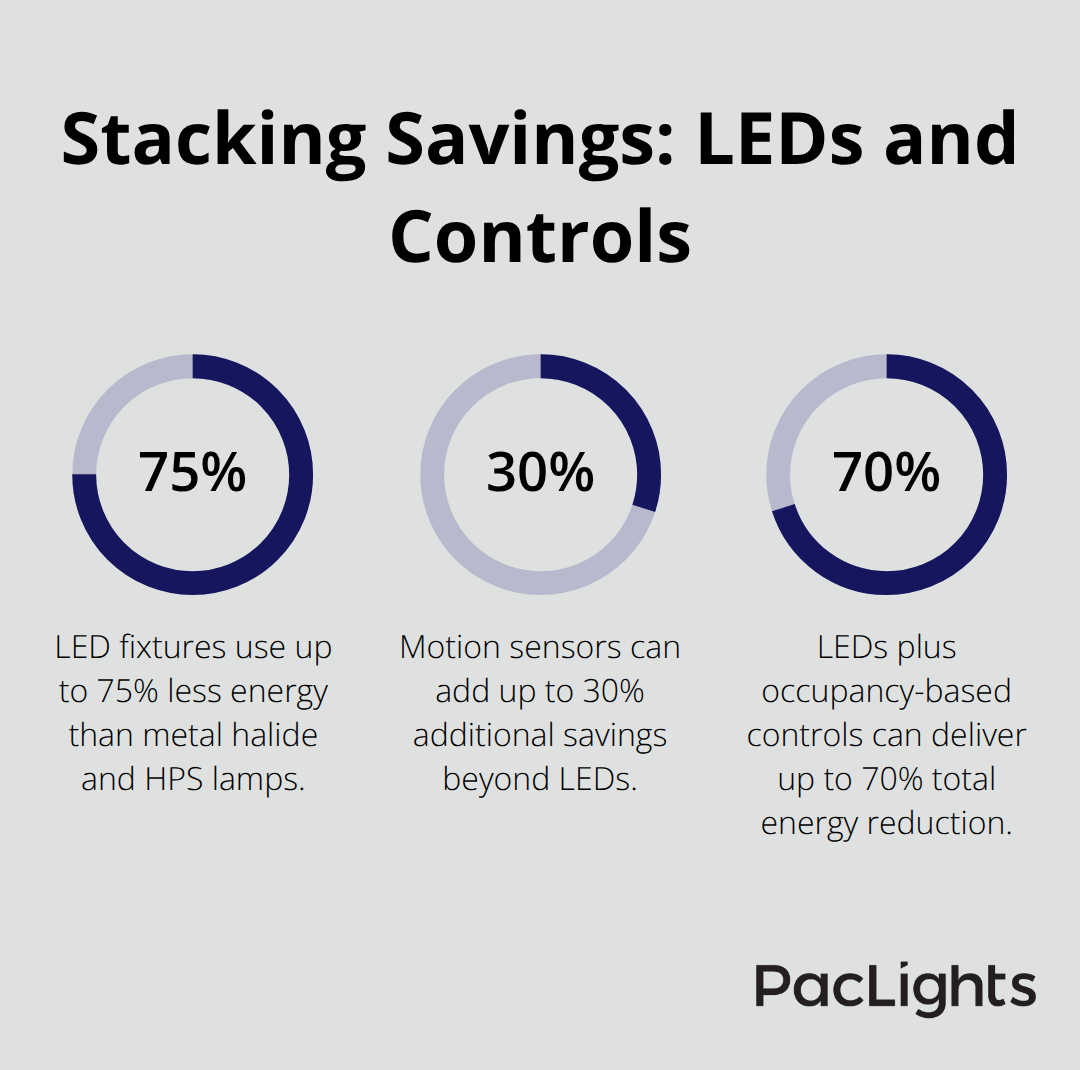
LED fixtures consume 50-75% less energy than metal halide and high-pressure sodium lamps. A warehouse running 100 fixtures at 400 watts each on traditional technology uses 40,000 watts continuously. Switching those same fixtures to 100-watt LEDs drops consumption to 10,000 watts, cutting energy draw by 30,000 watts immediately. At an average U.S. industrial electricity rate of $0.07 per kilowatt-hour, this single switch saves approximately $18,000 annually in a facility operating 24/7. The payback period typically ranges from 3 to 5 years, after which the savings accumulate as pure profit.
Real-World Warehouse Results
Warehouses across the country report lighting energy cost reductions of 40-50% within the first year of LED installation. Some facilities achieve even greater savings when adding smart controls to the equation. These results come from actual facility upgrades, not theoretical projections. The combination of lower wattage consumption and reduced maintenance creates a compounding financial benefit that extends well beyond the initial investment.
Maintenance Costs Drop Dramatically
Traditional high-intensity discharge lamps require replacement every 10,000 to 15,000 hours of operation, while quality LED fixtures last 50,000 to 100,000 hours or more. This means fewer replacement cycles, lower labor costs for maintenance crews, and reduced downtime for facility operations. A warehouse performing maintenance on 200 high-bay fixtures might spend $8,000 to $12,000 annually on lamp replacements and labor, whereas LED fixtures in the same space might require maintenance only every five years. Warehouses also benefit from superior light quality and instant-on capability with LEDs, eliminating the warm-up time that traditional fixtures require.
Environmental Impact Matters
Carbon emissions drop proportionally with energy consumption, so a facility cutting energy use by 50% simultaneously reduces its lighting-related carbon output by the same amount. For warehouses pursuing sustainability certifications or corporate carbon reduction targets, this metric matters significantly when reporting environmental impact to stakeholders and regulators. The environmental gains align directly with financial gains, making LED upgrades a strategy that satisfies both cost and sustainability objectives.
Smart Controls Amplify the Advantage
LED fixtures alone deliver substantial savings, but adding motion sensors and daylight harvesting controls multiplies those benefits further. The next section examines how smart controls and automation transform warehouse lighting from a static energy drain into a dynamic system that responds to actual operational needs.
Smart Controls Transform Warehouse Lighting From Static to Responsive
Motion Sensors Stop Energy Waste in Empty Spaces
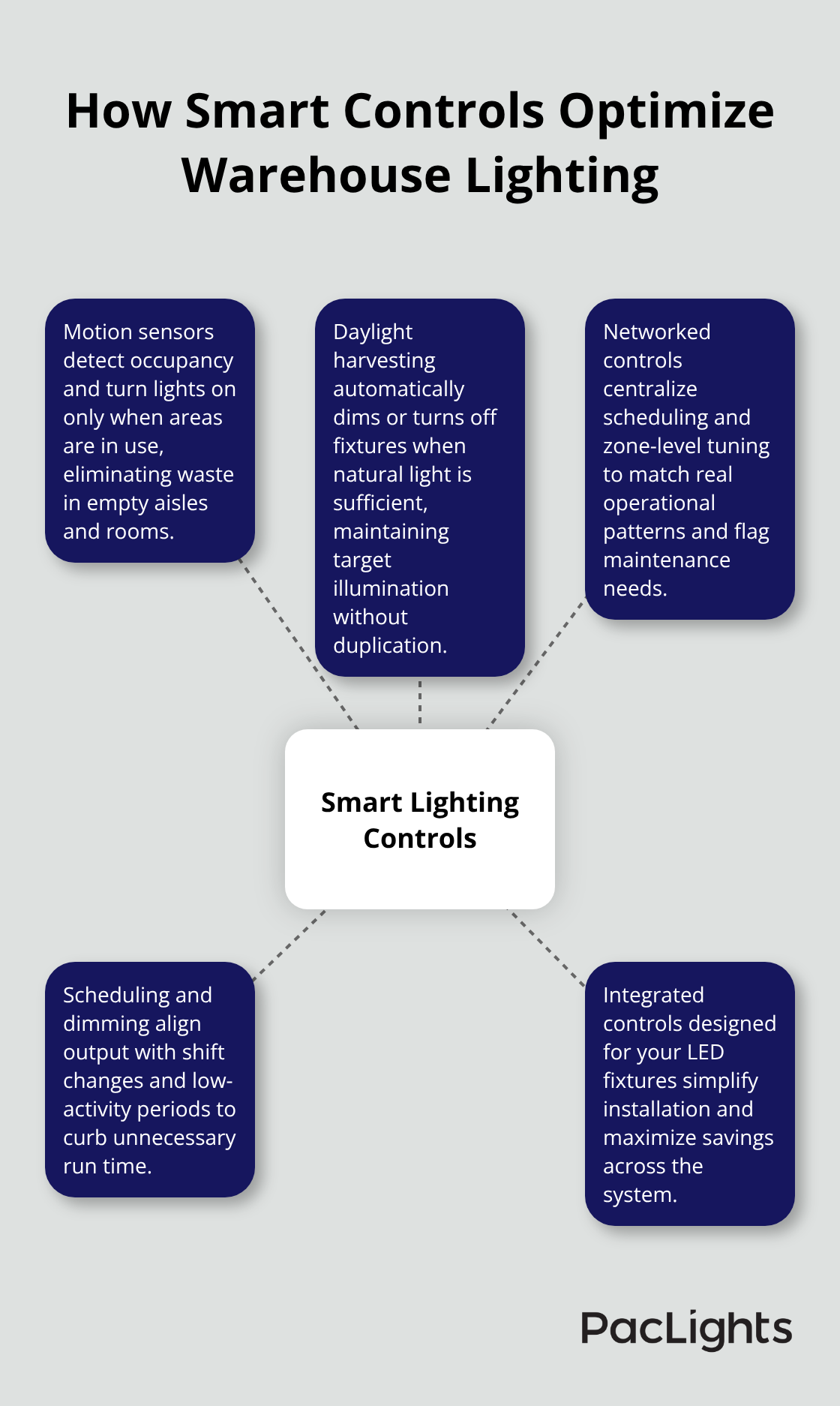
Motion sensors and daylight harvesting controls represent the difference between a warehouse that wastes energy and one that operates intelligently. A facility with motion sensors installed in storage areas, offices, and break rooms can reduce lighting energy consumption by an additional 20-30% beyond what LEDs alone achieve. A warehouse operating motion sensors in a 50,000-square-foot facility with intermittent occupancy saves $8,000 to $15,000 annually simply by preventing lights from running in unoccupied zones during shift changes or overnight hours. The U.S. Department of Energy reports that warehouses combining LED upgrades with occupancy-based controls achieve total energy reductions of 60-70% compared to traditional systems-these figures come from actual facility audits and post-retrofit measurements, not theoretical projections.
Daylight Harvesting Eliminates Unnecessary Artificial Light
Daylight harvesting systems automatically dim or turn off artificial lights when sufficient natural light enters through windows or skylights, eliminating the absurdity of running full-power fixtures on sunny afternoons. This technology works especially well in warehouses with significant window exposure or skylights that provide consistent natural illumination during daylight hours. The system measures ambient light levels and adjusts fixture output in real time, ensuring that artificial lighting supplements rather than duplicates available daylight. Facilities that implement motion sensors without addressing daylight harvesting capture only partial savings and miss the opportunity for maximum efficiency gains.
Networked Controls Manage Multiple Zones Efficiently
Networked lighting controls allow facility managers to monitor and adjust lighting across multiple buildings or zones from a centralized system. This approach works especially well for large warehouse operations with dozens of high-bay fixtures spread across extensive floor space. Managers program lighting schedules that match actual operational patterns, reduce fixture brightness during low-activity periods, and receive alerts when fixtures require maintenance. The installation cost for networked controls typically ranges from $15,000 to $40,000 depending on facility size, but annual savings often exceed $20,000 in facilities larger than 100,000 square feet.
Integration Matters More Than Individual Components
The key is selecting controls that integrate seamlessly with your LED fixtures rather than treating them as separate add-ons. PacLights offers LED fixtures with optional daylight and motion control features, plus advanced networked lighting controls designed to work directly with our products. This integrated approach eliminates the complexity of retrofitting separate control systems into existing installations. Facilities that combine motion sensors, daylight harvesting, and networked controls (rather than implementing them piecemeal) capture the full spectrum of efficiency gains available from modern warehouse lighting technology.
Final Thoughts
The financial case for energy efficient warehouse lighting upgrades is straightforward. A facility spending $30,000 annually on lighting energy cuts that bill to $15,000 within months of installing LED fixtures, then reduces it further with motion sensors and daylight harvesting. The payback period of 3 to 5 years means your investment starts generating pure savings long before the fixtures reach their 50,000-hour lifespan, while lower maintenance expenses and better light quality compound the benefits.
Smart controls amplify these gains significantly. Motion sensors prevent lights from running in unoccupied storage areas and offices, while daylight harvesting eliminates the waste of running full-power fixtures on sunny days. Networked lighting controls let you monitor and adjust performance across your entire facility from a centralized system, matching lighting output to actual operational patterns rather than running everything at maximum capacity around the clock-facilities combining LEDs with comprehensive controls achieve 60-70% total energy reductions compared to traditional systems.
The real barrier to upgrading isn’t cost or complexity, it’s uncertainty about whether the investment makes sense for your specific facility. An ROI assessment quantifies your current energy waste, projects realistic savings based on your building’s actual usage patterns, and shows exactly when your investment pays for itself. We at PacLights provide free lighting layout designs and ROI assessments to help you make informed decisions about warehouse lighting upgrades, and our fixtures come with optional motion and daylight controls plus advanced networked lighting controls designed to work seamlessly together-visit PacLights to explore how your facility can capture these savings.
Disclaimer: PacLights is not responsible for any actions taken based on the suggestions and information provided in this article, and readers should consult local building and electrical codes for proper guidance.