

Cylinder ceiling lights have become the go-to choice for spaces that demand both function and style. At PacLights, we’ve seen firsthand how the right cylinder ceiling light options can transform a room’s ambiance while delivering superior performance.
Whether you’re upgrading a commercial space or redesigning your home, understanding what these fixtures offer is the first step toward making a smart lighting investment.
What Cylinder Ceiling Lights Actually Are
The Form and Function of Cylinder Fixtures
Cylinder ceiling lights are compact, tubular fixtures that mount flush or semi-flush to your ceiling, delivering focused illumination in a sleek vertical form. The cylindrical design sits tight against the ceiling surface, making them ideal for spaces where headroom matters or where you want clean architectural lines. Most cylinder fixtures range from 3 to 6 inches in diameter and use integrated LED modules that typically consume 5 to 20 watts while producing 450 to 1,100 lumens depending on the model. This concentrated form factor directs light more precisely downward than traditional recessed downlights or pendant fixtures, reducing wasted light scatter and glare. Traditional recessed lights spread illumination broadly across a ceiling cavity, while cylinder lights contain that output in a defined beam. For commercial and industrial applications, this distinction matters significantly: a warehouse retrofit replacing old 400-watt metal halide fixtures with 150-watt LED cylinder options cuts energy consumption by 50 to 70 percent, according to the U.S. Department of Energy. The modular nature of cylinder fixtures allows you to deploy multiple units across a ceiling in strategic patterns-spacing them roughly 6 to 8 feet apart in larger rooms-to achieve uniform illumination without dark spots or excessive brightness variation.
Why Cylinder Lights Outperform Traditional Options
The real advantage of cylinder lights in commercial settings lies in their thermal efficiency and maintenance accessibility. LED cylinder fixtures with proper aluminum or copper heat sinks maintain their full lumen output over 25,000 to 50,000 hours of operation, dramatically reducing replacement cycles compared to fluorescent or HID alternatives. In industrial facilities where lighting accounts for 17 to 20 percent of operating expenses according to the Department of Energy, this translates to measurable cost recovery.
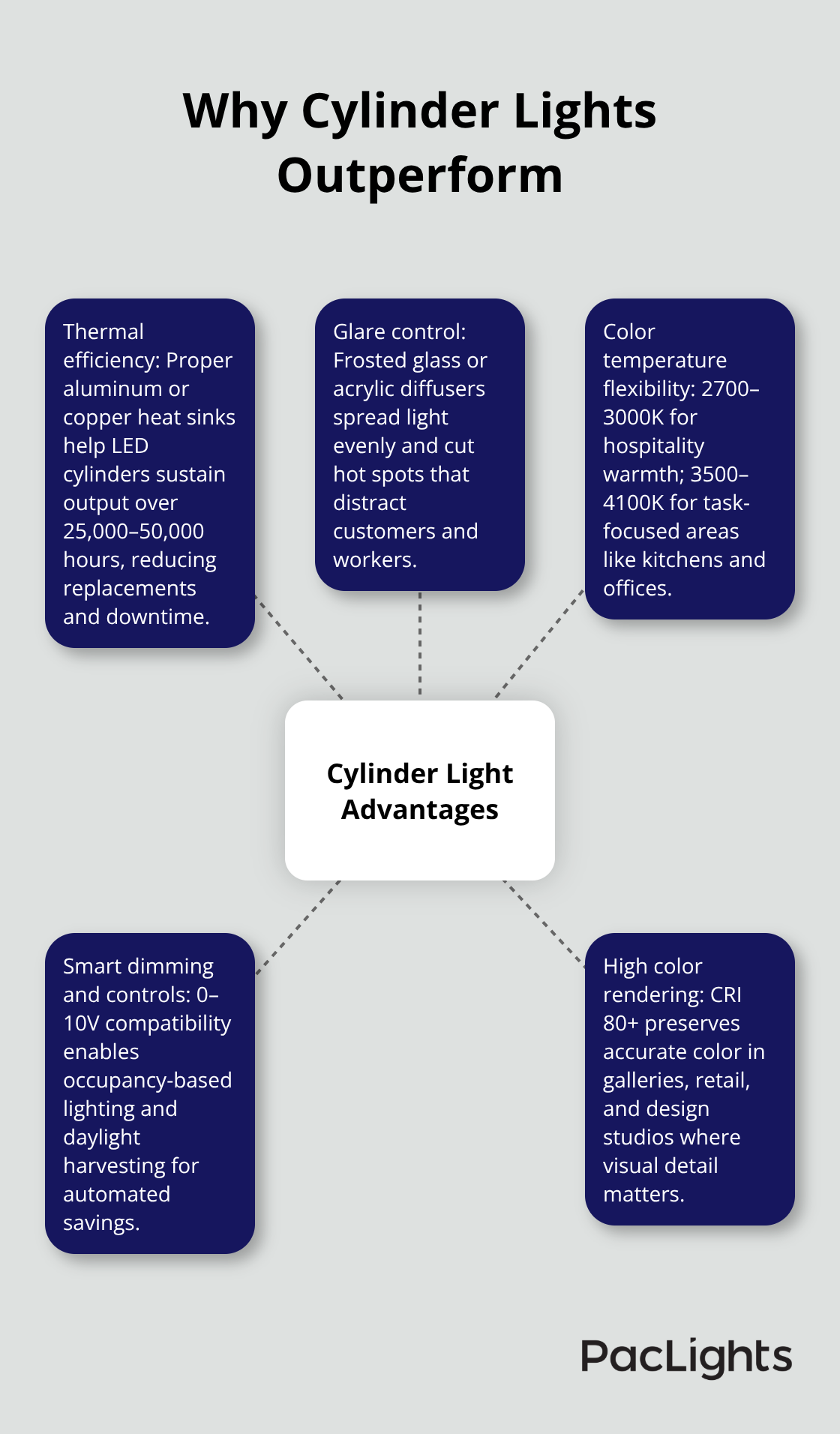
Retail galleries, design studios, offices, and hospitality spaces favor cylinder lights because they minimize glare through diffuser options-frosted glass or acrylic diffusers spread light evenly and eliminate hot spots that annoy customers or workers. Color temperature flexibility offers another practical advantage: warm whites at 2700 to 3000 Kelvin suit hospitality environments, while neutral whites at 3500 to 4100 Kelvin work better in kitchens and task-focused areas. The Illuminating Engineering Society recommends about 30 foot-candles for general industrial work, and cylinder fixtures deliver that uniformly when properly spaced and diffused. Many models offer dimmable operation with 0-10V dimming compatibility, allowing you to integrate them into building management systems for occupancy-based lighting or daylight harvesting, which the Department of Energy notes can reduce energy use by 20 to 60 percent. High color rendering options-CRI 80 or above-preserve color accuracy in spaces where visual detail matters, from artwork display to precision manufacturing.
Why Cylinder Lights Cut Operating Costs and Boost Efficiency
The Real Numbers Behind Energy Savings
Cylinder ceiling lights deliver measurable financial impact from day one. A typical 150-watt LED cylinder fixture produces around 15,000 lumens, while the older 400-watt metal halide it replaces generated similar output at four times the power consumption. The U.S. Department of Energy confirms that LED fixtures use up to 80 percent less energy than incandescent lighting, and switching from HID or fluorescent systems to LED cylinders cuts annual lighting costs by 50 to 70 percent. For a warehouse spanning 20,000 square feet, replacing roughly 60 to 80 traditional fixtures with LED cylinders saves $30,000 to $60,000 annually depending on local electricity rates and operating hours. Since lighting accounts for 17 to 20 percent of operating expenses in industrial facilities according to the Department of Energy, optimizing this system directly impacts your bottom line.
Lifespan and Maintenance Advantages
LED cylinder fixtures rated for 25,000 to 50,000 hours eliminate the constant replacement cycle that plagues fluorescent and HID systems. In industrial facilities where a single maintenance visit costs $500 to $1,500 and requires production downtime, fewer replacements mean real operational savings. The modular thermal design of cylinder fixtures, with aluminum or copper heat sinks that actively dissipate heat, preserves full lumen output across the fixture lifespan rather than the gradual dimming that occurs in poorly cooled alternatives. This extended performance directly reduces your total cost of ownership over five to ten years.
Smart Controls Amplify Savings Further
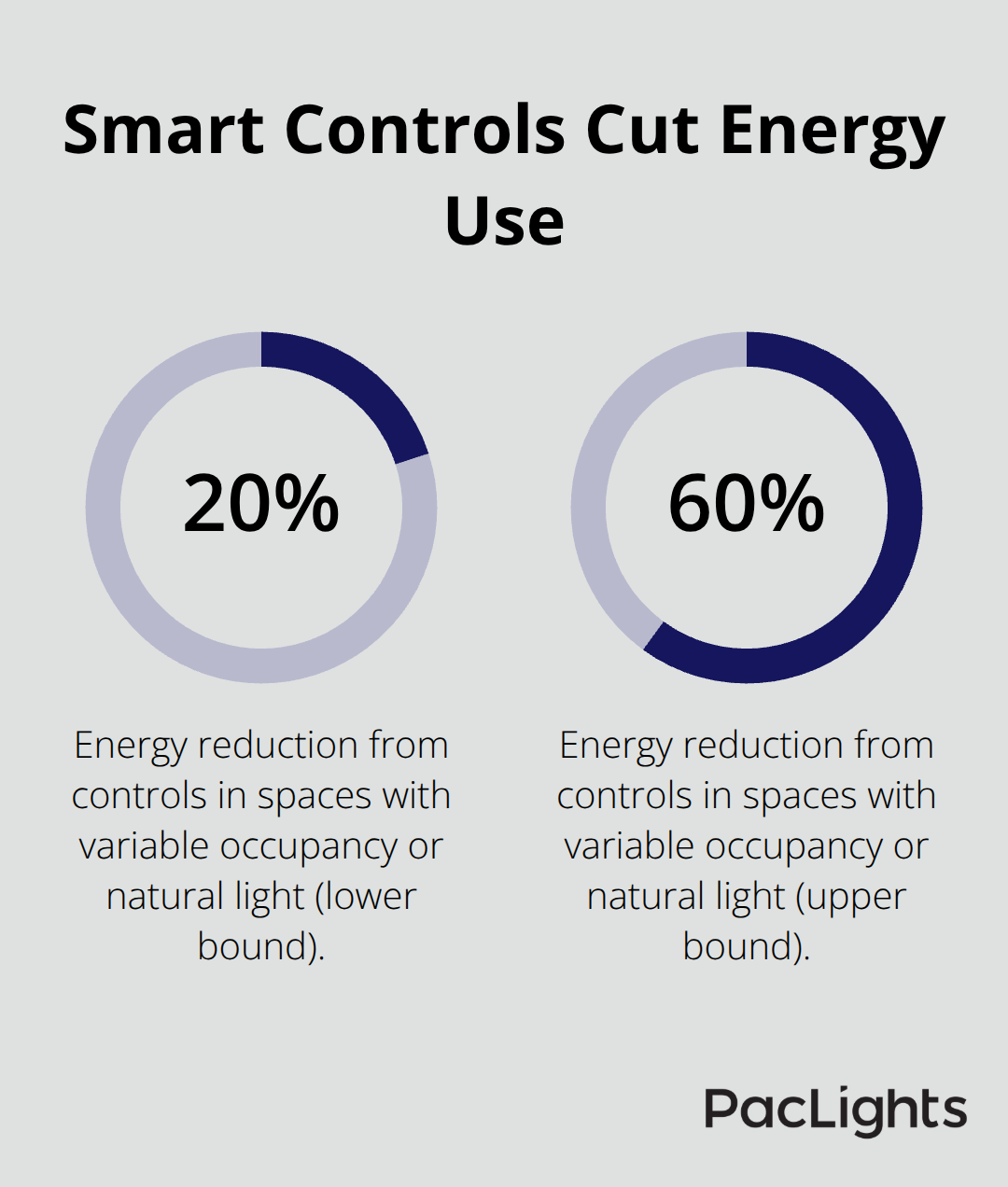
Motion sensors and daylight harvesting capabilities reduce energy consumption by an additional 20 to 60 percent according to the Department of Energy, particularly in spaces with variable occupancy or significant natural light. These controls integrate seamlessly into building management systems through 0-10V dimming compatibility, allowing you to automate lighting based on actual need rather than fixed schedules. The investment in smart controls pays for itself through reduced energy waste and lower operational overhead.
Uniform Light Distribution Reduces Hidden Costs
Uniform light distribution from properly spaced cylinder fixtures eliminates the dark patches and bright hotspots that frustrate workers and create safety hazards. When a 30-foot industrial ceiling has fixtures spaced approximately 30 feet apart using the Illuminating Engineering Society spacing-to-height ratio of 1.0 or less, you achieve consistent 30 foot-candles across work surfaces without glare or shadows that compromise visibility. Poor lighting degrades worker performance through eye strain, headaches, and fatigue, while uneven lighting increases error rates and accident risk-a single preventable accident can cost $40,000 to $100,000.
Design Flexibility Simplifies Installation
Cylinder fixtures accept frosted glass or acrylic diffusers that spread light evenly while maintaining directional efficiency, so you waste no lumens on areas above the work plane. Color temperature flexibility adds another practical dimension: warm whites at 2700 to 3000 Kelvin create welcoming hospitality environments, neutral whites at 3500 to 4100 Kelvin support task-focused kitchens and offices, and cooler 5000 Kelvin options boost focus in precision manufacturing. High color rendering at CRI 80 or above preserves accurate color visibility in galleries, design studios, and retail spaces where visual detail drives customer perception. The cylindrical form factor itself eliminates wasted ceiling cavity space, making retrofits simpler and cheaper than replacing larger traditional fixtures-you avoid costly structural modifications or extensive electrical rewiring since the compact design fits existing ceiling infrastructure.
How to Pick the Right Cylinder Light for Your Space
Calculate Your Actual Lighting Needs
Selecting the right cylinder ceiling light starts with measuring your actual space and understanding what you need the light to accomplish. Most facilities fail here by guessing at brightness or picking fixtures based on appearance alone. Calculate your room’s square footage first, then multiply by the foot-candles required for your task: general office areas need roughly 30 to 50 foot-candles, while precision work demands 75 to 100 foot-candles according to the Illuminating Engineering Society. A 2,000-square-foot warehouse requiring 30 foot-candles needs approximately 60,000 lumens total output. Divide that by the lumens per fixture-a typical 150-watt LED cylinder produces around 15,000 lumens-and you arrive at four fixtures minimum.
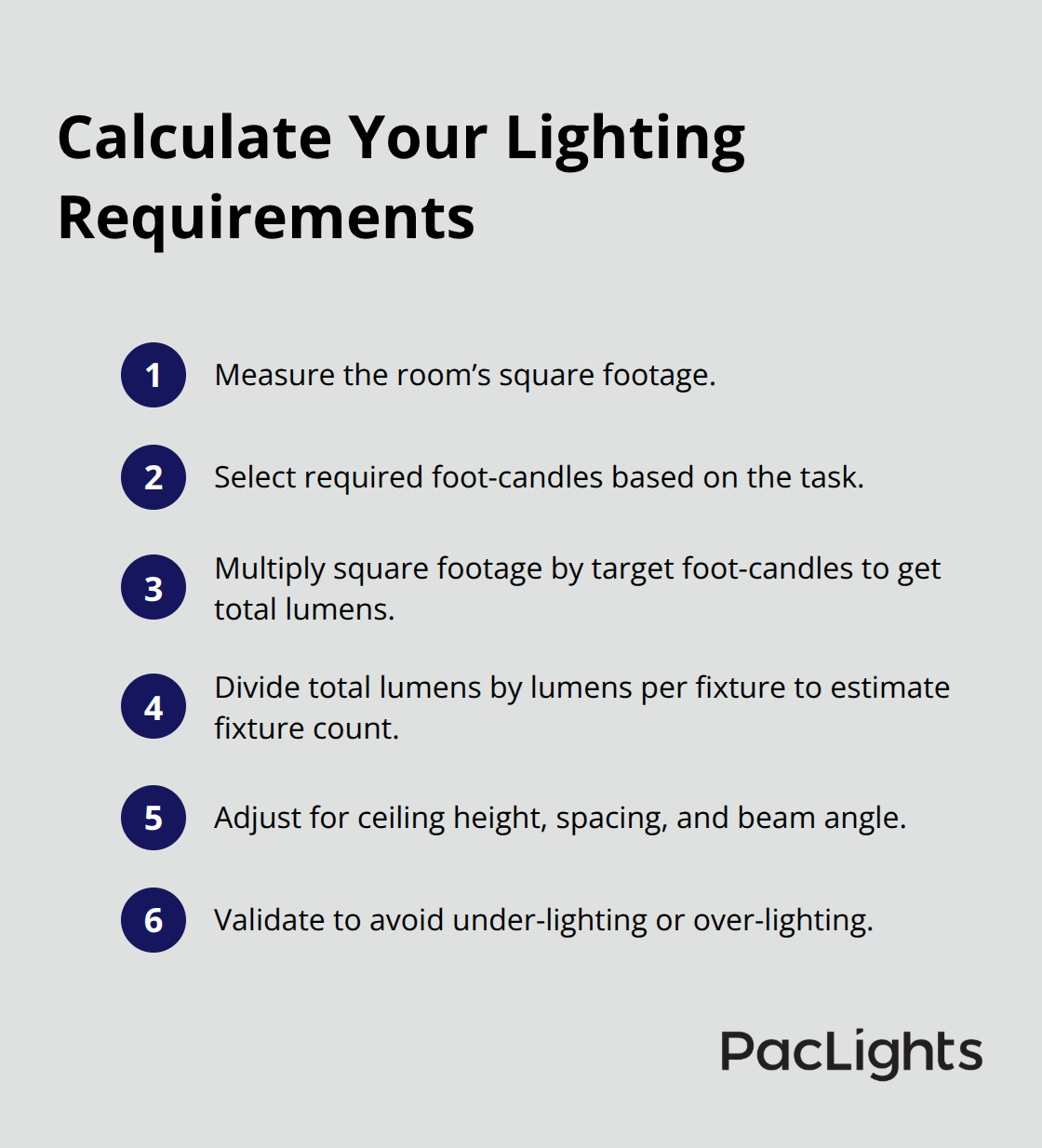
This math prevents both under-lighting, which degrades worker performance and safety, and over-lighting, which wastes thousands annually in unnecessary energy costs.
Match Spacing and Ceiling Height to Your Layout
Next, measure your ceiling height and spacing requirements. The Illuminating Engineering Society recommends a spacing-to-height ratio of 1.0 or less, meaning a 30-foot ceiling supports fixtures spaced roughly 30 feet apart. Smaller rooms with 9-foot ceilings benefit from spacing cylinders 6 to 8 feet apart to eliminate dark patches. Proper spacing prevents the dark zones and bright hotspots that frustrate workers and create safety hazards. Your ceiling height directly influences how far light travels before reaching work surfaces, so taller ceilings require wider spacing or narrower beam angles to maintain consistent illumination across the floor.
Select Color Temperature for Your Specific Task
Color temperature selection matters more than most people realize. Warm whites at 2700 to 3000 Kelvin create welcoming atmospheres in hospitality and retail spaces, but they reduce alertness and precision. Neutral whites at 3500 to 4100 Kelvin work better in kitchens, offices, and manufacturing areas where task focus drives results. Daylight temperatures around 5000 Kelvin boost focus and accuracy in precision manufacturing and detail-oriented work. Research from the Lighting Research Center confirms that color temperature directly impacts worker productivity and mood, so match your selection to how people actually use the space rather than defaulting to one option across your facility.
Evaluate Heat Sinks and Color Rendering
Durability becomes the deciding factor once you narrow brightness and color options. LED cylinders rated for 25,000 to 50,000 hours outlast fluorescent and HID alternatives by 25 to 50 times, but thermal management determines whether you hit those ratings or fall short. Inspect the fixture’s heat sink design-aluminum or copper fins actively dissipate heat and preserve lumen output across the lifespan, while passive designs without adequate surface area allow gradual dimming. Check the color rendering index (CRI) rating; anything below 80 produces flat, inaccurate colors that frustrate customers and workers in retail, galleries, and design studios. CRI 90 or above preserves true color visibility and justifies the modest premium in spaces where visual detail drives perception.
Verify Moisture Ratings and Control Compatibility
Damp-rated or wet-rated options become non-negotiable in bathrooms, laundry rooms, kitchens, and covered outdoor areas where moisture and corrosion damage fixtures quickly. Sealed diffusers prevent fogging and extend component life significantly. Finally, verify dimming compatibility with your existing infrastructure. Most modern cylinders support 0-10V dimming, allowing integration into building management systems for occupancy-based controls and daylight harvesting. PacLights offers free lighting layout designs and ROI assessments to ground your selection in real numbers rather than guesswork, helping you avoid costly mistakes before installation begins.
Final Thoughts
Cylinder ceiling light options deliver measurable advantages that extend far beyond aesthetics. The combination of energy savings, extended lifespan, and uniform light distribution creates a compelling financial case for upgrading your facility-a warehouse replacing traditional fixtures with LED cylinders recovers its investment through reduced energy costs and maintenance expenses within five to ten years, then continues generating savings for decades. The 25,000 to 50,000 hour lifespan means fewer replacement cycles, less production downtime, and lower total cost of ownership compared to fluorescent or HID alternatives.
Implementation starts with understanding your actual lighting requirements. Calculate your space’s square footage, determine the foot-candles needed for your specific tasks, and measure ceiling height to establish proper fixture spacing. This foundation prevents costly mistakes and ensures you invest in the right solution rather than guessing at brightness or selecting fixtures based on appearance alone.
We at PacLights recognize that lighting decisions impact your operational budget, worker safety, and facility aesthetics simultaneously. Our team offers free lighting layout designs and ROI assessments to ground your cylinder ceiling light selection in real data rather than assumptions, and PacLights provides energy-efficient lighting solutions tailored to your facility’s unique demands, complete with optional motion controls and advanced lighting controls to maximize long-term performance and savings.
Disclaimer: PacLights is not responsible for any actions taken based on the suggestions and information provided in this article, and readers should consult local building and electrical codes for proper guidance.