

Flush mount downlights are the backbone of modern interior lighting. They sit seamlessly in your ceiling, delivering clean light without taking up visual space.
At PacLights, we know that choosing the right fixtures makes all the difference between a well-lit room and one that falls short. This guide walks you through everything you need to know about selecting the best flush mount downlights for your home or business.
What Flush Mount Downlights Actually Do
How They Work
Flush mount downlights sit tight against your ceiling and deliver light straight down into your room. The fixture mounts directly to the ceiling surface with no gap or protrusion, which is why they work so well in spaces with limited vertical clearance. Inside, an LED produces light that travels through a diffuser or reflector, spreading illumination evenly across the floor below. This direct downward path means you get efficient light distribution without wasting energy on sideways scatter.
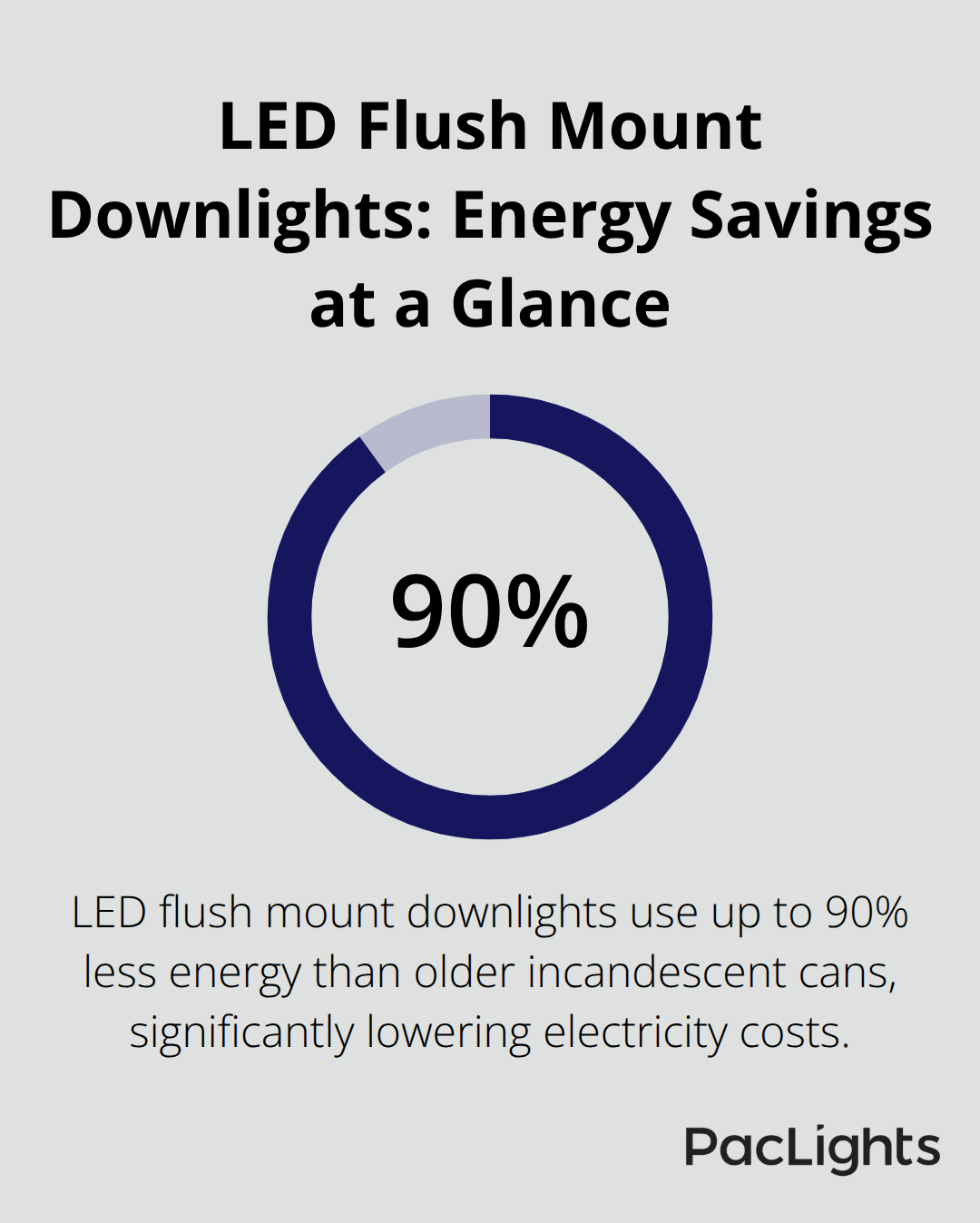
The U.S. Department of Energy reports that LED flush mount downlights reduce energy use by up to 90 percent compared to older incandescent cans. A typical 4-inch LED downlight delivers 600 to 1,100 lumens, while 6-inch versions produce 900 to 1,800 lumens depending on the model. Choosing the right size directly impacts how well your space gets lit without creating dark corners or wasted brightness.
Why They Beat Other Options
Flush mounts outperform recessed cans and pendant lights in specific ways that matter for real installations. Recessed lights require deeper ceiling cavities, which creates installation headaches in older buildings or spaces with low clearance. Pendants hang down and eat visual space, making rooms feel cramped. Flush mounts solve both problems by staying flush with the ceiling surface while delivering comparable brightness.
For kitchens and task areas, you need brightness without glare. A baffle trim on a flush mount downlight cuts glare while maintaining the 60-degree or narrower beam spread that the Illuminating Engineering Society recommends for general ambient lighting. In commercial and industrial facilities, flush mounts work in warehouses, retail stores, offices, and educational buildings where durability and energy savings matter.
Where They Fit Best
Flush mount downlights fit perfectly into facilities that need straightforward, long-lasting illumination without complicated installation or high maintenance costs. Their low-profile design works equally well in residential hallways, living rooms, and kitchens as it does in commercial spaces. The versatility of these fixtures (available in multiple sizes, finishes, and brightness levels) makes them adaptable to nearly any interior environment.
Now that you understand how flush mount downlights work and why they outperform alternatives, the next step involves identifying which specific features matter most for your particular space.
Key Features to Look For When Choosing Flush Mount Downlights
Brightness and Lumens: The Real Measure
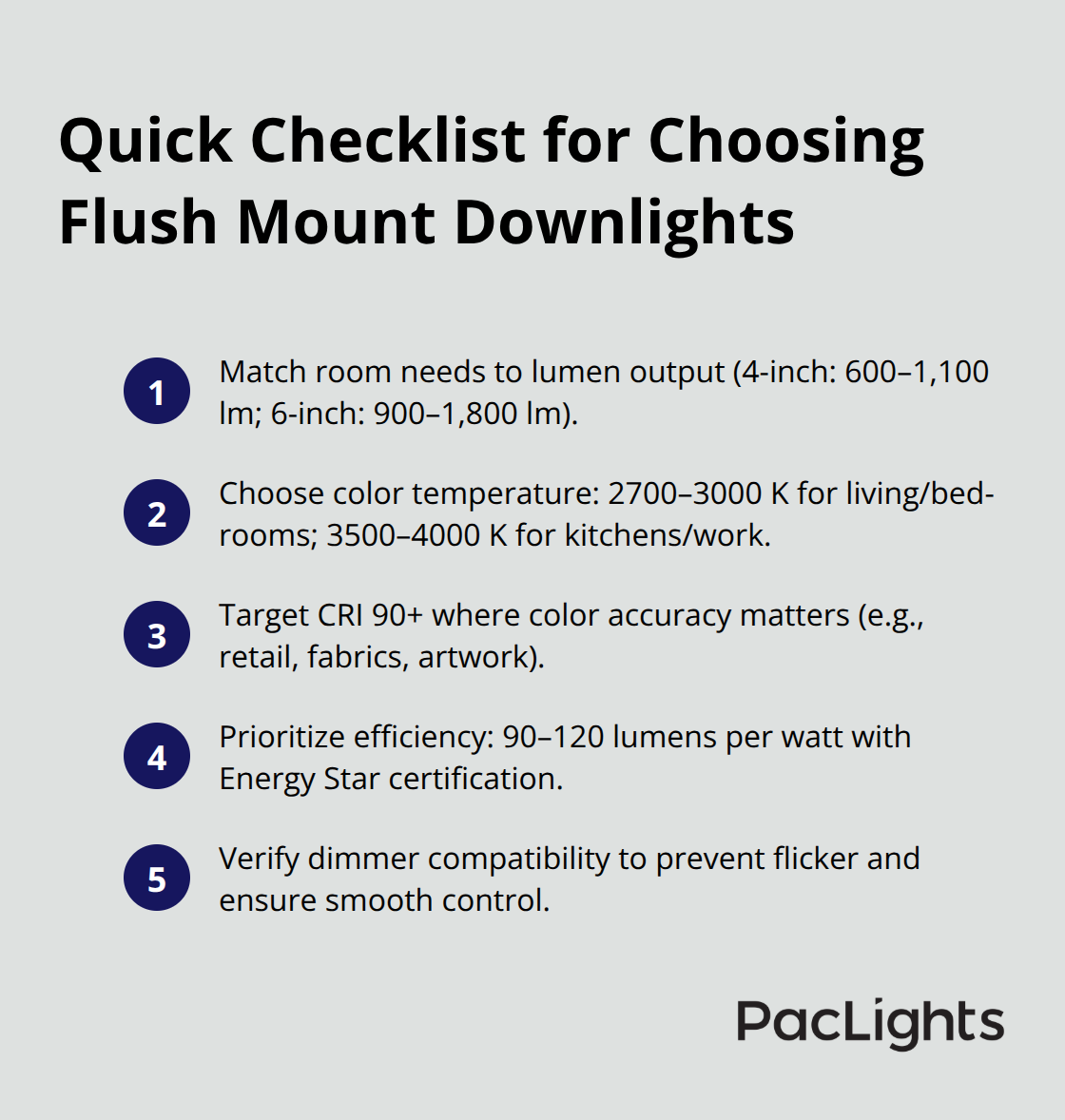
Brightness matters more than you think, and lumens tell the real story. A 4-inch LED downlight typically delivers 600 to 1,100 lumens while a 6-inch version produces 900 to 1,800 lumens, according to the Department of Energy’s Lighting Facts program. For a 10 square meter living room, you need roughly 2,500 lumens total, which breaks down to about 250 lumens per square meter. This means a single 6-inch fixture won’t cut it for most spaces-you’ll need multiple fixtures positioned strategically to avoid dark corners.
Color Temperature and Rendering Quality
Color temperature shapes how a room feels and functions. Warm light between 2700 and 3000 Kelvin works for living areas and bedrooms where you want relaxation, while 3500 to 4000 Kelvin suits kitchens and work zones where visibility matters. The Illuminating Engineering Society recommends selecting a color rendering index of 90 or higher in spaces where color accuracy counts, such as retail environments or areas where you’re evaluating fabrics or artwork.
Energy Efficiency and Long-Term Savings
Energy efficiency separates smart choices from wasteful ones. LED flush mount downlights reduce energy consumption by up to 90 percent compared to incandescent alternatives, per the U.S. Department of Energy. High-efficiency LED options commonly achieve 90 to 120 lumens per watt, which directly translates to lower electricity bills over the fixture’s lifetime. Look for Energy Star certification and read the Lighting Facts label before purchasing-these details tell you exactly what you’re getting in terms of output, temperature, and efficiency rather than relying on marketing claims.
Dimming and Smart Control Options
Dimming capabilities transform a one-dimensional fixture into a flexible lighting tool. Dimmable LED fixtures paired with a compatible dimmer like those from Lutron give you smooth control across the full brightness range, which supports both task work and ambient relaxation in the same space. Verify dimmer compatibility before purchase because not all LED drivers work with every dimmer model-incompatibility causes flickering or failure. Smart controls add another layer of flexibility, allowing you to schedule lighting around your daily routine and adjust color temperature to support your circadian rhythm. Temperature shifts from cooler light during work hours to warmer light in the evening help maintain healthy sleep patterns, though this requires a fixture that supports tunable color temperature.
Installation Requirements and Durability Standards
Installation details affect long-term performance and durability. Choose IC-rated housings if your ceiling touches insulation, as non-IC fixtures can create fire hazards and reduce light output through heat buildup. In bathrooms or damp locations, use fixtures rated for moisture exposure; in showers or outdoor areas, use wet-rated fixtures with appropriate UL or ETL listings. Airtight, energy-efficient luminaire designs minimize air leakage through your ceiling, which prevents energy loss and maintains comfort. Most LED fixtures come with 5 to 10 year warranties and boast lifespans of 25,000 to 50,000 hours, so prioritize brands offering solid safety certifications and documented thermal management rather than the cheapest option available.
With these selection criteria in mind, you’re ready to evaluate specific products that match your space’s unique requirements and performance demands.
Matching Downlights to Your Space
Kitchen and Task Lighting
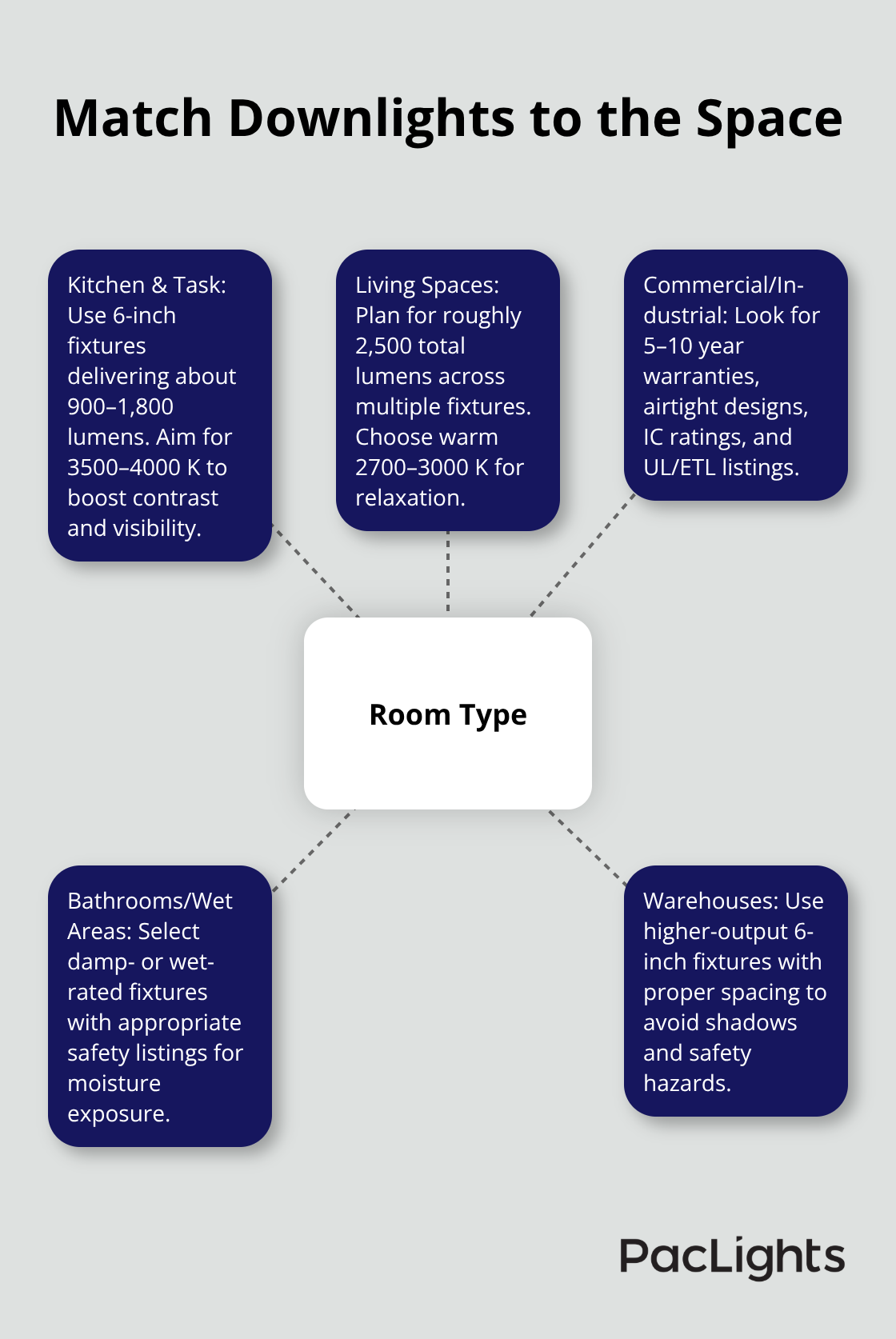
Kitchen and task-focused areas demand brightness without compromise. A 6-inch flush mount downlight delivering 900 to 1,800 lumens works well for food preparation, where clear visibility prevents mistakes and maintains safety. Position these fixtures 24 to 36 inches apart in a grid pattern across your work surfaces to eliminate shadows that hide cutting boards or stovetops. Color temperature matters here-try 3500 to 4000 Kelvin to boost contrast and visibility, which the Illuminating Engineering Society recommends for task zones. Dimmable fixtures provide flexibility to shift from bright work mode during meal prep to softer ambient light during dining, but test your dimmer compatibility before installation to avoid flickering issues.
In commercial kitchens and restaurant spaces, durability takes priority. Choose fixtures with corrosion-resistant aluminum housing rated for damp locations, since steam and moisture degrade cheaper materials quickly. Amico Ultra-Thin LED Recessed Ceiling Lights deliver about 1,050 lumens and fit tight 2-inch ceiling spaces, making them practical for older buildings where ceiling depth limits your options.
Living Spaces and Ambient Lighting
Living spaces and ambient lighting need a different approach entirely. A 10 square meter living room typically benefits from roughly 2,500 lumens total spread across multiple fixtures rather than one bright point source, which creates an unbalanced, harsh feel. Warm light between 2700 and 3000 Kelvin promotes relaxation, so select fixtures rated at this temperature to support how you actually use the space.
Layer your lighting with ceiling downlights, wall sconces, and floor lamps-this prevents the flat, one-dimensional look that single overhead sources create.
Dimmable fixtures paired with smart controls let you adjust brightness throughout the day to match your activities and circadian rhythm. Sunco Lighting Dimmable Recessed Downlights offer budget-friendly pricing with durable corrosion-resistant housing and suitability for various room types.
Commercial and Industrial Facilities
Commercial and industrial facilities require fixtures that prioritize durability, energy savings, and long operational life. Choose fixtures with 5 to 10 year warranties and 25,000 to 50,000 hour lifespans to minimize replacement costs. Airtight, energy-efficient designs reduce air leakage through your ceiling envelope, which lowers heating and cooling expenses over time.
For large warehouse spaces, 6-inch downlights with higher light output provide broad coverage, though proper spacing prevents gaps and shadows that create safety hazards. Verify IC-rating for insulated ceilings and check UL or ETL listings to meet building codes and ensure fire safety compliance. PacLights offers tailored lighting solutions for warehouses, retail stores, offices, and educational buildings, with advanced controls and retrofit options to optimize energy use across your facility.
Final Thoughts
Selecting the best flush mount downlights requires you to match three core factors: brightness in lumens, color temperature for your room’s purpose, and energy efficiency standards. A 6-inch fixture delivering 900 to 1,800 lumens works for most residential kitchens and living areas, while 4-inch options suit hallways and smaller spaces. Warm light at 2700 to 3000 Kelvin creates comfort in bedrooms and lounges, whereas 3500 to 4000 Kelvin improves visibility in kitchens and work zones. Energy Star certification and high lumens-per-watt ratings directly reduce your electricity costs over the fixture’s 25,000 to 50,000 hour lifespan.
Your space’s specific demands determine which features matter most. Residential installations benefit from dimmable fixtures paired with compatible dimmers for flexibility between task and ambient modes, while commercial facilities prioritize durability, airtight designs that minimize air leakage, and IC-rated housings for insulated ceilings. Moisture-prone areas like bathrooms require damp-rated fixtures, and industrial warehouses need fixtures with proven thermal management and solid safety certifications. A licensed electrician should handle installation and confirm your ceiling box size, electrical load capacity, and local building codes before work begins.
Read the Lighting Facts label to verify lumen output, color temperature, and CRI rather than relying on marketing language, and test dimmer compatibility if you’re upgrading existing systems. We at PacLights provide tailored lighting solutions with advanced controls and retrofit options to optimize energy use and performance across your space.
Disclaimer: PacLights is not responsible for any actions taken based on the suggestions and information provided in this article, and readers should consult local building and electrical codes for proper guidance.