

Office spaces need strategic lighting to showcase their best features and create productive environments. Architectural spotlights transform bland workspaces into visually striking areas that reflect company culture.
We at PacLights see how proper spotlight placement boosts employee satisfaction while reducing energy costs. The right lighting system pays for itself through improved productivity and lower utility bills.
Which Spotlight Types Work Best in Modern Offices
Track Lighting Systems for Maximum Flexibility
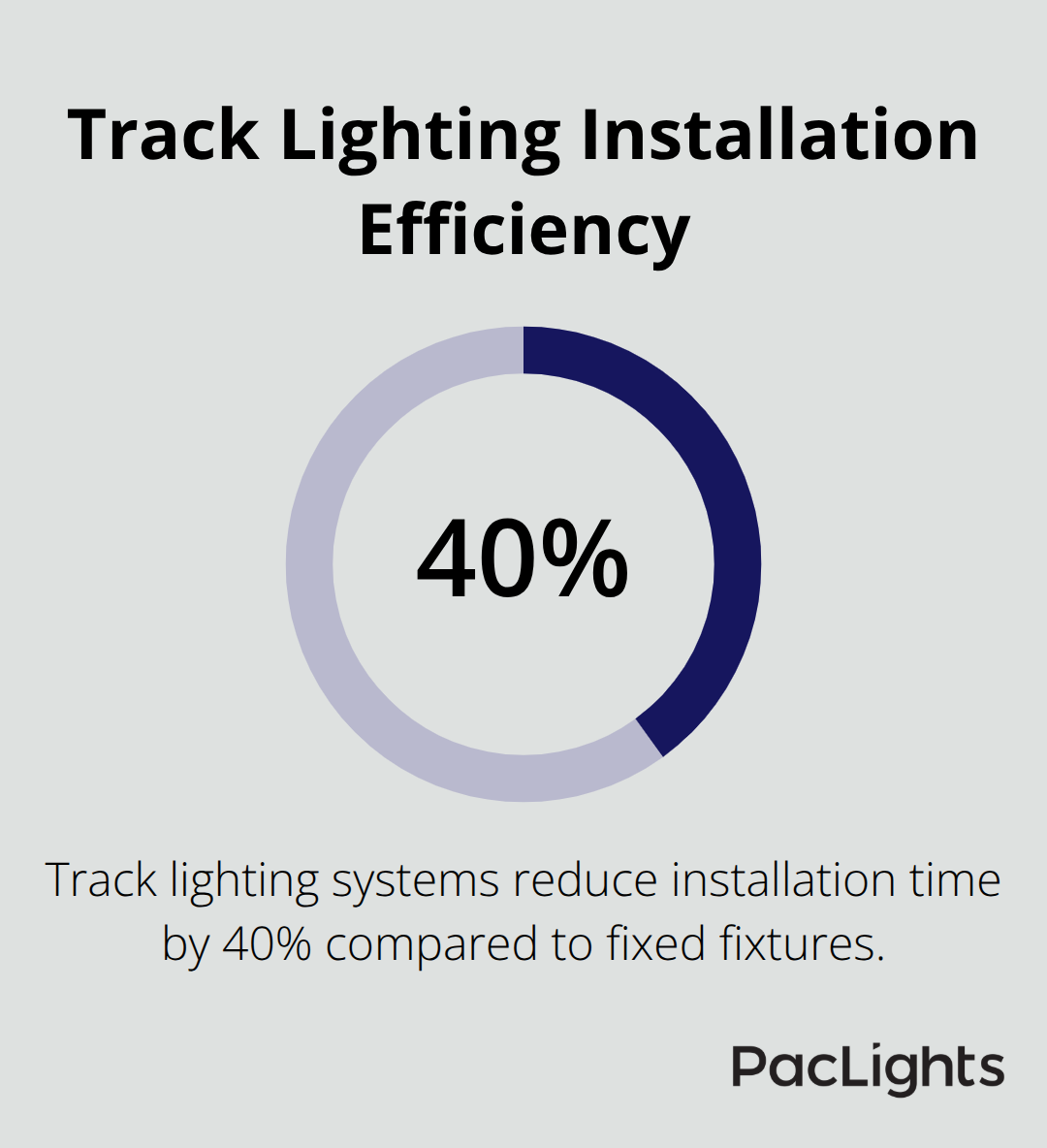
LED track lighting systems dominate office spotlight applications because they adapt to workspace changes without rewiring. These systems mount to ceiling tracks and allow individual fixtures to slide, rotate, and adjust beam angles instantly. The National Electrical Manufacturers Association reports that track systems reduce installation time by 40% compared to fixed fixtures.
Modern LED track heads consume just 15-25 watts while they deliver 1,800-2,500 lumens. This efficiency makes them perfect for reception areas, artwork, or architectural details that need emphasis. Track systems excel in open offices where furniture layouts shift frequently (quarterly reorganizations become simple lighting adjustments).
Recessed Adjustable Downlights for Clean Aesthetics
Recessed adjustable downlights provide clean visual integration while they maintain spotlight functionality. These fixtures sit flush with ceiling tiles and feature gimbal rings that tilt up to 30 degrees in any direction. The Illuminating Engineering Society recommends 8-10 foot spacing for optimal coverage in standard 9-foot ceiling offices.
Quality recessed spotlights deliver 2,000-3,000 lumens with beam angles from 15 degrees for accent work to 40 degrees for general illumination. They work exceptionally well in conference rooms where presentations need focused light without visible fixtures that clutter the ceiling plane.
Surface-Mounted Accent Fixtures for Architectural Impact
Surface-mounted accent fixtures create dramatic effects while they showcase unique architectural elements. These fixtures attach directly to ceilings or walls and project light at specific angles to highlight textures, columns, or branded elements. Professional designers specify surface-mounted spots with narrow 10-15 degree beam angles for wall effects that make spaces appear larger.
The fixtures typically consume 20-35 watts while they produce highly focused illumination. This precision transforms ordinary office features into visual focal points that reinforce company identity.
Smart Integration Options
Modern spotlight systems integrate with building automation platforms (BACnet, KNX protocols) to create responsive environments. These systems adjust brightness and color temperature based on occupancy, time of day, and natural light levels. Smart integration reduces energy consumption by an additional 30% beyond standard LED efficiency gains.
Strategic spotlight placement creates the foundation for productive workspaces, but the real impact comes from understanding how these fixtures benefit your specific office environment.
How Strategic Spotlights Transform Office Environments
Visual Impact Creates Lasting Impressions
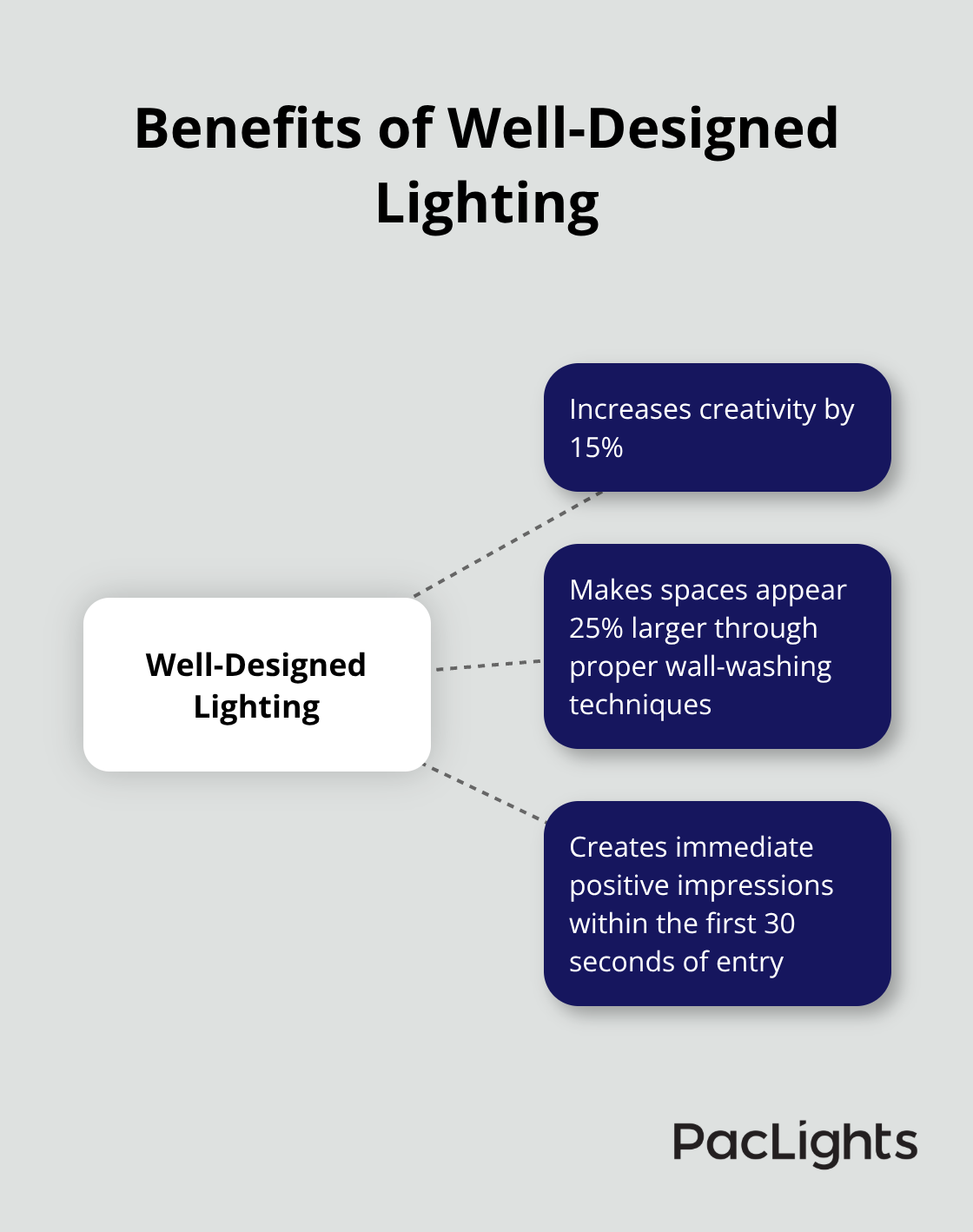
Strategic spotlight placement transforms ordinary office spaces into memorable environments that reinforce brand identity. The Human Spaces study found that well-designed lighting increases creativity by 15% while making spaces appear 25% larger through proper wall-washing techniques. Reception areas with focused accent lighting create immediate positive impressions that influence client perceptions within the first 30 seconds of entry.
Conference rooms benefit from adjustable spotlights that highlight presentation walls while they maintain comfortable ambient levels for video calls. Architectural features gain prominence through precise beam placement. Columns, textured walls, and company logos become focal points that guide visitor attention and strengthen brand recognition. The Cornell University study shows that employees who work in visually appealing environments report 18% higher job satisfaction scores compared to standard fluorescent-lit spaces.
Productivity Gains Through Better Lighting
Employee performance improves significantly with proper spotlight integration. The National Research Council of Canada research demonstrates that workspaces with layered lighting systems reduce eye strain by 42% and decrease headaches by 35%. Task-focused spotlights eliminate harsh shadows on work surfaces while they maintain optimal contrast ratios for screen work.
Circadian rhythm support becomes possible through tunable white spotlights that adjust color temperature throughout the day. Morning settings at 5000K boost alertness, while afternoon transitions to 3500K maintain comfort without sleep pattern disruption. This approach increases afternoon productivity by 12% according to Lighting Research Center data (particularly effective in open office environments).
Energy Savings Generate Immediate ROI
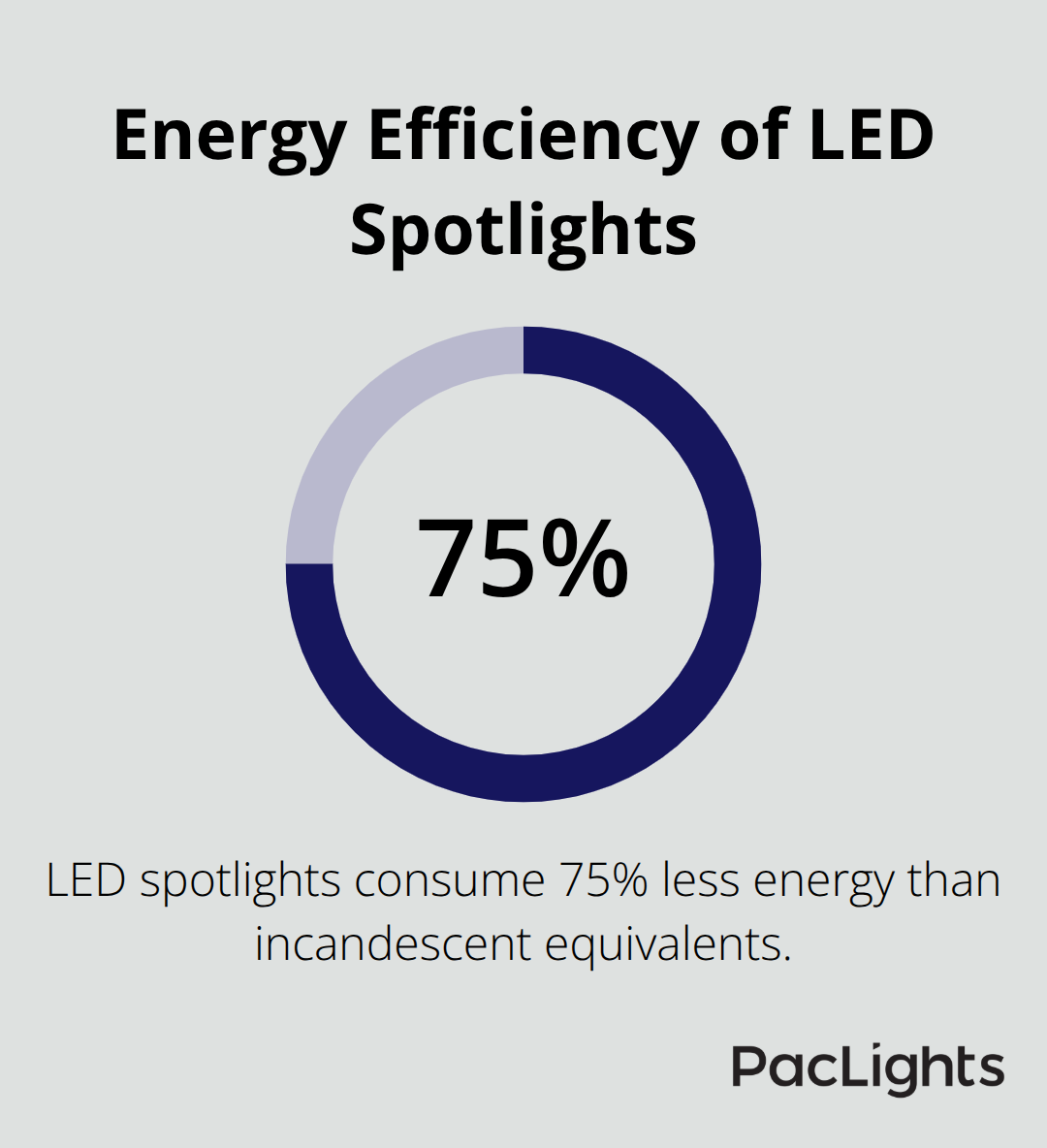
Modern LED spotlight systems deliver substantial cost reductions compared to traditional halogen or fluorescent alternatives. The U.S. Department of Energy reports that LED spotlights consume 75% less energy while they last 25 times longer than incandescent equivalents. A typical 5000 square foot office that switches to LED spotlights saves $2,800 annually in electricity costs alone.
Smart controls amplify these savings through occupancy sensors and daylight harvesting systems. These systems automatically dim or shut off fixtures in unoccupied areas, which creates additional 30% energy reductions. The payback period for quality spotlight installations ranges from 18-24 months through combined energy savings and reduced maintenance costs.
These benefits multiply when you implement spotlights according to proven design principles that maximize their effectiveness.
How Do You Position Spotlights for Maximum Impact
Target High-Value Visual Elements First
Office spotlight placement requires systematic identification of architectural features that deserve emphasis. Reception desks, company logos, textured accent walls, and unique structural elements like exposed beams or columns become primary focal points. The International Association of Lighting Designers recommends that you start with elements visible from main circulation paths since these areas influence first impressions most strongly. Feature walls behind reception areas need 3-5 times more illumination than adjacent surfaces to create proper visual hierarchy.
Conference room presentation walls require spotlights positioned at 30-degree angles from viewer positions to minimize glare while they maintain adequate brightness for video calls. Artwork and branded elements need narrow 15-degree beam angles positioned 2-3 feet from wall surfaces to prevent hot spots and achieve even coverage. This precision transforms ordinary office features into memorable brand touchpoints that reinforce company identity.
Calculate Beam Angles and Distances for Optimal Coverage
Proper beam angle selection directly impacts spotlight effectiveness and energy efficiency. Wide 40-degree beams work for general accent applications over large areas, while narrow 10-degree beams create dramatic effects on specific architectural details. The formula for beam diameter is simple: distance from fixture multiplied by 0.5 for 30-degree beams, or distance multiplied by 0.18 for 10-degree beams.
Ceiling-mounted spotlights need 8-12 foot spacing for uniform coverage in typical office environments. Wall-wash applications require fixtures positioned 12-18 inches from wall surfaces to prevent scalloped effects. The Illuminating Engineering Society specifies minimum 500 lux levels for detailed tasks (achievable with 2,000-lumen spotlights at 8-foot heights).
Layer Spotlights with Ambient Systems
Successful spotlight integration requires coordination with existing ambient systems to prevent harsh contrasts that cause eye strain. Ambient light levels should remain at 200-300 lux while accent spotlights provide 3:1 brightness ratios on featured elements. This approach reduces the 42% eye strain rates documented in single-source environments.
Smart controls allow spotlight intensity adjustments throughout the day to complement natural light variations. Morning settings at 80% intensity support alertness while afternoon reductions to 60% maintain visual comfort. These systems integrate with occupancy sensors to automatically adjust based on space usage patterns, which creates additional energy savings while they maintain optimal positioning for visual conditions.
Final Thoughts
Architectural spotlights represent a strategic investment that transforms office environments while they deliver measurable returns. The evidence shows clear productivity gains of 12-20% through improved conditions, reduced eye strain by 42%, and enhanced employee satisfaction scores by 18%. These performance improvements translate directly to bottom-line value for businesses of all sizes.
The financial benefits compound over time through 75% energy savings compared to traditional systems and maintenance cost reductions from LED longevity. Smart integration capabilities create additional 30% efficiency gains while they support circadian health through tunable white technology. Most installations achieve full payback within 18-24 months through combined operational savings.
Office environments require professional assessment to maximize effectiveness and ROI potential. We at PacLights provide comprehensive solutions that include energy-efficient LED fixtures, retrofit options, and advanced controls with daylight and motion sensors. The transition to architectural spotlights positions offices for long-term success through enhanced brand presentation, improved employee performance, and substantial cost savings that benefit operations for decades.
Disclaimer: PacLights is not responsible for any actions taken based on the suggestions and information provided in this article, and readers should consult local building and electrical codes for proper guidance.