

NSF certification lights guide standards exist for a reason: they protect people and products in the most demanding environments. Whether you operate a food service facility, pharmaceutical lab, or hospital, lighting compliance isn’t optional-it’s a requirement that directly impacts safety and operations.
At PacLights, we’ve helped countless facilities navigate these standards and find lighting solutions that meet their specific needs. This guide breaks down what NSF certification means, which standards apply to your facility, and how to choose the right compliant lighting systems.
What NSF Certification Actually Means for Your Facility
NSF Certification: More Than a Label
NSF certification proves that a lighting product meets specific safety and performance standards set by NSF International, an independent organization that tests and certifies products for public health. When you install NSF certified lighting, you use fixtures that have undergone rigorous testing to prevent contamination, withstand harsh cleaning procedures, and maintain performance in regulated environments. The NSF/ANSI standards for lighting cover everything from surface materials that won’t harbor bacteria to fixture design that prevents product contamination in food service areas.
For facilities operating under FDA, USDA, or other regulatory oversight, NSF certification becomes a legal requirement rather than a recommendation. Non-compliant lighting results in failed inspections, fines, and operational shutdowns. Compliance directly affects your bottom line, which is why selecting the right lighting solutions matters from the start.
Where NSF Standards Create Real Impact
NSF standards matter most in environments where contamination creates genuine risks. Food service facilities must comply with NSF/ANSI 51, which specifies that fixtures cannot shed particles, collect debris, or create harborage points for pests and pathogens. Pharmaceutical labs and cleanrooms follow NSF/ANSI 49 requirements, demanding fixtures that support stringent hygiene protocols and withstand frequent sanitization with harsh chemicals.
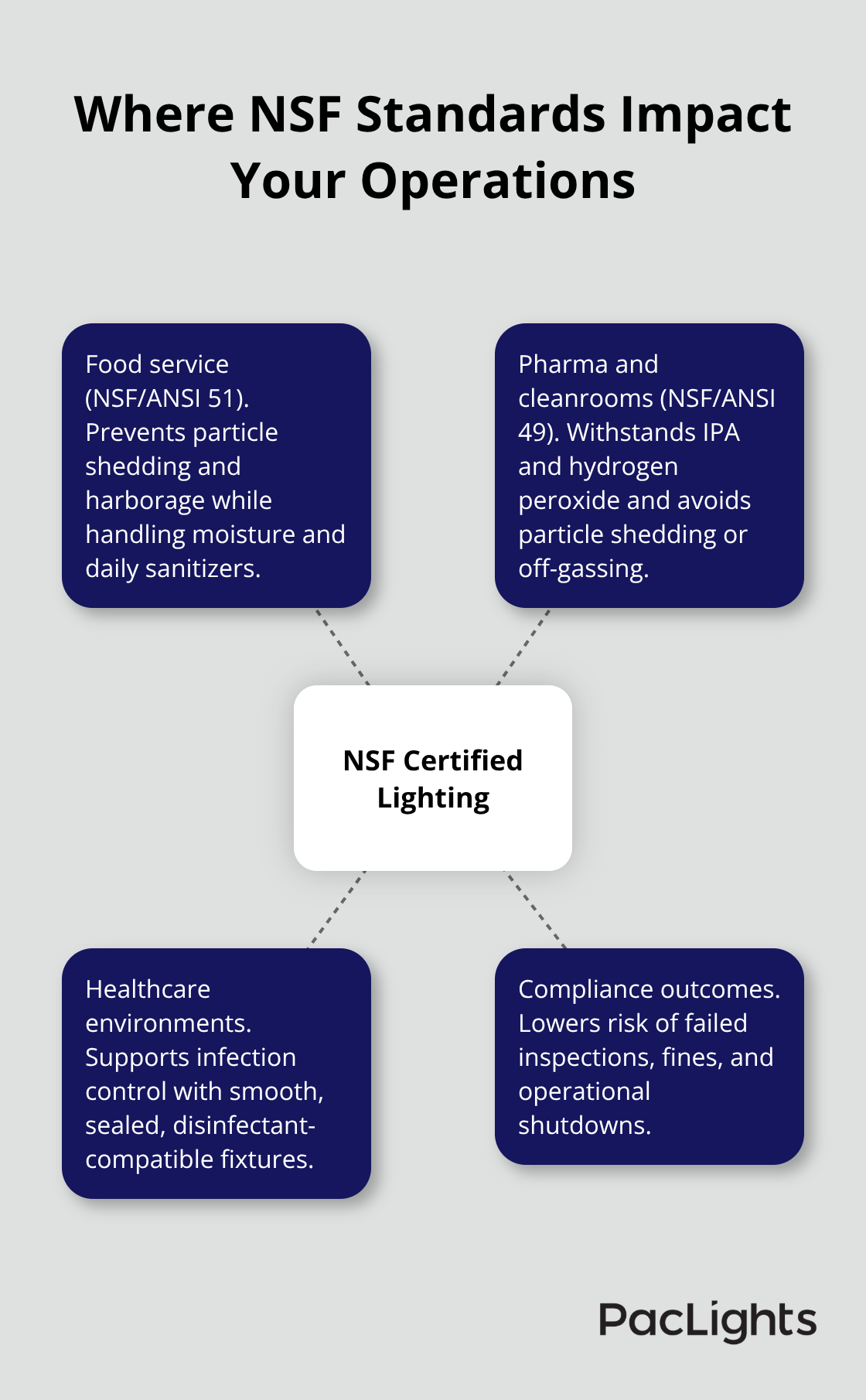
Healthcare facilities need lighting that supports infection control, particularly in operating rooms and patient care areas where lighting quality directly impacts both safety and clinical outcomes. The certification process involves third-party testing of materials, construction methods, and performance under real-world conditions-not theoretical scenarios. This means NSF certified fixtures have already proven they can handle your facility’s actual demands.
The Real Cost of Choosing Compliant Lighting
When you choose compliant lighting, you eliminate the guesswork and reduce the risk of costly compliance violations. The investment in certified fixtures pays for itself through avoided penalties, reduced equipment replacement due to degradation, and the operational confidence that comes from meeting regulatory requirements. Understanding which specific NSF standards apply to your facility type determines which lighting solutions will actually work for your operations.
Which NSF Standards Apply to Your Facility Type
Food Service: The Strictest Lighting Requirements
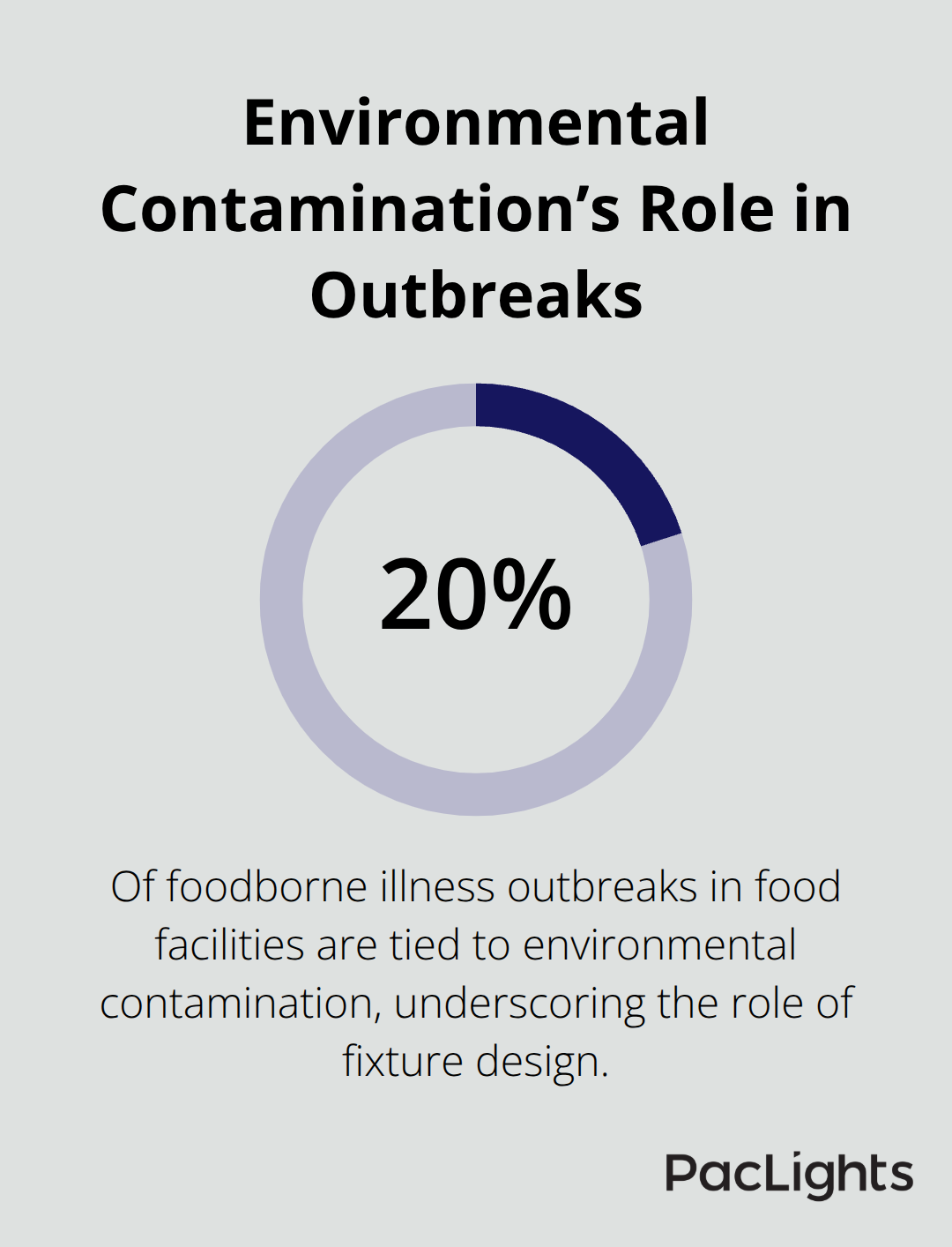
Food service operations face the most demanding lighting standards because contamination risks are immediate and measurable. NSF/ANSI 51 certification requires fixtures with smooth, sloped surfaces that shed water and cleaning solutions rather than trapping them, sealed construction that prevents insects and rodents from nesting inside the fixture, and materials that resist corrosion from sanitizing chemicals used daily in commercial kitchens. The CDC found that environmental contamination in food facilities accounts for roughly 20 percent of foodborne illness outbreaks, making fixture design a genuine food safety tool. When selecting fixtures for kitchens, prep areas, or storage facilities, verify that NSF/ANSI 51 certification includes the specific mounting location-wall-mounted fixtures have different requirements than ceiling-mounted options.
Pharmaceutical and Laboratory Environments
Pharmaceutical and laboratory environments demand equally rigorous but different standards. NSF/ANSI 49 certification applies to facilities where product purity matters, including compounding pharmacies, research labs, and manufacturing cleanrooms. These fixtures must withstand frequent exposure to isopropyl alcohol, hydrogen peroxide, and other harsh disinfectants without degradation. The fixture design must prevent particle shedding into products or samples, and the materials used cannot off-gas chemicals that contaminate sensitive research or pharmaceutical products. Laboratory managers report that non-compliant lighting requires replacement every two to three years due to chemical degradation, while NSF certified fixtures maintain performance for five to seven years under the same conditions.
Healthcare Facilities and Infection Control
Healthcare facilities operate under different regulatory pressure than food service or pharmaceutical environments. Hospitals and surgical centers don’t require NSF/ANSI certification for all lighting, but operating rooms, intensive care units, and sterile processing areas benefit from fixtures designed to infection control standards. These environments demand fixtures with smooth surfaces, sealed construction, and materials compatible with hospital-grade disinfectants. Beyond regulatory compliance, lighting quality itself affects clinical outcomes-proper color rendering and brightness in operating rooms reduce surgical errors and eye strain for staff working extended shifts. When upgrading lighting in healthcare settings, specify fixtures rated for healthcare environments and confirm compatibility with your facility’s disinfection protocols.
Matching Standards to Your Specific Operations
Your facility’s regulatory requirements determine which standards apply, but the selection process involves more than identifying the correct certification number. Food service facilities need fixtures that handle daily moisture and chemical exposure, pharmaceutical labs require materials that resist aggressive disinfectants without degradation, and healthcare settings demand both compliance and optical performance that supports clinical work. The difference between a standard industrial fixture and an NSF certified one often comes down to material selection, surface finish, and construction details that prevent contamination pathways. Choosing certified fixtures from the start eliminates costly replacements and compliance violations down the line, but understanding the testing procedures behind these certifications helps you evaluate whether a fixture truly meets your facility’s actual demands.
How NSF Certification Testing Works
The NSF Testing Process and What It Measures
NSF International conducts testing through a standardized process that examines every aspect of a lighting fixture’s design, materials, and performance. The certification doesn’t rely on manufacturer claims or theoretical specifications-NSF sends fixtures to independent laboratories where they undergo rigorous testing for surface contamination risk, material compatibility with disinfectants, and structural integrity under real-world conditions. The testing requirements exist because non-compliant fixtures fail in ways that create genuine operational costs.
Food Service Fixture Testing Standards
For NSF/ANSI 51 fixtures used in food service, testing includes water spray tests to verify that surfaces shed liquids rather than trap them, chemical immersion tests with sanitizers like quaternary ammonium compounds, and direct bacterial culture tests on fixture surfaces after cleaning. A fixture that traps moisture in food service environments becomes a breeding ground for Listeria monocytogenes and Salmonella within days-bacteria that survive standard cleaning procedures. The certification process takes four to eight weeks depending on fixture complexity, and manufacturers must submit detailed technical documentation showing material composition, surface treatments, sealant types, and construction methods.
Pharmaceutical and Laboratory Testing Requirements
NSF/ANSI 49 testing for pharmaceutical environments adds chemical compatibility testing with isopropyl alcohol and hydrogen peroxide to ensure fixtures don’t degrade or off-gas particles that contaminate products. Pharmaceutical labs using non-certified fixtures report particle shedding that contaminates batches, forcing product destruction and regulatory investigation. NSF maintains a public database listing every certified product with its specific certification number and applicable standards, which you can verify before purchasing any fixture.
Performance Metrics That Matter
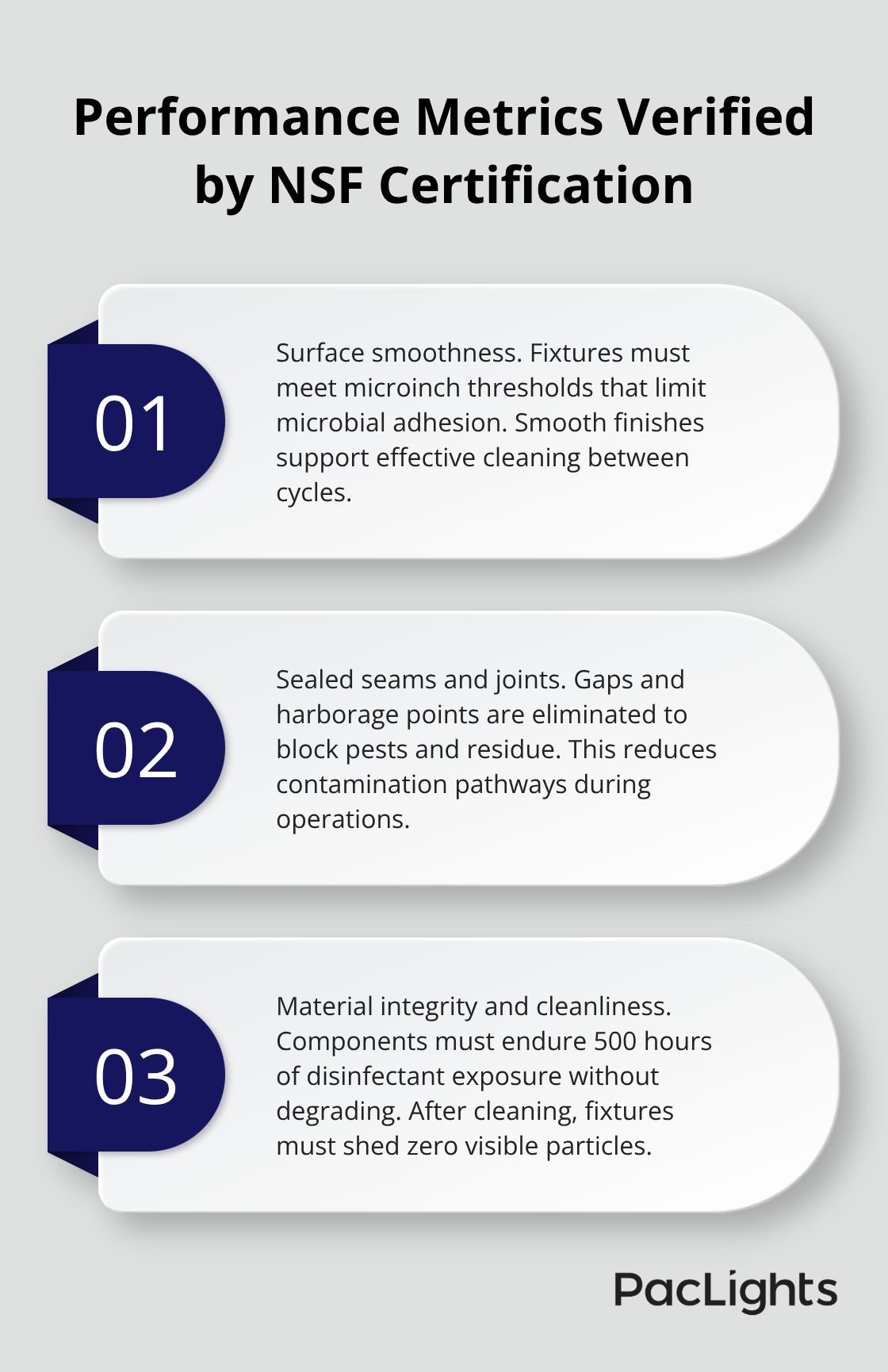
NSF certification verifies that fixtures meet specific performance metrics: surfaces must achieve a certain smoothness rating measured in microinches, all seams and joints must be sealed to prevent harborage, materials must maintain structural integrity after 500 hours of exposure to relevant disinfectants, and fixtures must shed zero visible particles after cleaning cycles. Healthcare facilities installing standard industrial fixtures in operating rooms face infection control risks because materials degrade under hospital disinfectants, exposing bare metal that harbors pathogens. When you specify NSF certified lighting, you receive documentation proving the fixture passed these specific performance benchmarks rather than relying on generic industrial ratings that don’t address contamination prevention.
Final Thoughts
NSF certification lights guide your facility toward compliant, reliable lighting that prevents contamination and meets regulatory requirements. Food service operations need NSF/ANSI 51 fixtures that shed moisture and resist sanitizing chemicals, while pharmaceutical labs demand NSF/ANSI 49 certification to withstand aggressive disinfectants without degradation. Healthcare facilities benefit from fixtures designed for infection control, supporting both compliance and clinical outcomes.
The upgrade process starts with understanding your current compliance gaps and calculating the cost of non-compliance against the investment in certified fixtures. Many facilities discover that certified lighting actually reduces long-term costs by eliminating premature replacement due to chemical degradation and avoiding compliance violations. Verify the certification number on any fixture before purchasing, and confirm it applies to your specific mounting location and operational conditions.
We at PacLights offer lighting fixtures tailored to diverse industrial needs, including options for food service, pharmaceutical, and healthcare environments. Our team provides free lighting layout designs and ROI assessments to help you understand the financial impact of upgrading to compliant systems. Visit PacLights to explore NSF certified lighting solutions and connect with our team about your facility’s specific requirements.
Disclaimer: PacLights is not responsible for any actions taken based on the suggestions and information provided in this article, and readers should consult local building and electrical codes for proper guidance.