

Datacenters consume massive amounts of energy, with lighting often accounting for 20% of total facility power usage. At PacLights, we’ve seen firsthand how networked datacenter lighting transforms this challenge into an opportunity for significant savings.
Centralized control systems give you real-time visibility and automated optimization across your entire facility. The result is lower energy bills, reduced maintenance costs, and faster ROI than traditional lighting approaches.
How Networked Datacenter Lighting Works
[TASK_CLASS=ACTIVE]Networked datacenter lighting operates through connected fixtures that communicate with a central control platform, allowing real-time adjustments across your entire facility without manual intervention. Each fixture contains sensors that detect occupancy, ambient light levels, and equipment heat signatures, feeding this data back to your control system continuously. This constant feedback loop means your lighting responds instantly to actual conditions rather than following preset schedules.
Integration Across Your Entire Facility
The system connects to your building management platform, creating a unified view of facility operations where lighting data flows alongside HVAC, power distribution, and security systems. This integration prevents the isolated decision-making that wastes energy in traditional setups. Most datacenter operators don’t realize their networked lighting controls run independently from other building systems, creating conflicts where cooling systems work harder because lighting generates unnecessary heat. Networked solutions eliminate this inefficiency by coordinating across all building functions.
Real-Time Monitoring Changes Everything
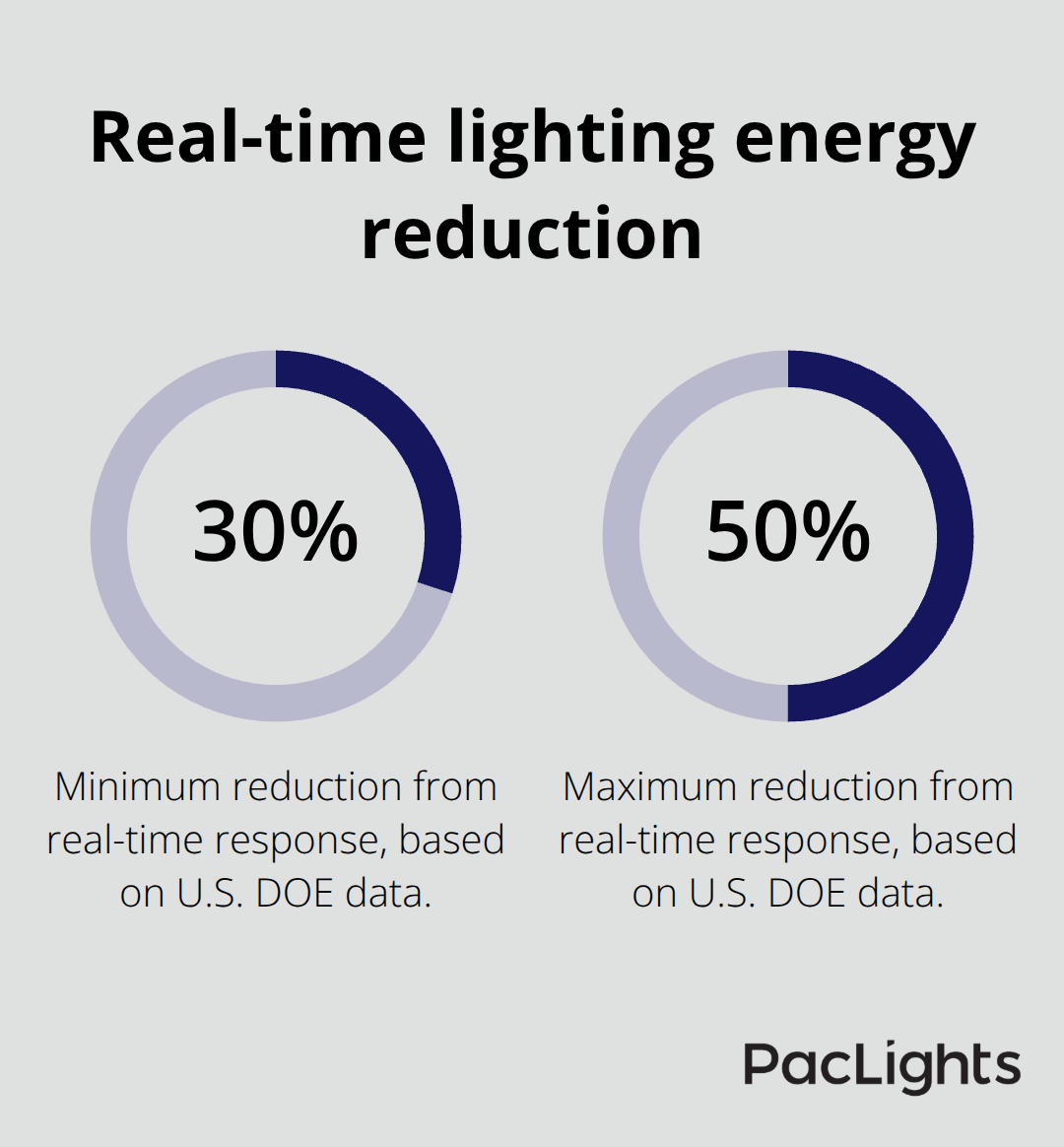
Traditional datacenter lighting operates on fixed schedules or manual controls, meaning lights remain on during periods of low activity and in areas where natural light supplements artificial illumination. Networked systems detect these conditions and dim or disable fixtures within seconds. A datacenter with 500 high-bay fixtures across 50,000 square feet can reduce lighting energy consumption by 30-50% through this real-time response alone, according to data from the U.S. Department of Energy.
The monitoring component also tracks individual fixture performance, identifying failing bulbs or ballasts before they cause complete outages. This predictive capability means your maintenance team addresses problems during planned service windows rather than responding to emergency failures that disrupt operations. Datacenters operating 24/7 cannot tolerate unexpected lighting failures, making this transition from reactive to preventive maintenance worth the investment immediately.
Automation That Adapts to Your Operations
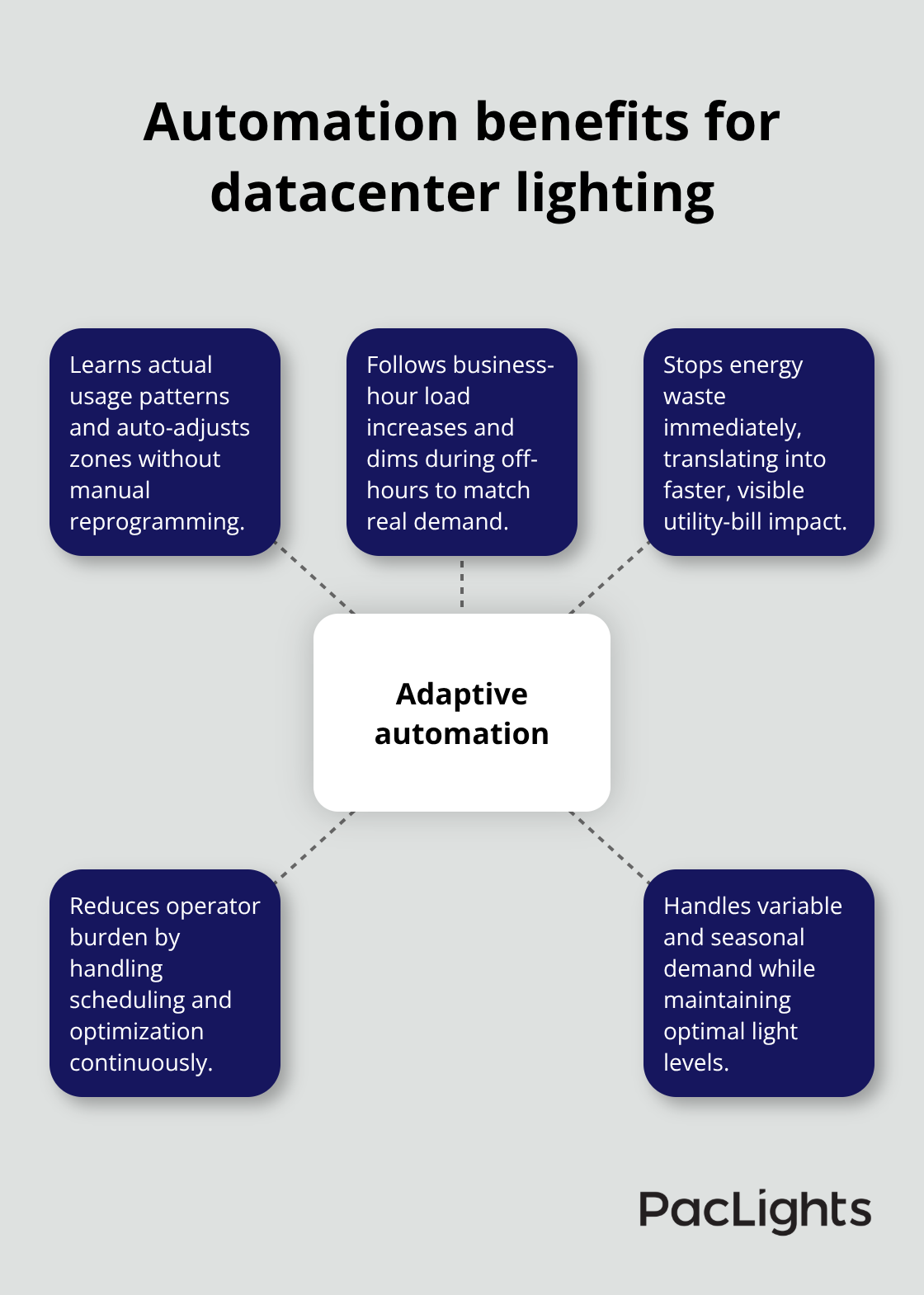
Scheduling in networked systems works differently than traditional timers because it responds to actual facility usage patterns rather than clock time. The system learns when different zones experience peak activity and adjusts lighting accordingly without requiring you to reprogram anything manually. If your datacenter runs higher loads during business hours and reduces operations at night, the lighting automatically follows this pattern.
You set parameters once, and the system maintains optimal lighting levels across changing conditions. This automation particularly benefits facilities with variable workloads or seasonal demand fluctuations (which most modern datacenters experience). The financial impact appears quickly because energy waste stops immediately, without waiting for your next scheduled maintenance review or utility bill analysis. These operational improvements set the stage for understanding the specific financial returns you can expect from implementation.
The Financial Impact of Networked Lighting
Networked datacenter lighting delivers measurable financial returns that appear within months, not years. A 30-50% reduction in lighting energy consumption translates directly to lower utility bills, and most datacenters see this benefit immediately after implementation. A typical 50,000 square foot datacenter spending $15,000 annually on lighting electricity can reduce that to $7,500-$10,500, depending on baseline efficiency and operational patterns. The U.S. Department of Energy reports that lighting represents 20% of datacenter energy use, making it one of the few facility systems where you can achieve substantial savings without major infrastructure overhauls.
Energy Savings Hit Your Bottom Line Fast
Facilities upgrading to networked controls recover their investment in 18-36 months through energy savings alone, even before accounting for maintenance cost reductions. This timeline matters because it means your facility stops losing money on inefficient lighting within a year and a half. Most datacenter operators cannot ignore a financial case this strong, especially when the payback period falls well within typical equipment lifecycle expectations.
Predictive Maintenance Cuts Costs Dramatically
Predictive maintenance capabilities generate secondary savings that often exceed the primary energy reduction benefits. Traditional datacenter lighting requires reactive maintenance where failures interrupt operations and force emergency service calls at premium rates. Networked systems identify failing fixtures before outages occur, allowing your team to schedule replacements during planned maintenance windows. This shift from emergency response to scheduled service reduces labor costs by 25-40% annually, according to facility management research from APPA.
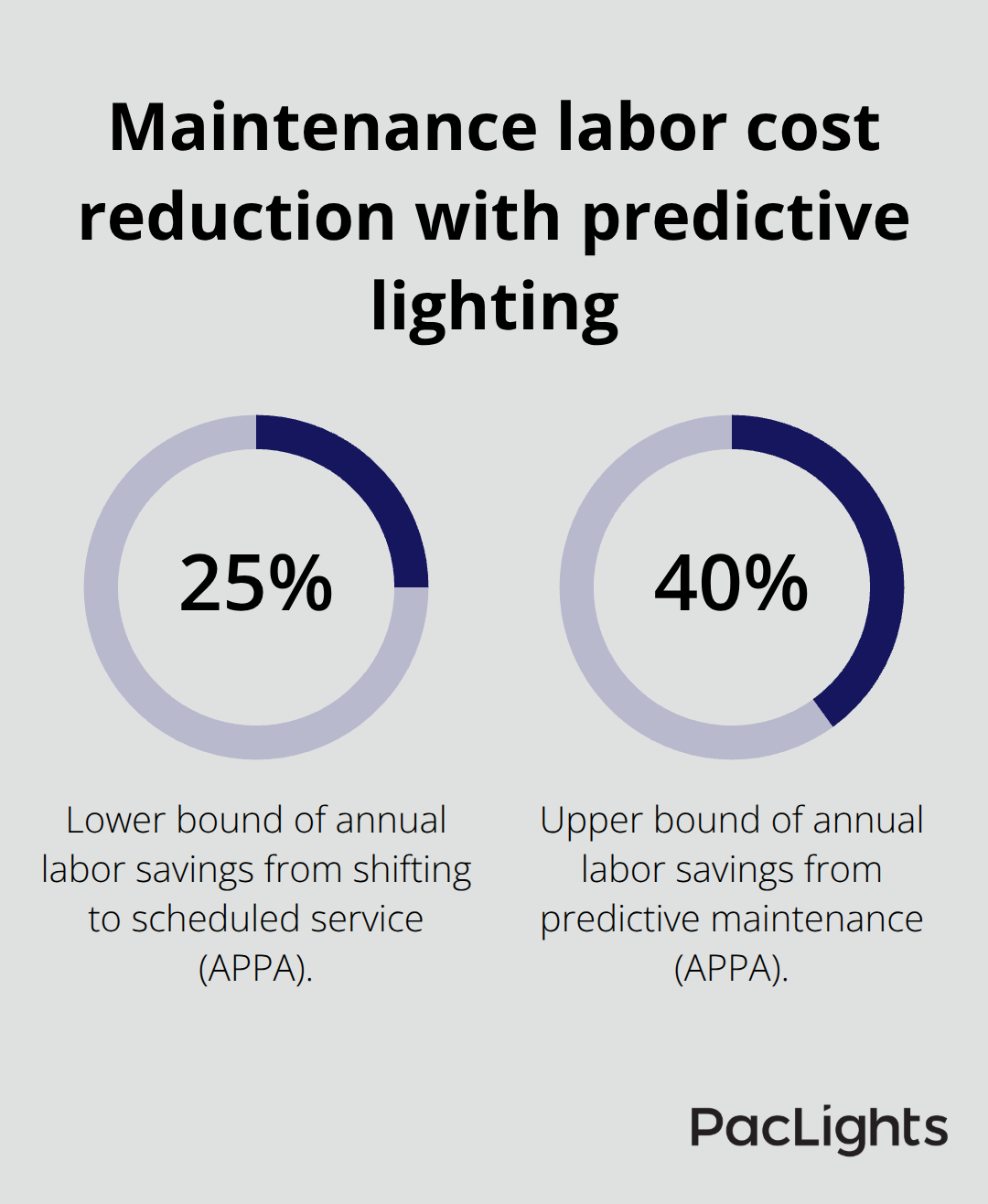
A datacenter with 500 fixtures might spend $8,000-$12,000 yearly on unplanned maintenance visits; networked monitoring can cut this to $5,000-$7,000 through predictive intervention. The operational stability matters equally because unexpected lighting failures in critical server areas create business interruption costs that dwarf the maintenance expense itself.
Uptime Commitments Demand Preventive Action
Datacenters operating on 99.99% uptime commitments cannot afford reactive maintenance, making the shift to predictive systems a business necessity rather than an optional upgrade. Your facility’s reputation and customer contracts depend on consistent operations, and lighting failures threaten both. The combination of reduced energy consumption and lower maintenance costs creates a financial case so strong that implementation becomes inevitable. Understanding these returns helps you evaluate which networked lighting solution fits your specific facility needs and budget constraints.
Getting Your Datacenter Ready for Networked Lighting
Audit Your Current Lighting Infrastructure
Implementing networked datacenter lighting requires three critical steps that most facilities rush through, which costs them thousands in wasted efficiency gains. Start with a thorough audit of your current lighting infrastructure, documenting fixture types, ages, wattage ratings, and maintenance history across every zone. This audit reveals which areas consume the most energy and which fixtures fail most frequently, giving you the data needed to prioritize replacement areas and calculate realistic ROI. Facilities that skip this step typically overestimate savings because they cannot distinguish between energy waste from old fixtures versus inefficient controls.
Spend 2-3 weeks on this audit using a spreadsheet to track fixture locations, installation dates, and recent repair costs. Include your maintenance team in this process since they know which fixtures cause recurring problems and which areas experience the most unexpected failures. Most datacenters discover that 30-40% of their fixtures are over 10 years old, according to lighting industry data from the International Association of Lighting Management Companies, making these zones prime candidates for immediate upgrade.
Match Your Facility to Compatible Solutions
Selecting the right networked lighting solution demands matching your facility’s specific requirements to compatible hardware and software platforms rather than choosing based on price alone. Datacenters with older electrical infrastructure often face compatibility challenges that force expensive rewiring or adapter systems, so verify electrical compatibility before purchasing any networked fixtures.
Request detailed compatibility documentation from any vendor before committing to purchase, including electrical specifications, control protocol requirements, and integration capabilities with your building management system. PacLights offers free lighting layout designs and ROI assessments that help you understand exactly which fixtures work with your existing systems and what modifications, if any, your facility requires. This approach prevents costly mistakes that emerge after installation begins.
Train Your Team Before Implementation Starts
Staff training must happen before implementation begins, not after, which prevents operational disruptions and speeds up the transition to full system optimization. Schedule training sessions with your maintenance team and facility operators at least two weeks before new fixtures arrive, covering system operation, troubleshooting basic issues, and how to access real-time monitoring data.
Assign one staff member as the primary point of contact for the system, giving them deeper training on advanced features and emergency procedures. This structured approach prevents the common failure where networked systems remain underutilized because staff lack confidence using the control platform. Your team’s comfort with the new system directly determines how quickly you realize the financial and operational benefits that networked lighting delivers.
Final Thoughts
Networked datacenter lighting delivers three measurable outcomes that justify immediate implementation: reduced energy consumption, lower maintenance costs, and operational reliability that supports your uptime commitments. The financial case alone-with ROI timelines of 18-36 months-makes this transition unavoidable for facilities managing tight budgets and performance expectations. Real-time monitoring eliminates the guesswork from energy management, predictive maintenance prevents costly failures, and automated optimization runs continuously without requiring staff intervention.
Your datacenter stops wasting money on unnecessary lighting the moment implementation completes, and the sustainability impact extends beyond your utility bills. Reducing lighting energy consumption by 30-50% cuts your facility’s carbon footprint significantly while lowering operational costs simultaneously, which appeals to stakeholders focused on environmental responsibility and those demanding financial performance. This combination makes networked datacenter lighting a rare investment that satisfies both priorities.
Audit your current lighting infrastructure and calculate your specific ROI potential with help from our team at PacLights. We provide free lighting layout designs and ROI assessments that show exactly what your facility can achieve with networked controls, and our energy-efficient fixtures work with advanced lighting controls to optimize your operations. Contact us at paclights.com to start your assessment and move forward with implementation planning.
Disclaimer: PacLights is not responsible for any actions taken based on the suggestions and information provided in this article, and readers should consult local building and electrical codes for proper guidance.