

Modern office spaces demand lighting solutions that blend functionality with aesthetics. Architectural downlights have emerged as a key element in creating productive and visually appealing work environments.
At PacLights, we’ve seen firsthand how these versatile fixtures can transform office spaces. This blog post explores why architectural downlights are essential for modern offices and how they contribute to employee well-being and energy efficiency.
What Are Architectural Downlights?
Architectural downlights form the cornerstone of modern office lighting design. These fixtures recess into the ceiling and direct light downward to illuminate spaces below. Their versatility transforms workspaces, creating a balance of functionality and aesthetics.
Types of Downlights for Office Spaces
Office environments benefit from several types of downlights:
- Recessed downlights: These offer a clean, minimalist look and are the most common type.
- Adjustable downlights: Perfect for highlighting specific areas or artwork, they allow for directional lighting.
- Surface-mounted downlights: Ideal for spaces where recessed installation isn’t possible (e.g., concrete ceilings).
The beam angle of downlights plays a critical role in office lighting. Narrow beam angles (10°-24°) excel at accent lighting, while wider beams (60°-90°) provide general illumination. A standard office typically requires downlights that provide 2000-3000 lumens, according to lighting industry standards.
Key Features for Optimal Office Lighting
When selecting downlights for office spaces, several features stand out as essential:
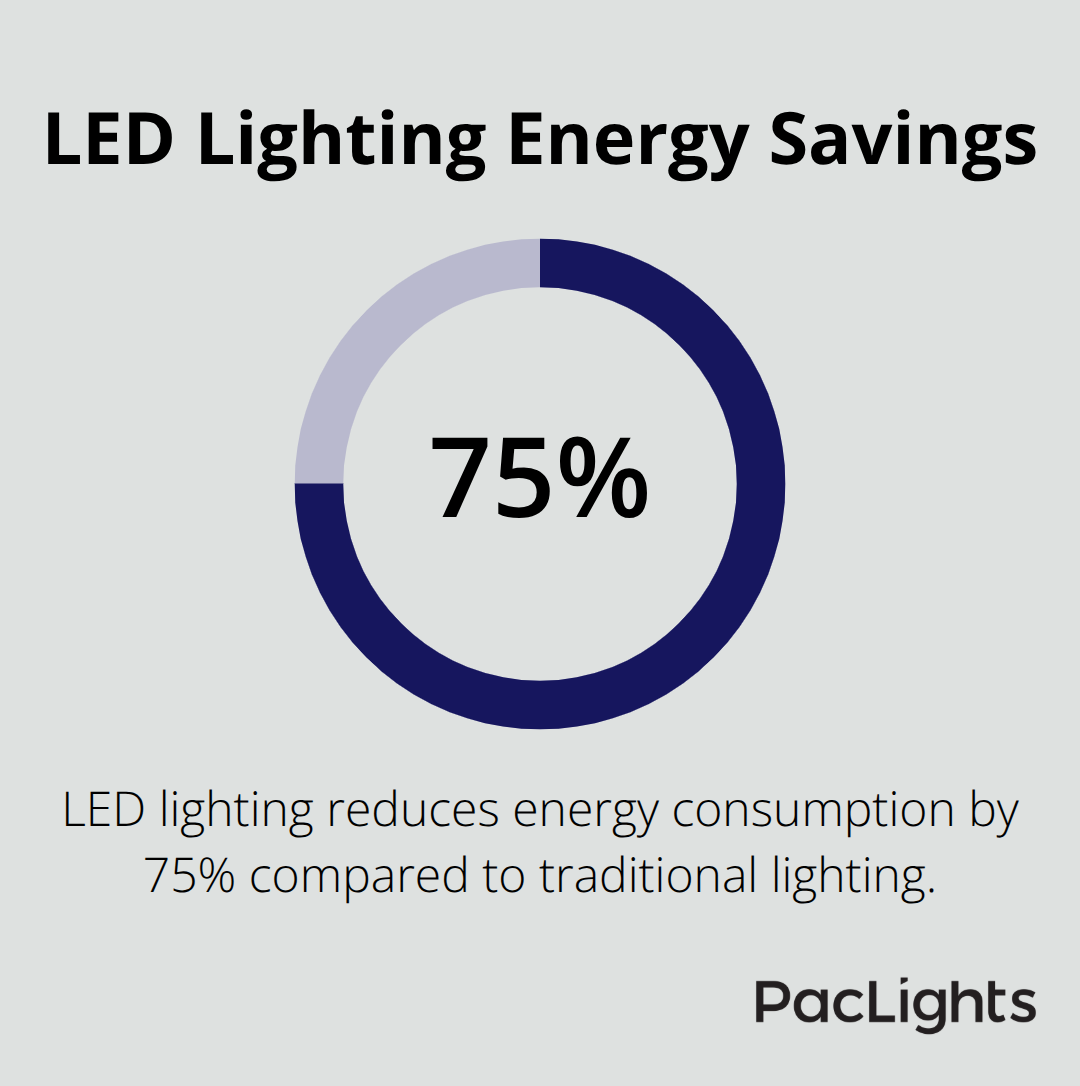
- LED technology: This is a must for energy efficiency and longevity. The U.S. Department of Energy reports that LED lighting can reduce energy consumption by up to 75% compared to traditional lighting.
- Color temperature: Office environments often benefit from a range of 3000K to 4000K. This provides a balance between warm and cool light, which promotes both comfort and productivity.
- Color Rendering Index (CRI): The CRI should be at least 80, with 90+ being ideal for tasks requiring accurate color perception.
LED technology offers significant energy savings compared to traditional lighting systems. The following chart illustrates this reduction in energy consumption:
Integrating Downlights into Overall Lighting Strategy
Downlights play a vital role in a comprehensive office lighting strategy. They provide ambient lighting, which forms the foundation of any lighting plan. When combined with task lighting and accent lighting, downlights contribute to a layered lighting approach that enhances both functionality and atmosphere.
Smart integration is key to maximizing the benefits of downlights. Many modern downlights incorporate into lighting control systems, allowing for adjustments based on time of day or occupancy. This not only saves energy but also supports employee well-being by mimicking natural light patterns.
The Lighting Research Center has found that proper lighting design (including the strategic use of downlights) can significantly impact employee productivity and satisfaction. Businesses can create an office environment that promotes both efficiency and comfort through careful consideration of downlight placement, intensity, and quality.
As we move forward, let’s explore the specific benefits that architectural downlights bring to modern office spaces, from enhanced visual comfort to improved energy efficiency.
How Architectural Downlights Benefit Modern Offices
Architectural downlights offer numerous advantages for modern office spaces, transforming them into productive and visually appealing environments. Let’s explore the key benefits that make these fixtures indispensable in contemporary workplace design.
Enhanced Visual Comfort and Glare Reduction
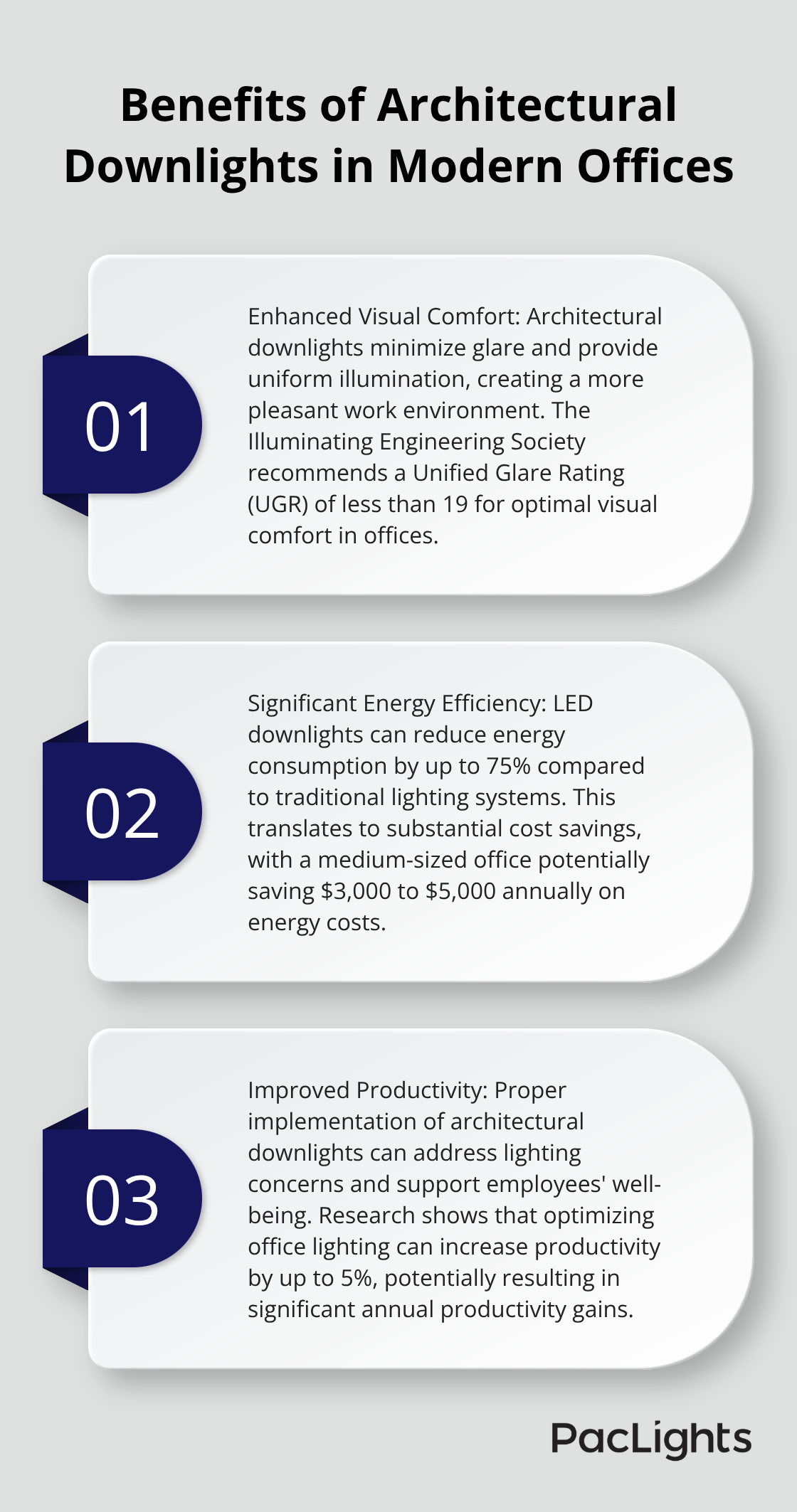
One of the primary advantages of architectural downlights is their ability to enhance visual comfort while minimizing glare. These fixtures recess into the ceiling and direct light downward, which reduces direct exposure to the light source. This design feature proves essential in office settings where employees spend long hours working on computers or other tasks that require focused attention.
The Illuminating Engineering Society recommends a Unified Glare Rating (UGR) of less than 19 for office spaces to ensure optimal visual comfort. Many modern downlights are specifically engineered to meet or exceed this standard, which creates a more pleasant and productive work environment.
Significant Energy Efficiency and Cost Savings
LED technology has revolutionized the lighting industry, and this is particularly evident in architectural downlights. These fixtures can reduce energy consumption by up to 75% compared to traditional lighting systems (according to the U.S. Department of Energy). This reduction translates to significant cost savings for businesses over time.
A medium-sized office of 10,000 square feet that switches from fluorescent to LED downlights could save approximately $3,000 to $5,000 annually on energy costs alone. Additionally, the long lifespan of LED downlights (often exceeding 50,000 hours) means reduced maintenance and replacement costs, which further contributes to overall savings.
Unparalleled Flexibility in Lighting Design
Architectural downlights offer unmatched flexibility in creating diverse lighting atmospheres within a single office space. With options for different beam angles, color temperatures, and dimming capabilities, these fixtures can adapt to various needs throughout the workday.
For instance, wider beam angles (60°-90°) can provide general illumination for open office areas, while narrower beams (10°-24°) can highlight specific workstations or architectural features. Color temperature adjustability allows for a shift from cooler, more energizing light (around 5000K) in the morning to warmer tones (around 3000K) in the afternoon, which supports natural circadian rhythms.
Positive Impact on Employee Productivity and Well-being
The influence of lighting on employee well-being and productivity is substantial. A study by the American Society of Interior Design found that 68% of employees complain about the lighting situation in their offices. Proper implementation of architectural downlights can address many of these concerns.
Consistent, high-quality illumination throughout the workspace can reduce eye strain and headaches associated with poor lighting. Furthermore, the ability to adjust light levels and color temperatures throughout the day can support employees’ natural circadian rhythms, potentially improving sleep quality and overall well-being.
The Cornell University Department of Design and Environmental Analysis has shown that optimizing office lighting can increase productivity by up to 5%. For a company with 100 employees earning an average salary of $50,000, this could translate to an annual productivity gain worth $250,000.
Architectural downlights play a key role in creating modern office environments that are not only visually appealing but also support the health, comfort, and productivity of employees. As we continue to understand the impact of lighting on human performance, the strategic use of these fixtures will undoubtedly remain a central consideration in office design and renovation projects.
The following chart summarizes the key benefits of architectural downlights in modern offices:
Now, let’s explore the best practices for implementing architectural downlights to maximize their benefits in modern office spaces.
How to Maximize the Impact of Architectural Downlights
Strategic Placement for Optimal Coverage
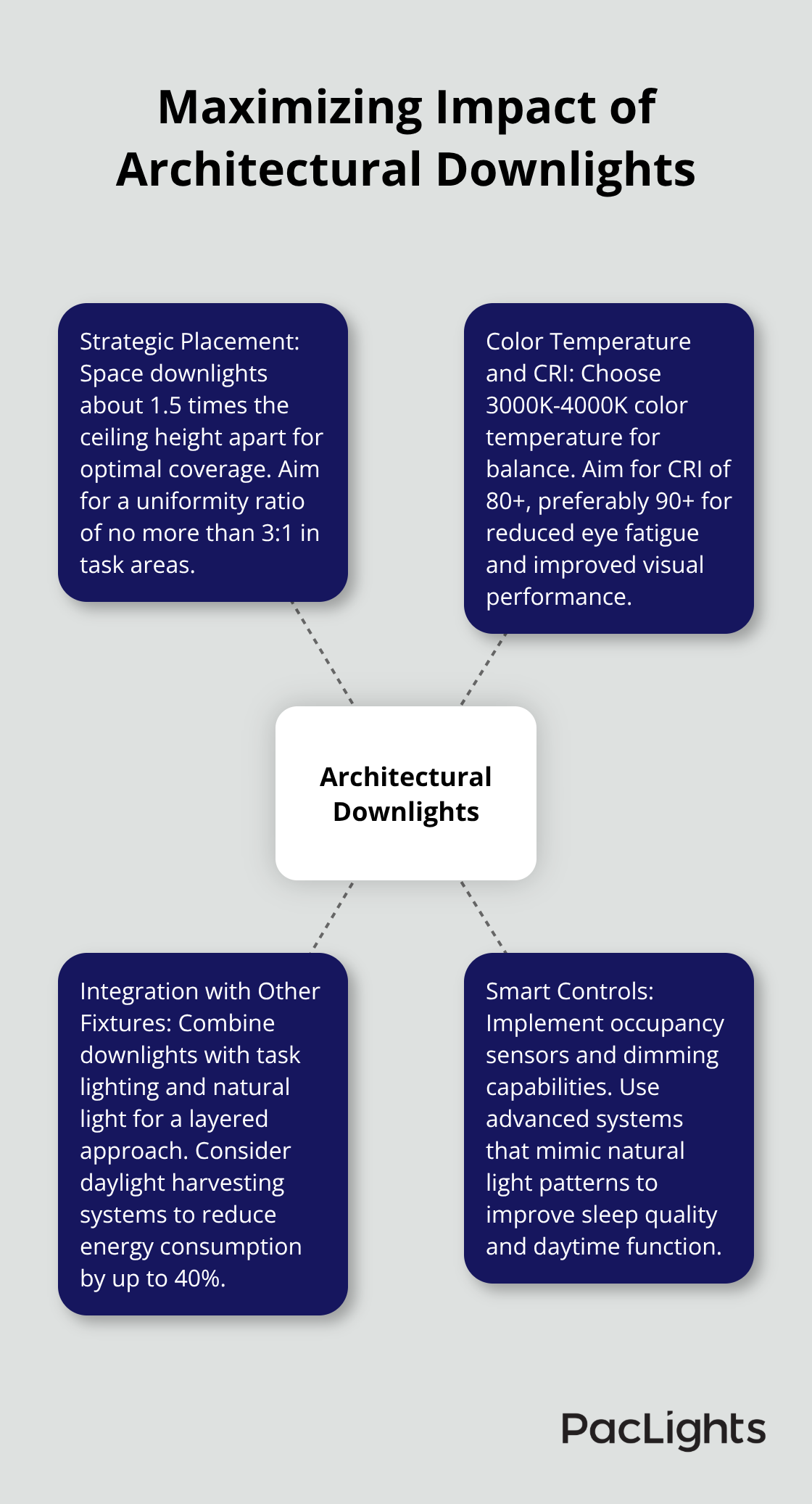
Effective downlight placement achieves uniform illumination without harsh shadows or overly bright spots. A general rule suggests spacing downlights at a distance of about 1.5 times the height from the working surface to the ceiling. For a typical 9-foot office ceiling, this translates to spacing downlights roughly 6 feet apart.
This rule isn’t absolute. Room layout, task areas, and desired ambiance all influence placement. Open office spaces often benefit from a grid layout. Conference rooms or individual offices might require downlights to highlight specific areas or features.
The Illuminating Engineering Society recommends a uniformity ratio (maximum to minimum illuminance) of no more than 3:1 in task areas. This ensures consistent lighting across work surfaces.
Tailoring Color Temperature and CRI
Color temperature and Color Rendering Index (CRI) significantly impact the office environment. Most office spaces benefit from a color temperature between 3000K and 4000K, which balances warmth and alertness. The nature of work should guide your choice. Creative agencies might prefer warmer tones (around 3000K) for a relaxed atmosphere, while technical workspaces might opt for cooler temperatures (4000K or above) to enhance focus.
For CRI, try to select fixtures with a minimum of 80, but preferably 90 or above. A study by the National Research Council of Canada found that higher CRI values (90+) improved visual performance and reduced eye fatigue in office settings.
Seamless Integration with Other Fixtures
Downlights should not work in isolation. They form part of a layered lighting approach that includes task lighting, accent lighting, and natural light. Use downlights for general illumination, and complement them with desk lamps or under-cabinet lights for task-specific needs.
In areas with ample natural light, consider daylight harvesting systems. These systems automatically adjust artificial light levels based on available natural light, potentially reducing energy consumption by up to 40% (according to the U.S. Department of Energy).
Smart Controls for Enhanced Performance
Smart lighting controls can dramatically improve the functionality and efficiency of your downlight system. Occupancy sensors reduce energy waste in rarely used areas, while dimming capabilities allow for adjustments throughout the day.
Some advanced systems mimic natural light patterns, adjusting color temperature and intensity throughout the day. A study published in the Journal of Clinical Sleep Medicine found that this type of circadian lighting improved office workers’ sleep quality and daytime function.
The goal is to create a flexible, comfortable, and energy-efficient lighting system. The right implementation not only enhances aesthetics but also boosts productivity and well-being.
Final Thoughts
Architectural downlights have revolutionized modern office design, offering a perfect blend of functionality, aesthetics, and energy efficiency. These versatile fixtures provide uniform illumination, reduce glare, and create adaptable lighting environments that boost employee productivity and well-being. The strategic implementation of downlights leads to significant energy savings, improved visual comfort, and enhanced workplace aesthetics.
The future of office lighting design will embrace more advanced technologies, including human-centric lighting solutions that adapt to individual preferences and circadian rhythms. Integration with IoT systems will allow for more sophisticated control and data-driven optimization of lighting environments. The push for sustainability will drive further innovations in energy-efficient lighting technologies.
PacLights offers a comprehensive range of solutions tailored to diverse industrial needs. We provide the tools necessary to create productive, comfortable, and cost-effective lighting environments (including energy-efficient LED downlights and advanced lighting control systems). Our expertise in lighting layout design and ROI assessments helps businesses make informed decisions about their lighting investments.
Disclaimer: PacLights is not responsible for any actions taken based on the suggestions and information provided in this article, and readers should consult local building and electrical codes for proper guidance.