

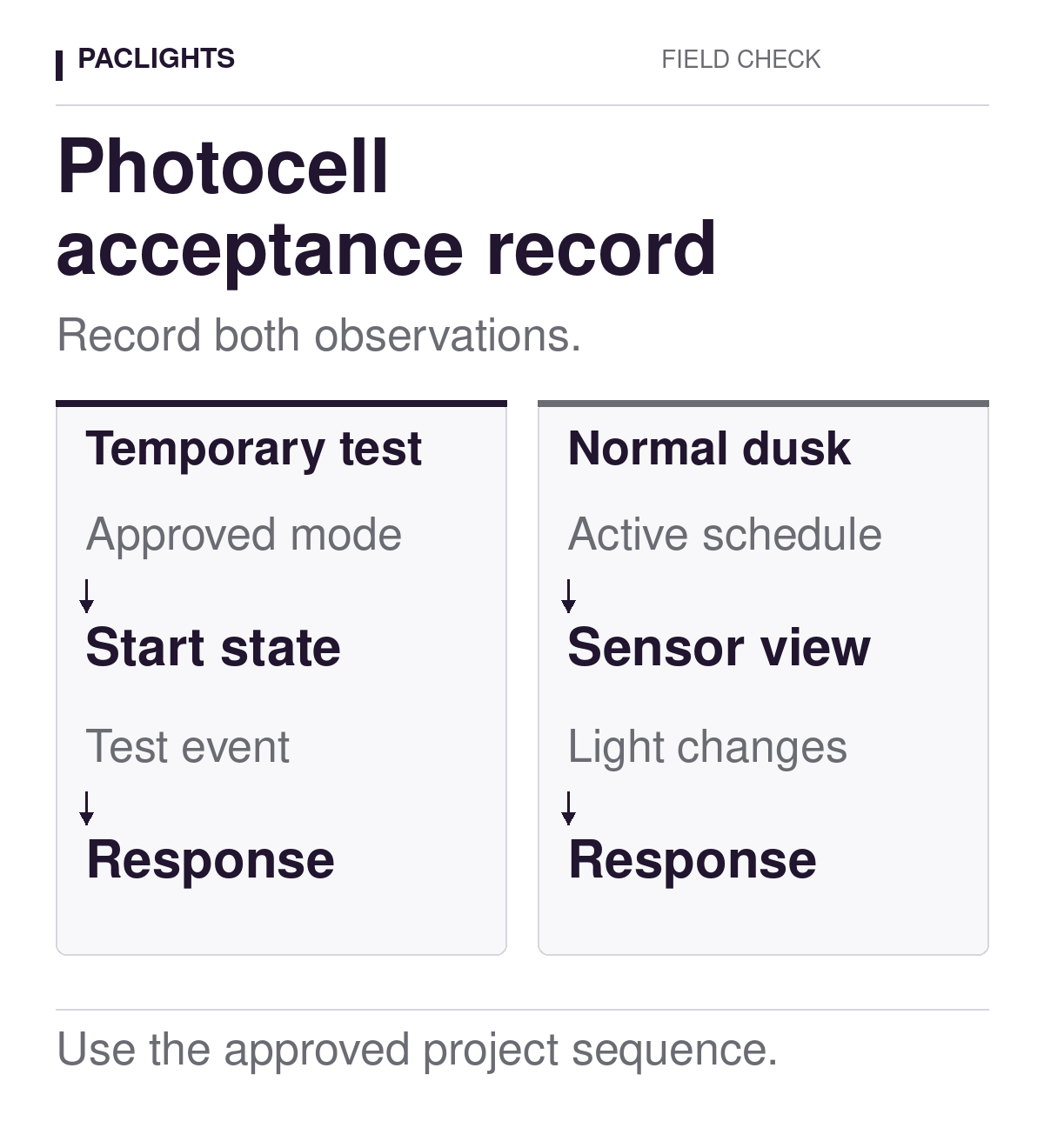
Record a temporary photocell test and normal dusk-to-dawn operation as two separate observations. A manufacturer-supported test can show how the identified fixture or group responds to a defined condition. A dusk observation shows what happens with the sensor in its installed surroundings, the lighting schedule in effect, and the system in its normal mode. If the project requires both observations, give each its own expected result, evidence and disposition.
Identify the equipment and the boundary of the test
Start with the fixture marks on the drawing and the exact equipment installed at those locations. Record the fixture configuration, control model and relevant documentation revision. Identify which fixtures the control is expected to affect. A pole may carry several luminaires, and a single control or upstream command may serve a group. A record that says only “north lot photocell passed” leaves the reviewer guessing about which devices and fixtures were included.
The PacLights FALC area-light family offers optional three- and seven-pin twist-lock control receptacles. Record the ordered fixture configuration and the actual control separately. The receptacle identifies a connection option. The installed control documentation and the approved project sequence establish the functions and test procedure that apply to that installation. Resolve any discrepancy between the schedule and the equipment record with the responsible project team before signing off.
Recover the sequence for normal operation
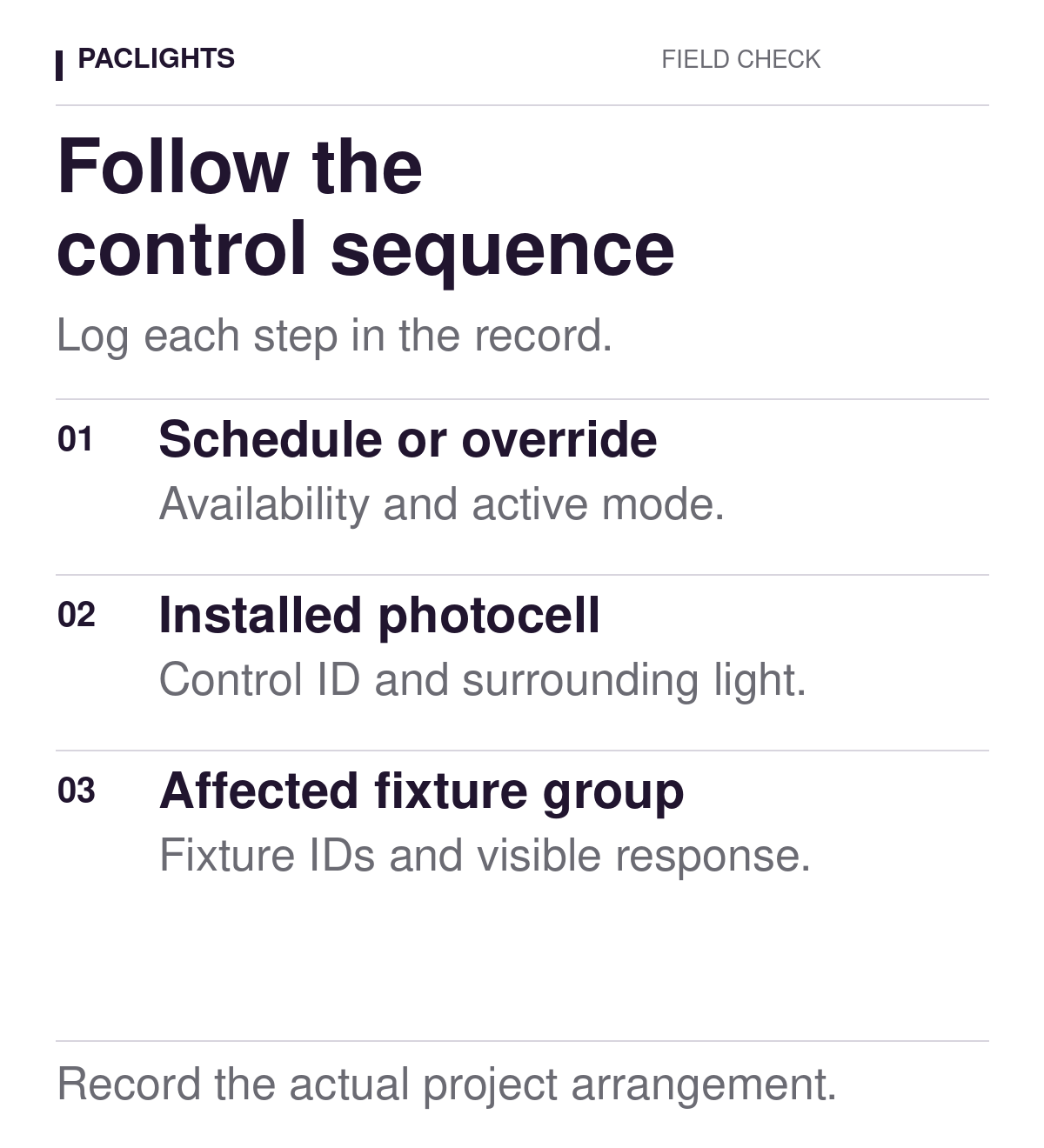
Use the approved sequence to describe the conditions for the lights to turn on, remain on and turn off. Record which controller, time schedule, override or local photocell governs each step. Confirm whether the observation concerns fixture output, a controller status or both. A reported command and a visible change at the fixture can each help establish the sequence. Give them separate fields so the next reviewer can see how they relate.
For example, a permitted upstream schedule may make a group available only during defined hours. A normal dusk observation outside that period answers a different question from an observation within it. The approved sequence should explain what result to expect in each case. Put the schedule revision and active operating mode in the record. The zone and settings handover guide shows how to keep group assignments, sequence documents and field observations connected.
Sketch the control relationships in the same order a reviewer would check them. Begin with the scheduled availability of the group, then record the installed photocell and its relationship to the fixtures. Leave space for an override when the approved sequence includes one. Some projects combine these functions in a controller, while others assign them to separate devices. Capture the functions and their documented relationship so the sketch stays useful without relying on a particular wiring arrangement.
Define what a temporary test can establish
Use a test mode or temporary simulation only where the exact control instructions and the project procedure support it. Record the procedure reference, the starting state, the stimulus or mode specified by that procedure, and the expected response. Identify who performs the authorized test and who observes the fixtures. Decide how an unexpected result will be recorded before anyone starts. If the control documents leave the test method unclear, resolve that question with the responsible reviewer.
Some test procedures set up a condition specifically to check that a control responds. Write down the actual conditions and which fixtures responded. If the procedure changes normal settings or introduces a temporary override, log that fact and the documented step for restoring normal operation. Avoid borrowing response timing or light-level criteria from another model. Use the installed control documentation for any such values the approved procedure requires.
Observe dusk with the area in its normal state
Schedule the observation under the conditions named in the project procedure. Record the date, local time, weather or unusual sky conditions, and the starting fixture state. Note nearby sources that may affect the installed sensor, such as illuminated signs or neighboring luminaires, and identify the direction the sensor faces if it can be determined safely. If a dawn observation is also required, give it its own entry. Time of observation and direction of change are useful context for the reviewer.
Describe what the sensor can see separately from what the lighting team sees on the pavement. For instance, a fixture can illuminate the intended area while the installed photocell is exposed to other light sources near its location. The daylight sensor reference-check guide explains a related commissioning distinction between a sensor’s environment and the receiving surface of interest. For an outdoor switching test, the immediate question is which light conditions the photocell was exposed to and what the controlled group actually did.
For a dusk visit, agree on which fixture or group each person will watch and what event they should timestamp. An observer might record the first visible change at an entrance fixture while another records the group state available from the approved control interface. If the environment changes during the observation, describe what changed and when. For example, record whether a neighboring tenant sign turned on before the fixture changed. The note belongs in the observation field until the responsible team can evaluate its relevance.
Document a conflicting result before changing settings
Consider an illustrative parking lot where a supported temporary test produces the expected response on every fixture in a row. During the later dusk visit, one fixture begins cycling while the remainder of the row stays steady. The record should identify the affected fixture, its observed sequence of changes, any nearby lights operating at the time and any relevant upstream control state. Keep the earlier test result alongside that observation so the project team can see exactly which condition produced each outcome.
Recurring switching can warrant a review of light falling on the installed sensor, including its own controlled light where the layout makes that possible. Treat that as a condition to investigate alongside the installed configuration, active schedules and documented control behavior. An observer can note when another light source comes on and when the affected fixture changes state. A timing coincidence is a reason to investigate, with any corrective work handled by authorized personnel under the project procedure.
Close the acceptance record with the actual evidence
For each test condition, include an equipment ID, operating mode, procedure reference, expected response, observed response and result. Attach the relevant schedule excerpt or field notes when they help explain a discrepancy. Record which operating settings were restored and who confirmed the final state. If the normal dusk observation remains outstanding, name it separately with its owner and expected observation conditions.
Keep the original record if the project team changes a setting or replaces a control. Put the new configuration and the reason for the change on the retest record. List which earlier conditions can be repeated and which changed, including a new schedule or a different source of surrounding light. If an observation window ended before a required response could be checked, leave that result open and specify what a follow-up visit needs to establish.
Before the next site visit, lay out the temporary-test entry and dusk observation entry side by side. Confirm the normal control sequence and bring the exact fixture and photocell records. That gives the field team enough information to document what changed, when it changed and which part of the acceptance procedure the observation supports.
Disclaimer: PacLights is not responsible for any actions taken based on the suggestions and information provided in this article, and readers should consult local building and electrical codes for proper guidance.