

Emergency wall lights are non-negotiable for any building that prioritizes occupant safety. When power fails, these fixtures become your facility’s lifeline, guiding people to exits and preventing panic.
At PacLights, we’ve seen firsthand how the wrong choice can leave blind spots in your evacuation routes. This emergency wall lights guide walks you through the systems, features, and installation practices that actually work.
Types of Emergency Wall Lights and Their Applications
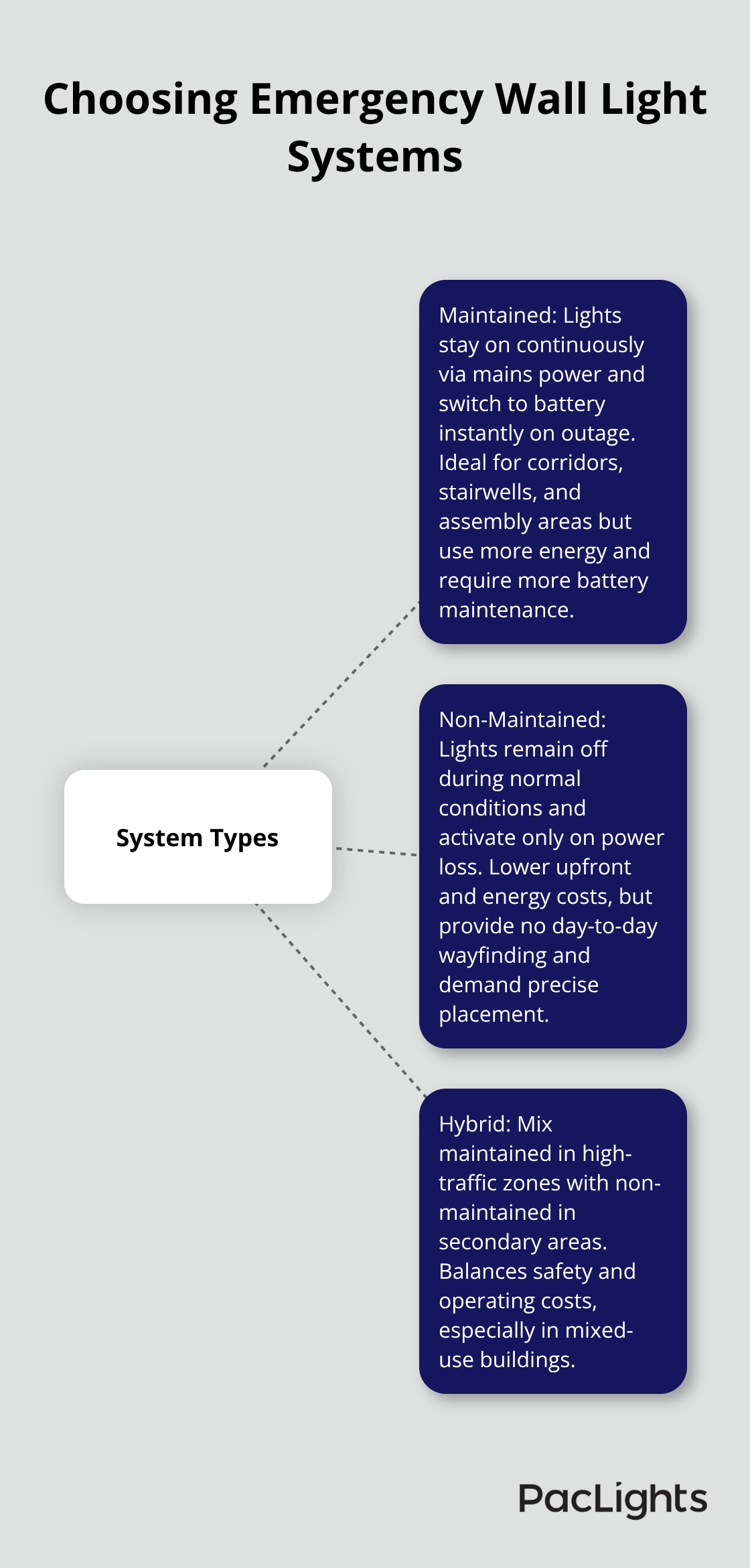
Maintained Emergency Lighting Systems
Maintained emergency lighting systems stay on continuously, powered by your building’s main electrical supply. When mains power fails, an internal battery takes over instantly without any delay. This approach works best in spaces where people need constant visual reference points, such as corridors, stairwells, and assembly areas.
The National Fire Protection Association reports that maintained systems reduce evacuation times by an average of 23 seconds compared to non-maintained alternatives-a significant advantage in high-occupancy facilities. However, maintained fixtures consume more energy because they run constantly, which increases your electricity bills year-round. They also demand more frequent battery maintenance since the batteries cycle continuously rather than sitting idle until needed.
Non-Maintained Emergency Lighting Systems
Non-maintained emergency lighting activates only when main power fails, meaning the fixture stays dark under normal conditions. These systems cost less upfront and consume minimal energy during regular operations since they draw power only from batteries during emergencies. They work well in spaces where occupants have alternative lighting, such as offices with windows or retail areas with natural daylight.
The trade-off is that non-maintained fixtures provide no visual guidance during normal operations, so occupants may not know where emergency exits are located. Installation placement becomes more critical because you cannot rely on the fixture being visible beforehand.
Hybrid Emergency Lighting Solutions
Hybrid emergency lighting solutions combine both approaches, maintaining certain fixtures in high-traffic areas while using non-maintained units in secondary locations. This strategy optimizes both safety and operational costs. Many facilities find hybrid systems deliver the best balance, particularly in mixed-use buildings where different zones have different occupancy patterns and lighting needs.
The choice between these three systems should reflect your building’s layout, occupancy levels, and energy budget rather than defaulting to one approach for your entire facility. Once you understand which system fits your space, the next step involves identifying the specific features that separate reliable emergency lighting from systems that fail when you need them most.
Key Features to Look for When Selecting Emergency Wall Lights
Battery Backup Duration and Reliability
Battery backup duration separates fixtures that actually work during emergencies from those that fail when occupants need them most. Select fixtures with a minimum 90-minute runtime, which aligns with the International Fire Code requirement for most commercial buildings. High-occupancy facilities like hospitals, data centers, and large office complexes should target 3-hour minimum runtime because evacuation takes longer in these environments.
Test your battery backup annually by cutting main power and timing how long fixtures maintain full brightness. Many facility managers discover their batteries fail this test, revealing that age and improper maintenance have degraded performance silently over months or years. Battery chemistry matters significantly. Lithium-ion batteries outperform traditional lead-acid options in reliability and lifespan, typically lasting 8-10 years compared to 4-6 years for lead-acid alternatives.
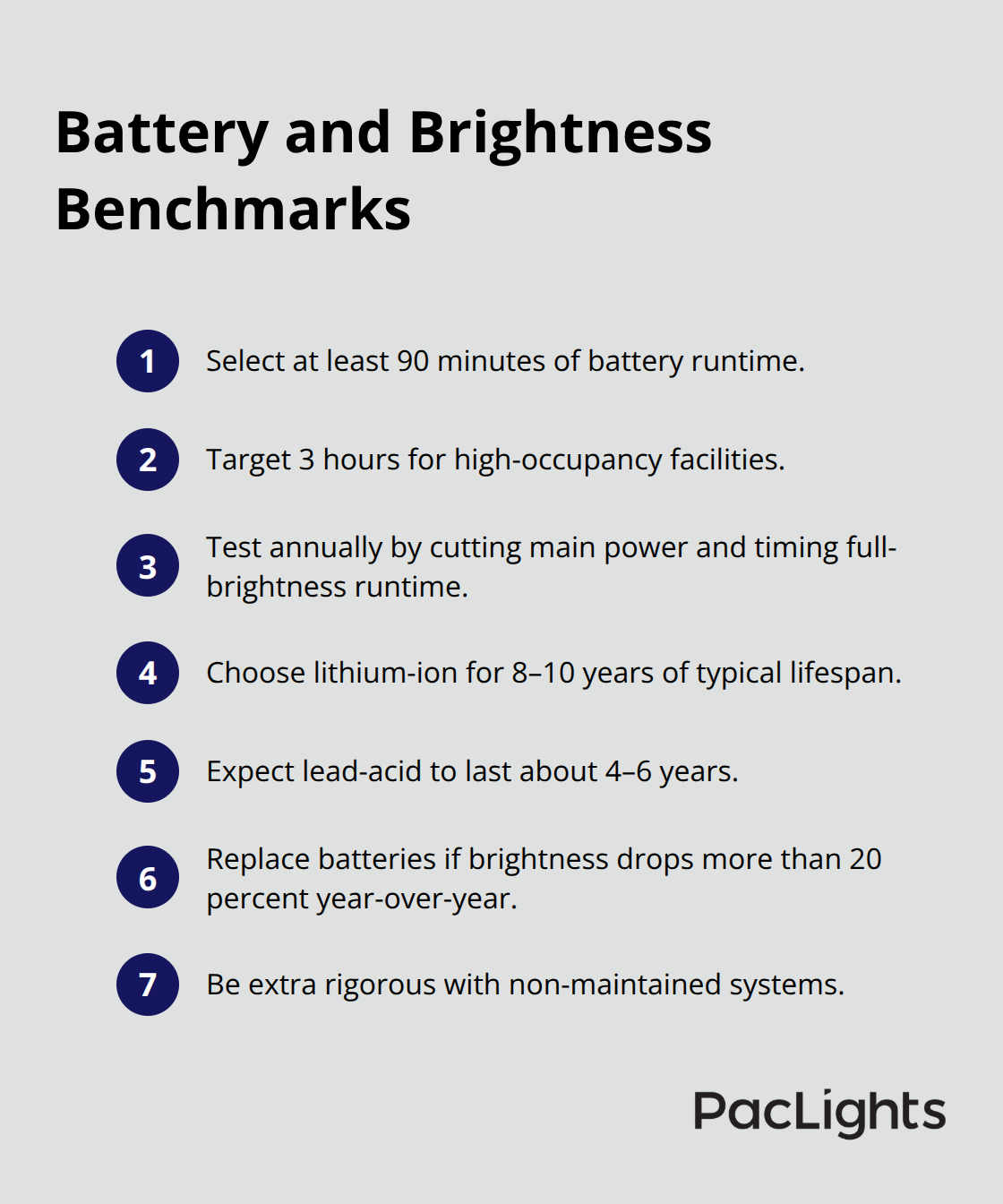
If your facility relies on non-maintained systems, battery reliability becomes even more critical since occupants won’t notice degradation until an actual power failure occurs. This hidden vulnerability makes annual testing non-negotiable for non-maintained installations.
Brightness Levels and Coverage Area
Brightness levels need to match your specific space rather than defaulting to maximum output. The Illuminating Engineering Society recommends minimum light levels of 1 foot-candle at floor level along evacuation routes, but this baseline assumes typical ceiling heights and clear sightlines. Narrow corridors with low ceilings need less brightness than open warehouses with 20-foot ceilings.
Conduct a site survey with a light meter to identify areas where standard fixtures produce insufficient coverage. Most emergency wall lights effectively illuminate a radius of 20-30 feet when mounted at standard 8-foot heights, but this distance shrinks significantly in cluttered spaces or areas with obstructions. Calculate required fixture quantity by dividing your total evacuation route length by the effective coverage distance specific to your chosen model.
Compliance with Safety Standards and Regulations
Compliance with local fire codes adds another layer of complexity. Building codes vary by jurisdiction, but most reference either the International Fire Code or NFPA 101 Life Safety Code. These standards specify lux requirements, placement distances, and testing protocols.
Contact your local fire marshal’s office to confirm exact requirements for your building type and occupancy classification before purchasing fixtures. Skipping this step often results in expensive retrofits after inspection failures. Integration with building management systems adds measurable value because automated testing catches battery failures before emergencies occur. Modern emergency fixtures with networked lighting controls alert facility staff when battery performance drops below acceptable thresholds, triggering maintenance before a crisis happens.
With these features identified and understood, the next step involves determining where to position these fixtures and how to maintain them throughout their operational life.
Installation and Maintenance Best Practices
Proper Placement for Maximum Coverage
Placement determines whether your emergency lighting system protects occupants or leaves dangerous gaps in your evacuation routes. Mount fixtures at 8 feet above floor level along all primary and secondary exit routes, spacing them no more than 40 feet apart according to NFPA 101 standards. This distance prevents dark zones where people cannot see the next fixture ahead.
In corridors wider than 20 feet, install fixtures on both walls rather than relying on a single centerline installation, since shadows and obstructions will block light from reaching the far wall. Stairwells demand fixtures at each landing and at the top and bottom of every run, not just at the entrance. Avoid mounting fixtures where they create shadows behind doors, columns, or equipment. Position them to illuminate exit signs directly rather than assuming general ambient light will make signs visible.
Test your placement by walking evacuation routes at night with main lights off and only emergency fixtures active. If you cannot clearly see the next exit sign or fixture from your current position, add additional units. Many facilities discover they need 30 to 50 percent more fixtures than initial calculations suggested after conducting this practical test.
Regular Testing and Battery Replacement Schedules
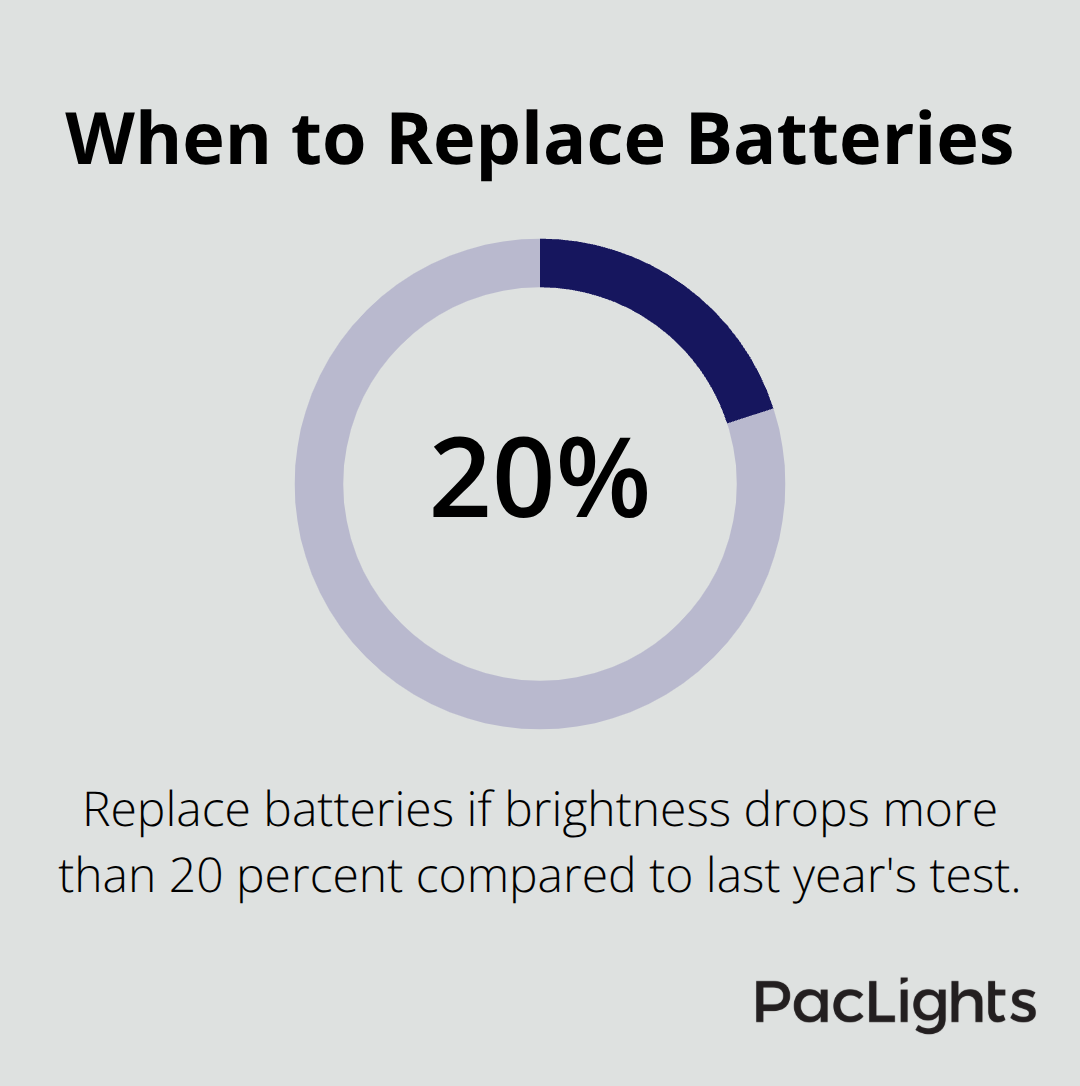
Battery degradation happens silently, which is why annual testing must occur on a fixed schedule rather than waiting for problems to surface. Cut main power to your emergency system each year and record how long fixtures maintain rated brightness using a light meter, comparing results to manufacturer specifications. If brightness drops more than 20 percent from the previous year’s test, replace batteries immediately regardless of age.
Lithium-ion batteries in modern fixtures typically last 8 to 10 years, but this timeline assumes proper maintenance and regular testing. Lead-acid alternatives fail sooner (typically within 4 to 6 years), making them a poor choice for facilities where emergency lighting cannot fail. Document all testing results with dates and brightness measurements. Most fire marshals request this documentation during inspections, and gaps in your testing record signal neglect that could result in code violations.
Integration with Building Management Systems
Networked lighting controls transform maintenance from reactive to predictive. These systems monitor battery performance continuously and alert facility staff when voltage drops below acceptable levels, allowing you to replace batteries before an emergency occurs rather than discovering failure during a power outage. Integration with your building management system costs more upfront but eliminates the manual testing burden and catches problems weeks or months before they would otherwise be discovered. PacLights offers advanced lighting controls that provide this networked capability, helping facilities optimize both safety and operational efficiency.
Final Thoughts
Selecting the right emergency wall lights requires balancing system type, battery reliability, and strategic placement. Maintained systems provide constant visual guidance but consume more energy, while non-maintained fixtures minimize operational costs at the expense of visibility during normal conditions. Hybrid approaches let you optimize both safety and budget by deploying maintained lighting where occupants concentrate and non-maintained units in secondary areas. Lithium-ion batteries outperform lead-acid alternatives by lasting 8 to 10 years instead of 4 to 6 years, making them worth the upfront investment for facilities where emergency lighting cannot fail.
Proper emergency lighting reduces maintenance costs through predictive battery replacement rather than reactive repairs. Annual testing catches degradation before emergencies occur, preventing the expensive retrofits that follow inspection failures. Buildings with well-designed emergency lighting systems experience lower insurance premiums and reduced liability exposure when evacuation procedures work as intended.
Your next step involves conducting a site survey to identify current gaps in coverage and determining which system type matches your building’s layout and occupancy patterns. Contact your local fire marshal to confirm exact code requirements for your jurisdiction before purchasing fixtures. Visit PacLights to explore emergency wall lights solutions and customizable controls that protect your occupants while reducing operational costs.
Disclaimer: PacLights is not responsible for any actions taken based on the suggestions and information provided in this article, and readers should consult local building and electrical codes for proper guidance.