

Cylinder wall accent lights have become standard in modern commercial design, transforming how businesses illuminate their spaces. At PacLights, we’ve watched this trend accelerate as companies recognize both the aesthetic and functional advantages these fixtures deliver.
The right lighting can define a space’s character while reducing energy costs significantly. This guide walks through everything you need to know about selecting and implementing cylinder wall lights in your facility.
What Cylinder Wall Lights Actually Are
Design and Form Factor
Cylinder wall lights are compact, tubular fixtures mounted directly to walls to deliver focused or diffuse illumination. The cylindrical shape-typically 4 to 8 inches long and 2 to 3 inches in diameter-houses an LED module, optics, and mounting hardware in a streamlined form factor. Unlike traditional sconces or pendant lights that occupy visual space, cylinders sit flush against the wall surface, making them ideal for tight corridors, retail displays, and architectural accent work. Modern versions use die-cast aluminum housings with powder-coated finishes in matte black, brushed nickel, polished chrome, or brushed gold, allowing them to blend seamlessly into contemporary commercial aesthetics or stand out as intentional design elements.
Beam Angles and Light Control
The fixture’s beam angle determines its light spread and controls exactly where light lands without wasted lumens or glare. Narrow 15° to 24° beams create dramatic accent lighting on textured walls or artwork, while wider 36° to 60° distributions provide softer ambient illumination for corridors and lobbies.
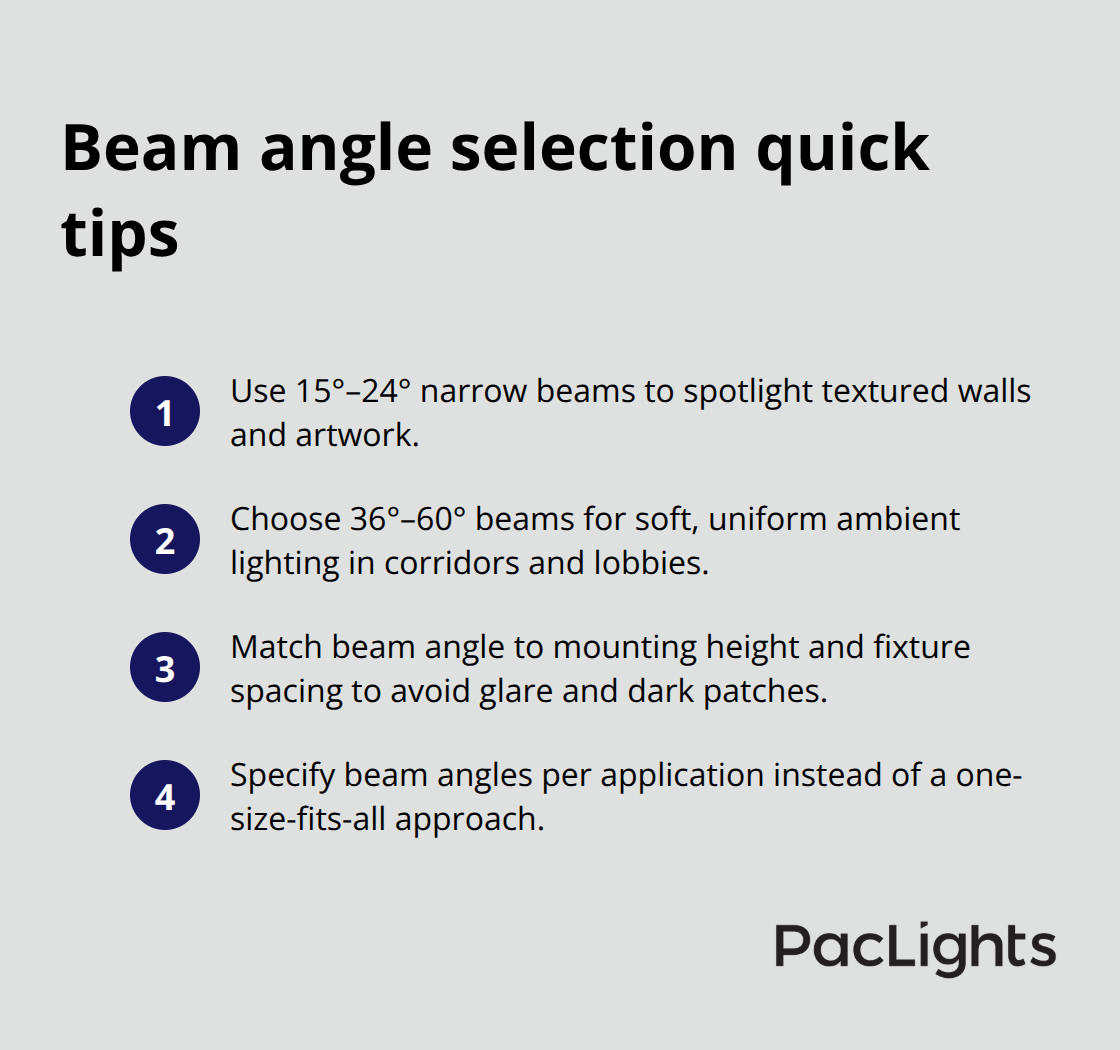
This design flexibility means you can select the right beam angle for your specific application rather than accepting a one-size-fits-all solution.
Why Commercial Architecture Embraces Cylinder Fixtures
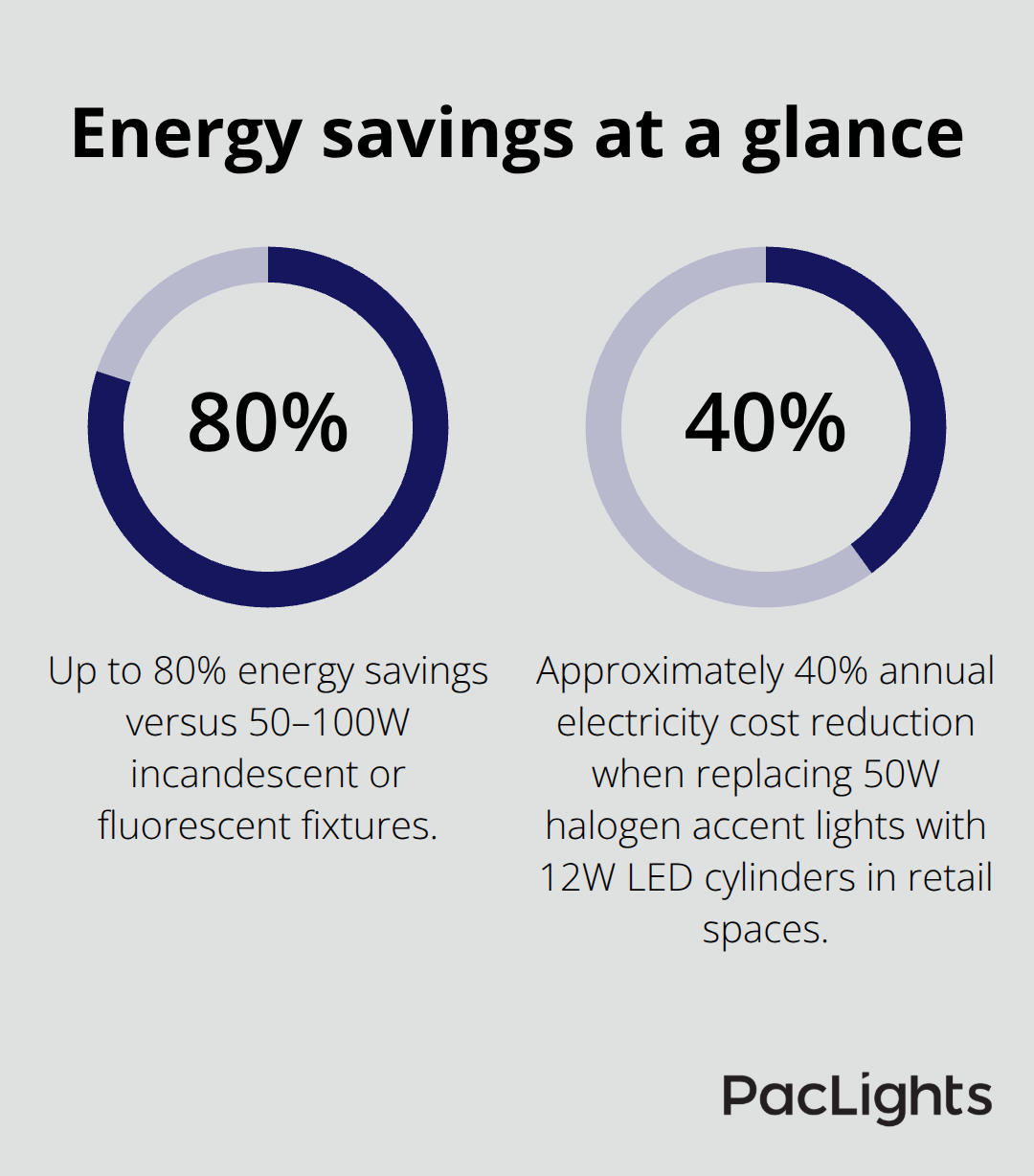
The commercial architecture sector has embraced cylinder wall lights at an accelerating pace because they solve three problems simultaneously. First, they deliver up to 80% energy savings compared to traditional 50–100W incandescent or fluorescent fixtures, consuming only 5–20W depending on output requirements. A typical mid-size commercial building recovers upfront fixture costs in 2–4 years through energy alone, with LED lifespans of 50,000 hours or longer meaning replacement happens only once or twice over a decade of operation.
Second, they reduce installation complexity-mounting requires no suspended ceilings or complex wiring runs, making retrofits faster and cheaper than overhauling entire lighting systems. Third, they work across any commercial environment: hospitality corridors benefit from warm 2700–3000K color temperatures at 5.5–6.5 feet mounting height, retail displays demand high color rendering index above 90 to showcase merchandise accurately, and outdoor façades need IP65-rated aluminum housings to withstand weather exposure.
Versatility Across Commercial Settings
This versatility explains why cylinder fixtures now appear in hotel lobbies, office hallways, retail storefronts, and building entrances-they’re simply more practical and cost-effective than older alternatives. The next section explores how these fixtures perform in specific commercial applications and what design choices matter most when you select them for your facility.
Applications of Cylinder Wall Lights in Commercial Spaces
Hospitality Corridors and Office Hallways
Cylinder wall lights excel in hotel corridors and office hallways when you space fixtures 6–8 feet apart with 36° to 60° beam angles. This spacing eliminates dark patches while maintaining visual continuity without harsh shadows on faces. Position cylinders at 5.5–6.5 feet above finished floor to keep the light source out of direct sight lines while adequately illuminating pathways.
A hospitality corridor using warm 2700K–3000K color temperature with cylinders spaced 8 feet apart and operating 12 hours daily consumes roughly 12W per fixture. Ten fixtures total about 52 kWh monthly-a dramatic reduction from 50W halogen predecessors that would consume 180 kWh monthly for the same run time. This translates to annual energy cost reductions of $150–$200 per 10-fixture corridor section at typical commercial electricity rates of $0.12 per kilowatt-hour.
Retail and Hospitality Display Environments
Retail and hospitality display environments demand narrow 15° to 24° beam angles positioned 6–8 inches from artwork or merchandise to create focused accent lighting without hotspots. Color rendering index above 90 is non-negotiable here because poor CRI distorts product colors and undermines customer perception of quality.
A 5,000–10,000 square foot retail space switching from 50W halogen accent lights to 12W LED cylinders operating 14 hours daily cuts annual lighting electricity costs by approximately 40%. This recovers fixture investment in roughly 18–24 months while delivering superior color accuracy throughout the fixture’s 50,000-hour lifespan.
Outdoor Building Facades and Entrances
Outdoor building facades and entrances require IP65-rated aluminum housings with powder-coated finishes to withstand weather exposure, UV degradation, and salt spray in coastal environments. Secure fixtures to structural studs when possible and use silicone gaskets to seal junctions against moisture infiltration.
Upward and downward light distribution on building facades creates architectural interest by washing textured surfaces like brick or stone while reducing shadows that diminish visual appeal. A typical commercial entrance using eight IP65-rated cylinders with 40° beams operating dusk-to-dawn via photocell control consumes approximately 15W per fixture, totaling roughly 1,800 kWh annually in a region with 12 hours average darkness. Integrated motion sensors reduce this baseline further by approximately 30–40% in low-traffic periods.
Thermal Management and Long-Term Performance
Outdoor fixtures with proper thermal management-effective heat sinks and die-cast aluminum construction-maintain their 50,000-hour lifespan even in high-temperature environments. Poor thermal design drops lifespan to roughly 20,000 hours, doubling maintenance frequency and total cost of ownership.
Request photometric data from manufacturers before large deployments, as lab IP65 ratings sometimes underperform in extreme coastal or temperature-swing conditions. Professional lighting designers can provide free layout designs and ROI assessments tailored to your specific building conditions, usage patterns, and local electrical codes-information that directly informs your selection of beam angles, color temperatures, and control strategies for maximum performance across all three environments.
Design Considerations When Selecting Cylinder Wall Lights
Color Temperature Shapes Space Perception
Color temperature determines whether your space feels energizing or welcoming, and this decision directly impacts how occupants perceive your facility. We at PacLights recommend 4000K neutral white for office spaces where focus and alertness matter most, especially in areas where employees spend eight or more hours daily on detailed work. A 4000K environment supports task performance better than warmer alternatives because it aligns with circadian rhythms during daylight hours, reducing eye strain and fatigue. For hospitality corridors, lobbies, and retail spaces where ambiance matters equally to function, warm 2700K to 3000K creates psychological comfort without sacrificing visibility.
Most facilities select a single color temperature across all zones instead of matching temperature to each space’s primary purpose. This approach wastes the flexibility that modern LED cylinders provide. Retail display areas benefit from 4000K or even 5000K if you showcase products where color accuracy matters-this is where color rendering index above 90 becomes non-negotiable because poor CRI makes merchandise appear washed out or distorted, directly damaging customer perception and sales.
Light Output Must Match Function
Light output measured in lumens should match your space’s function precisely. Hallways typically need 50 to 100 lumens per linear foot to eliminate dark patches, while retail displays demand 300 to 500 lumens per display area to make products visually compelling without creating hotspots that wash out colors. Most commercial facilities underestimate their actual lumen requirements, resulting in spaces that feel dim or unwelcoming even with adequate fixture count.
Request photometric data sheets from manufacturers before purchase-these show exact beam patterns and lux distribution at various distances, allowing you to calculate exact spacing and output needs rather than guessing based on fixture wattage alone.
Smart Controls Amplify Energy Savings
Smart controls and motion sensors amplify your energy savings beyond the baseline LED advantage, but only if you implement them strategically. Motion sensors in intermittently occupied spaces like storage areas or back-of-house corridors reduce energy consumption by 30 to 40% compared to fixtures running continuously. Daylight harvesting in spaces with substantial natural light adds 15 to 20% additional savings by automatically dimming fixtures when daylight levels are adequate.
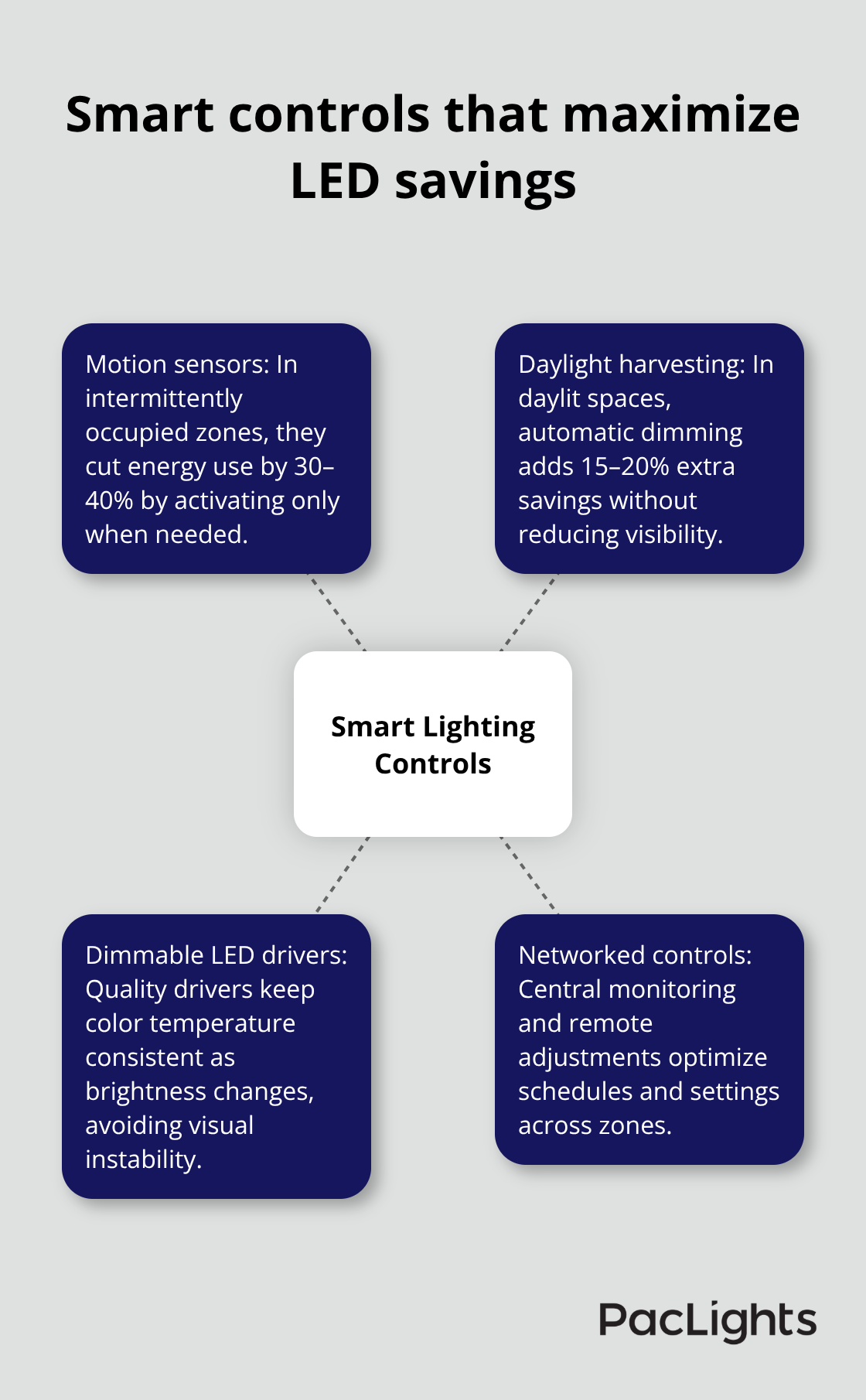
The critical detail most facilities overlook is that dimmable LED drivers maintain consistent color temperature while reducing brightness-inferior dimming systems shift color temperature as brightness drops, creating an unsettling effect that makes spaces feel unstable or unprofessional. Networked lighting controls enable monitoring across multiple zones and remote adjustments without rewiring, allowing you to optimize performance based on actual usage patterns rather than assumptions.
Durability Determines Long-Term Performance
For outdoor fixtures, durability trumps all other considerations because replacement costs and downtime are exponentially higher than indoor applications. IP65-rated aluminum housings with powder-coated finishes withstand weather exposure, but coastal environments with salt spray demand additional corrosion resistance-stainless steel or specialized coatings provide this protection and justify their higher upfront cost when compared to premature failure and replacement cycles.
Thermal management through effective heat sinks preserves the 50,000-hour lifespan that makes LED economics work; poor thermal design reduces lifespan to roughly 20,000 hours, doubling maintenance frequency and destroying the ROI calculation that justified the initial investment. Test environment-specific conditions before large deployments because lab IP65 ratings sometimes underperform in extreme temperature swings or coastal salt spray. PacLights provides free lighting layout designs and ROI assessments tailored to your specific building conditions and local codes, helping you select fixtures and control strategies that deliver measurable performance across all environments.
Final Thoughts
Cylinder wall accent lighting delivers measurable business value across three dimensions that matter most to commercial facility managers: energy cost reduction, aesthetic transformation, and operational simplicity. The 80% energy savings compared to traditional fixtures translate directly to bottom-line cost reductions, with most facilities recovering their investment in 2–4 years while enjoying 50,000-hour lifespans that minimize maintenance disruption and replacement cycles. Beyond economics, these fixtures solve a design problem that older lighting systems cannot address-a hospitality corridor lit with properly spaced cylinder fixtures at warm 2700K–3000K creates psychological comfort that guests perceive immediately, while retail displays with high CRI above 90 showcase merchandise accurately enough to influence purchasing decisions.
The practical implementation challenge most facilities face is matching fixture specifications to actual space requirements rather than accepting generic recommendations. Hallways need 50–100 lumens per linear foot, retail displays demand 300–500 lumens per area, and outdoor facades require thermal management that preserves lifespan in temperature-extreme environments. Motion sensors and daylight harvesting add 15–40% additional savings beyond the LED baseline, but only when you integrate them into a cohesive control strategy rather than applying them randomly across zones.
We at PacLights understand that selecting the right cylinder wall accent fixtures requires more than product specifications-it demands analysis tailored to your specific facility. Our team provides free lighting layout designs and ROI assessments that determine exact beam angles, color temperatures, and control strategies for your building conditions and usage patterns. Visit PacLights to explore how cylinder wall accent lighting can reduce your energy costs while enhancing the commercial spaces your business depends on.
Disclaimer: PacLights is not responsible for any actions taken based on the suggestions and information provided in this article, and readers should consult local building and electrical codes for proper guidance.