

Modern cylinder wall lights have become the go-to choice for buildings that demand both performance and style. They deliver energy savings, require minimal upkeep, and fit seamlessly into any architectural design.
At PacLights, we’ve seen firsthand how the right wall lighting transforms spaces while cutting operational costs. This guide walks you through everything you need to know about selecting, installing, and optimizing these fixtures for your property.
Why Cylinder Wall Lights Outperform Traditional Options
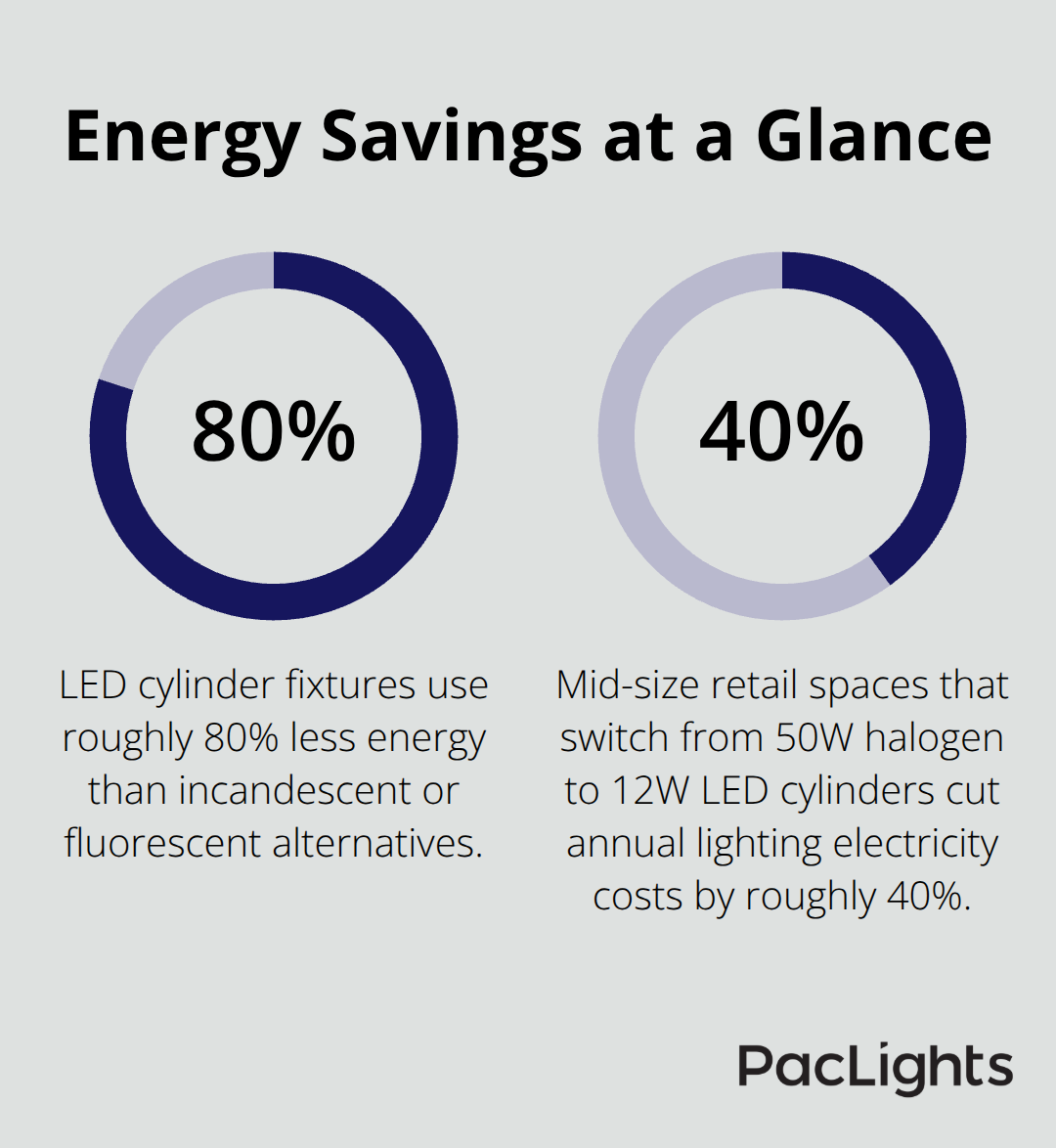
Cylinder wall lights deliver measurable advantages that justify their growing adoption across modern buildings. The energy savings are substantial and immediate: LED cylinder fixtures consume between 5W and 20W compared to 50W–100W for traditional incandescent or fluorescent alternatives, translating to roughly 80% lower energy consumption. Over a year, a single fixture operating 8 hours daily saves between 300–600 kilowatt-hours, depending on the building’s climate and usage patterns. The lifespan difference is equally compelling. Standard LED cylinder lights operate for 25,000 to 50,000 hours before replacement becomes necessary, which means a fixture installed in a hallway used 12 hours daily won’t need changing for 5–10 years. This extended lifespan eliminates frequent maintenance cycles and the associated labor costs that plague traditional lighting systems. Maintenance itself becomes almost nonexistent: LEDs produce minimal heat, require no ballast replacements, and resist the thermal degradation that shortens the life of conventional bulbs.
Precise Light Distribution Without Waste
Cylinder wall lights succeed where other fixtures fail because their form follows function. The cylindrical design enables precise light distribution through optimized optics, delivering beam angles from narrow 15–24° for architectural accent work to wide 36–60° for softer ambient illumination. This control prevents the light spill and hotspots that plague poorly designed fixtures, so you achieve your desired effect without wasting lumens. The optical efficiency means fewer fixtures can cover the same area, further reducing energy consumption and installation costs across larger projects.
Aesthetic Flexibility Across Any Space
The aesthetic advantage is undeniable: clean cylindrical geometry complements contemporary minimalist interiors, industrial spaces, and traditional buildings with equal ease. Available finishes-matte black, brushed nickel, polished chrome, and brushed gold-integrate seamlessly with existing architectural elements rather than standing out as an afterthought. A well-chosen cylinder light becomes part of the building’s visual language instead of a functional necessity that demands attention. This design versatility means facility managers and architects can specify the same fixture type across diverse areas without compromising the visual coherence of the space.
Why This Matters for Your Next Project
The real problem every facility manager faces involves balancing operational efficiency with visual appeal without compromise. Cylinder wall lights solve this challenge directly. Whether you’re upgrading an existing facility or designing new construction, these fixtures deliver the performance metrics that justify capital investment while maintaining the aesthetic standards your building demands. The combination of energy savings, extended lifespan, and design flexibility makes them the logical choice for spaces where both function and form matter equally.
Where Cylinder Wall Lights Deliver Real Results
Retail Spaces: Precision Lighting That Sells
Commercial retail environments benefit most when cylinder wall lights replace outdated track or recessed fixtures. Retailers operating 10–14 hours daily across 5,000–10,000 square feet see immediate payback on fixture upgrades. A mid-size retail space switching from 50W halogen spotlights to 12W LED cylinders cuts annual lighting electricity costs by roughly 40%, according to retrofit data from commercial installations. The narrow 15–24° beam angles work exceptionally well for highlighting merchandise displays without creating glare that drives customers away, while wider 36–60° options provide ambient fill light in circulation areas. Mounting height matters here: retail spaces typically position cylinders 6–8 feet high on feature walls, spacing them 4–6 feet apart to avoid dark zones between fixtures.
Hospitality Settings: Creating Welcoming Atmospheres
Hospitality settings-hotels, restaurants, corridors-demand different thinking. Warm color temperatures between 2700–3000K create the welcoming atmosphere guests expect, and dimming capability becomes essential for adjusting mood throughout the day without replacing fixtures. Install cylinders at 5.5–6.5 feet in hallways to avoid creating shadows on guest faces while still providing adequate wayfinding illumination.
Industrial and Warehouse Applications: Durability Under Pressure
Industrial facilities and warehouses present tougher conditions. Dust, moisture, and temperature extremes require IP65-rated cylinders with durable die-cast aluminum housings and powder-coated finishes that resist corrosion. These spaces benefit from motion sensors and daylight harvesting controls that eliminate unnecessary operation during daylight hours or when areas sit unoccupied. A warehouse operating 16 hours daily with motion-integrated cylinders reduces energy consumption an additional 25–35% beyond the baseline LED efficiency gain.
Residential Applications: Creative Freedom and Control
Residential applications allow more creative freedom. Accent lighting on textured walls or near artwork demands precise beam control, making narrow-angle cylinders the right choice. Bedside or reading applications work better with wider distributions and dimmable controls that let occupants adjust brightness from 10–100% without switching fixtures. Install residential cylinders 4–6 feet high on feature walls, spacing them 3–4 feet apart for balanced illumination without hotspots.
Universal Spacing and Mounting Principles
Spacing and mounting guidelines vary by application, but several principles apply universally. First, calculate required lumen output based on wall size and desired illumination level-a typical hallway needs 50–100 lumens per linear foot, while retail displays demand 300–500 lumens depending on merchandise type. Second, use beam angle to determine spacing: narrow beams (15–24°) require closer spacing but create dramatic accent effects, while medium beams (36–60°) space further apart for softer general illumination. Third, avoid mounting cylinders directly above head height in frequently used areas, as this creates uncomfortable shadows and glare. Fourth, verify that mounting surfaces support the fixture weight and that power sources exist nearby-running conduit across finished walls costs significantly more than planning placement during initial design.
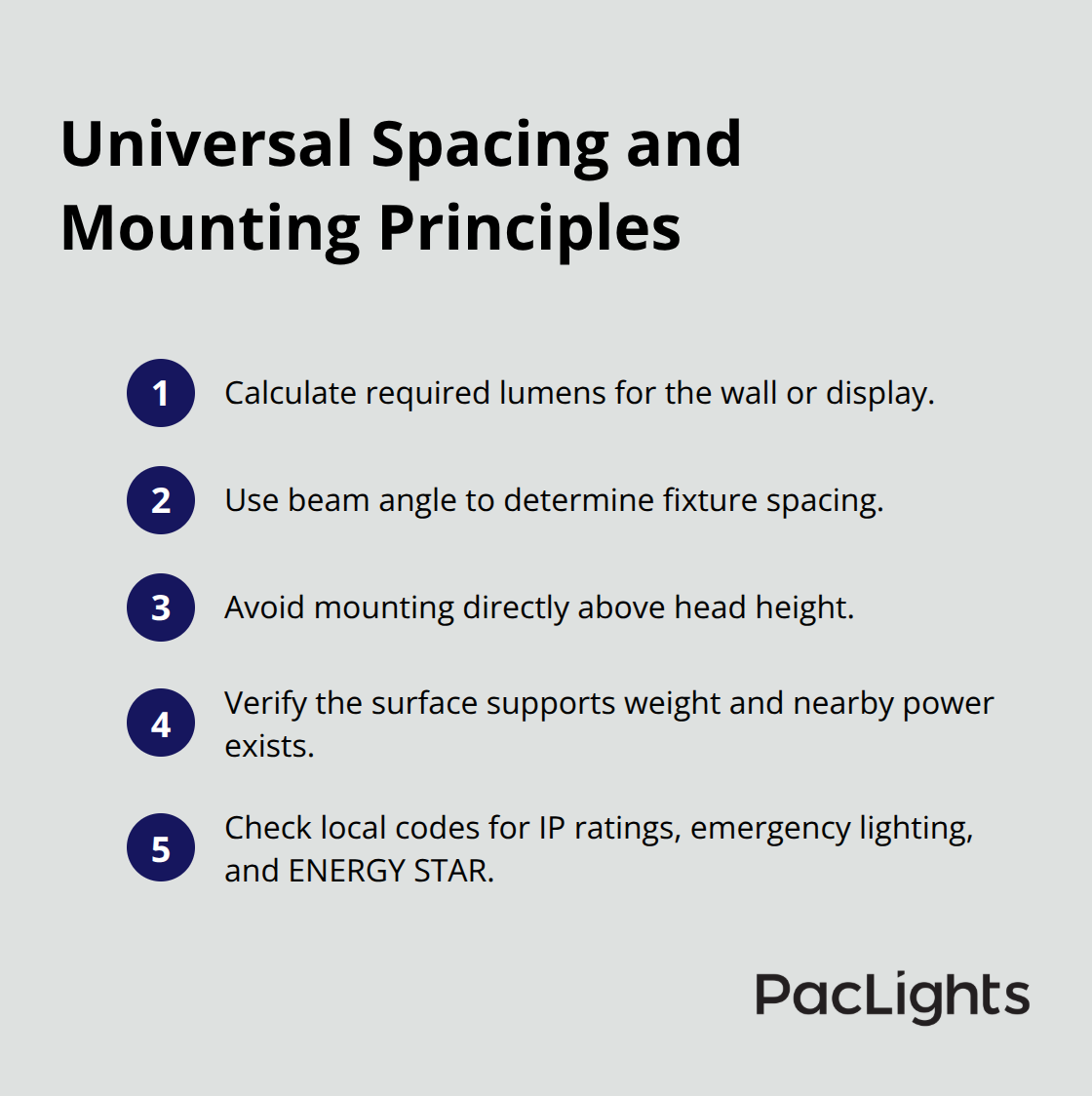
Fifth, check local electrical codes and building regulations; some jurisdictions require specific IP ratings, emergency lighting provisions, or ENERGY STAR compliance for commercial installations.
The technical specifications matter, but the real challenge lies in translating these guidelines into an installation that performs on day one. Advanced features and customization options allow you to fine-tune cylinder wall lights for your specific environment, moving beyond basic placement to optimize both energy performance and visual impact.
Smart Controls and Material Selection Transform Performance
Motion Sensors and Daylight Harvesting Cut Energy Further
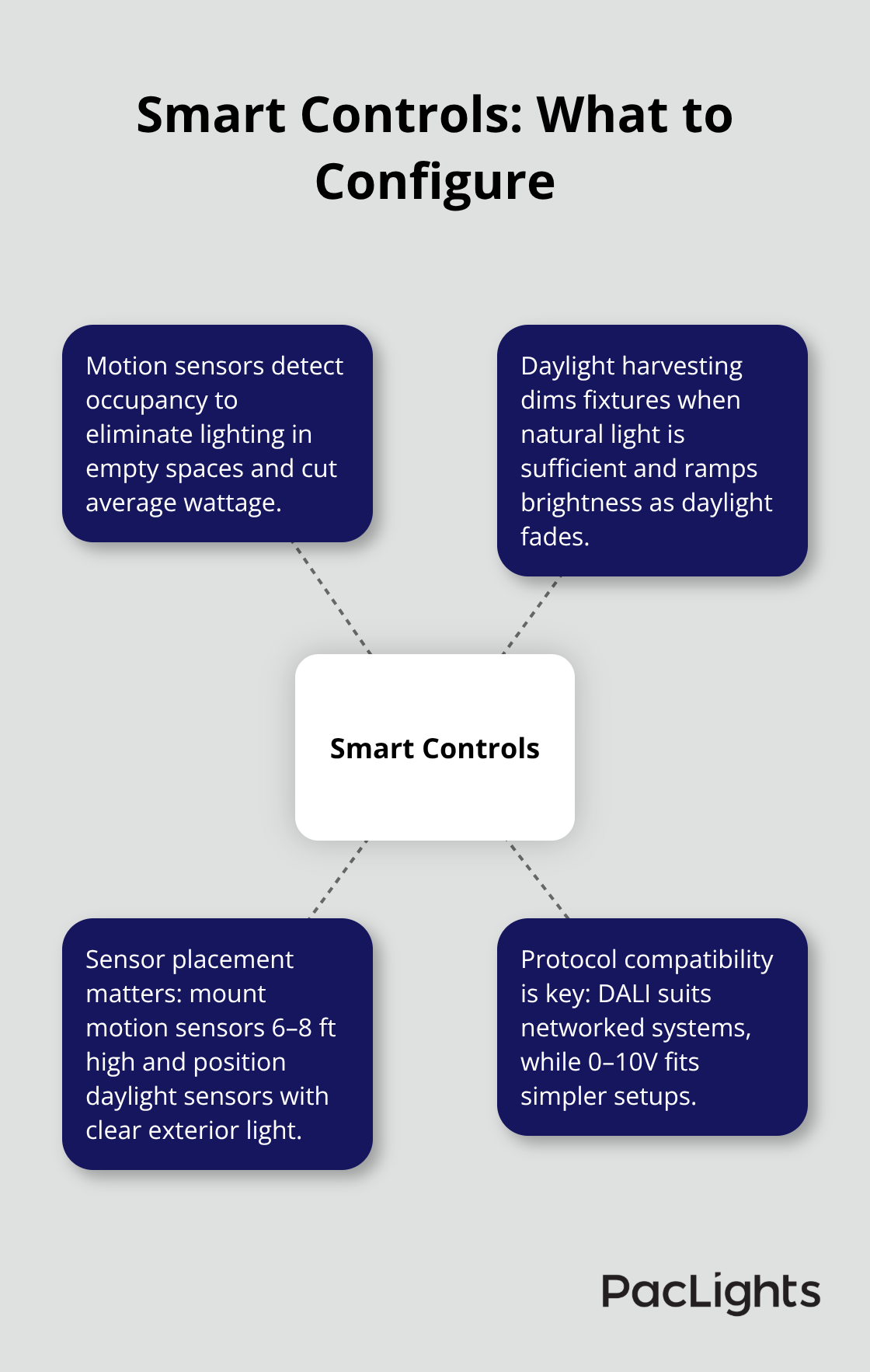
Cylinder wall lights reach their full potential when equipped with intelligent controls that respond to actual building conditions rather than fixed schedules. Motion sensors eliminate the most wasteful lighting pattern: illumination in unoccupied spaces. A warehouse or office corridor with motion-integrated cylinders reduces energy consumption an additional 25–35% beyond the baseline LED efficiency advantage, meaning a fixture that already uses 12W drops to roughly 8W average consumption when motion control activates. Daylight harvesting works differently but delivers comparable results. Sensors measure incoming natural light and automatically dim cylinders when sufficient daylight exists, then ramp brightness back up as evening approaches. Commercial buildings with extensive window exposure see 15–20% additional energy savings from daylight harvesting alone.
The practical advantage extends beyond energy: motion and daylight controls eliminate the maintenance burden of manual switching in large facilities with dozens or hundreds of fixtures. Install motion sensors at least 6–8 feet high to avoid false triggers from pets or passing vehicles, and position daylight sensors where they receive direct exterior light without obstruction from building features. Verify that your chosen fixtures support the control protocol your facility uses-DALI control works well for networked commercial installations, while 0–10V dimming suits simpler systems.
Color Temperature and Brightness Flexibility
Color temperature adjustment capabilities matter more than most facility managers realize. Warm white at 2700–3000K creates the welcoming atmosphere that hospitality and residential spaces demand, yet the same fixtures can operate at neutral white 4000K for task-intensive retail displays or cool white 5000K+ for security-sensitive outdoor applications. Dimmable cylinders with adjustable color temperature give you flexibility without fixture replacement, though verify that your dimmer supports the specific LED driver your manufacturer uses-incompatible dimmers cause visible flicker or shortened lifespan.
Brightness adjustment without color temperature shift requires quality drivers that maintain consistent color rendering across the dimming range; try for CRI 80 minimum, preferably CRI 90+ for spaces where color accuracy matters. This capability allows you to adapt the same fixture to different times of day or seasonal changes without any physical modifications.
Outdoor Materials and Durability Standards
Outdoor cylinder wall lights demand material specifications that most facility managers overlook until failure occurs. IP65 or higher ratings prevent dust and water ingress that corrodes electronics and degrades light output over time. Die-cast aluminum housing with powder-coated finish resists salt spray and humidity far better than painted steel, making it essential for coastal facilities or areas with aggressive de-icing chemicals.
Check warranty documentation carefully: most reputable manufacturers offer 2–5 years on electronics and 5+ years on housing, but spare part availability varies significantly. A fixture with exceptional optics becomes worthless if replacement LED modules disappear from inventory within three years. Vandal-resistant designs using impact-resistant polycarbonate or reinforced optics matter in public-facing applications where deliberate damage poses realistic risk.
Thermal Management for Extended Lifespan
Thermal management through efficient heat sinks preserves LED lifespan in high-temperature environments like industrial facilities or sun-exposed exterior walls where ambient temperatures exceed 40°C. Quality fixtures dissipate heat effectively enough to maintain 50,000-hour rated life even under challenging conditions, while poorly designed alternatives see lifespan drop to 20,000 hours or less.
When specifying outdoor cylinders, confirm that gaskets remain serviceable and that the fixture design allows water drainage rather than trapping condensation inside the housing. Test installations in your specific environment before committing to large-scale deployments-a fixture rated IP65 in laboratory conditions sometimes fails prematurely in coastal salt spray or areas where temperature swings exceed manufacturer specifications.
Final Thoughts
Modern cylinder wall lights deliver measurable returns that justify immediate action. A mid-size commercial building switching from traditional fixtures recovers its investment within 2–4 years through energy savings alone, then operates at substantially lower cost for the remaining 5–10 year lifespan of the fixtures. Reduced maintenance means fewer service calls, less downtime, and staff focused on core operations rather than fixture replacement.
The decision to upgrade your lighting system should rest on concrete numbers: calculate your current energy consumption, project savings based on 80% reduction, and factor in maintenance cost elimination. Most facilities discover that modern cylinder wall lights pay for themselves while delivering superior performance and aesthetics across retail environments, hospitality settings, industrial facilities, and residential applications. Outdoor-rated variants with IP65 protection and corrosion-resistant aluminum handle coastal salt spray and temperature extremes that destroy lesser fixtures.
We at PacLights understand that lighting decisions require more than product specifications. Our team provides free lighting layout designs and ROI assessments to help you make informed decisions backed by your actual building conditions and usage patterns. Contact us today to explore how cylinder wall lights can transform your facility’s performance and appearance.
Disclaimer: PacLights is not responsible for any actions taken based on the suggestions and information provided in this article, and readers should consult local building and electrical codes for proper guidance.