

Moisture damage costs facilities thousands in repairs and downtime every year. At PacLights, we know that choosing the right IP rating and surface mount sealing technology makes the difference between a downlight that lasts decades and one that fails prematurely.
This guide breaks down IP ratings, moisture protection methods, and how to match them to your specific environment.
What IP Ratings Actually Measure
Moisture damage costs facilities thousands in repairs and downtime every year. IP ratings define how well surface mount downlights resist dust and moisture intrusion-and these two-digit codes matter far more than most facility managers realize. The IEC 60529 standard breaks protection into two separate numbers: the first digit (0–6) rates solid particle protection, and the second digit (0–9) rates liquid protection. This distinction is critical because a downlight might handle dust perfectly but fail under water spray, or vice versa. Facilities often choose IP ratings based on marketing hype rather than actual environmental conditions, leading to premature failures and expensive replacements. The reality is that matching the correct rating to your specific space prevents moisture damage before it starts.
How the Two Digits Work
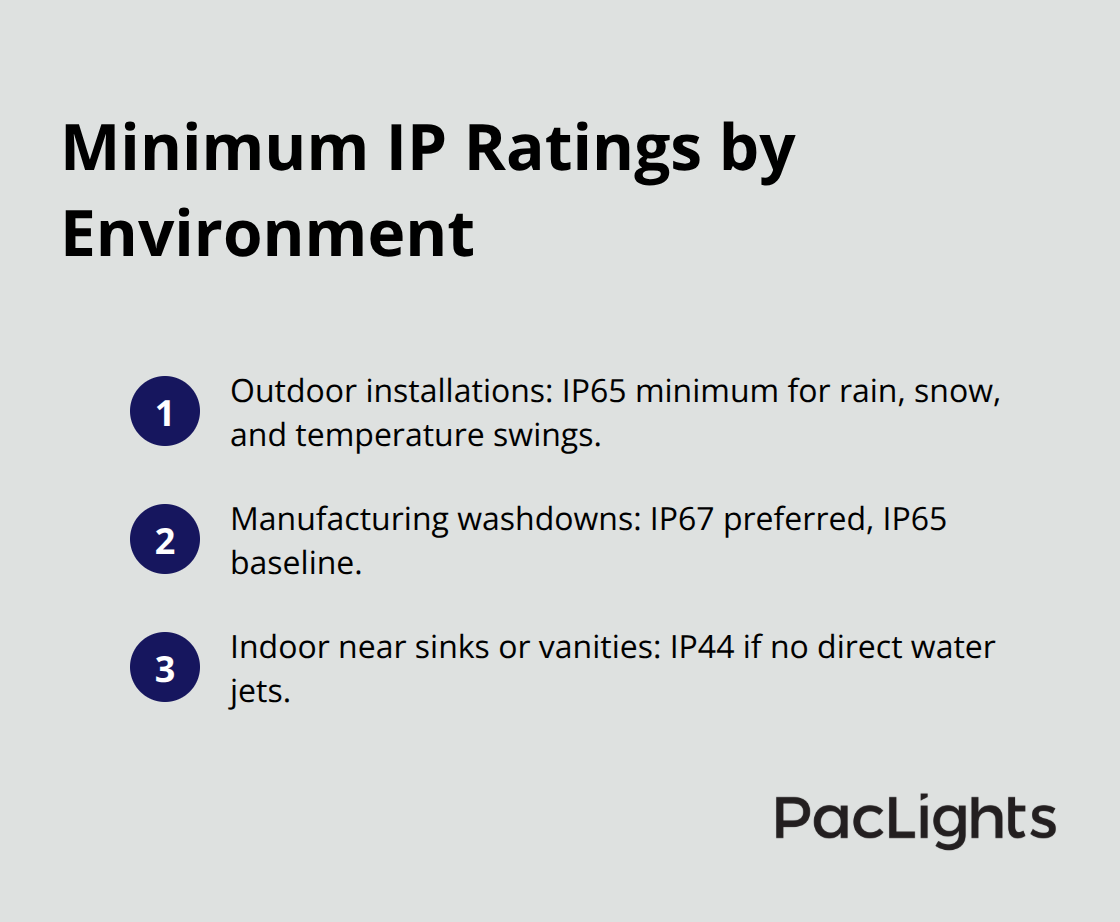
The first digit addresses dust and solid particles. A rating of 6 means complete dust protection-nothing gets inside the fixture. A rating of 4 means the fixture resists splashing water but allows some dust ingress. The second digit focuses on liquid protection, scaling from 0 (no protection) to 9 (powerful high-temperature water jets). IP65, for instance, means full dust protection plus resistance to water jets from any angle-the standard minimum for outdoor installations and high-moisture indoor spaces. IP67 adds submersion protection up to 1 meter for 30 minutes, making it suitable for pool areas and washdown environments. IP68 extends that to deeper submersion. Outdoor installations absolutely require at least IP65 to withstand rain, snow, and temperature swings from -40°F to 140°F. Manufacturing facilities with washdown procedures need IP65 as a minimum, though IP67 is preferred where chemical exposure and repeated moisture contact occur. For indoor commercial spaces near sinks or vanities where water splashes occur but jets don’t directly hit fixtures, IP44 provides adequate protection.
Sealing Determines Real-World Performance
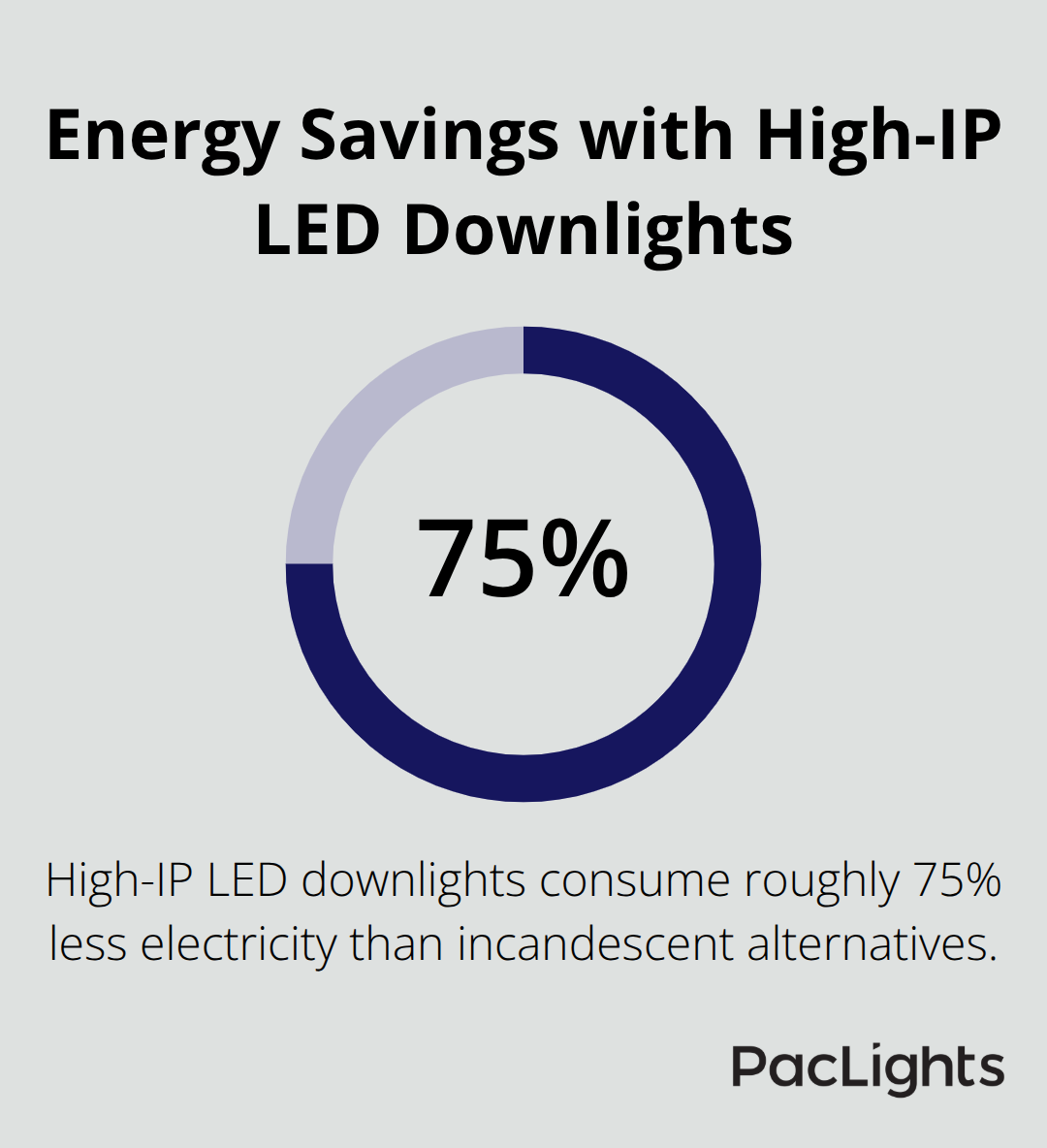
The IP rating only works if the fixture seals properly. Silicone gaskets, waterproof caulking, and edge-to-edge sealing at every connection prevent moisture and dust infiltration. Aluminum housings resist salt spray in coastal environments, stainless steel withstands aggressive washdowns, and UV-resistant plastics prevent yellowing in direct sunlight. Surface mount downlights with sealed construction avoid the condensation problems that plague poorly sealed fixtures, maintaining electrical safety even in extreme temperature ranges. LED surface mount downlights in high-IP ratings typically deliver 25,000 to 50,000 hours of lifespan and consume roughly 75% less electricity than incandescent alternatives. With typical 12-hour daily use, IP-rated LED downlights last 5–10 years in harsh environments, whereas older technologies may fail in 1–2 years. Although upfront costs are higher, the reduction in replacements and maintenance often yields a 2–3 year return on investment in most facilities.
Why Material Selection Matters
The housing material you select directly impacts how long your downlight survives in harsh conditions. Aluminum resists salt spray in coastal environments, stainless steel withstands aggressive washdowns, and UV-resistant plastics prevent yellowing in direct sunlight. These material choices work together with gaskets and seals to create a complete moisture barrier. When you pair the right material with proper sealing techniques, your fixtures maintain electrical safety across extreme temperature ranges (from -40°F to 140°F). The investment in quality materials pays off through extended service life and reduced maintenance calls.
Matching IP Ratings to Your Next Steps
Now that you understand how IP ratings work and what seals them in place, the next step is identifying which rating your specific environment actually requires. Different spaces demand different protection levels, and selecting the wrong rating wastes money on unnecessary features or leaves your facility vulnerable to moisture damage.
Moisture Sealing Technologies in Modern Downlights
How Silicone Gaskets and Waterproof Caulking Protect Your Fixtures
Silicone gaskets and waterproof caulking form the first line of defense against moisture intrusion in surface mount downlights. These materials work at every connection point-where the fixture body meets the mounting base, where wiring enters the housing, and around lens edges-to create a complete barrier that prevents water and dust from reaching internal components. Silicone outperforms rubber gaskets in high-moisture environments because it maintains flexibility across extreme temperature ranges from -40°F to 140°F without cracking or degrading. When you install IP65 or IP67 fixtures, the sealing quality matters as much as the IP rating itself; a poorly sealed IP67 downlight fails faster than a well-sealed IP65 unit.
Housing Materials That Resist Real-World Damage
Housing material selection determines how long these seals remain effective. Aluminum resists salt spray in coastal facilities, stainless steel withstands aggressive chemical washdowns in manufacturing plants, and UV-resistant plastics prevent the yellowing that compromises sealing integrity in direct sunlight. These material choices work together with gaskets and seals to create a complete moisture barrier.
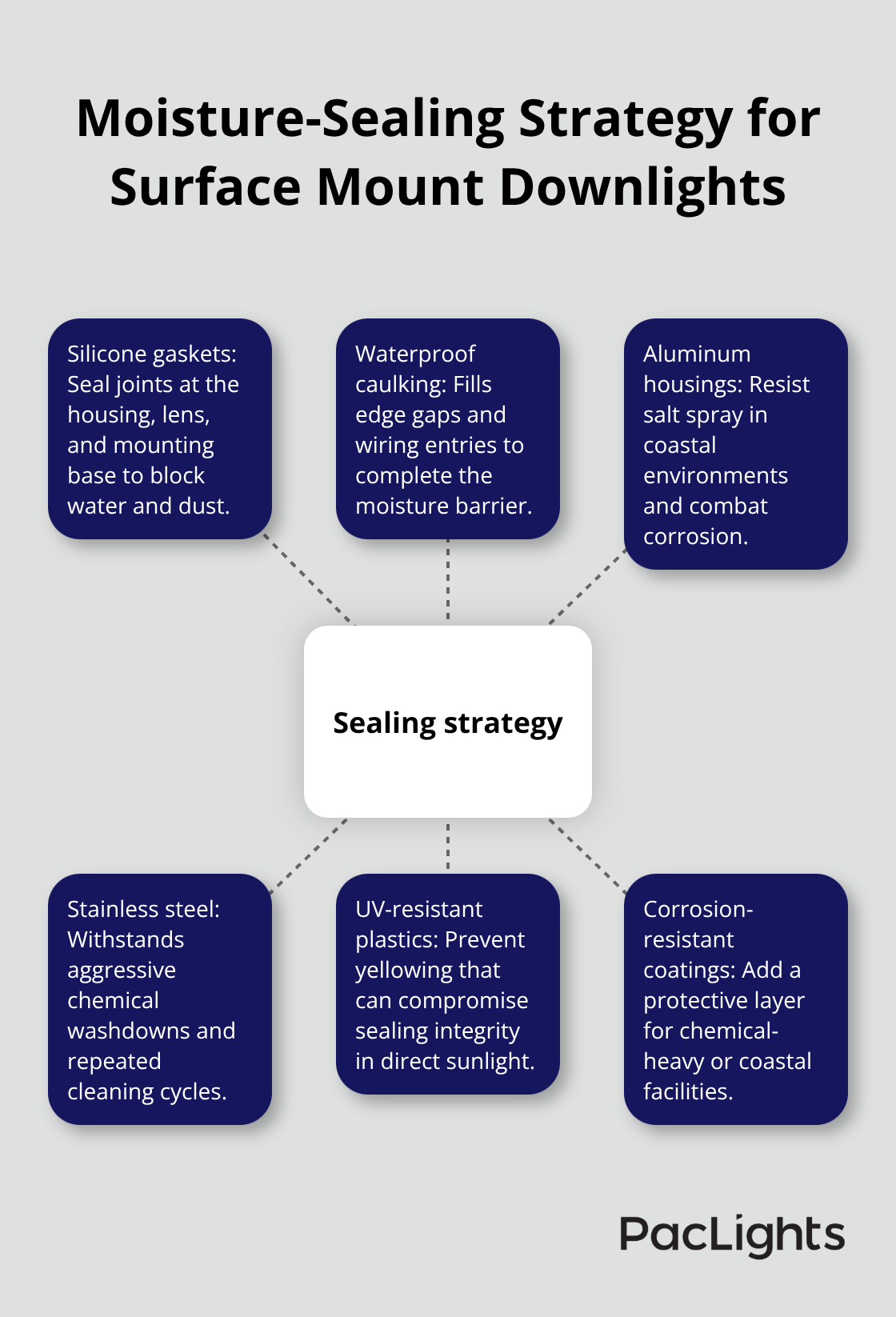
The combination of silicone sealing, quality housing materials, and corrosion-resistant finishes creates redundant protection that survives repeated moisture exposure without premature seal degradation.
Why LED Heat Output Extends Seal Life
Sealed LED designs emit minimal heat-roughly 4–5% of energy as thermal output-which actually helps preserve gasket materials and extend fixture lifespan in confined spaces like washdown areas or steam rooms. This thermal efficiency contrasts sharply with older incandescent technology, which generates excessive heat that accelerates seal degradation. Facilities that invest in properly sealed high-IP fixtures typically see 5–10 year service life in harsh environments, compared to 1–2 years for older incandescent technology or poorly sealed alternatives. Although upfront costs run 30–50% higher than standard fixtures, the reduction in emergency replacements and maintenance labor typically delivers a 2–3 year return on investment across most industrial and commercial facilities.
Testing Standards Verify Sealing Performance
Testing standards like IEC 60529 verify sealing performance through submersion tests, spray tests, and pressure jet tests. However, these laboratory conditions don’t always reflect real-world abuse-vibration, thermal cycling, and chemical exposure all degrade seals over time. Corrosion-resistant coatings add another protection layer, especially in chemical-heavy environments like food processing plants or coastal installations where salt spray accelerates material breakdown. The practical reality is that you need multiple layers of protection working together to survive repeated moisture exposure.
Matching Sealing Technology to Your Environment
Different environments demand different sealing approaches. Indoor commercial spaces near sinks require basic silicone gaskets and standard aluminum housings, while coastal facilities need stainless steel with advanced corrosion-resistant coatings. Manufacturing plants with washdown procedures benefit from sealed construction that prevents condensation buildup inside housings-a leading cause of electrical failures in temperature-cycling environments. Your next step involves identifying which sealing technologies your specific facility actually needs, and then selecting fixtures that combine those seals with the appropriate IP rating for maximum protection.
Selecting the Right IP Rating for Your Environment
IP Ratings for Indoor Commercial Spaces
Indoor commercial spaces demand different protection than outdoor installations, yet most facility managers apply a one-size-fits-all approach to IP ratings and waste thousands on unnecessary features or invite premature failures. IP44 fixtures work adequately in break rooms, offices, and retail spaces where water splashes near sinks or vanities but direct water jets never hit the lights. You’ll find IP44 suitable for indoor areas more than 2.25 meters away from water sources, and it keeps costs down while providing real protection against accidental splashing. However, the moment you move closer to water sources-kitchens, bathrooms, food preparation areas-IP65 becomes the practical minimum. IP65 withstands water jets from any angle without allowing water ingress to reach internal components, and this rating handles the humidity swings and condensation that plague indoor high-moisture spaces.
IP Ratings for Wet Locations and High-Humidity Areas
Manufacturing facilities with washdown procedures absolutely require IP65 as a baseline, though IP67 offers superior protection for any space where chemical exposure or repeated moisture contact occurs. The difference matters: IP67 adds submersion protection up to 1 meter for 30 minutes, which prevents catastrophic failures when washdown procedures accidentally submerge fixtures or when steam condensation pools inside poorly sealed housings. IP67 fixtures maintain electrical safety across extreme temperature ranges (-40°F to 140°F) and resist the corrosive effects of chemical exposure that standard IP65 units cannot tolerate. Facilities that invest in IP67 protection typically see 5–10 year service life in harsh environments, compared to 1–2 years for inadequately sealed alternatives.
IP Ratings for Outdoor and Corrosive Environments
Outdoor installations and corrosive environments eliminate any flexibility in rating selection. Coastal facilities, parking structures, and external wall-mounted lights face salt spray, temperature cycling from -40°F to 140°F, and wind-blown debris that standard indoor fixtures cannot survive. IP65 serves as the absolute minimum for outdoor locations, but IP66 and IP67 deliver the durability that justifies the installation cost. IP66 protects against powerful water jets from pressurized washdowns, making it ideal for facilities that clean exterior lighting with high-pressure equipment or that experience heavy seasonal rainfall and snow accumulation. IP67 adds submersion tolerance and complete sealing against dust ingress, extending service life significantly in harsh outdoor conditions. The 2–3 year return on investment you achieve through reduced replacements and emergency maintenance labor makes the upfront cost premium for IP67 fixtures economically sensible in any outdoor or corrosive environment.
Matching Ratings to Environmental Conditions
Select your rating based on actual environmental conditions-water spray frequency, temperature extremes, chemical exposure, and submersion risk-rather than marketing claims or generic industry standards. Indoor spaces near water sources require IP65 minimum; outdoor installations and washdown environments demand IP67. Coastal facilities benefit from stainless steel housings paired with IP67 ratings to resist salt spray degradation. Manufacturing plants with chemical exposure need both IP67 protection and corrosion-resistant coatings to survive repeated moisture and chemical contact. The upfront investment in proper IP ratings and sealing technologies prevents thousands in repair costs and facility downtime over the fixture’s service life.
Final Thoughts
IP ratings and surface mount sealing determine whether your downlights survive five years or fail in eighteen months. The choice between IP44, IP65, and IP67 directly impacts your facility’s operating costs, safety record, and maintenance burden. Indoor spaces near water sources require IP65 minimum; outdoor installations and washdown environments demand IP67, while coastal facilities need stainless steel housings paired with IP67 ratings to resist salt spray degradation.
Silicone gaskets, waterproof caulking, and edge-to-edge sealing at every connection point determine real-world performance more than the rating itself-a poorly sealed IP67 fixture fails faster than a well-sealed IP65 unit. LED surface mount downlights in high-IP ratings deliver 25,000 to 50,000 hours of lifespan and consume roughly 75% less electricity than incandescent alternatives, lasting 5–10 years in harsh environments compared to 1–2 years for older technologies. Although costs run 30–50% higher than standard fixtures, the reduction in emergency replacements and maintenance labor typically yields a 2–3 year return on investment across most industrial and commercial facilities.
We at PacLights offer durable surface mount downlights with advanced sealing technologies tailored to your specific environmental conditions. Our team provides free lighting layout designs and ROI assessments to help you match the right IP rating and sealing approach to your facility’s actual needs, ensuring long-term performance and cost efficiency.
Disclaimer: PacLights is not responsible for any actions taken based on the suggestions and information provided in this article, and readers should consult local building and electrical codes for proper guidance.