

Your building’s facade is one of the first things clients and customers notice. Outdoor cylinder wall lights transform that first impression while delivering measurable returns through energy savings and enhanced security.
At PacLights, we’ve helped commercial properties across multiple sectors upgrade their outdoor lighting systems. The right fixtures do far more than illuminate-they protect your investment and reinforce your brand identity.
Why Outdoor Cylinder Lights Deliver Real Financial Returns
LED cylinder wall lights cut energy consumption significantly compared to traditional outdoor fixtures. Standard models operate between 6W and 50W depending on output requirements, with many delivering 3,000 to 4,000 lumens for full facade illumination.
The number 100% seems to be not appropriate for this chart. Please use a different chart type. A typical commercial property installing ten 20W LED cylinder fixtures instead of 150W traditional outdoor lights reduces annual energy costs by roughly 40 percent. Over a five-year period, that difference compounds into thousands of dollars saved. The long lifespan rated at 50,000 to 70,000 hours means maintenance crews visit less frequently, cutting labor costs substantially. Integrated photocells enable daylight harvesting and automatic on-off control, eliminating the need for manual scheduling. Properties with motion sensors on cylinder fixtures report additional 20 to 30 percent energy reductions since lights activate only when needed. When you factor in available energy rebates from utility companies and the durability advantage, the financial case becomes undeniable.
Security That Shows on Your Balance Sheet
Well-lit facades deter criminal activity while reducing liability exposure. Properties with strategic cylinder wall lighting mounted at consistent heights between 11 and 16 inches create visible illumination across entryways and walkways, eliminating dark zones where incidents occur. Insurance companies recognize this protection, often offering premium reductions for properly lit commercial properties. The IP65 weather resistance rating means fixtures withstand coastal salt spray, heavy rain, and snow without failing, maintaining consistent security coverage year-round. Upward and downward lighting configurations highlight architectural features while eliminating blind spots, making the property feel controlled and maintained to visitors and potential customers.
Branding Through Architectural Presence
Facade lighting shapes how clients perceive your business before they enter. Cylinder wall lights in matte black, oil-rubbed bronze, or white finishes complement modern and traditional architecture without appearing bulky or industrial. Warm color temperatures at 2700K to 3000K create inviting entryways that communicate professionalism and care. Cool temperatures above 4000K project contemporary sophistication on commercial storefronts. The minimalist cylindrical design works across diverse building styles, meaning your lighting investment remains relevant if your company rebrands or relocates. Dark Sky compliant fixtures that direct 100 percent of light downward demonstrate environmental responsibility to clients increasingly evaluating corporate sustainability practices.
Selecting the Right Fixtures for Your Property
The specifications you choose determine both performance and long-term value. Fixtures with adjustable color temperature options (3000K through 5000K) allow you to match your brand identity while adapting to seasonal preferences or time-of-day requirements. Dimmable models with 0-10V control systems provide flexibility without requiring expensive rewiring. IP65 ratings protect against moisture and debris, while IK10 impact resistance ratings suit high-traffic or vandalism-prone areas. Material selection matters significantly-rust-proof aluminum and ceramic construction withstand harsh coastal environments and industrial settings far better than standard finishes.
Understanding these financial and operational advantages positions your property to make informed decisions about outdoor lighting upgrades. The next section examines the specific types of cylinder wall lights available and how their configurations address different facade challenges.
Types of Outdoor Cylinder Wall Lights and Their Applications
Uplight and Downlight Configurations
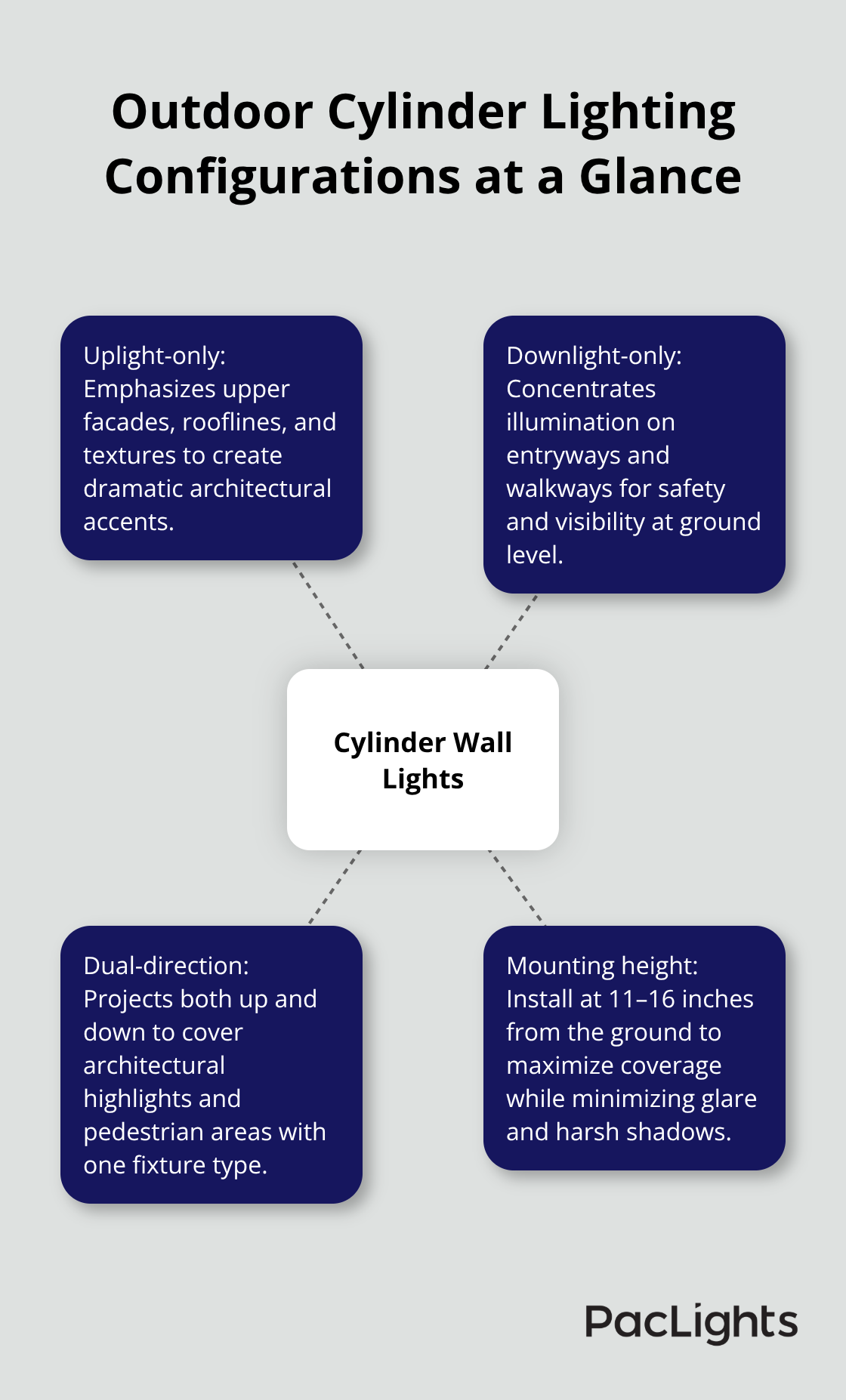
Uplight-only fixtures direct all energy toward the upper facade, accentuating rooflines and upper structural details while creating dramatic shadow play on textured surfaces like brick or stone. Downlight-only models focus illumination on entryways, walkways, and ground-level security concerns, making this configuration ideal for properties prioritizing pedestrian safety and entrance visibility. Dual-direction cylinder lights project both upward and downward simultaneously, delivering the most versatile approach for commercial facades. According to industry guidance, mounting these fixtures at heights between 11 and 16 inches from the ground provides optimal coverage without creating harsh shadows or glare on building surfaces. Properties with mixed architectural elements benefit most from dual-direction systems since a single fixture type addresses multiple lighting objectives rather than requiring separate fixtures for different zones. One wiring run and one control circuit can manage lighting across both upper and lower facade areas instead of operating separate systems, reducing maintenance and control costs substantially.
Materials and Weather Resistance Ratings
Rust-proof aluminum construction withstands coastal salt spray and industrial pollution far better than standard steel finishes, making it the standard choice for properties near ocean environments or in areas with aggressive weather patterns. Ceramic fixtures offer superior corrosion resistance in marine-grade applications and cost less than marine-grade aluminum alternatives. IP65 waterproofing protects internal components from rain penetration, while IK10 impact resistance ratings defend against vandalism and accidental damage in high-traffic commercial areas. These material choices directly impact how long your investment performs in harsh outdoor conditions.
Installation Options for Different Facade Types
Installation approaches vary based on facade type and existing infrastructure. New construction allows for recessed wiring runs behind finished surfaces, while retrofit projects on older buildings often require surface-mounted conduit or exposed wiring solutions that must coordinate with architectural aesthetics. Properties with stone or masonry facades should anchor fixtures into structural elements rather than relying on mortar joints, which deteriorate over time and compromise mounting security. Concrete facades allow direct drilling with proper anchoring hardware, while metal panel systems require specialized brackets that distribute load across multiple panels to prevent stress concentration. The specific facade composition determines which mounting strategy delivers optimal performance and longevity.
Understanding these configuration and material options prepares you to evaluate the technical specifications that separate high-performing fixtures from mediocre alternatives. The next section examines the key features that determine whether your cylinder wall lights deliver the energy savings, durability, and aesthetic impact your commercial property requires.
What Separates High-Performance Cylinder Fixtures from Mediocre Ones
Waterproofing and Impact Resistance Standards
IP65 waterproofing stands as the minimum acceptable standard for outdoor cylinder wall lights, yet many commercial properties overlook this specification during purchasing. IP65 means the fixture withstands water spray from any angle and dust ingress that degrades performance over time. However, IK10 impact resistance ratings deserve equal attention in high-traffic areas or locations prone to vandalism. IK10-rated fixtures endure direct strikes up to 20 joules without housing damage or internal component failure, protecting your investment in rough urban environments.
Material Composition and Real-World Durability
Material composition determines real-world durability far more than marketing claims. Rust-proof aluminum resists coastal salt spray and industrial pollution indefinitely, while standard steel finishes pit and corrode within 18 months in marine-grade applications. Ceramic fixtures offer superior corrosion resistance in aggressive environments and cost less than marine-grade aluminum alternatives, making them the practical choice for properties near ocean environments.
When you evaluate durability, examine the fixture’s seal design around the LED driver and electrical connections, since moisture penetration at these points causes failure regardless of external IP ratings. Fixtures with fully sealed gaskets and epoxy-potted drivers outlast those relying on simple rubber seals by 5 to 7 years in harsh conditions.
Light Output and Color Temperature Alignment
Light output specifications require matching to actual facade requirements rather than selecting maximum lumen options. Fixtures delivering 600 to 1,200 lumens suit accent lighting on architectural details and entryway illumination, while 3,000 to 4,000 lumen outputs handle full facade washing on large commercial buildings. Oversized fixtures waste energy and create glare that damages nighttime visibility instead of enhancing it.
Color temperature selection shapes both energy consumption and brand perception. Warm temperatures at 2700K to 3000K reduce ecological disruption by minimizing upward light pollution while maintaining luxury aesthetics, according to Faraday Lighting research. Cool temperatures above 4000K convey contemporary sophistication on modern storefronts but consume 8 to 12 percent more energy due to increased fixture brightness requirements.
Smart Controls and Automation Systems
Dimmable fixtures with 0-10V control systems eliminate expensive rewiring costs compared to replacing fixtures when brightness adjustments become necessary. IoT-enabled connectivity enables remote monitoring and automatic adjustments based on weather or occupancy patterns, reducing energy waste during low-traffic periods. Motion sensors integrated into cylinder fixtures report 20 to 30 percent additional energy reductions since illumination activates only when needed.
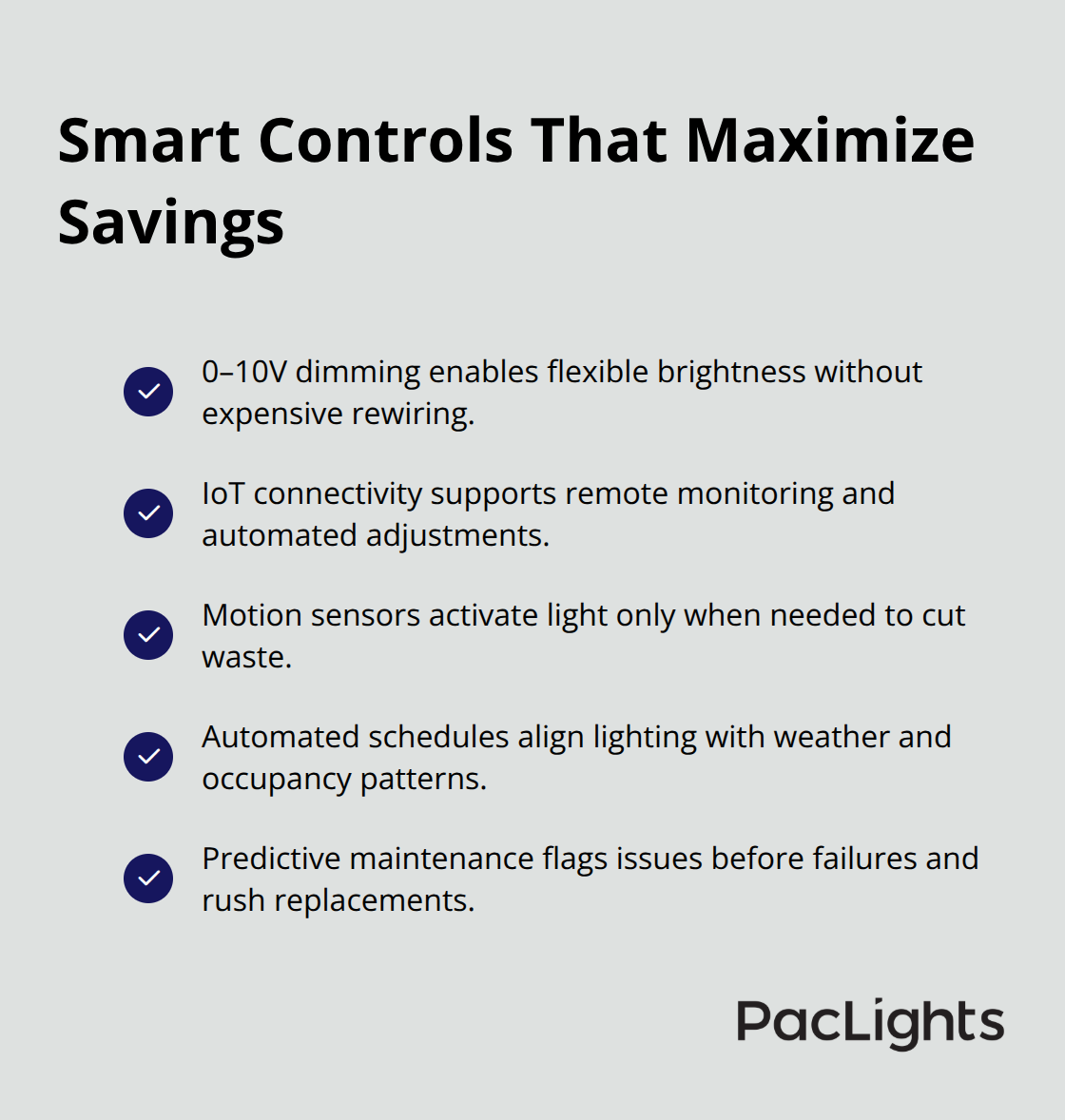
Smart control systems track battery health, monitor fixture performance remotely, and schedule maintenance before failures occur, preventing emergency replacement costs that exceed planned upgrades by 40 to 60 percent.
Final Thoughts
Outdoor cylinder wall lights deliver measurable financial returns while strengthening your commercial property’s security posture and brand identity. The energy savings compound over time, with properly specified fixtures reducing annual consumption by 40 percent or more compared to traditional outdoor lighting systems. Lower maintenance costs from extended LED lifespans and reduced labor visits add another layer of financial advantage that extends across five, ten, and fifteen-year planning horizons.
The real value emerges when you combine these operational savings with the security benefits and aesthetic impact that influence how clients perceive your business. A well-lit facade communicates professionalism and care while eliminating the dark zones where incidents occur. The architectural presence created by outdoor cylinder wall lights in appropriate finishes and color temperatures reinforces your brand identity without requiring expensive redesigns if your company evolves.
Long-term return on investment depends on selecting fixtures matched to your specific facade requirements rather than defaulting to maximum specifications. Material composition, waterproofing standards, and control system capabilities determine whether your investment performs reliably across ten to fifteen years or requires premature replacement due to corrosion or component failure. Contact us through our lighting design services to begin your outdoor lighting upgrade and capture the energy savings and security benefits your property deserves.
Disclaimer: PacLights is not responsible for any actions taken based on the suggestions and information provided in this article, and readers should consult local building and electrical codes for proper guidance.