

Linear lighting systems have transformed how we illuminate commercial and residential spaces. These sleek fixtures provide continuous light distribution that traditional point sources simply cannot match.
We at PacLights see growing demand for linear solutions across offices, retail stores, and modern homes. The technology offers superior energy efficiency while creating clean, professional aesthetics that architects and designers prefer.
What Makes Linear Lighting Systems Work
Linear lighting systems consist of LED chips mounted on elongated aluminum housings that create continuous light distribution across extended lengths. The core components include the LED driver, heat sink, optical lens or diffuser, and mounting hardware. High-quality systems use LED chips with CRI ratings above 90 for accurate color representation and maintain color consistency with SDCM values below 3 to prevent visible variations across installations.
Installation Methods That Deliver Results
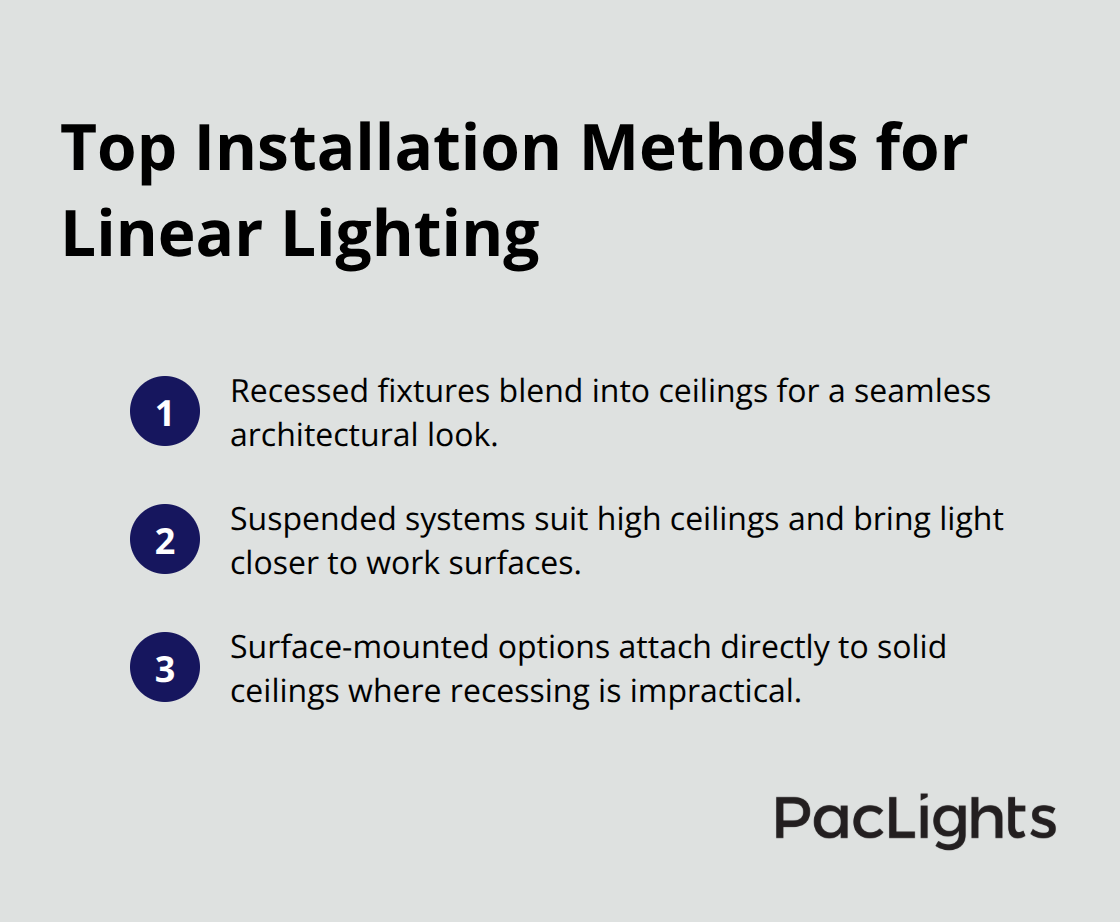
Three primary installation approaches dominate commercial applications. Recessed fixtures integrate directly into ceiling structures through mud-in, spackle flange, or trimless installations that blend seamlessly with architectural details. Suspended systems hang from cables or rigid stems, perfect for high ceilings where fixtures need placement closer to work surfaces. Surface-mounted options attach directly to ceiling surfaces and work best on solid concrete ceilings where recessed installation proves difficult.
Proper Spacing Prevents Common Problems
Correct fixture placement requires specific measurements to avoid shadows and hot spots. Install parallel runs at distances equal to 1.5 times the mount height between fixtures. This spacing formula applies across most commercial environments and prevents uneven light distribution that creates visual discomfort.
Performance Specifications That Matter
Modern linear systems achieve luminous efficacy that exceeds 200 lumens per watt, which reduces operational costs by up to 60% compared to traditional options. Office environments require 30-50 foot-candles at desk level, while retail spaces need 50-75 foot-candles for general areas and up to 200 foot-candles for accent displays. Tunable white systems adjust between 2700K and 6500K throughout the day (essential for healthcare facilities where circadian rhythm support matters). Motion sensors paired with these systems decrease energy costs by an additional 30% in low-traffic areas.
Productivity Benefits Drive Adoption
The Lighting Research Center reports that effective linear systems enhance productivity by 15% over fluorescent alternatives through superior light quality and distribution control. This performance advantage stems from better color rendering and reduced glare that traditional fixtures cannot match. These measurable benefits explain why commercial spaces continue to adopt linear solutions at accelerated rates, setting the stage for understanding how these systems deliver substantial cost savings and operational advantages.
Benefits of Linear Lighting in Commercial Spaces
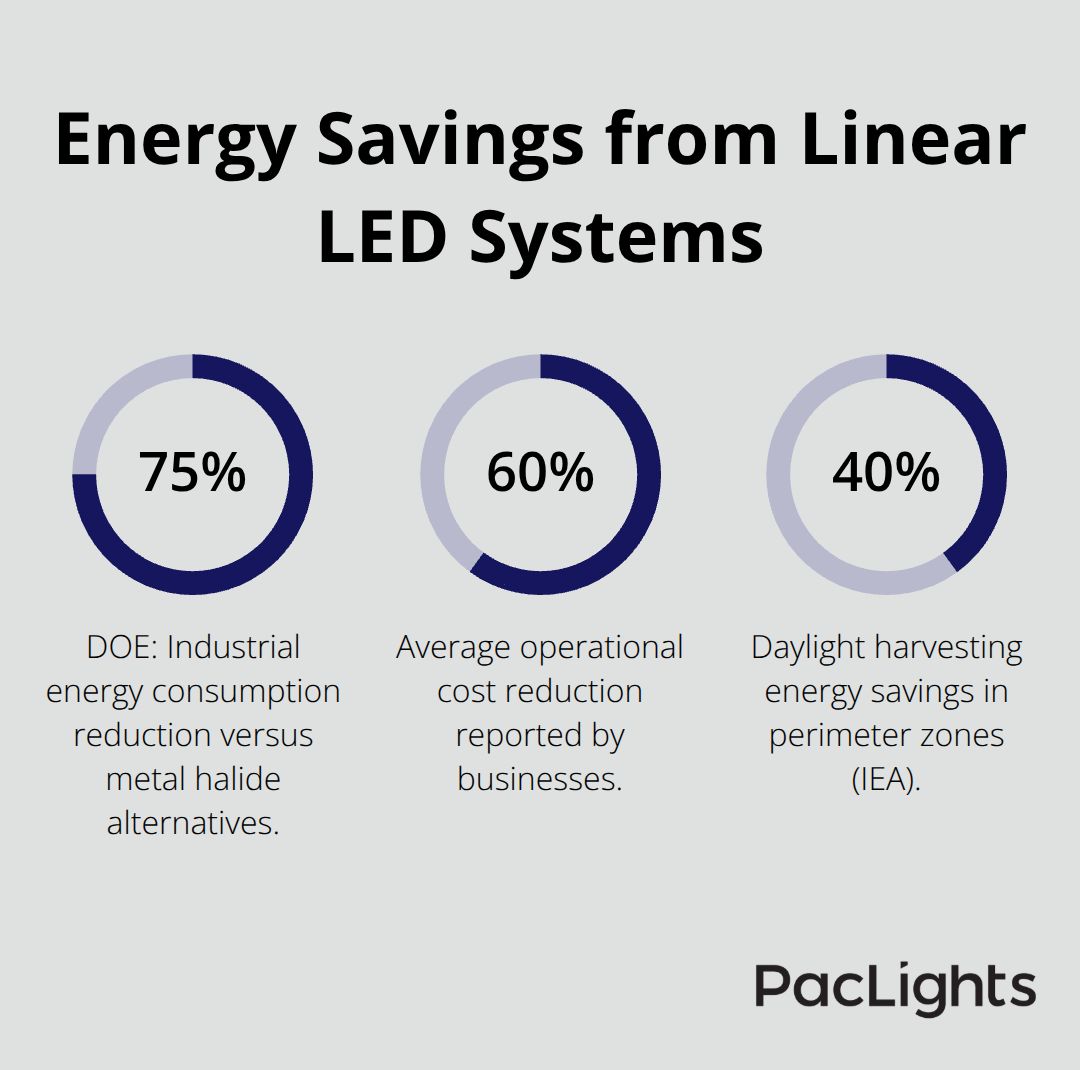
Commercial spaces experience immediate operational improvements when they switch to linear LED systems. The U.S. Department of Energy reports that these systems cut industrial energy consumption by 75% compared to metal halide alternatives, while businesses report average operational cost reductions of 60%. Motion sensors paired with linear systems reduce energy expenses by another 30% in low-traffic areas, which creates compound savings that directly impact bottom lines. Smart control systems automate dimming schedules and achieve 20% reductions during non-peak hours, while daylight harvesting systems cut energy usage by 40% in perimeter zones (according to the International Energy Agency).
Uniform Distribution Eliminates Workplace Problems
Linear systems solve the shadow and hot spot problems that plague traditional point sources. Proper installation spacing at 1.5 times the mount height between parallel runs creates consistent illumination across entire work surfaces. This uniform distribution reduces eye strain and fatigue that decreases productivity in office environments. Healthcare facilities benefit from tunable white systems that adjust between 2700K and 6500K throughout the day to support circadian rhythms, while educational spaces achieve optimal 30-50 foot-candles with glare-free distribution that minimizes student fatigue.
Design Freedom Drives Architectural Innovation
Modern linear systems enable creative configurations that were impossible with traditional fixtures. Designers create continuous illuminated patterns that link walls to ceilings through corner connections that form geometric shapes like rectangles and hexagons. Trimless recessed installations blend seamlessly with architectural details, while suspended systems establish visual connections across open floor plans. Custom lengths and profiles accommodate specific space requirements without compromising performance, and various finish options (including textured surfaces) add warmth to modern commercial interiors.
Property Value Enhancement Through Strategic Lighting
Real estate studies suggest that well-designed lighting increases property value and appeals to potential buyers or renters. Linear systems contribute to this value enhancement through their clean, modern aesthetics that complement contemporary architectural features. The professional appearance these fixtures create helps commercial properties attract higher-quality tenants and command premium lease rates in competitive markets.
These operational advantages and design benefits establish the foundation for successful linear lighting implementation, but proper planning and installation techniques determine whether projects achieve their full potential.
Installation and Design Considerations
Accurate measurements and load calculations prevent costly mistakes during installation. Calculate total wattage requirements by multiplying fixture count by individual fixture wattage, then add a 20% safety margin for future expansions. Most commercial installations require 15-amp circuits for every 1,800 watts of linear fixtures, while 20-amp circuits handle up to 2,400 watts. Junction boxes must carry ratings for specific voltage and amperage requirements, with proper wire management that maintains access for maintenance while protecting electrical connections. Install circuits in parallel rather than series to prevent total system failure when individual fixtures require service.
Smart Controls Maximize Performance and Savings
DALI and wireless control systems enable zone-based dimming that reduces energy consumption by 35% during non-peak hours. Position occupancy sensors to cover entire illuminated areas without dead zones, with sensitivity settings adjusted to prevent false triggers from HVAC airflow.
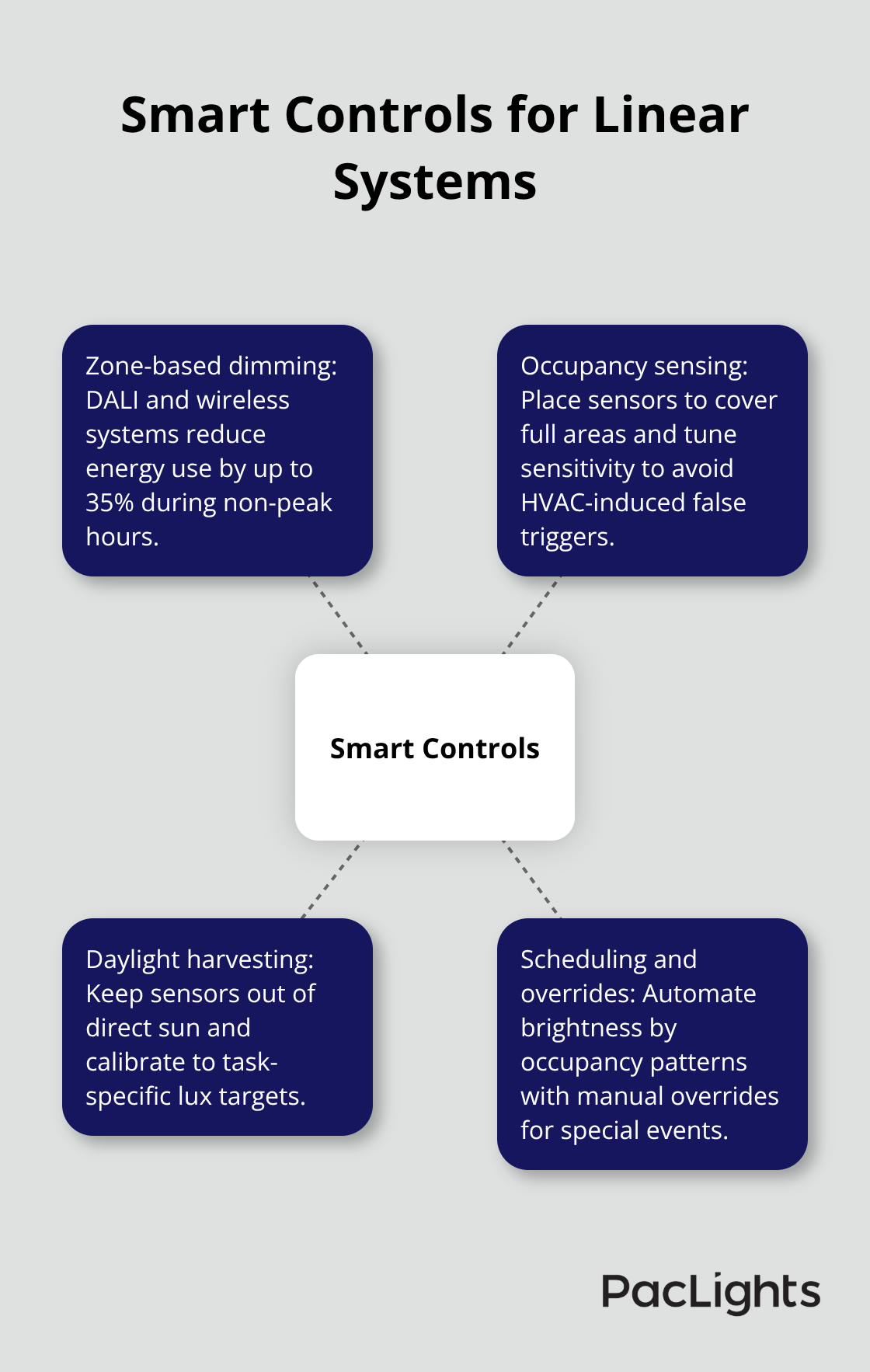
Daylight harvesting sensors require placement away from direct sunlight exposure and calibration to specific lux targets that match task requirements. Smart scheduling systems automatically adjust brightness levels based on occupancy patterns (with manual override capabilities for special events or extended work periods).
Integration Techniques That Prevent Problems
Existing electrical systems require capacity verification before linear installation begins. Check panel amperage ratings and available circuits, as most commercial buildings need electrical upgrades when switching from fluorescent to high-performance LED linear systems. Heat dissipation requires adequate spacing between fixtures and ceiling materials, with aluminum housings cleaned every six months to maintain efficiency. Monitor light output every two years, where levels below 85% of initial output indicate replacement needs.
Proper Spacing Eliminates Common Issues
Install fixtures at distances equal to 1.5 times the mount height between parallel runs to prevent shadows and hot spots. This spacing formula applies across most commercial environments and prevents uneven light distribution that creates visual discomfort. Continuous rows should align with aisle ways in warehouse applications to minimize dark spots, while high-bay fixtures require strategic placement that accounts for ceiling height and beam spread to optimize coverage across different spaces.
Final Thoughts
Linear lighting systems deliver measurable advantages that transform commercial environments. Energy savings reach 75% compared to traditional alternatives, while productivity improvements of 15% create substantial operational benefits. The uniform light distribution eliminates shadows and hot spots that plague conventional fixtures and reduces eye strain and workplace fatigue.
Successful implementation requires proper planning and professional installation. Calculate electrical loads accurately, maintain 1.5 times mount height spacing between fixtures, and integrate smart controls for maximum efficiency. Regular maintenance includes cleaning aluminum housings every six months and monitoring light output every two years (replacement becomes necessary when levels drop below 85% of initial output).
The technology continues to advance rapidly with enhanced LED performance that now exceeds 200 lumens per watt. Tunable white systems support circadian health in healthcare facilities while smart controls and daylight harvesting reduce energy consumption through automated optimization. We at PacLights provide comprehensive lighting solutions that help facilities achieve optimal performance with our linear lighting system options and expert support.
Disclaimer: PacLights is not responsible for any actions taken based on the suggestions and information provided in this article, and readers should consult local building and electrical codes for proper guidance.