

Linear lighting solutions transform how we illuminate modern spaces, offering seamless integration with contemporary architecture. These versatile systems provide uniform light distribution while maintaining clean, minimalist aesthetics.
At PacLights, we see growing demand for linear fixtures that combine energy efficiency with design flexibility. From LED strips to architectural-grade systems, these solutions address both functional and aesthetic lighting needs in commercial and residential environments.
Which Linear Lighting Type Fits Your Project
LED Strip Lights Offer Maximum Installation Flexibility
LED strip lights dominate the flexible linear market with installation versatility that traditional fixtures cannot match. These systems deliver 80-120 lumens per watt efficiency while they bend around corners and fit into tight spaces. Professional-grade strips handle continuous runs up to 32 feet without voltage drop, which makes them ideal for under-cabinet installations, cove lighting, and retail displays. The adhesive backing works for temporary setups, but aluminum channels provide better heat dissipation and extend lifespan to 50,000 hours.
Linear Tube Replacements Drive Retrofit Projects
T8 LED tubes represent the fastest payback option for existing fluorescent systems and cut energy consumption by 50-60% immediately. Direct-wire tubes eliminate ballast maintenance costs that average $75 per fixture replacement. Facilities achieve 18-month payback periods when they replace 32-watt fluorescents with 15-watt LED equivalents. The key specification involves compatible drivers – bypass tubes work with most existing housings but require rewiring labor costs of $25-40 per fixture.
Architectural Linear Systems Command Premium Applications
Commercial-grade linear fixtures integrate into suspended ceilings and architectural elements with professional results. These systems cost 40-60% more than strip alternatives but provide superior light quality with CRI ratings above 90. Linkable sections create continuous light lines that span entire room lengths without visible gaps.

High-performance models deliver 140+ lumens per watt efficiency while they maintain consistent color temperature across joined sections (installation requires proper planning for power distribution every 20-30 feet depending on fixture specifications).
The next consideration moves beyond product selection to how these linear systems integrate with your specific design vision and installation requirements.
How Should You Install Linear Lighting for Maximum Impact
Strategic Placement Maximizes Visual Drama
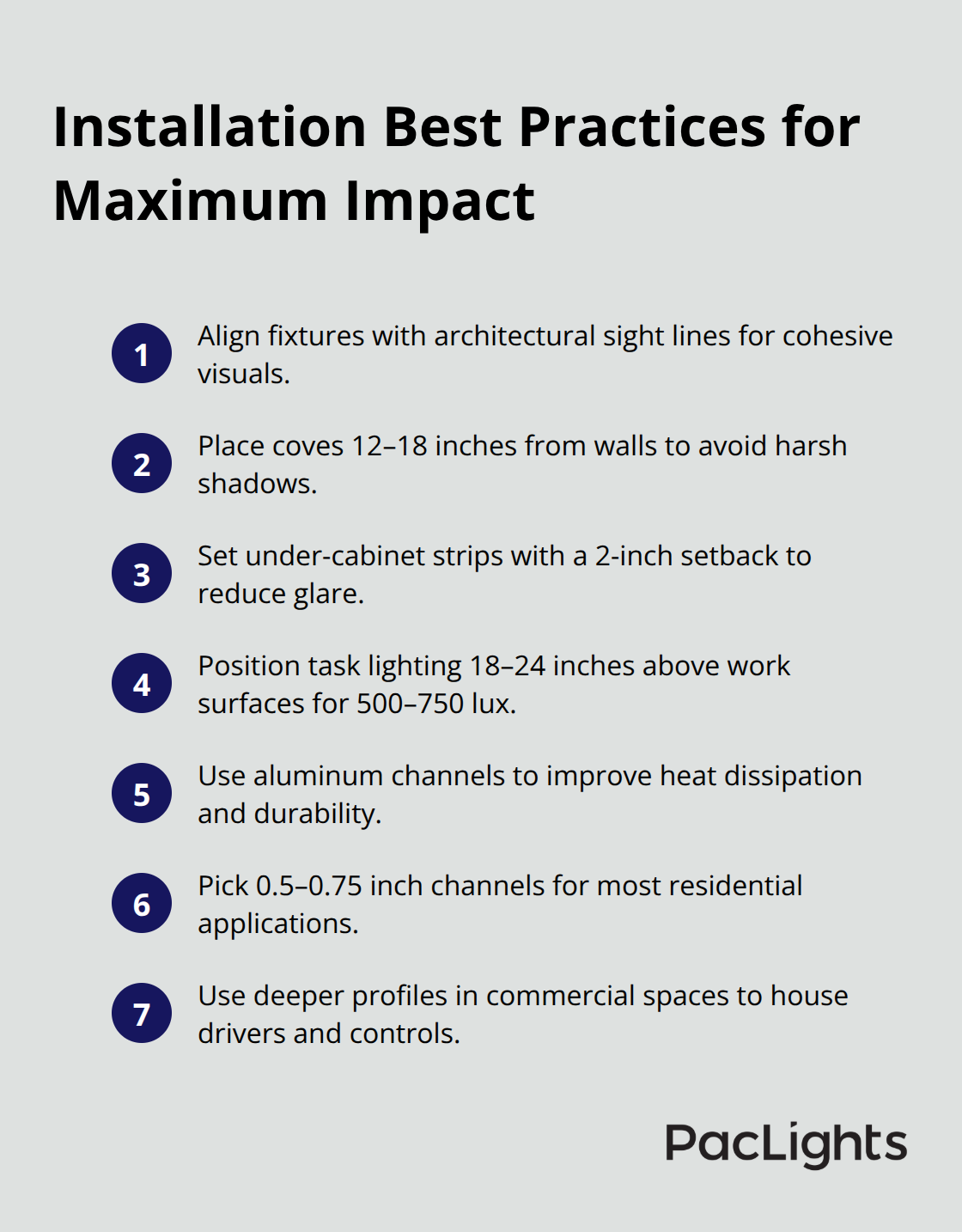
Linear lighting installations succeed when they follow architectural sight lines rather than fight against existing structures. Cove installations positioned 12-18 inches from walls create optimal light distribution without harsh shadows, while under-cabinet strips require 2-inch setbacks from front edges to prevent glare. Task lighting performs best when positioned 18-24 inches above work surfaces, delivering 500-750 lux illumination that meets commercial workspace standards according to Illuminating Engineering Society guidelines.
Professional installations use aluminum channels that dissipate heat and extend LED lifespan by 30-40% compared to surface-mounted strips. Channel depths of 0.5-0.75 inches accommodate most residential applications, while commercial projects benefit from deeper profiles that house drivers and controls within the fixture housing.
Continuous Runs Transform Large Commercial Spaces
Large retail and office environments demand seamless light distribution across spans that exceed 100 feet, which requires careful power planning and junction management. Modern linear systems handle continuous runs through low-voltage DC connections that maintain consistent brightness levels without visible brightness variations between sections. Power injection points every 32 feet prevent voltage drop issues that cause color shifts and reduced output.
Suspended linear installations in open offices typically mount 8-10 feet above finished floors to provide uniform ambient lighting while they avoid direct glare into computer screens. Multiple 8-foot sections link together to create uninterrupted light lines that guide traffic flow and define architectural zones without physical barriers. These installations reduce overall fixture counts by 25-35% compared to traditional recessed layouts while they deliver superior light uniformity.
Architectural Integration Demands Professional Planning
Modern buildings integrate linear systems into structural elements during construction phases rather than add them as afterthoughts. Recessed ceiling channels accommodate linear fixtures flush with finish surfaces, which creates clean lines that enhance minimalist design aesthetics. Wall grazing applications position fixtures 6-12 inches from vertical surfaces to emphasize texture and architectural details through controlled light angles (proper angles prevent hot spots and shadows).
Integration with building management systems allows linear lighting to respond to occupancy sensors and daylight harvesting controls that reduce energy consumption by 40-60% during peak daylight hours. Smart controls coordinate multiple linear zones to create dynamic scenes that adapt throughout daily work cycles.
These installation strategies work best when paired with proper energy calculations and cost analysis that demonstrate long-term value.
What Returns Do Linear LED Upgrades Actually Deliver
Performance Numbers That Matter for Budget Planning
Linear LED systems deliver measurable performance advantages that translate directly to operational savings. Modern linear LEDs achieve 140-160 lumens per watt efficiency compared to 85-95 lumens per watt from fluorescent systems, which creates immediate 40-50% energy reduction upon installation. Commercial facilities typically see monthly electricity costs drop from $2.50 per linear foot with T8 fluorescents to $1.20 per linear foot with LED replacements (according to Department of Energy test data).
The lifespan advantage compounds these savings significantly. Quality linear LEDs operate for 50,000-70,000 hours compared to 20,000-30,000 hours for fluorescent tubes, which cuts replacement frequency by 60-70%. Labor costs for lamp changes average $15-25 per fixture in commercial settings, which makes maintenance reduction a substantial cost factor for facilities with hundreds of linear fixtures.
Smart Controls Multiply Energy Savings Beyond Basic LED Conversion
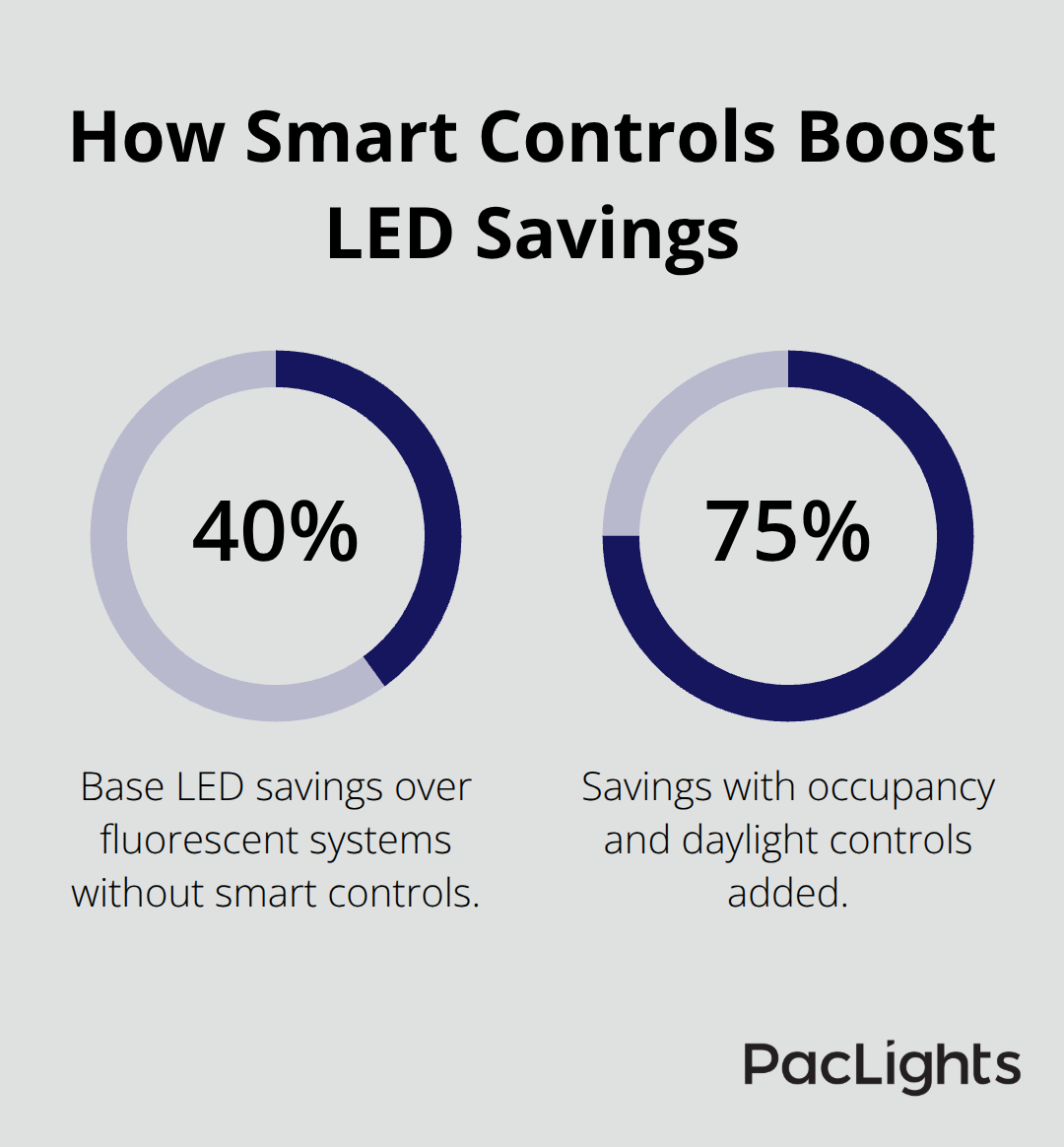
Occupancy sensors and daylight controls increase linear LED savings from 40% to 75% over baseline fluorescent consumption. Motion sensors cost $25-40 per zone but reduce hours by 30-45% in intermittently occupied spaces like conference rooms and storage areas.
Daylight sensors automatically dim fixtures near windows, which saves additional 15-25% during peak daylight hours when utility rates hit maximum levels.
Utility Rebates Accelerate Project Payback Periods
Utility rebate programs specifically target linear LED retrofits with incentives that range from $8-15 per fixture for basic replacements and $20-35 per fixture when smart controls are included. California utilities offer some of the highest rebates at $40 per fixture for LED systems, while northeastern utilities average $12-18 per fixture according to Database of State Incentives for Renewables and Efficiency data. Simple payback periods drop from 2.5 years to 1.2 years when rebates factor into project costs (these programs change annually based on utility budgets).
Final Thoughts
Linear lighting solutions represent the most significant advancement in commercial and industrial illumination technology over the past decade. These systems deliver 40-50% energy savings, 60-70% maintenance reduction, and superior light quality compared to traditional fluorescent alternatives. Smart controls amplify these benefits and create total energy reductions up to 75%.
The technology evolves rapidly with new innovations that transform how facilities operate. Tunable white LEDs now adjust color temperature throughout the day to support circadian rhythms. Wireless mesh controls eliminate complex wiring requirements and integrate with building management systems to create responsive environments that adapt to occupancy patterns automatically.
We at PacLights help facilities navigate this transition with comprehensive linear strip lights, retrofit solutions, and advanced controls. Our team provides free lighting layout designs and ROI assessments that remove guesswork from upgrade decisions. With utility rebates reducing payback periods to 12-18 months (and some programs offering up to $40 per fixture), the financial case for linear LED upgrades has never been stronger.
Disclaimer: PacLights is not responsible for any actions taken based on the suggestions and information provided in this article, and readers should consult local building and electrical codes for proper guidance.