

Linear office lighting is revolutionizing workspaces, transforming them into more productive and energy-efficient environments. In 2025, businesses are increasingly recognizing the impact of well-designed lighting on employee well-being and performance.
At PacLights, we’ve seen firsthand how the right lighting solutions can dramatically improve office spaces. This guide will show you how to harness the power of linear lighting to create a workspace that’s not only visually appealing but also optimized for productivity and comfort.
What is Linear Office Lighting?
Definition and Types
Linear office lighting transforms modern workspace design. It uses long, narrow fixtures to create uniform illumination across an area. These fixtures typically house LED lights, which offer superior energy efficiency and longevity compared to traditional options.
Several types of linear office lighting suit different workspace needs:
- Suspended linear lights: These hang from the ceiling, ideal for spaces with high ceilings or to create a visual feature.
- Recessed linear lights: These install flush with the ceiling, providing a sleek, minimalist look.
- Surface-mounted linear lights: Perfect for spaces where recessed lighting isn’t feasible, these attach directly to the ceiling surface.
- Linear task lights: Often used on desks or workstations to provide focused illumination for detailed tasks.
Impact on Workspaces
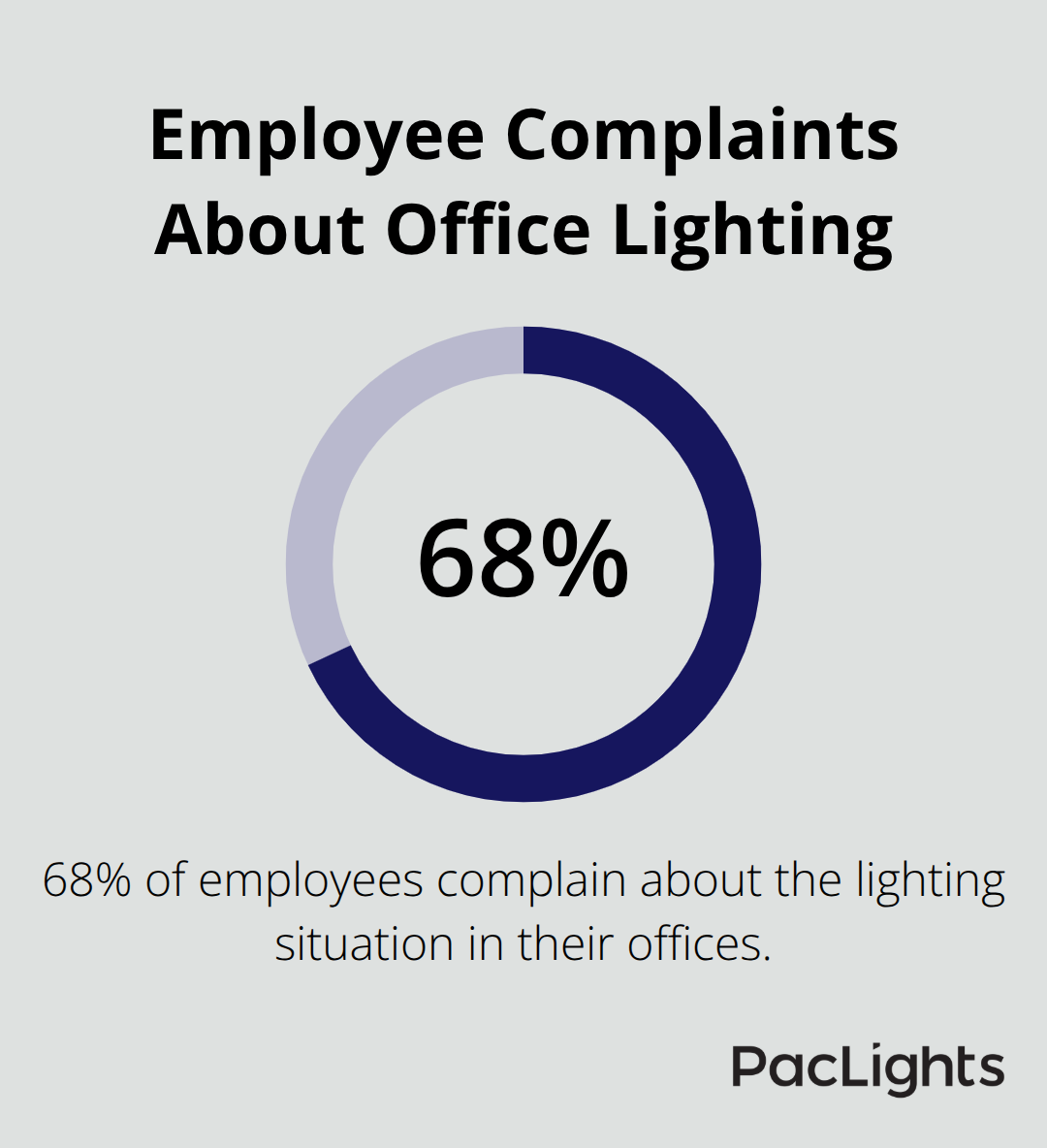
Linear lighting significantly impacts workspace functionality. A study by the American Society of Interior Designers found that 68% of employees complain about the lighting situation in their offices. Linear lighting addresses many of these concerns by providing even, glare-free illumination that reduces eye strain and enhances visibility.
Well-designed linear lighting can boost productivity. Research from the Department of Design and Environmental Analysis at Cornell University shows that optimizing natural light in an office can increase worker productivity by 2%. Linear LED lighting can mimic this effect, potentially leading to similar productivity gains.
Key Features to Consider
When selecting linear office lighting, several important features deserve attention:
- Color temperature: Select fixtures that offer adjustable color temperature. The ability to shift between cool (around 5000K) and warm (around 2700K) light can help maintain circadian rhythms and boost alertness when needed.
- Dimming capabilities: Dimmable lights allow for customization based on time of day and task requirements.
- Glare reduction: Choose fixtures with diffusers or indirect lighting options to minimize glare on computer screens.
- Energy efficiency: LED linear lights can use up to 75% less energy than traditional fluorescent tubes. Look for fixtures with high lumens per watt ratings.
- Smart controls: Integration with smart building systems can further optimize energy use and customize lighting based on occupancy and natural light levels.
These features (especially energy efficiency and smart controls) not only enhance the workspace but also contribute to long-term cost savings and sustainability goals.
As we move forward, it’s clear that the strategic placement of linear lighting plays a crucial role in maximizing its benefits. Let’s explore how to design with linear office lighting to create an optimal work environment.
How to Design with Linear Office Lighting
Strategic Placement for Optimal Illumination
Effective design with linear office lighting requires more than just fixture installation. It demands a strategic approach to create a harmonious environment that enhances productivity and well-being.
In open office layouts, suspend linear fixtures at regular intervals to provide even illumination across workstations. For a 1,000 square foot open office, install 8-10 linear fixtures at 8-foot intervals for optimal coverage.
For task-oriented areas like conference rooms or individual offices, use recessed linear lighting around the perimeter. This method minimizes glare on screens while still providing ample illumination. A study by the Lighting Research Center found that this approach can reduce eye strain by up to 30% compared to centralized overhead lighting.
Layering Light Sources
Linear lighting forms the backbone of office illumination, but combining it with other light sources creates a more dynamic and functional space. Add task lighting on desks to supplement overhead linear fixtures. This layered approach allows employees to adjust their immediate lighting environment, potentially boosting productivity by 5-10% (according to a report by the National Renewable Energy Laboratory).
Don’t overlook accent lighting. Use wall-mounted linear fixtures to highlight artwork or architectural features, adding depth and interest to the space. This enhances aesthetics and improves wayfinding in larger office environments.
Color Temperature and Productivity
Color temperature plays a significant role in office productivity and well-being. While many offices default to cool white light (around 4000K), research suggests a more nuanced approach yields better results.
A study published in the Journal of Environmental Psychology found that exposure to blue-enriched light (17000K) in the morning led to improved alertness and performance. However, as the day progresses, a transition to warmer color temperatures (3000K) can help prepare the body for rest.
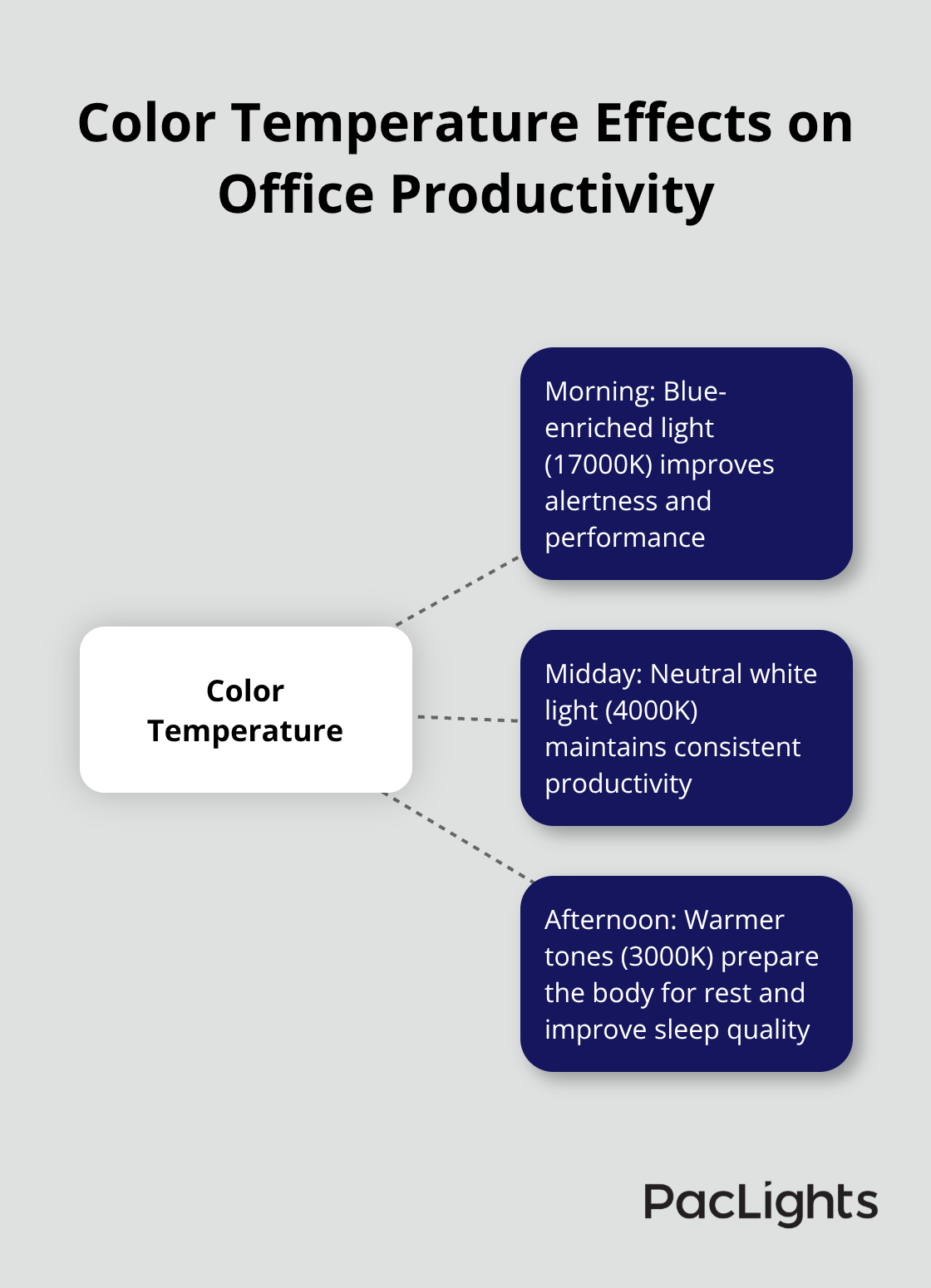
Implement tunable linear lighting systems that adjust color temperature throughout the day. Start with cooler temperatures in the morning, then gradually shift to warmer tones in the afternoon. This mimics natural daylight patterns and can lead to improved sleep quality and daytime productivity.
High Color Rendering for Accuracy
When selecting linear fixtures, prioritize those with high color rendering index (CRI) values. A CRI of 90 or above ensures colors appear vibrant and true-to-life, which is particularly important in design-oriented workspaces or industries where color accuracy is essential.
Smart Controls for Optimization
Integrate smart controls with your linear lighting system to optimize energy use and customize lighting based on occupancy and natural light levels. This not only enhances the workspace but also contributes to long-term cost savings and sustainability goals.
The strategic use of linear office lighting can transform your workspace into a more productive and comfortable environment. As we explore specific lighting solutions, let’s turn our attention to the range of options available in the market and how they can elevate your office design.
How Can Linear Office Lighting Transform Your Workspace?
Energy Efficiency That Pays Off
Linear office lighting solutions combine cutting-edge technology with practical design. These products meet the diverse needs of modern workspaces, from open-plan offices to individual workstations.
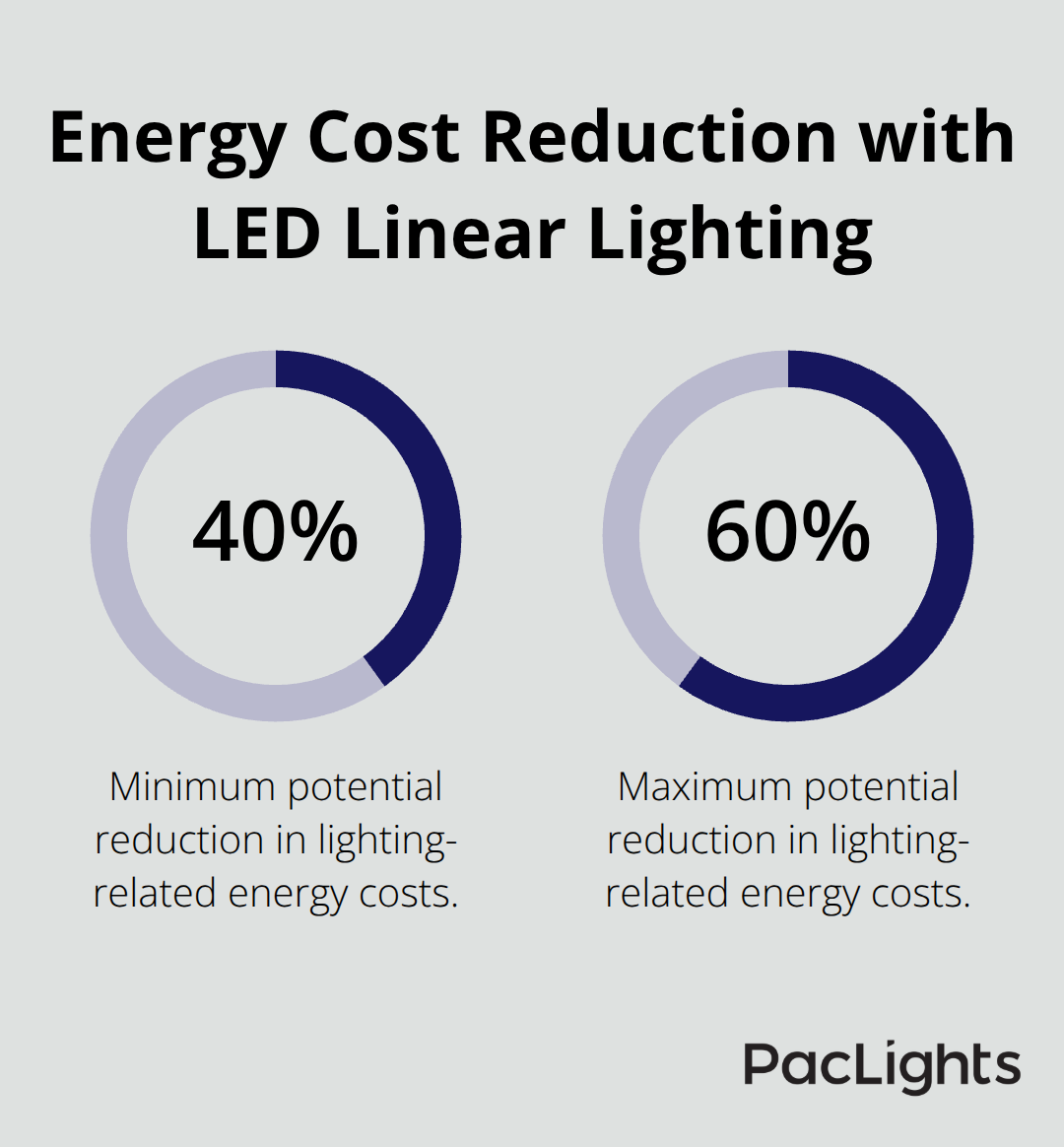
LED linear fixtures maximize energy efficiency without compromising light quality. Businesses that switch to LED linear lighting systems often see a 40-60% reduction in their lighting-related energy costs. For a typical 10,000 square foot office space, this can translate to annual savings of $3,000 to $5,000.
Advanced heat sink designs in modern fixtures result in an impressive L70 rating of 200,000 hours. This means lights maintain 70% of their initial brightness for over 22 years of continuous use, significantly reducing maintenance and replacement costs.
Customization for Every Space
No two offices are alike, which is why a wide range of customization options exist. Linear fixtures come in various lengths (from 2 feet to 8 feet), allowing for seamless integration into any office layout. Many manufacturers provide field-selectable wattage and color temperature options, giving facility managers the flexibility to adjust lighting on-site without additional equipment.
For example, some LED strip lights offer an adjustable color temperature range from 3000K to 5000K. This allows offices to create different lighting zones optimized for various tasks and times of day, potentially boosting productivity by up to 15% (according to a study published in the Journal of Circadian Rhythms).
Smart Controls for Smarter Offices
To further enhance energy savings and user comfort, smart lighting controls integrate into linear office lighting solutions. These systems are compatible with various building management systems (BMS) and can easily integrate with occupancy sensors and daylight harvesting technologies.
A tech company in Silicon Valley demonstrated the power of these smart controls. By implementing a linear lighting system with integrated sensors and daylight harvesting, they achieved an additional 25% energy savings on top of the savings from switching to LEDs.
Glare Reduction for Visual Comfort
Innovation in office lighting doesn’t stop at energy efficiency and smart controls. The latest linear fixtures incorporate high-quality diffusers that reduce glare by up to 30% compared to standard LED panels, creating a more comfortable visual environment for employees.
Future-Proofing Your Workspace
Linear office lighting offers a future-proof solution for workspaces. With their long lifespan, energy efficiency, and adaptability, these lighting systems provide a solid foundation for evolving office needs. As work patterns change and office layouts adapt, linear lighting can easily reconfigure to meet new requirements (without the need for extensive renovations or replacements).
Final Thoughts
Linear office lighting transforms workspaces into productive and energy-efficient environments. It provides uniform illumination, reduces glare, and allows customization to boost employee well-being and productivity. The energy savings and long lifespan of LED linear fixtures result in significant cost reductions for businesses, making them a smart investment for the future.
The future of office lighting looks bright with a shift towards human-centric designs that adapt to natural circadian rhythms. Integration with smart building systems will become more seamless, allowing for greater automation and personalization. Biophilic design principles also influence lighting trends, with fixtures that mimic natural light patterns and complement green spaces within offices.
We at PacLights stand at the forefront of these innovations in linear office lighting solutions. Our range of energy-efficient LED fixtures meets the diverse needs of modern workspaces. We offer customizable options with daylight and motion control, as well as advanced networked lighting controls to optimize energy use (our team provides free lighting layout designs and ROI assessments).
Disclaimer: PacLights is not responsible for any actions taken based on the suggestions and information provided in this article, and readers should consult local building and electrical codes for proper guidance.