

Choosing the right industrial LED high bay lighting can significantly impact your workspace’s efficiency and productivity. At PacLights, we understand the importance of proper illumination in industrial settings.
This guide will walk you through the essential factors to consider when selecting high bay lights for your facility. We’ll cover everything from understanding your lighting requirements to evaluating key features that make a difference in performance and longevity.
What Are Industrial LED High Bay Lights?
Definition and Purpose
Industrial LED high bay lighting is a specialized lighting solution designed for spaces with high ceilings (typically 20 to 45 feet). These lights illuminate warehouses, factories, and large retail spaces where bright, uniform lighting is essential for safety and productivity.
The LED Revolution in Industrial Lighting
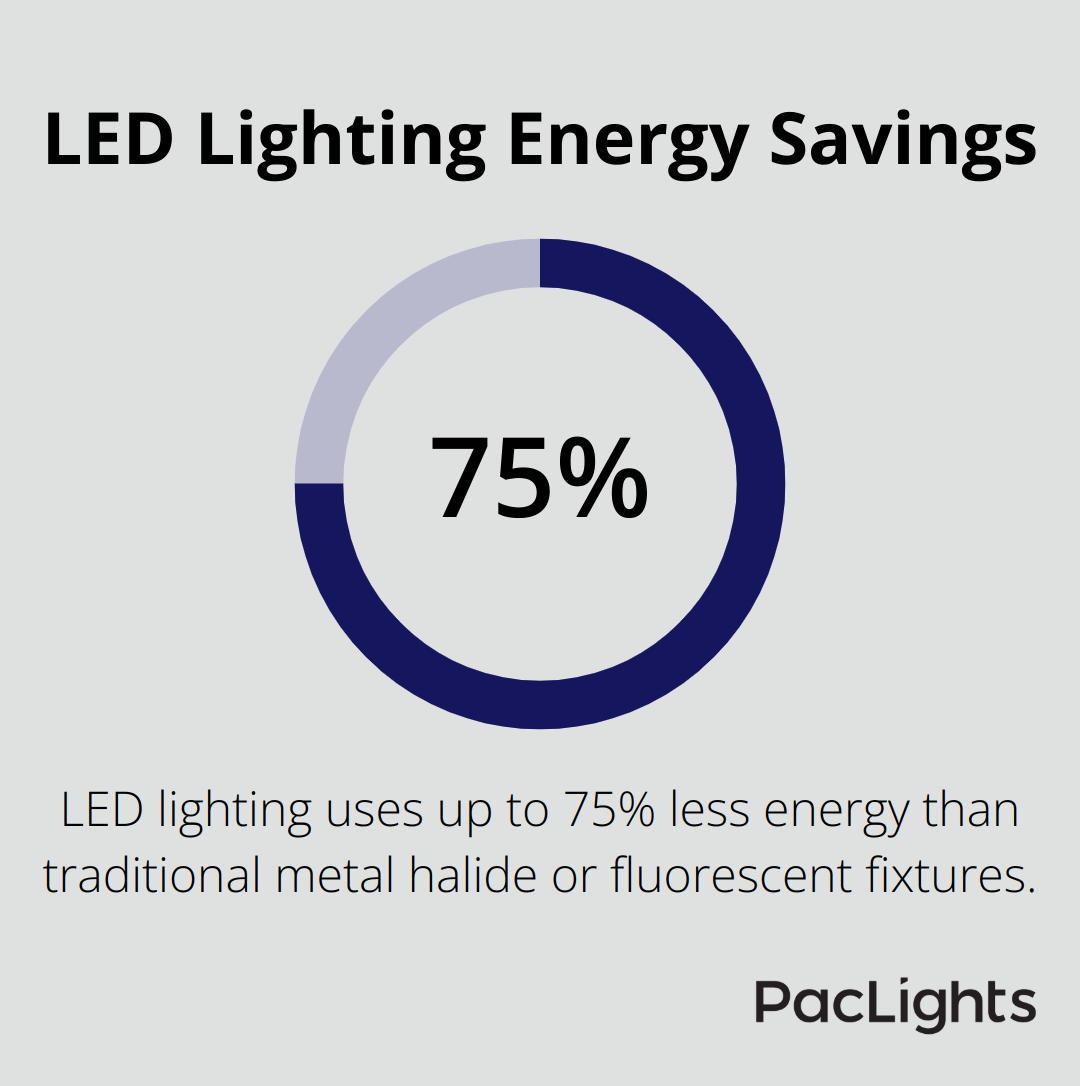
LED technology has transformed industrial lighting. LEDs use up to 75% less energy than traditional metal halide or fluorescent fixtures, according to the U.S. Department of Energy. This results in significant cost savings, with industrial facilities potentially saving $0.25 per square foot annually by switching to LED lighting.
LEDs also excel in longevity. The Illuminating Engineering Society reports that LED fixtures can last up to five times longer than conventional lighting options, often exceeding 50,000 hours of operation. This reduces maintenance costs and downtime associated with frequent bulb replacements.
Key Factors in Selecting High Bay Lights
When choosing industrial LED high bay lights, consider these critical factors:
- Lumen Output: Try to find fixtures that provide at least 100 lumens per watt for optimal efficiency. For ceilings 20-30 feet high, select lights delivering 16,000 to 20,000 lumens.
- Color Temperature: Cooler color temperatures (5000K-6500K) enhance worker productivity in task-oriented areas.
- Beam Angle: Fixtures with beam angles between 120 and 140 degrees provide uniform illumination in large spaces.
- IP Rating: Choose fixtures with an IP65 rating or higher to ensure durability against dust and moisture in industrial settings.
- Dimming Capabilities: Lights with dimming options can provide additional energy savings (potential reductions of 20-30% according to the U.S. Department of Energy).
Lighting Calculation Basics
To determine the right number of fixtures for your space, use this formula:
Number of Fixtures = (Desired Foot-Candles × Room Area) ÷ (Lumens per Fixture × Light Loss Factor)
The Light Loss Factor (LLF) for LED fixtures usually ranges from 0.7 to 0.8. Industrial areas typically require lighting levels of 10-20 foot-candles for general spaces and 50-100 fc for detailed tasks.
For optimal coverage, space fixtures 1 to 1.5 times the mounting height. This approach ensures uniform illumination without creating dark spots or wasting energy through overlighting.
Now that we understand the basics of industrial high bay LED lights, let’s explore how to evaluate your specific lighting requirements for your facility.
How to Evaluate Your Industrial Lighting Needs
Space Assessment
Start your evaluation by measuring your facility’s dimensions. Include ceiling height, floor area, and any obstructions like machinery or shelving. A warehouse with 30-foot ceilings and extensive racking systems will have different lighting needs compared to an open manufacturing floor with 20-foot ceilings.
Identify task areas that require higher light levels. The Illuminating Engineering Society recommends 30-50 foot-candles for general warehouse areas, but up to 100 foot-candles for detailed assembly work. Use a light meter to measure current light levels and pinpoint areas needing improvement.
Lumen Calculation
Calculate the total lumens needed with this formula:
Total Lumens = Desired Foot-Candles × Floor Area (in square feet)
For example, a 10,000 sq ft warehouse needing 30 foot-candles would require 300,000 lumens. Divide this by the lumen output of your chosen fixtures to determine the number of lights needed.
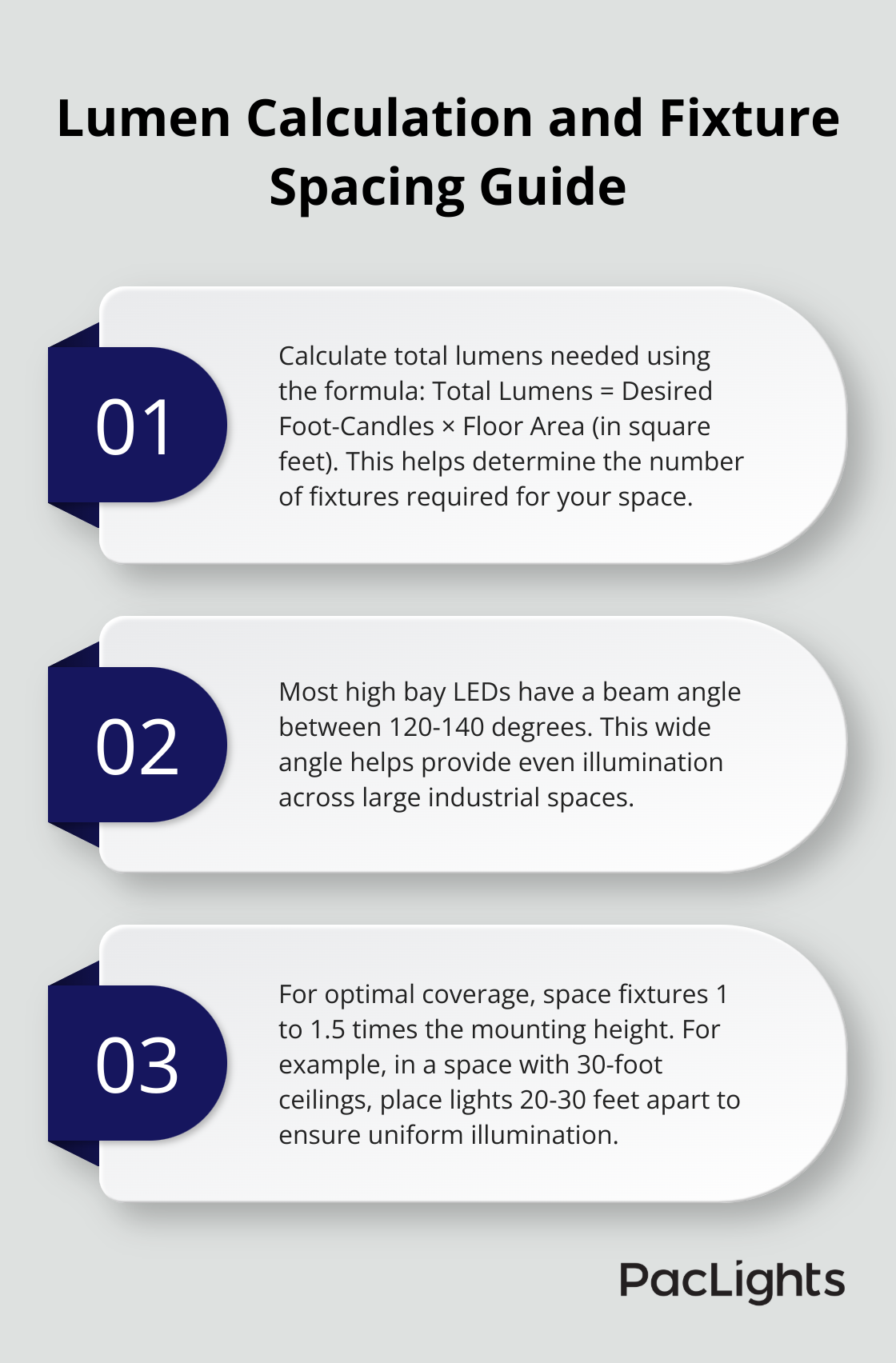
Consider light distribution patterns when placing fixtures. Most high bay LEDs have a beam angle between 120-140 degrees. Space fixtures 1 to 1.5 times the mounting height for even coverage. For a 30-foot ceiling, this means placing lights 20-30 feet apart.
Color Temperature and CRI
Color temperature significantly impacts worker productivity and comfort. Industrial settings often prefer cooler temperatures (5000K-6500K) as they promote alertness and visibility.
The Color Rendering Index (CRI) is equally important, especially in quality control areas. Try to select fixtures with a CRI of 80 or higher for most industrial applications. Some tasks, like color matching in textile manufacturing, may require a CRI of 90 or above.
Environmental Factors
Consider the specific environmental conditions of your facility. Factors such as humidity, dust, and temperature fluctuations can affect lighting performance and longevity. Select fixtures with appropriate IP ratings (e.g., IP65 or higher for dusty or damp environments) to ensure durability and longevity.
Energy Efficiency and Controls
Evaluate the potential for energy savings through efficient fixtures and smart controls. LED high bays can reduce energy consumption by up to 75% compared to traditional lighting (according to the U.S. Department of Energy). Incorporate occupancy sensors and daylight harvesting systems to further optimize energy use.
Now that you’ve assessed your lighting needs, let’s explore the key features to look for in LED high bay lights to meet these requirements effectively.
Key Features of LED High Bay Lights for Industrial Spaces
Energy Efficiency: The Power of Lumens per Watt
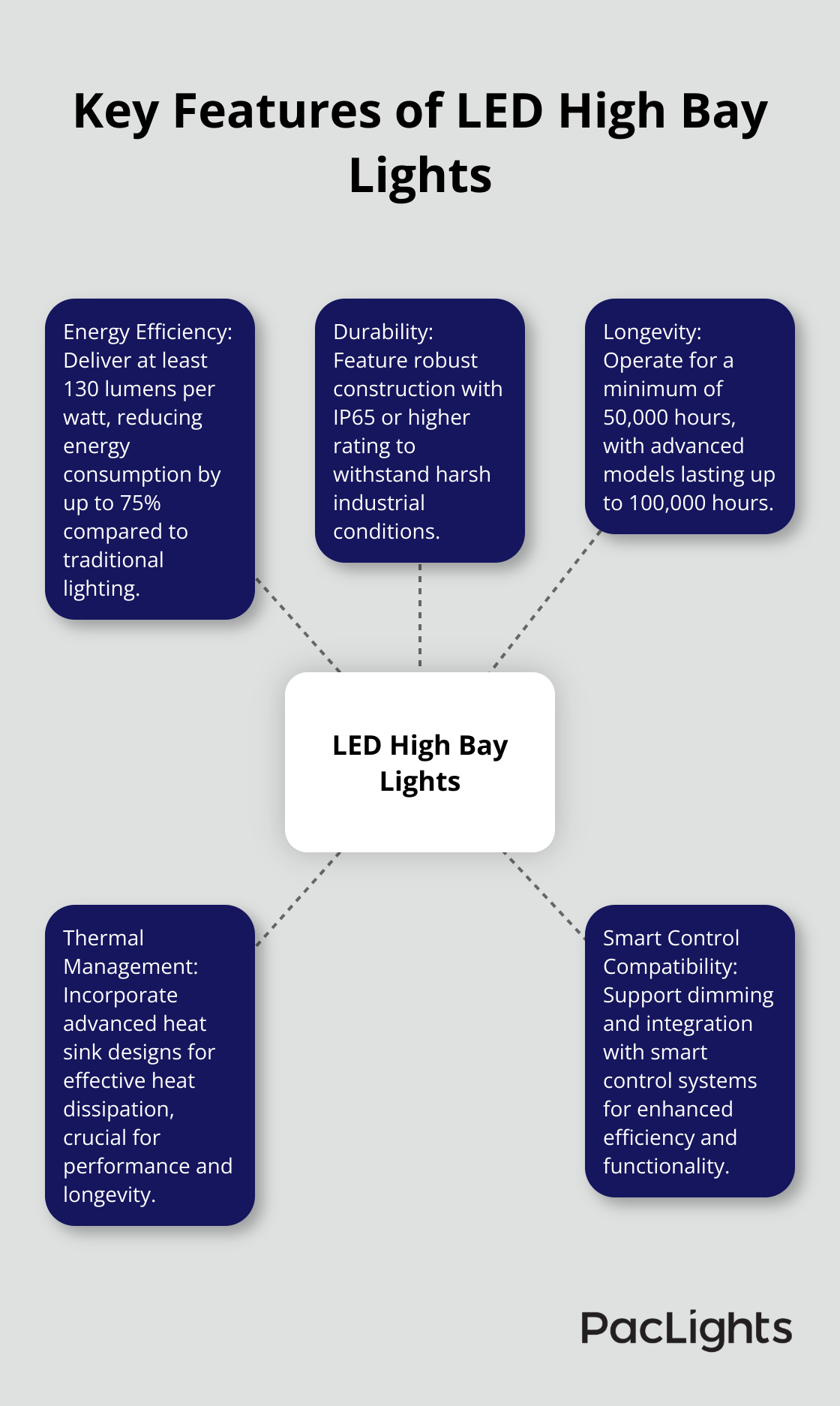
Energy efficiency stands as a top priority in industrial lighting. The most effective LED high bay lights deliver at least 130 lumens per watt. This efficiency level can reduce energy consumption by up to 75% compared to traditional metal halide or fluorescent options (according to the U.S. Department of Energy).
Some cutting-edge LED high bay lights reach up to 200 lumens per watt. This translates to substantial cost savings. For instance, a 100,000 square foot warehouse that switches from metal halide to high-efficiency LED high bays could save over $50,000 annually on energy costs.
Durability: Built to Withstand Industrial Conditions
Industrial environments demand tough lighting fixtures. The best high bay lights feature robust construction, often made from high-quality aluminum with a powder-coated finish. This combination resists corrosion and stands up to harsh industrial settings.
Fixtures with an IP65 rating or higher protect against dust and water ingress. This protection maintains performance in dusty or humid conditions. Food processing facilities or outdoor applications might require lights with even higher ratings (IP66 or IP67).
Longevity: Reducing Maintenance and Downtime
Quality LED high bay lights should operate for a minimum of 50,000 hours. Advanced models can last up to 100,000 hours. This extended lifespan significantly cuts maintenance costs and downtime associated with replacements.
Thermal Management: Keeping Cool Under Pressure
Heat reduces LED performance and longevity. Effective thermal management becomes critical, especially in high-ceiling industrial spaces where heat accumulates.
The best fixtures incorporate advanced heat sink designs. Fins or ridges on the fixture body help dissipate heat more effectively. Some manufacturers use innovative materials like graphene in their heat sinks, which can improve heat dissipation by up to 50% compared to standard aluminum heat sinks.
Passive cooling systems offer more reliability than active ones, as they have no moving parts that can fail. However, extremely high-output fixtures or very hot environments might benefit from high-end models with small, silent fans for active cooling.
Smart Control Compatibility: Enhancing Efficiency and Functionality
Integration with smart control systems can dramatically improve the efficiency and functionality of your lighting setup. Try to find fixtures that support 0-10V dimming at a minimum. This allows for basic brightness control and integration with occupancy sensors.
For more advanced capabilities, consider fixtures that support protocols like DALI (Digital Addressable Lighting Interface) or work with wireless control systems. These enable granular control over individual fixtures or groups of lights, allowing strategies like daylight harvesting and occupancy-based lighting.
Some manufacturers offer proprietary control systems. While these can provide seamless integration, they might limit future flexibility. Open standards-based systems generally offer more long-term flexibility and compatibility with other building systems.
Final Thoughts
Selecting the right industrial LED high bay lighting impacts your facility’s efficiency, safety, and bottom line. You must evaluate your space requirements, calculate necessary lumens, and consider factors like color temperature and CRI. Energy efficiency, durability, longevity, thermal management, and smart control compatibility all play vital roles in maximizing the benefits of your lighting investment.
Quality LED fixtures can reduce energy consumption by up to 75% compared to traditional lighting systems (according to the U.S. Department of Energy). This translates to lower utility bills and a smaller carbon footprint. The extended lifespan of these fixtures means fewer replacements and reduced maintenance costs, while improved light quality enhances worker productivity and safety.
The complexities of industrial lighting often benefit from professional expertise. PacLights offers comprehensive lighting solutions tailored to diverse industrial needs. Their team provides free lighting layout designs and ROI assessments, helping you make an informed decision for your specific requirements.
Disclaimer: PacLights is not responsible for any actions taken based on the suggestions and information provided in this article, and readers should consult local building and electrical codes for proper guidance.