

Selecting the right explosion proof LED high bay lighting is critical for safety and performance in hazardous environments. These specialized fixtures must meet strict standards to prevent potential ignition sources in areas with flammable gases, vapors, or dust.
At PacLights, we understand the importance of choosing the correct lighting solution for these challenging settings. This guide will help you navigate the key factors and features to consider when selecting explosion proof LED high bay lights for your facility.
What Are Explosion Proof LED High Bay Lights?
The Science Behind Explosion Proof Lighting
Explosion proof lighting operates safely in hazardous environments where flammable gases, vapors, or dust exist. These lights prevent potential ignition sources from contacting the surrounding explosive atmosphere.
The robust construction of these lights contains any sparks or excessive heat within the fixture. Even if an internal explosion occurs, it won’t spread to the external environment. This containment results from carefully designed housings, specialized seals, and pressure-resistant materials.
LED technology has become increasingly popular in explosion proof lighting. LEDs offer numerous advantages over traditional lighting sources:
- Lower heat generation
- Higher energy efficiency
- Longer lifespans (often exceeding 50,000 hours)
These characteristics make LEDs ideal for use in hazardous locations.
Critical Features of LED High Bay Lights
LED high bay lights illuminate areas with high ceilings (typically 20 feet or higher). They provide powerful, uniform light over large areas, making them perfect for industrial settings, warehouses, and manufacturing facilities.
Key features of LED high bay lights include:
- High lumen output (often ranging from 10,000 to 60,000 lumens or more)
- Wide beam angles (usually between 90 to 120 degrees for even light distribution)
- Energy efficiency (they consume significantly less power compared to traditional high-intensity discharge lamps)
The Vital Role in Hazardous Environments
In hazardous environments, proper lighting transcends visibility-it becomes a matter of life and death. Explosion proof LED lights maintain safety and operational efficiency in these challenging settings.
The Occupational Safety and Health Administration (OSHA) states that inadequate lighting in hazardous locations can lead to accidents, injuries, and even fatalities. Proper explosion proof lighting prevents these incidents by ensuring clear visibility while eliminating potential ignition sources.
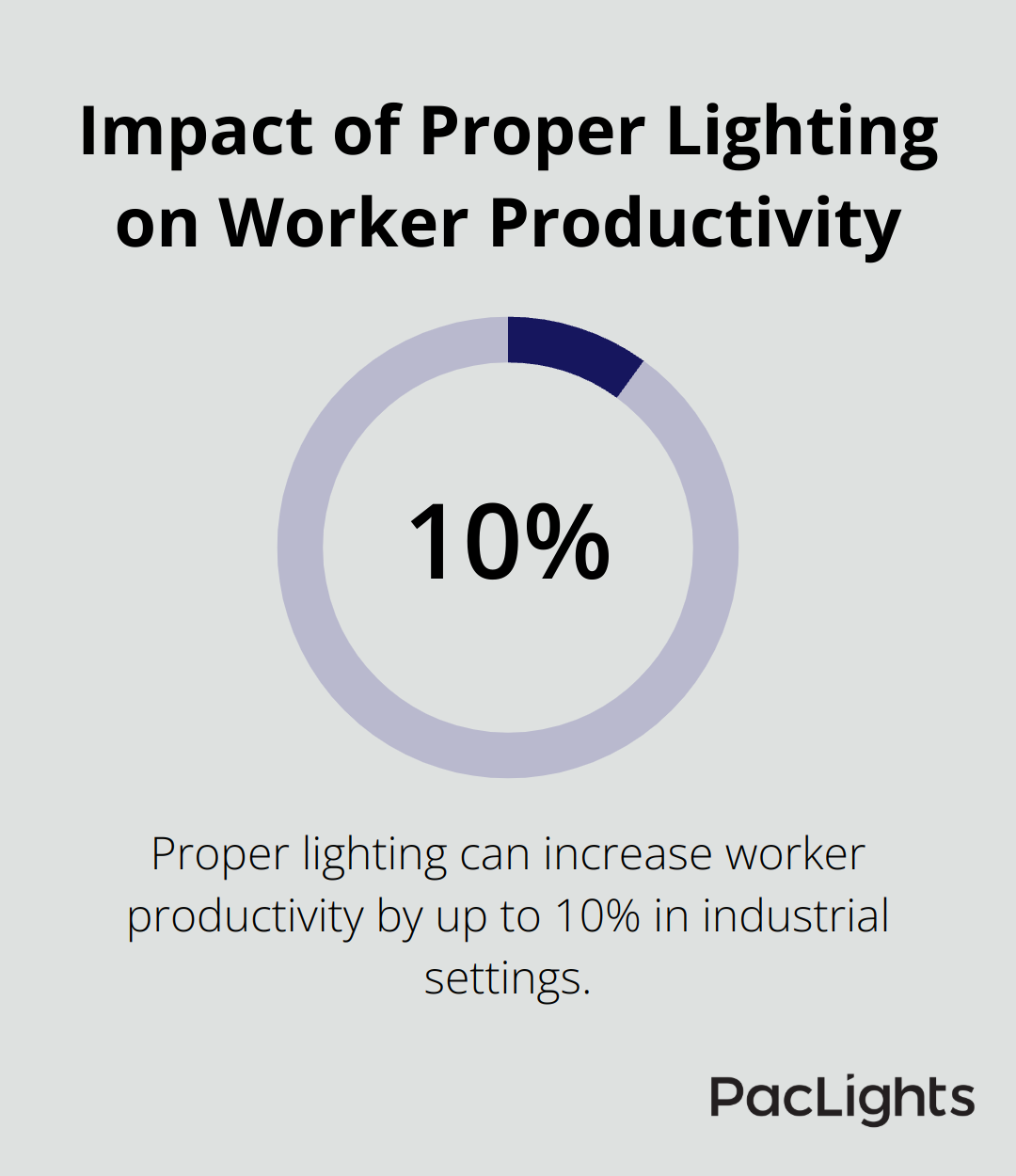
These lights also contribute to improved productivity. A study by the National Institute for Occupational Safety and Health (NIOSH) found that proper lighting can increase worker productivity by up to 10% in industrial settings. This finding underscores the dual benefit of explosion proof LED high bay lights: they enhance safety while boosting operational efficiency.
Hazardous Location Classifications
When selecting explosion proof LED high bay lights, you must consider the specific hazardous location classifications relevant to your facility. These classifications (defined by the National Electrical Code) determine the type of protection required for electrical equipment in different hazardous environments.
Understanding these classifications forms the foundation for choosing the right explosion proof LED high bay lighting for your specific needs. Let’s explore the factors you should consider in this selection process.
What Factors Matter Most for Explosion Proof LED High Bay Lighting?
Hazardous Location Classifications
The selection of explosion proof LED high bay lighting starts with understanding your facility’s hazardous location classification. The National Fire Protection Association (NFPA) defines these classifications based on the type and concentration of flammable substances present.
Class I locations contain flammable gases or vapors, Class II involves combustible dust, and Class III covers ignitable fibers. Each class is further divided into Division 1 (hazardous concentrations present under normal conditions) and Division 2 (hazardous concentrations present only under abnormal conditions).
For example, a chemical processing plant might be classified as Class I, Division 1, requiring the highest level of protection. In contrast, a grain storage facility could be Class II, Division 2, needing a different type of explosion proof lighting.
Light Output and Distribution
The lumens and light distribution of LED high bay fixtures significantly impact visibility and safety in your facility. The Illuminating Engineering Society (IES) recommends specific light levels for different industrial tasks. General warehouse areas typically require 10-20 foot-candles, while detailed assembly work might need 50-100 foot-candles.
To achieve these levels, consider both the lumen output of individual fixtures and their beam angle. A narrow beam angle concentrates light in a smaller area, while a wider angle provides more even distribution across a larger space.
Color Quality and Temperature
Color temperature and color rendering index (CRI) affect both the appearance of your workspace and the ability of workers to perform tasks accurately. Color temperature, measured in Kelvin (K), ranges from warm (2700K-3000K) to cool (5000K-6500K) tones.
For most industrial applications, a neutral to cool color temperature (4000K-5000K) is preferred as it promotes alertness and closely mimics natural daylight. The U.S. Department of Energy reports that lighting in this range can improve productivity by up to 8% compared to warmer tones.
The CRI (on a scale of 0-100) indicates how accurately colors are rendered under the light source. For tasks requiring color discrimination, such as quality control inspections, try to select fixtures with a CRI of 80 or higher.
Energy Efficiency and Long-Term Costs
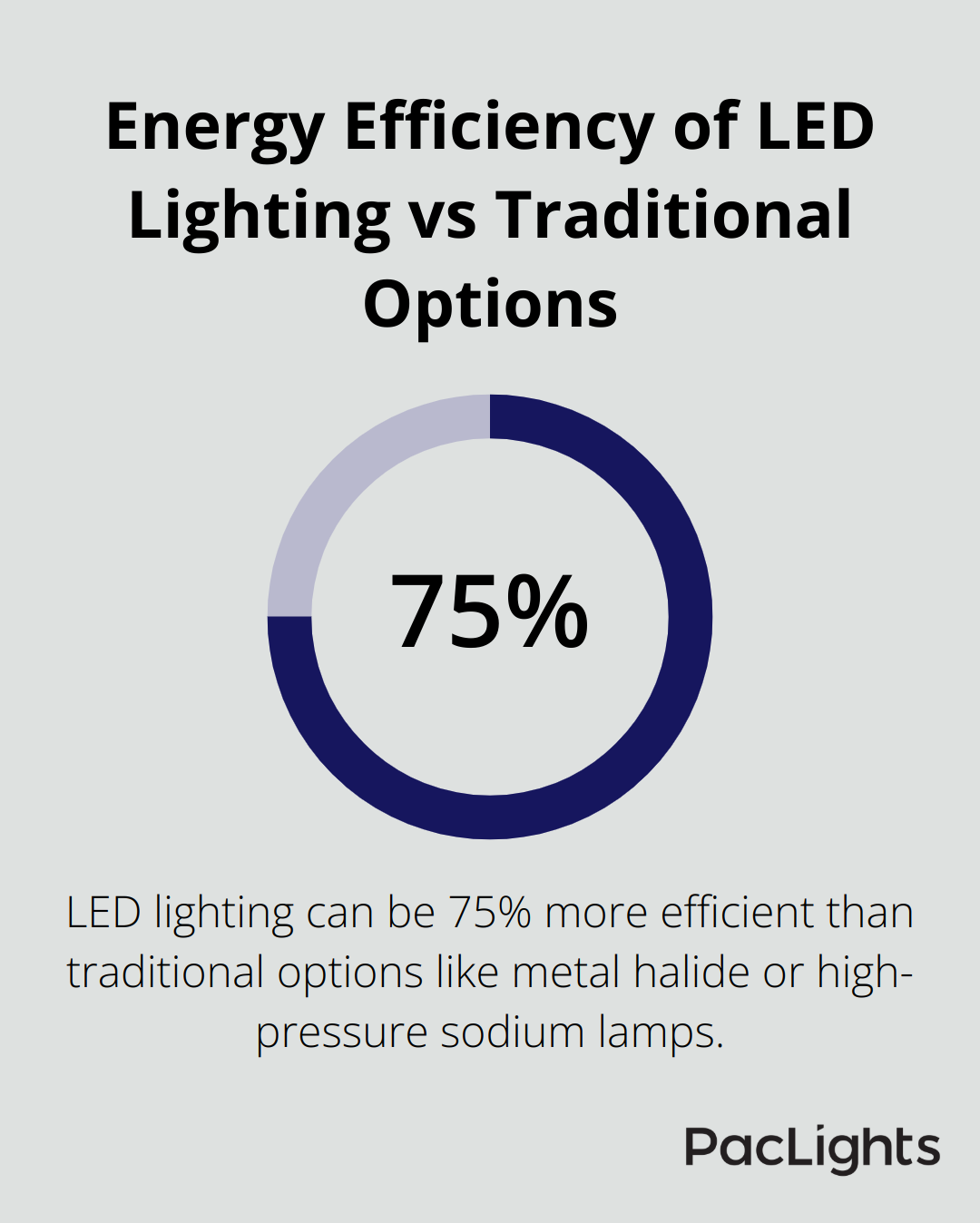
While initial costs matter, the long-term energy efficiency of your lighting system can lead to significant savings over time. The Department of Energy states that LED lighting can be 75% more efficient than traditional options like metal halide or high-pressure sodium lamps.
Look for fixtures with high lumens per watt ratios. Top-performing LED high bays can deliver over 150 lumens per watt, drastically reducing energy consumption and operating costs.
Durability in Harsh Environments
Explosion proof LED high bay lights must withstand challenging industrial conditions beyond just the risk of explosion. Select fixtures with high Ingress Protection (IP) ratings to ensure they can resist dust, moisture, and other environmental factors. An IP66 or IP67 rating ensures protection against dust and powerful water jets or temporary immersion.
Also, consider the fixture’s resistance to corrosion, especially in chemical processing environments. Some manufacturers offer special coatings or materials designed for these harsh conditions.
The selection of the right explosion proof LED high bay lighting involves careful consideration of these factors. Each element plays a vital role in ensuring safety, efficiency, and longevity in hazardous environments. As we move forward, we’ll explore the specific factors you should consider when selecting these fixtures, including lumen output, color temperature, and durability.
Key Features of Explosion Proof LED High Bay Lights
Certifications: Your Safety Guarantee
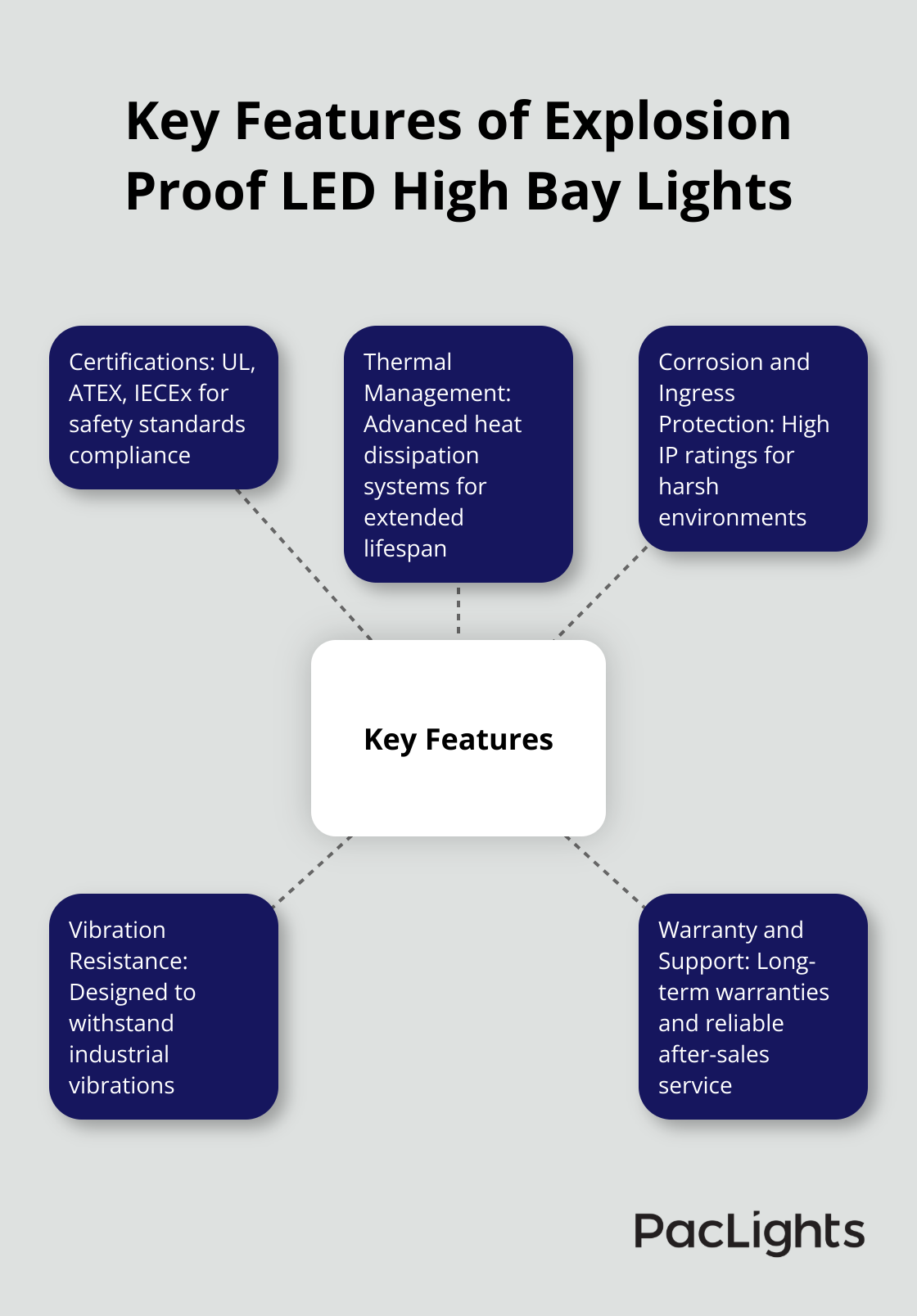
The first feature to look for is proper certification. Underwriters Laboratories (UL) certification is essential for explosion proof lighting in North America. For European and international markets, ATEX and IECEx certifications are standard. These certifications confirm that the fixtures have undergone rigorous testing and meet stringent safety standards for use in hazardous locations.
The Occupational Safety and Health Administration (OSHA) can fine companies up to $13,653 per violation for using uncertified lighting in hazardous locations. More importantly, it puts lives at risk. You must verify that the fixtures you consider carry the appropriate certifications for your specific hazardous location classification.
Thermal Management: Cool Under Pressure
Effective heat dissipation is critical in explosion proof LED high bay lights. LEDs generate heat, and in hazardous environments, excessive heat can be dangerous. Look for fixtures with advanced thermal management systems, such as heat sinks or innovative cooling fins.
The U.S. Department of Energy reports that effective thermal management can extend LED lifespan by up to 30%. This ensures safety and reduces long-term maintenance costs. When you evaluate fixtures, ask manufacturers about their thermal management strategies and how they impact the fixture’s lifespan and performance.
Corrosion and Ingress Protection: Built to Last
In many hazardous environments, corrosive chemicals and moisture are constant threats. Choose fixtures with high corrosion resistance and robust ingress protection (IP) ratings. An IP66 or IP67 rating indicates excellent protection against dust and water ingress.
The National Association of Corrosion Engineers (NACE) estimates that corrosion costs industries over $2.5 trillion globally each year. Your investment in corrosion-resistant fixtures protects your lighting investment and ensures consistent performance over time.
Vibration Resistance: Stability in Motion
Many industrial environments involve constant vibration from machinery. This can loosen connections and damage internal components in lighting fixtures over time. Look for explosion proof LED high bay lights designed with vibration resistance in mind.
The Institute of Electrical and Electronics Engineers (IEEE) recommends fixtures that can withstand vibrations of at least 1.5G for industrial applications. When you discuss options with manufacturers, inquire about their vibration testing procedures and results.
Warranty and Support: Long-Term Peace of Mind
A comprehensive warranty and reliable after-sales support are vital features of quality explosion proof LED high bay lights. Try to find manufacturers that offer warranties of 5 years or more (some even offer up to 10 years). This indicates the manufacturer’s confidence in their product’s durability and performance.
Quality after-sales support ensures that you can quickly address any issues that may arise, minimizing downtime and maintaining safety standards. Ask potential suppliers about their technical support services, replacement part availability, and response times for urgent inquiries.
Final Thoughts
Selecting the right explosion proof LED high bay lighting impacts safety, efficiency, and productivity in hazardous environments. Key factors include hazardous location classifications, light output, color quality, energy efficiency, and durability. These elements ensure compliance with safety standards while meeting specific needs.
Proper certifications (UL, ATEX, IECEx) are essential for explosion proof lighting. Features like thermal management, corrosion resistance, and vibration protection contribute to system longevity and reliability. High-quality explosion proof LED high bay lighting offers long-term benefits beyond safety, including energy savings and enhanced worker productivity.
We at PacLights offer explosion proof LED high bay lighting solutions for various industries. Our team provides free lighting layout designs and ROI assessments to help you choose the best option for your facility. Contact us to create a lighting system that meets safety standards and improves your operational efficiency.
Disclaimer: PacLights is not responsible for any actions taken based on the suggestions and information provided in this article, and readers should consult local building and electrical codes for proper guidance.