

Architectural linear lighting transforms spaces through clean lines and consistent illumination. These versatile fixtures work in commercial buildings, retail environments, and modern homes.
We at PacLights see clients struggle with selecting the right linear lighting systems. The wrong choice leads to poor light distribution, higher energy costs, and installation headaches.
This guide covers everything you need to make informed decisions about linear lighting for your next project.
Which Linear Lighting Type Fits Your Project
LED Strip Lights Deliver Maximum Flexibility
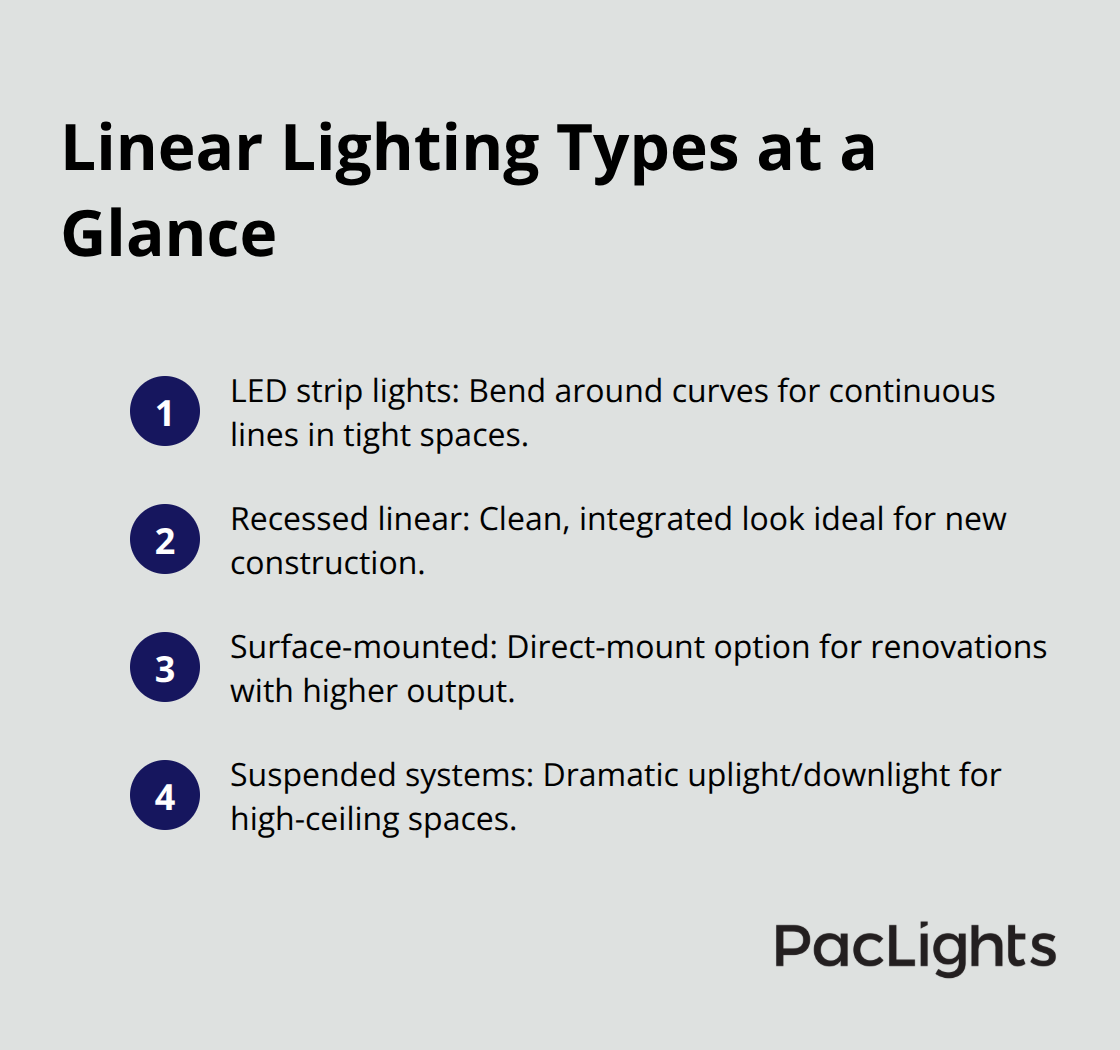
LED strip lights offer unmatched versatility for architectural applications. These fixtures bend around corners, follow curved surfaces, and create continuous light lines that rigid fixtures cannot achieve. Commercial designers choose LED strips for cove lighting, under-cabinet illumination, and accent features that require precise light placement. The key advantage lies in their 12-volt operation, which makes them safer for wet locations and easier to install in tight spaces. Quality LED strips produce 1,000-1,500 lumens per meter and last 50,000 hours when you manage heat properly.
Recessed Linear Systems Excel in Clean Aesthetics
Recessed linear fixtures integrate seamlessly into ceilings and walls, which creates the appearance that light emerges directly from the architecture. These systems work best in new construction where ceiling access allows proper installation. Troffer-style linear fixtures replace traditional fluorescent panels in office environments while they deliver 4,000-6,000 lumens per fixture and consume 40% less energy. The recessed mount eliminates dust accumulation and provides even light distribution across large areas. Installation requires 4-6 inches of ceiling depth for proper housing and thermal management.
Surface-Mounted Options Maximize Impact
Surface-mounted linear fixtures attach directly to ceilings or walls, which makes them ideal for renovation projects where recessed installation proves difficult. These fixtures typically produce higher light output than recessed alternatives (with some models that deliver up to 8,000 lumens per 4-foot section). The direct mount approach simplifies installation and reduces project costs significantly.
Suspended Systems Create Dramatic Effects
Suspended linear systems create dramatic visual effects while they provide both uplight and downlight distribution. Office spaces benefit from suspended fixtures positioned 7-8 feet above floor level, which creates indirect ceiling illumination that reduces glare on computer screens. These systems work particularly well in spaces with high ceilings (12 feet or more) where traditional fixtures would create harsh shadows.
Each fixture type serves specific project requirements, but your choice depends heavily on the technical specifications and performance metrics that match your space needs.
What Performance Specs Matter Most
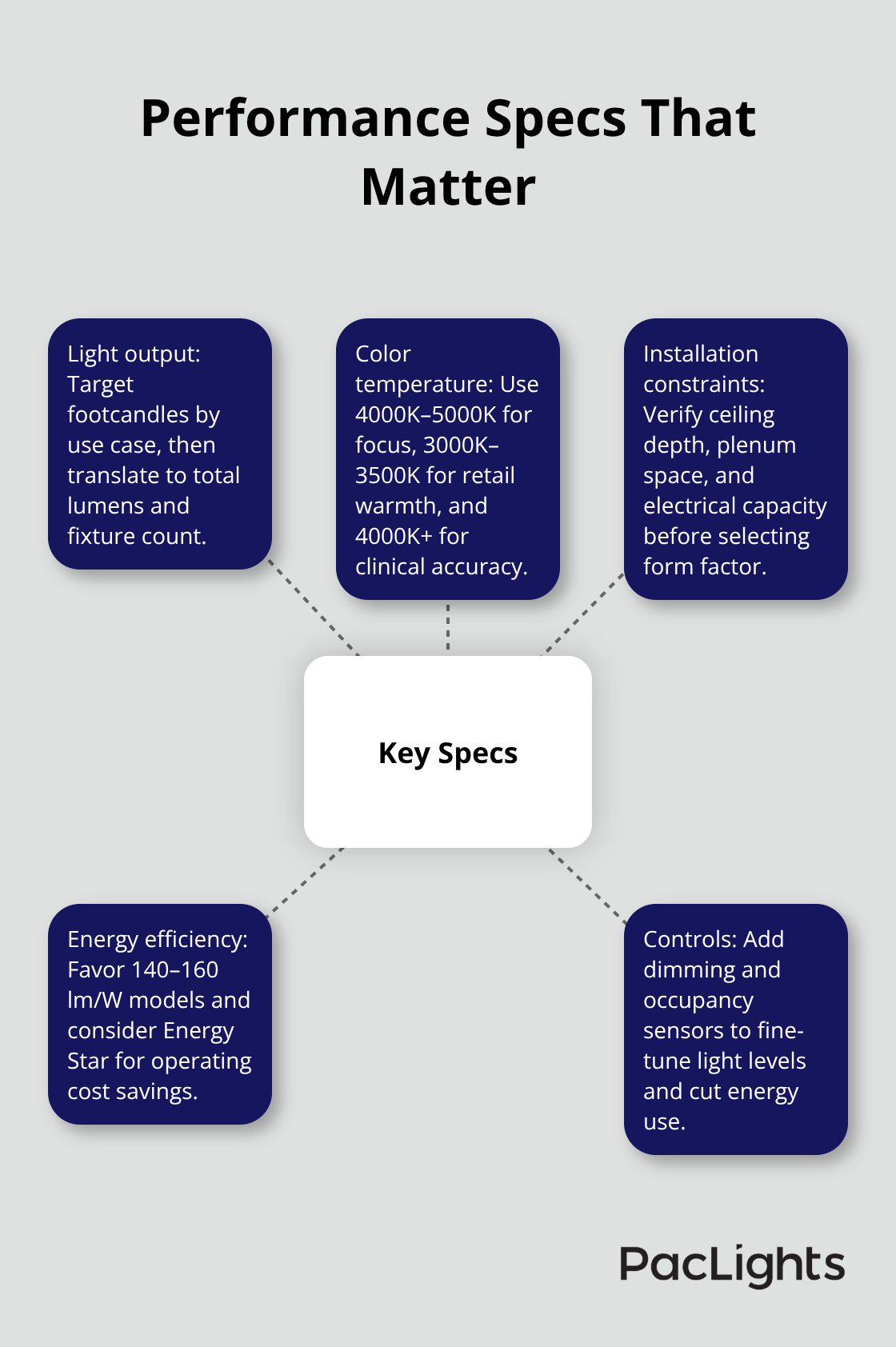
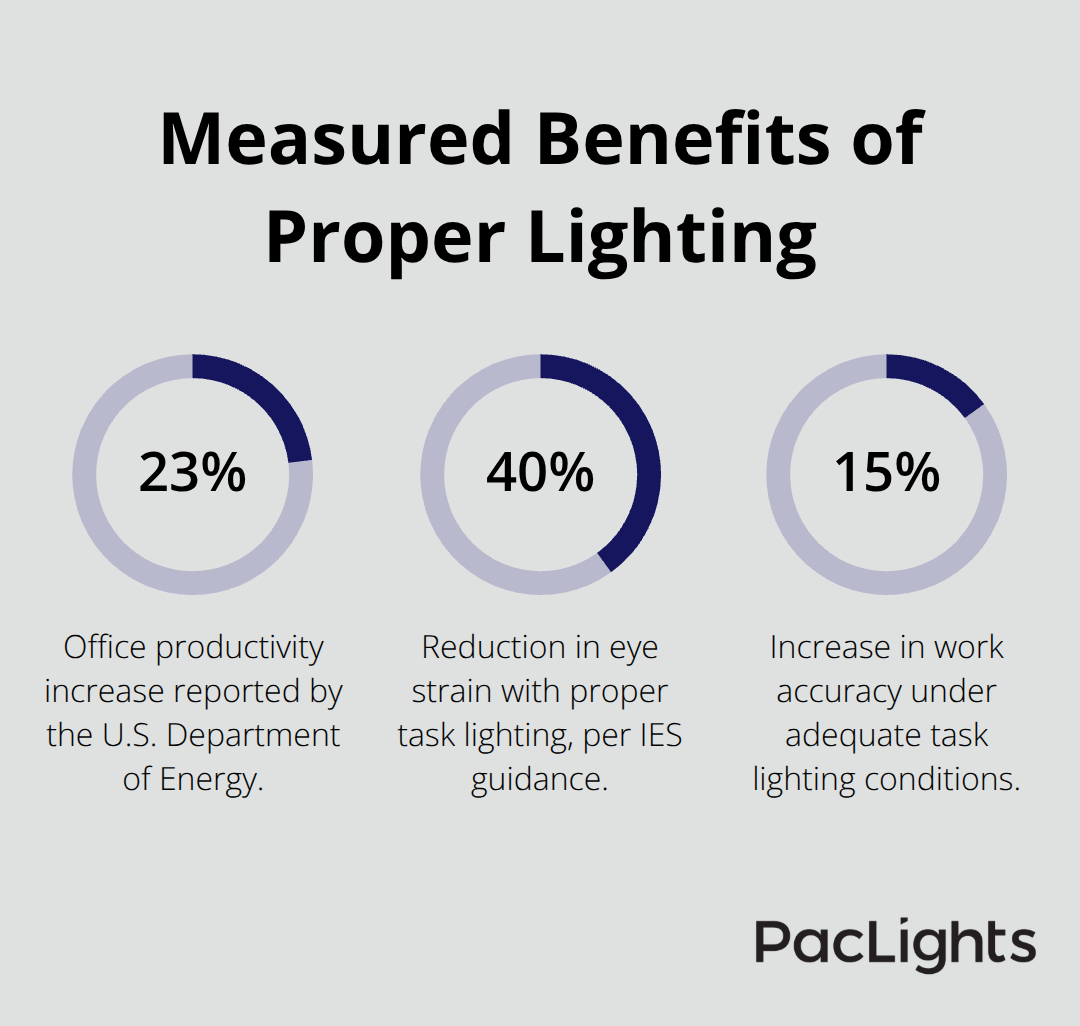
Light output measurements determine project success more than fixture appearance. Commercial spaces require 50-75 footcandles for general office work, while retail environments need 75-150 footcandles to highlight merchandise effectively. The Department of Energy reports that proper light levels increase productivity by 23% in office environments. Calculate total lumens needed when you multiply your space square footage by the recommended footcandle level, then divide by fixture efficiency to determine how many fixtures you need.
Color Temperature Shapes User Experience
Color temperature selection directly impacts occupant behavior and energy consumption. Workspaces perform best with 4000K-5000K light that maintains alertness throughout the day. Retail spaces benefit from 3000K-3500K temperatures that make products appear warmer and more appealing. Healthcare facilities require 4000K minimum to support accurate color recognition for medical procedures. Research from the Lighting Research Center shows that cooler temperatures above 5000K can disrupt sleep patterns when used in evening hours (making dimming controls essential for spaces with extended operating hours).
Installation Constraints Drive System Selection
Ceiling depth limitations eliminate many fixture options before you consider aesthetics. Recessed systems need 6-8 inches of plenum space for proper thermal management and code compliance. Surface-mounted alternatives require only 2-3 inches clearance but produce different light distribution patterns. Electrical infrastructure capacity often determines fixture quantity more than design preferences. Most linear LED systems draw 0.8-1.2 watts per foot, but high-output models can exceed 2.5 watts per foot. Existing electrical panels in older buildings may lack capacity for modern LED loads without costly upgrades (that can add $15,000-25,000 to project budgets).
Energy Efficiency Impacts Long-Term Costs
LED linear systems consume 60-80% less energy than fluorescent alternatives while they deliver superior light quality. High-efficiency models achieve 140-160 lumens per watt compared to fluorescent systems that produce only 80-90 lumens per watt. Energy Star certified fixtures reduce operating costs by $200-400 annually per 100 linear feet of installation. Dimming capabilities can extend these savings by another 15-25% when occupancy sensors automatically adjust light levels based on space usage patterns.
These technical specifications directly influence how well your linear lighting system performs in specific applications and environments.
Where Should You Use Linear Lighting
Accent Lighting Transforms Architectural Elements
Accent lighting with linear fixtures requires precise placement to achieve maximum visual impact. Position linear strips 12-18 inches from walls to create effective wall washing that eliminates shadows and highlights texture. The International Association of Lighting Designers recommends accent lighting levels at 3-5 times brighter than surrounding ambient light to create proper contrast. Cove lighting installations work best when fixtures mount 6-8 inches back from the ceiling edge to prevent hot spots and deliver smooth light distribution. For column highlighting, mount linear fixtures at 24-36 inch intervals vertically to create dramatic uplighting effects that emphasize height and architectural features.
Retail environments benefit most from 3000K linear accent lighting that enhances merchandise appeal without color distortion. Museums require 2700K temperature for artwork preservation while maintaining visual comfort for extended periods. The key lies in fixture selection: use narrow beam angles below 30 degrees for precise feature highlighting and wide beam angles above 60 degrees for general wall washing applications.
Task Lighting Demands Higher Output Levels
Workspaces require 75-100 footcandles at desk level for optimal productivity, which translates to 4000-5000 lumens per 100 square feet of workspace. Linear fixtures mounted 8-10 feet above work surfaces provide the most uniform light distribution with minimal glare. The Illuminating Engineering Society reports that proper task lighting reduces eye strain by 40% and increases work accuracy by 15% compared to inadequate conditions.
Corridor applications need different specifications entirely. Mount linear fixtures at 9-foot intervals along hallway centerlines to maintain 20-30 footcandles for safe navigation. Emergency egress codes require minimum 1 footcandle levels along exit paths (making battery backup integration essential for linear systems in commercial buildings). High-traffic corridors benefit from 4000K color temperature that maintains alertness and reduces accident rates by 18% according to workplace safety studies.
Ambient Lighting Covers Large Areas Efficiently
Open office areas that span over 2000 square feet require systematic linear fixture placement to avoid dark zones and overlighting. Install fixtures in parallel rows spaced 1.5 times their mounting height apart for optimal uniformity. A 10-foot ceiling height requires fixture spacing of 15 feet maximum to maintain consistent light levels across the entire space. Calculate 40-50 lumens per square foot for general office ambient lighting, which typically requires one 4-foot linear fixture per 80-100 square feet of floor area.
Warehouse environments demand higher mounting heights between 20-30 feet with linear fixtures rated for 15,000+ lumens each. These applications require fixtures with wide distribution patterns above 120 degrees to minimize shadows between storage racks. Motion sensors reduce energy consumption by 35-50% in large ambient installations by automatically adjusting light levels based on occupancy patterns throughout the facility (particularly effective in spaces with irregular usage schedules).
Final Thoughts
Architectural linear lighting success depends on technical performance rather than aesthetic preferences alone. Light output levels, color temperature, and installation requirements determine how well your system performs in real-world conditions. LED strip lights provide maximum flexibility for curved applications, recessed systems deliver clean aesthetics in new construction, surface-mounted fixtures work best for renovations, and suspended options create dramatic effects in spaces with high ceilings.
Professional lighting assessments help you avoid costly mistakes and optimize energy performance. Qualified designers calculate precise lumen requirements, evaluate electrical capacity, and recommend control systems that reduce operating costs by 35-50% (while also identifying code compliance issues before installation begins). They also provide accurate ROI projections based on your specific project parameters.
Document your space dimensions, ceiling heights, and electrical infrastructure before you select fixtures. Calculate required footcandle levels based on intended use, then choose fixtures that deliver appropriate light output and distribution patterns. We at PacLights help commercial clients evaluate their linear lighting options through detailed project consultations.
Disclaimer: PacLights is not responsible for any actions taken based on the suggestions and information provided in this article, and readers should consult local building and electrical codes for proper guidance.