

Selecting the right linear LED light strip can make or break your lighting project. Poor choices lead to inadequate illumination, higher energy costs, and frequent replacements.
We at PacLights see businesses struggle with this decision daily. The key lies in understanding specifications, features, and applications before making your investment.
What Specs Matter Most for Linear LED Selection
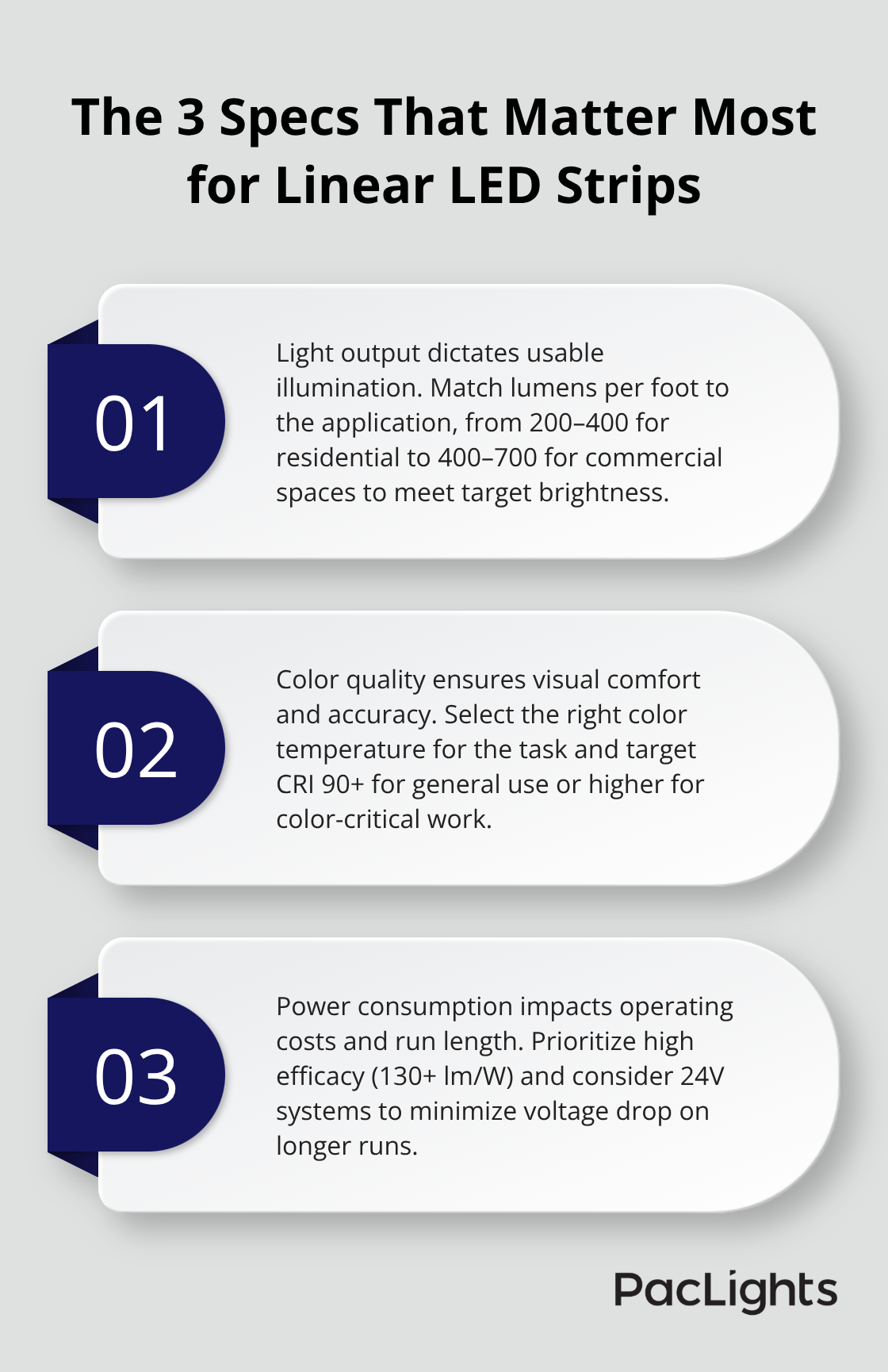
Three measurable factors separate professional-grade linear LED strips from basic options: light output, color quality, and power consumption. Lumens per foot determine your actual illumination levels, with commercial spaces requiring 400-700 lumens per foot according to industry standards, while residential applications typically need 200-400 lumens per foot. Energy-efficient LED modules should deliver at least 130 lumens per watt to qualify as high-performance options.
Light Output and Brightness Requirements
Strip density directly impacts your lighting quality and performance. High-density strips with 60 LEDs per meter produce superior brightness and eliminate the spotty lighting common with standard 30 LED per meter strips. For backlighting applications, choose strips with at least 140 LEDs per meter to prevent hotspots. Commercial installations often require strips that produce up to 2900 lumens per meter, while general residential lighting works well with 1200 lumens per meter.
Color Temperature and Rendering Performance
Color temperature measured in Kelvin affects productivity and visual comfort in your space. Warm white at 2700K works best for hospitality and residential areas, while cool white at 5000K-6500K increases alertness in offices and retail environments. Color Rendering Index values of 90 or higher are mandatory for general applications, but spaces that require accurate color representation need CRI 98+ strips. Full spectrum LED strips by manufacturers like Nichia offer near-daylight color rendering that reduces eye strain during extended work periods.
Power Efficiency and Operating Costs
Calculate total wattage requirements before you select your power supply, which should exceed strip consumption by at least 20% for longevity. Strips that operate at 24V handle longer runs more efficiently than 12V options (they reduce voltage drop issues in commercial installations). Smart controls with motion sensors and dimming capabilities can reduce energy consumption by 30-50% compared to static lighting systems, making them essential for cost-conscious projects.
These specifications form the foundation of your selection process, but the features that control and protect your investment matter just as much for long-term success.
Which Features Control Your Linear LED Investment
Control systems separate professional installations from basic setups. 0-10V controllers provide the most reliable performance for commercial applications, while wireless systems using protocols like Casambi offer smartphone integration that reduces energy consumption by 30-50% through automated scheduling and occupancy sensing. Motion sensors paired with dimming capabilities create responsive lighting that adapts to actual usage patterns rather than operating at full brightness continuously. Smart controls pay for themselves within 18 months in most commercial installations through reduced energy costs and extended LED lifespan.
Installation Speed Determines Project Costs
Adhesive-backed strips work for temporary installations but fail in commercial environments within 12 months due to heat and vibration. Aluminum channels with translucent covers provide optimal heat dissipation and even light distribution while they secure strips permanently. Mounting clips offer the fastest installation method for rigid surfaces and reduce labor costs by 40% compared to channel systems. AC plug-and-play strips eliminate separate power supplies and run continuous lengths up to 150 feet without voltage drop issues (making them ideal for warehouses and retail spaces where minimal installation time matters most).
Environmental Protection Ratings Matter More Than Price
IP65 ratings provide adequate moisture protection for most indoor humid environments like kitchens and bathrooms, while IP68 strips handle complete submersion for outdoor applications. Strips without proper IP ratings fail within 6 months in high-humidity environments and create expensive replacement cycles that eliminate any initial cost savings. Industrial facilities require IP67 minimum ratings to handle cleaning procedures and dust exposure. Temperature ratings above 50°C prevent thermal shutdowns in enclosed fixtures and maintain consistent light output throughout the product lifespan (which typically reaches 60,000 hours for quality strips).

Advanced Control Options Maximize Performance
Wireless systems enable zone control that allows different areas to operate independently based on occupancy and daylight levels. Casambi-compatible strips integrate with building management systems to create automated lighting schedules that respond to business hours and seasonal changes. Smart technology features allow users to control brightness and color temperature via mobile apps, while manual override capabilities provide immediate control when automated systems need adjustment for special events or maintenance activities.
The right features protect your investment, but success depends on matching these capabilities to your specific application requirements and environmental conditions.
Where Linear LED Strips Deliver Maximum Performance
Office environments need 400-500 lumens per foot at 4000K-5000K color temperature to maintain productivity levels according to Illuminating Engineering Society standards. Retail spaces demand higher output at 600-700 lumens per foot with CRI 90+ ratings to accurately display merchandise colors and drive purchase decisions. Strip installations in these environments must handle 8-12 hour daily operation cycles without performance degradation, which makes 24V systems with proper thermal management mandatory for commercial success.
Office Buildings Require Zone Control Systems
Open office layouts benefit from linear strips that provide indirect light through aluminum channels with diffused covers, which reduces glare on computer screens while they maintain adequate task levels. Conference rooms need tunable white strips that adjust from 2700K during presentations to 5000K for detailed document review. Private offices perform best with strips that deliver 300-400 lumens per foot combined with occupancy sensors that reduce energy consumption by 35% during unoccupied periods.

Warehouses Demand High-Output Performance
Industrial facilities need strips that produce 2900 lumens per meter to meet OSHA visibility requirements for material operations. Temperature ratings above 60°C prevent thermal shutdowns in environments where ambient temperatures reach 40°C during summer months. IP67 protection handles dust accumulation and pressure procedures that occur monthly in food facilities (motion-activated zones reduce costs by 60% in storage areas with infrequent access while they maintain safety illumination along main walkways).
Manufacturing Floors Need Specialized Solutions
Assembly lines need CRI 98+ strips to enable quality inspection processes that detect color variations and surface defects. Vibration-resistant systems prevent loosening from machinery operation that can reach 2G acceleration levels. Emergency backup systems with battery integration maintain critical illumination for 90 minutes during power outages as required by fire codes. Task applications need focused beam strips that deliver 800-1000 lumens per foot directly onto work surfaces without they create shadows that compromise precision operations.
Retail Spaces Maximize Visual Appeal
Department stores use strips with CRI 95+ ratings to enhance product colors and textures that influence customer decisions. Jewelry displays need strips that produce 1000+ lumens per foot with precise beam control to highlight merchandise without heat damage. Fashion retailers benefit from tunable white systems that adjust color temperature throughout the day to match natural light cycles (this approach increases customer dwell time by 23% according to retail studies).
Final Thoughts
Your linear LED light strip selection determines operational costs for the next 10-15 years. Quality strips with 130+ lumens per watt efficiency and CRI 90+ ratings cut energy consumption by 60% compared to fluorescent systems. These strips eliminate maintenance cycles that cost $200-400 per fixture annually in commercial facilities.
Professional installations need 24V systems with proper thermal management, IP65+ protection ratings, and smart controls. These features deliver 30-50% additional energy savings through automated schedules (while they prevent the premature failures that plague budget strips within 18 months). Facilities that invest in quality components see payback periods of 2-3 years through reduced energy and maintenance costs.
Calculate your total project requirements including strip length, mounting systems, and control integration before you purchase. Poor selections create replacement cycles every 12-24 months that eliminate any initial savings. We at PacLights provide professional lighting consultations that help you select the right specifications for your specific application and optimize your investment for maximum long-term performance.
Disclaimer: PacLights is not responsible for any actions taken based on the suggestions and information provided in this article, and readers should consult local building and electrical codes for proper guidance.