

Corridor lighting sets the tone for how people move through your space. Getting cylinder wall lights spacing right makes the difference between a welcoming hallway and one filled with awkward shadows.
At PacLights, we’ve seen how poor spacing ruins even the best fixtures. This guide walks you through the exact measurements and techniques that create balanced ambience from entrance to end.
How Far Apart Should Cylinder Wall Lights Be
The standard spacing rule for cylinder wall lights in corridors is 6 to 8 feet apart along each wall. This distance maintains uniform illumination without creating dark patches or wasting energy on overlap. However, this number isn’t one-size-fits-all-corridor ceiling height dramatically changes the math.
Adjust Spacing for Ceiling Height
For corridors with 10-foot ceilings, 6 to 8 feet works perfectly. If your ceiling rises to 12 feet or higher, you can increase spacing to 8 feet or even slightly beyond without sacrificing coverage. Conversely, corridors with lower ceilings around 8 feet need fixtures positioned closer together, sometimes as little as 5 to 6 feet apart.
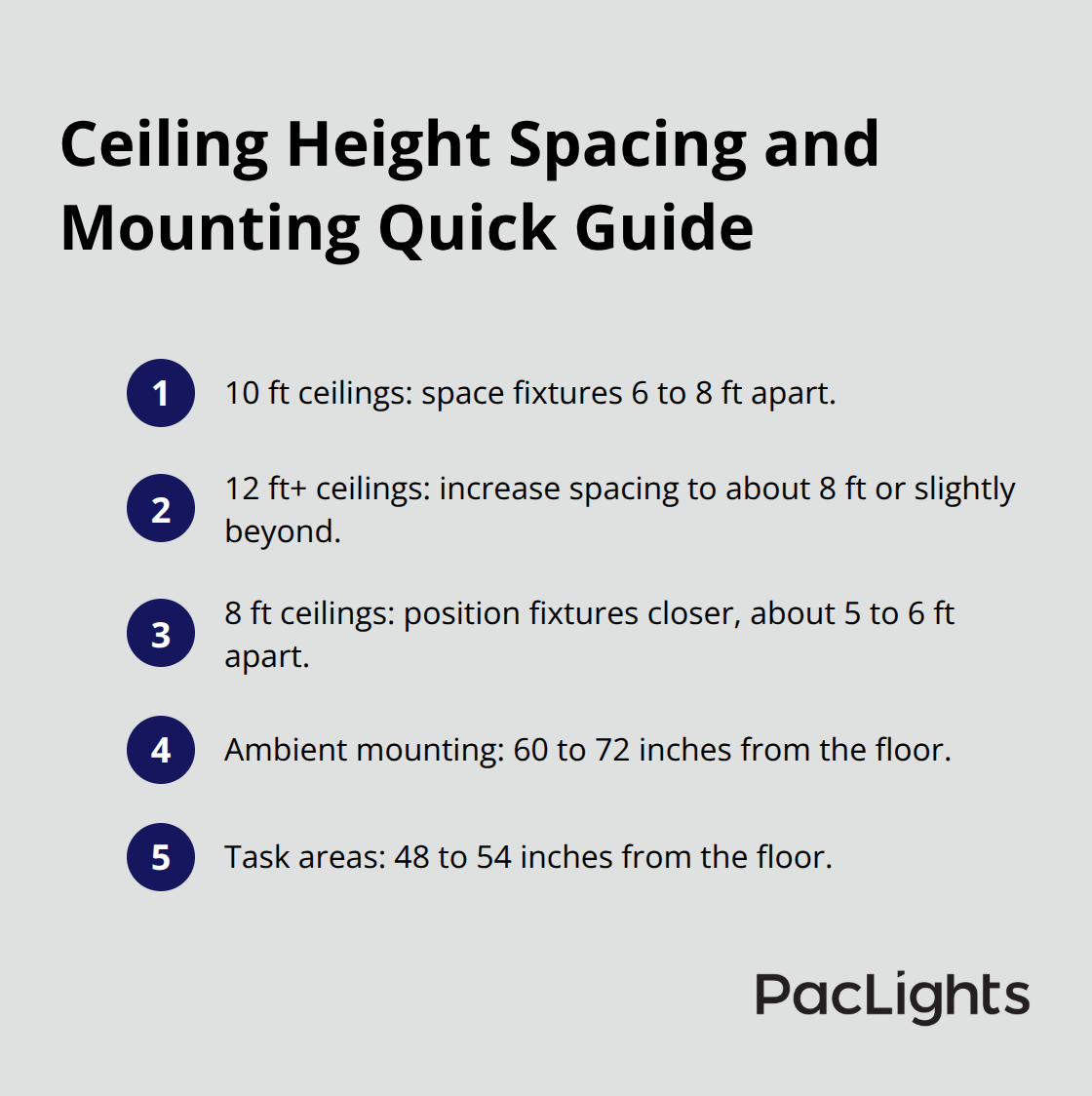
A practical example illustrates this principle: a 40-foot hallway with 10-foot ceilings needs roughly five fixtures per wall to achieve balanced coverage and cost efficiency. Mount these cylinder lights at 60 to 72 inches from the floor for ambient lighting, or position them at 48 to 54 inches if you need task-focused illumination near specific areas like seating or doorways.
Width and Wall Reflectance Determine Real Spacing
Corridor width affects how light bounces and distributes across your space. Narrow corridors benefit from fixtures mounted on both walls because light reflects between surfaces and creates a more cohesive glow. Wider corridors may allow you to alternate fixtures on opposite walls, reducing total fixture count while maintaining adequate brightness.
The reflectivity of your walls and ceiling determines spacing precision. Light-colored walls and ceilings with high reflectance values bounce more light around the corridor, allowing you to space fixtures slightly farther apart. Dark walls absorb light, forcing you to install fixtures closer together to compensate. If you notice dark patches near the floor or harsh shadows on walls after installation, reduce spacing by one foot to improve uniformity.
Target the Right Brightness Levels
Target brightness levels typically range from 200 to 400 lumens per fixture (depending on ceiling height and spacing). Use 4000K color temperature as the standard for commercial corridors to balance energy efficiency and visual clarity. These specifications work together to create corridors that feel open and safe rather than dim or sterile.
The next step involves understanding how lumen output and material reflectivity interact to shape the overall ambience of your corridor.
What Really Drives Corridor Lighting Performance
Lumen Output Sets the Brightness Foundation
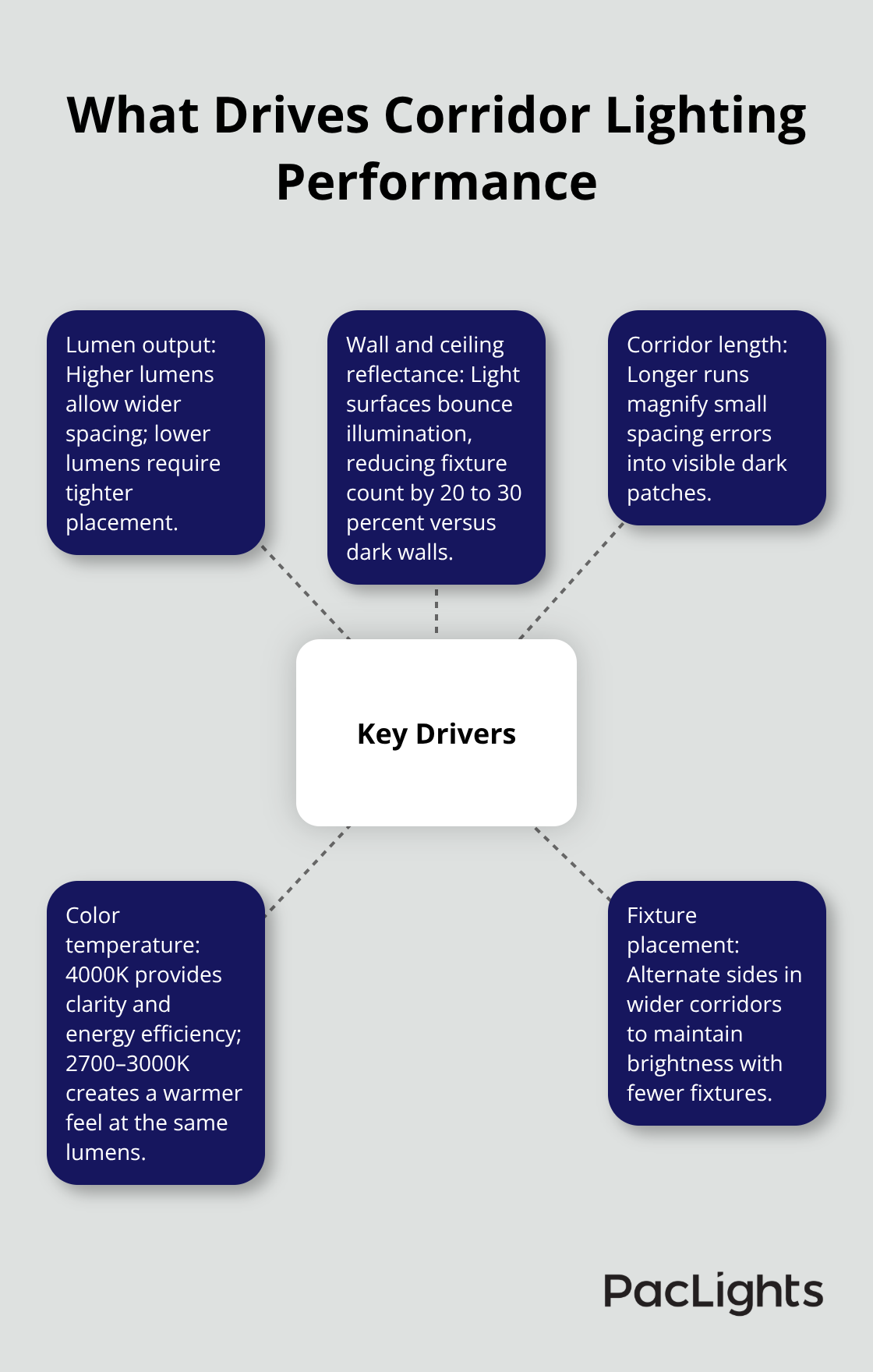
Lumen output determines how bright your corridor feels, and the numbers matter more than most installers realize. A 200-lumen fixture creates a dim, uninviting space where people move cautiously. Jump to 400 lumens per fixture and the same corridor transforms into a space that feels safe and purposeful. The relationship between lumens and spacing is direct: lower lumen outputs require closer fixture placement to avoid dark zones, while higher outputs allow you to stretch spacing and reduce total fixture count.
For a 40-foot corridor, 400-lumen fixtures spaced 8 feet apart deliver better results than 200-lumen fixtures spaced 6 feet apart, despite fewer total installations. Commercial corridors typically need 200 to 400 lumens depending on ceiling height, but this range assumes you account for how your walls and ceiling absorb or reflect light.
Wall and Ceiling Reflectance Changes Everything
Light-colored surfaces with high reflectance values bounce illumination around the corridor, stretching your spacing and reducing fixture count by 20 to 30 percent compared to dark walls. Dark walls absorb light aggressively, forcing you to install fixtures closer together or increase lumen output significantly. Concrete walls with low reflectance demand tighter spacing, while white painted surfaces allow you to work with standard 6 to 8 foot intervals.
The reflectance of your materials directly impacts your fixture budget. A corridor with reflective white walls and ceilings requires fewer fixtures than an identical space with dark concrete surfaces. This difference compounds across longer hallways, where material choices affect both installation costs and energy consumption.
Corridor Length Exposes Spacing Inconsistencies
Corridor length compounds these variables because longer hallways accumulate small lighting inconsistencies into obvious dark patches. A 100-foot corridor with inconsistent spacing shows visual discontinuity that a 30-foot hallway masks. The solution involves calculating your actual corridor dimensions first, then adjusting fixture placement based on your specific wall materials.
If dark patches appear near the floor after installation, reduce spacing by one foot rather than adding fixtures haphazardly. This targeted adjustment prevents over-lighting while maintaining visual continuity across the entire length.
Color Temperature Influences Perceived Brightness
Color temperature also influences how brightness feels: 4000K standard commercial settings create visual clarity, while 2700 to 3000K in hospitality spaces makes corridors feel warmer despite identical lumen levels. Your choice of color temperature works alongside lumen output to shape the overall atmosphere-higher color temperatures feel more energetic, while lower temperatures create a more relaxed environment.
These technical specifications form the foundation of effective corridor lighting, but they only work when you account for your specific installation conditions. The next section covers the mistakes that undermine even the best fixture choices and how to avoid them.
Common Mistakes to Avoid When Installing Cylinder Wall Lights
Spacing Fixtures Too Far Apart Creates Safety Hazards
Most corridor lighting failures stem from spacing fixtures too far apart, which creates dark zones that force people to move cautiously through your hallway. A 40-foot corridor with fixtures spaced 10 feet apart instead of the standard 6 to 8 feet leaves visible gaps in illumination. These dark patches near the floor become safety hazards-poor hallway lighting increases slip-and-fall incidents significantly because people cannot see obstacles clearly. The spacing calculation depends on your ceiling height, but stretching beyond 8 feet in a standard 10-foot corridor always creates visual discontinuity.
If your installation budget feels tight, increase lumen output instead of spacing fixtures farther apart. A 400-lumen fixture at 8 feet apart delivers better results than a 200-lumen fixture at 10 feet, and the safety improvement justifies the higher per-fixture cost.
Inconsistent Color Temperature Disrupts Visual Continuity
The second mistake involves inconsistent color temperature across your corridor, which makes the space feel disjointed even when spacing is correct. Installing some fixtures at 4000K and others at 2700K creates visible warm-cold transitions that confuse the eye and make the corridor feel poorly designed. Commercial corridors demand 4000K throughout for consistent visual clarity and energy efficiency.
If you’re mixing fixtures from different manufacturers or batches, verify the color temperature specification before installation-many LED modules drift slightly in actual output compared to their rated values. This verification step prevents the visual inconsistency that undermines otherwise well-planned installations.
Dark Spots Result From Ignoring Wall Reflectance
The third mistake involves failing to account for shadows and dark spots, which often results from ignoring wall reflectance during planning. Dark concrete or painted walls absorb light aggressively, and standard 6 to 8 foot spacing works only if your walls have moderate to high reflectance. If dark patches appear near the floor after installation, reduce spacing by one foot rather than adding more fixtures-this targeted adjustment prevents over-lighting while maintaining visual continuity.
Request full technical datasheets from your fixture supplier that specify beam angle, lumen output, and color temperature consistency rather than relying on marketing descriptions alone. These specifications reveal whether a fixture will perform in your specific corridor conditions (ceiling height, wall materials, and layout).
Final Thoughts
Proper cylinder wall lights spacing transforms corridors from dark, unwelcoming passages into safe, functional spaces. The 6 to 8 foot standard works for most 10-foot ceilings, but your specific results depend on adjusting for ceiling height, wall reflectance, and lumen output. A 40-foot corridor with reflective walls and 400-lumen fixtures spaced 8 feet apart outperforms a poorly planned installation with more fixtures crammed together.
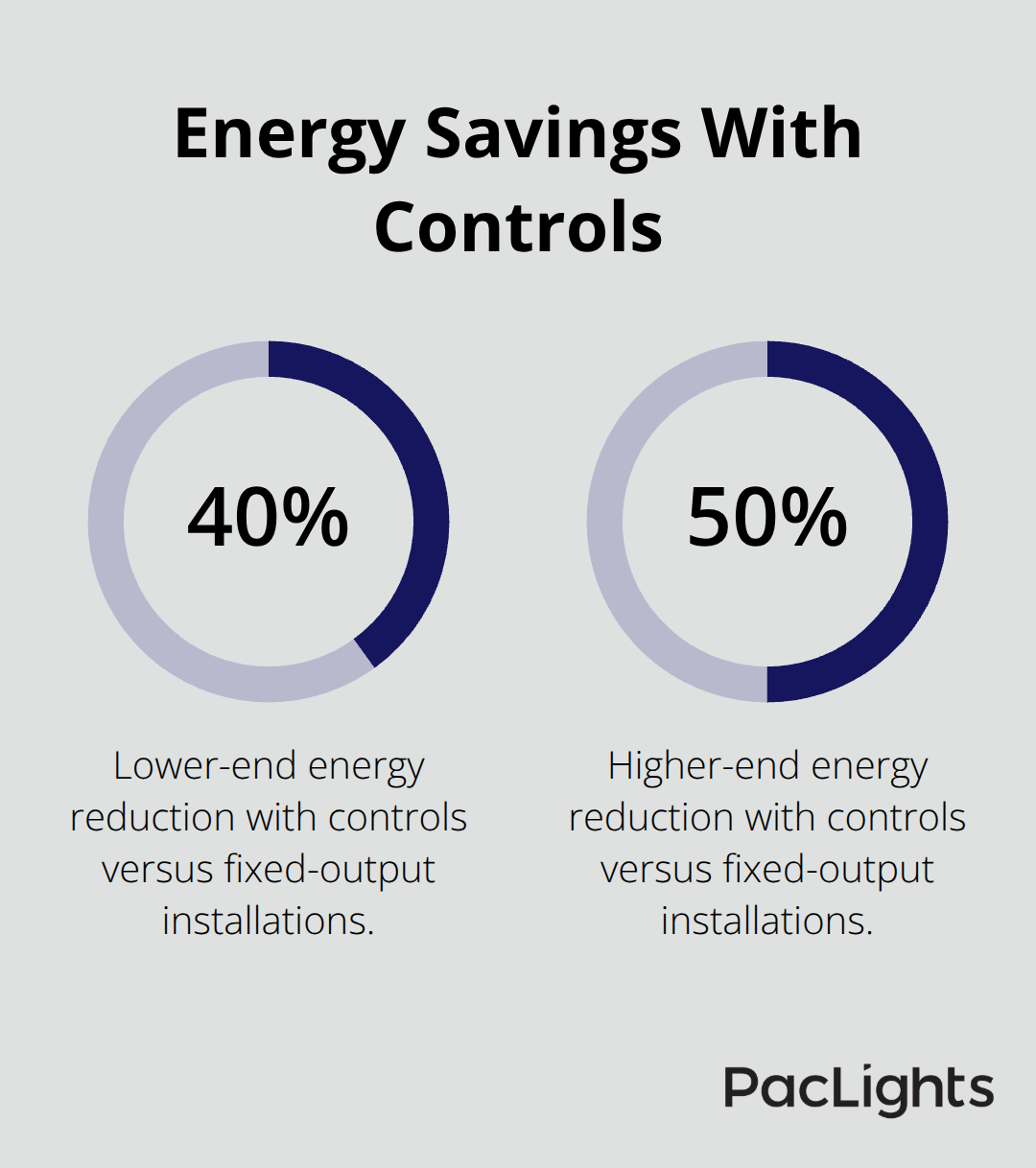
Proper illumination reduces slip-and-fall incidents by helping people see obstacles clearly throughout the hallway. Energy costs drop significantly when you avoid over-lighting-a well-designed corridor with motion sensors and dimming controls cuts energy consumption by 40 to 50 percent compared to fixed-output installations. The payback timeline for LED cylinder lights with controls typically runs 2 to 3 years, after which you operate with minimal maintenance costs and ongoing energy savings.
Measure your corridor dimensions and identify your wall materials, then select fixtures that match those conditions. We at PacLights provide free lighting layout designs and ROI assessments to help you plan installations that work for your specific space. Contact us to discuss your corridor lighting project and receive a customized layout that accounts for your actual installation variables.
Disclaimer: PacLights is not responsible for any actions taken based on the suggestions and information provided in this article, and readers should consult local building and electrical codes for proper guidance.