

Poor office lighting costs companies money and drains employee energy. At PacLights, we’ve seen firsthand how the right cylinder lights for offices transform workspaces by cutting glare, reducing fatigue, and lowering electricity bills.
This guide shows you exactly how cylinder lighting improves comfort and efficiency while keeping costs down.
Why Cylinder Lights Eliminate Workplace Discomfort
Glare Reduction Transforms Daily Comfort
Glare stands as the primary enemy of workplace productivity. Research from HOK confirms that employees perceive themselves as more productive when they control their lighting and experience reduced eye strain. Cylinder lights with proper optics and batwing distribution eliminate hotspots and create smooth, uniform illumination across workplanes without harsh shadows or bright spots that traditional fixtures produce. The U.S. Department of Energy reports that adequate lighting reduces depression and enhances mood, energy, and alertness in the workplace. When you switch from conventional downlights to cylinder fixtures with glare-free optics, you remove a daily source of fatigue that compounds over hours and weeks.
Even Light Distribution Across Every Zone
Standard fixtures create pools of light with dim zones between them, forcing employees to adjust position or squint to see clearly. Cylinder lights with wide-angled general illumination and uniform batwing distribution eliminate these dead zones. Every desk, conference table, and corridor receives consistent brightness. This uniform approach prevents the visual strain that occurs when workers move between bright and dim areas throughout the day. The practical result is faster task completion and fewer mistakes from poor visibility.
Color Rendering That Supports Task Performance
Neutral white lighting in the 4000K to 5000K range with a Color Rendering Index of 80 or higher keeps staff alert without causing eye strain. Your office likely contains varied tasks-some requiring focus like detailed design work, others requiring collaboration. Cylinder lights allow you to layer different color temperatures in specific zones. A 4000K setting in workstations maintains alertness for precision tasks, while a slightly warmer 3500K in break areas signals a shift in pace. This flexibility means you avoid forcing one lighting temperature across the entire office and accepting that some areas will feel off.
The right lighting configuration directly impacts how your team performs. Understanding these three comfort factors positions you to make informed decisions about your office’s lighting infrastructure and sets the stage for examining the financial benefits that cylinder lights deliver.
Energy Efficiency and Cost Savings with Cylinder Lights
LED Technology Slashes Your Electricity Consumption
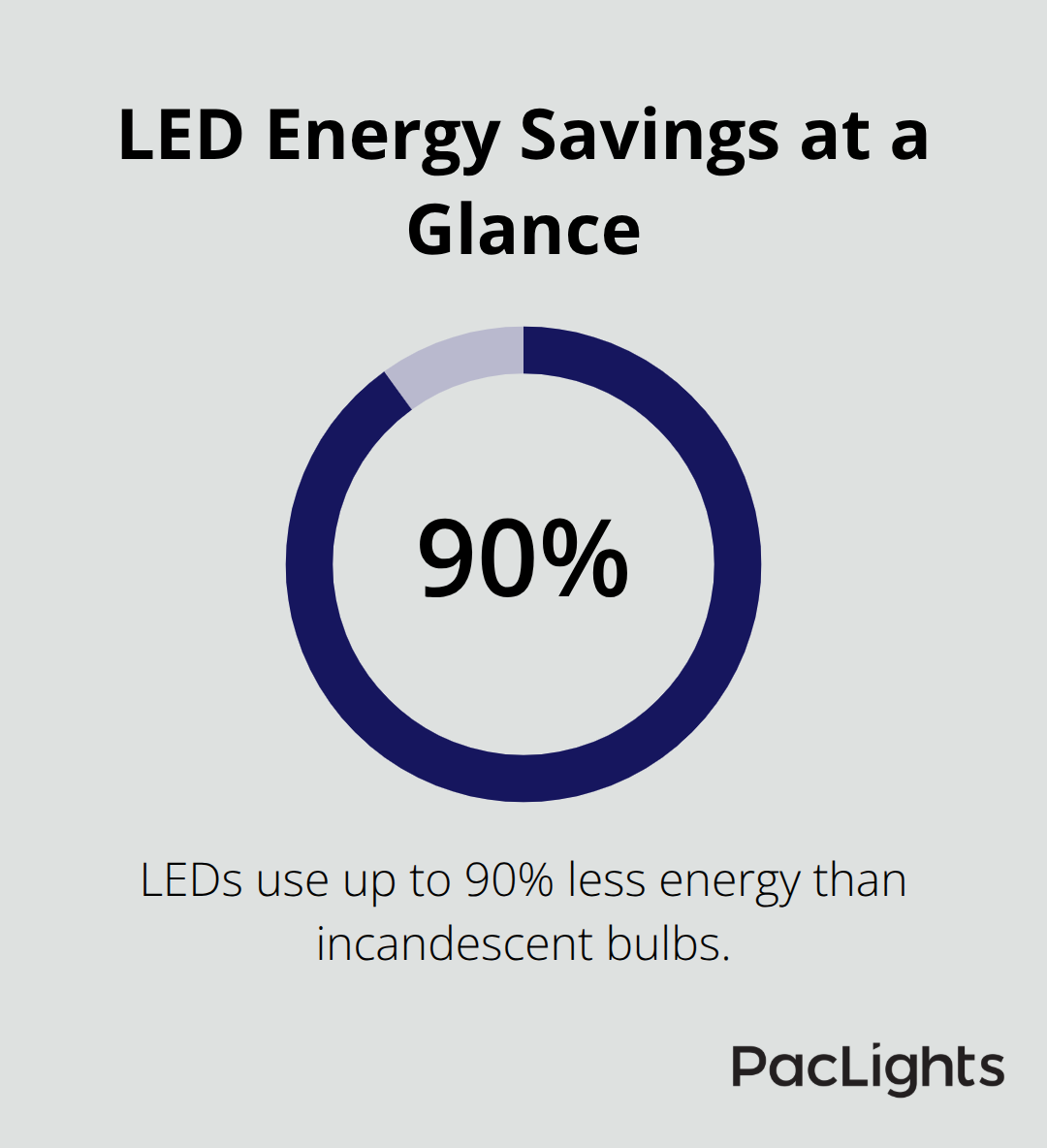
Cylinder lights built on LED technology consume dramatically less electricity than the incandescent and fluorescent fixtures most offices still rely on. LEDs use up to 90% less energy than incandescent bulbs, which translates to real savings on your monthly utility bills. The U.S. Department of Energy calculates that LED lighting saves approximately $225 per year per installation, and those numbers compound quickly across an entire office.
A mid-sized office with 40 fixtures switching from incandescent to LED cylinders could save $9,000 annually in electricity alone.
Maintenance Costs Drop with Longer-Lasting Fixtures
LED cylinders last up to 25 times longer than incandescent bulbs, meaning you replace fixtures far less frequently. Fewer replacements mean lower labor costs, less disruption to your workspace, and maintenance teams spend time on higher-value work instead of climbing ladders to swap burned-out bulbs every few months. When you factor in both energy savings and maintenance reduction, the financial case for cylinder lights becomes undeniable.
Recover Your Investment Faster Than You Think
The upfront cost of LED cylinder fixtures has dropped significantly and continues to fall as product availability grows, improving your return on investment faster than ever before. Many utilities offer rebates for switching to ENERGY STAR-qualified LED fixtures, which can offset your initial purchase price substantially. Some offices recover their full investment within 18 to 24 months when combining energy savings with utility rebates. Beyond rebates, tax incentives exist at federal and state levels for businesses upgrading to energy-efficient lighting systems.
Lighting professionals can assess your specific office layout and calculate exact savings based on your current fixtures, usage patterns, and local utility rates. This data-driven approach removes guesswork from your decision and shows you precisely what your office will save before you commit to any upgrade. The combination of lower operating costs, reduced maintenance burden, and available incentives makes cylinder lighting the financially sound choice for offices serious about controlling expenses while improving workspace quality-but the real impact extends beyond dollars and cents when you design your lighting strategy around your actual work patterns and spaces.
How to Plan Your Office Cylinder Lighting Layout
Map Your Office by Function and Lighting Needs
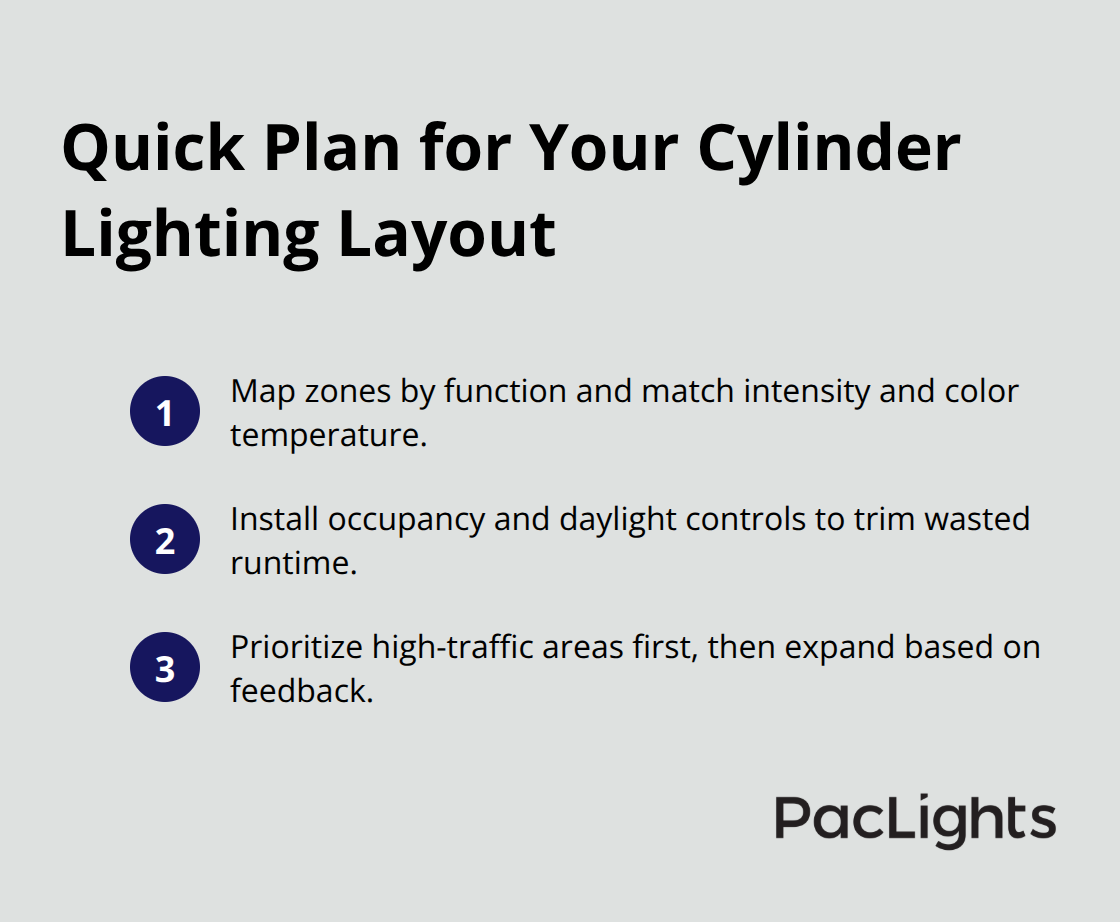
Start by walking through your office and identifying zones by function rather than treating every space identically. Workstations where employees perform detailed tasks, conference rooms where collaboration happens, corridors where people transition between spaces, and break areas where the pace shifts each demand different lighting intensity and color temperature. Workstations performing precision work benefit from 4000K to 5000K lighting at 300 to 500 lumens per square meter, maintaining alertness without fatigue. Conference rooms work better at slightly lower intensity with the same color temperature to reduce eye strain during longer meetings.
Break areas and lounges perform better at 3500K with reduced brightness, signaling a mental shift away from task focus. Rather than installing uniform fixtures throughout, layer your lighting by zone. This targeted approach means you avoid over-lighting spaces that don’t need it and under-lighting areas where people struggle to see clearly.
Install Controls That Respond to Occupancy and Daylight
Motion sensors and occupancy detectors eliminate the waste of lighting empty conference rooms or storage areas all day. According to DOE guidance, occupancy-aware features including motion sensors and timers cut energy use significantly by matching illumination to actual need. A typical mid-sized office loses thousands of dollars annually to lights running in unoccupied spaces.
Pair occupancy controls with daylight sensors in zones near windows, which automatically reduce artificial lighting when sufficient natural light enters the space. This coordination prevents the counterproductive scenario where employees manually dim overhead lights while skylights flood the same area with free daylight. Advanced lighting controls integrate motion sensing and daylight coordination, allowing you to manage your entire office lighting strategy from a centralized platform.
Prioritize High-Traffic Zones for Quick Implementation
Start your implementation in high-traffic zones like conference rooms and open offices where occupancy patterns vary most. These areas deliver quick wins in energy reduction and demonstrate the value of controls to your team. Expand to perimeter zones with windows after you refine control settings based on actual employee feedback and usage patterns. This phased approach reduces implementation risk and allows you to adjust your strategy as you learn what works in your specific office environment.
Final Thoughts
Cylinder lights for offices represent a straightforward investment in both immediate comfort and long-term financial performance. Your team works better when they can see clearly without fighting glare, and your bottom line improves when electricity bills and maintenance costs drop simultaneously. The evidence is clear: proper lighting reduces fatigue, sharpens focus, and cuts operating expenses in ways that few other office upgrades can match.
Different zones demand different approaches, and controls that respond to occupancy and daylight eliminate waste automatically. Starting with high-traffic areas lets you prove the value before expanding across your entire facility, reducing risk and allowing you to refine your approach based on real employee feedback. This phased strategy matches your lighting to how your office actually functions rather than applying a one-size-fits-all solution.
We at PacLights understand that every office has unique requirements, and our team provides free lighting layout designs and ROI assessments to show you exactly what your specific space will save. Contact PacLights to schedule your free assessment and discover how cylinder lighting transforms your office into a space where clarity and efficiency work together.
Disclaimer: PacLights is not responsible for any actions taken based on the suggestions and information provided in this article, and readers should consult local building and electrical codes for proper guidance.