

Choosing the right low bay lighting can make a world of difference in your workspace. At PacLights, we understand the importance of proper illumination for areas with lower ceilings.
Low bay lighting is essential for spaces like retail stores, workshops, and small warehouses. This guide will help you navigate the key factors to consider when selecting the best lighting solution for your specific needs.
What Is Low Bay Lighting?
Defining Low Bay Lighting
Low bay lighting is a specialized illumination solution for spaces with ceiling heights between 12 to 20 feet. These fixtures distribute light evenly across a wide area, typically with a beam angle of 120 degrees or more. This wide distribution ensures light reaches all corners of a space without creating harsh shadows or glare. The primary objective is to provide uniform illumination at the working plane (usually about 3 feet above the floor).
Applications of Low Bay Lighting
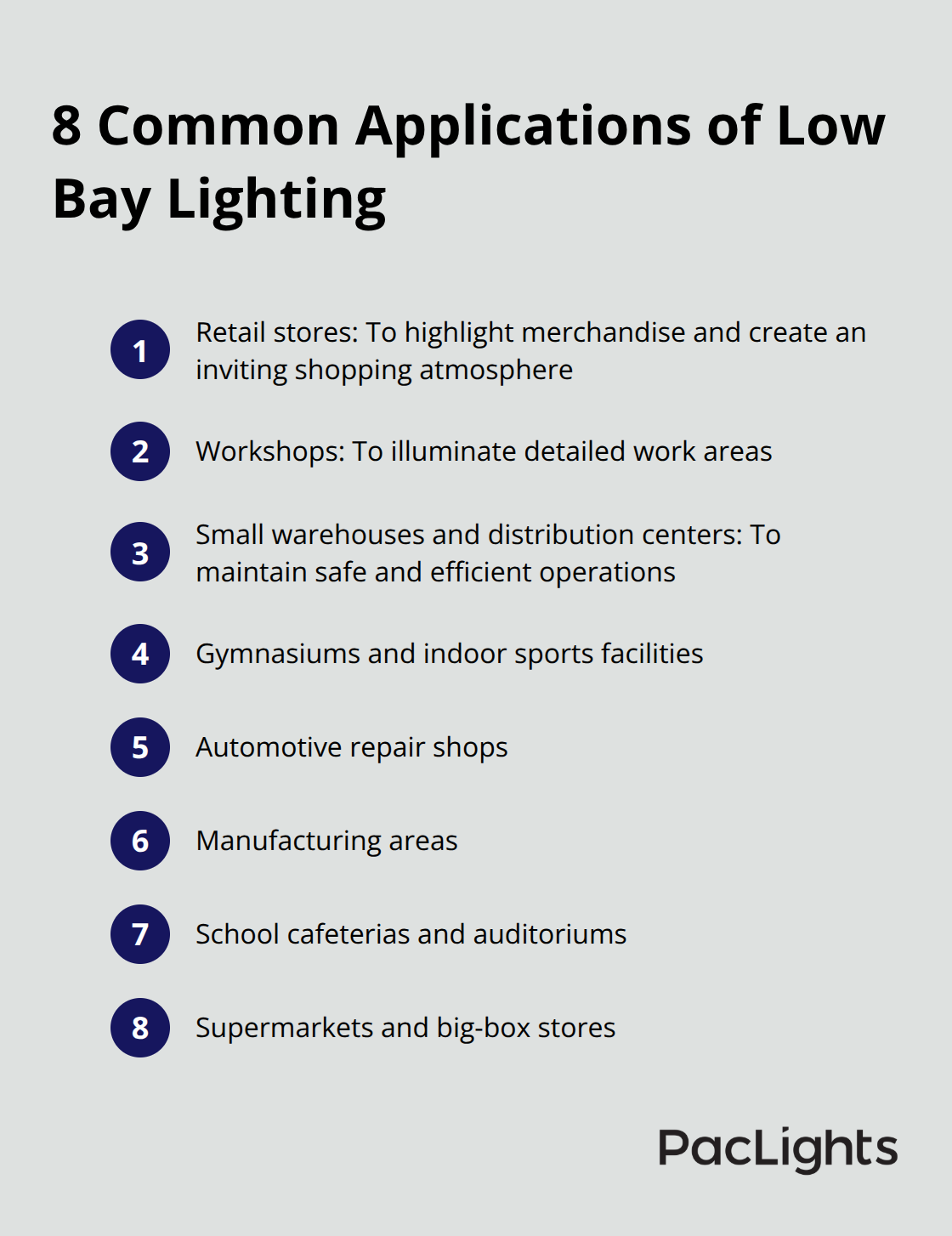
Low bay lighting finds its home in various commercial and industrial settings:
Low Bay vs. High Bay: Key Differences
The primary distinction between low bay and high bay lighting lies in the ceiling height and light distribution patterns:
- Ceiling Height: High bay fixtures are designed for ceilings above 20 feet, while low bay fixtures suit spaces with ceilings between 12 to 20 feet.
- Light Distribution: High bay fixtures often have a more focused beam angle to penetrate the greater distance to the floor. Low bay fixtures spread light more widely to avoid creating hot spots or areas of intense brightness directly beneath the fixture.
- Mounting Options: Low bay lights offer more flexibility in installation, including surface mounting, pendant mounting, and recessed options. This versatility allows for better integration with existing architectural elements and ceiling structures.
Selecting the Right Lighting Solution
When choosing between low bay and high bay lighting, consider not just the ceiling height, but also the specific tasks performed in the space and the desired light levels. A professional lighting assessment can help determine the most appropriate solution for your unique environment.
The next chapter will explore the critical factors to consider when selecting low bay lighting for your space, including energy efficiency, color temperature, and maintenance requirements.
How to Choose the Best Low Bay Lighting
Assess Your Space
The first step in selecting the right low bay lighting is to accurately measure your space. For ceilings between 12 to 20 feet, low bay lighting proves the best choice. Consider the total square footage of your area and identify any obstacles (such as shelving or equipment) that might affect light distribution.
Calculate Light Output Requirements
Determine the right amount of light for your space based on industry standards. The Illuminating Engineering Society (IES) recommends specific foot-candle levels for different types of spaces. For example:
- Warehouses: 30 foot-candles
- Retail spaces: 50+ foot-candles
To calculate the total lumens needed, multiply your square footage by the required foot-candles. Then, divide this number by the number of fixtures you plan to install to determine the lumen output per fixture.
Prioritize Energy Efficiency
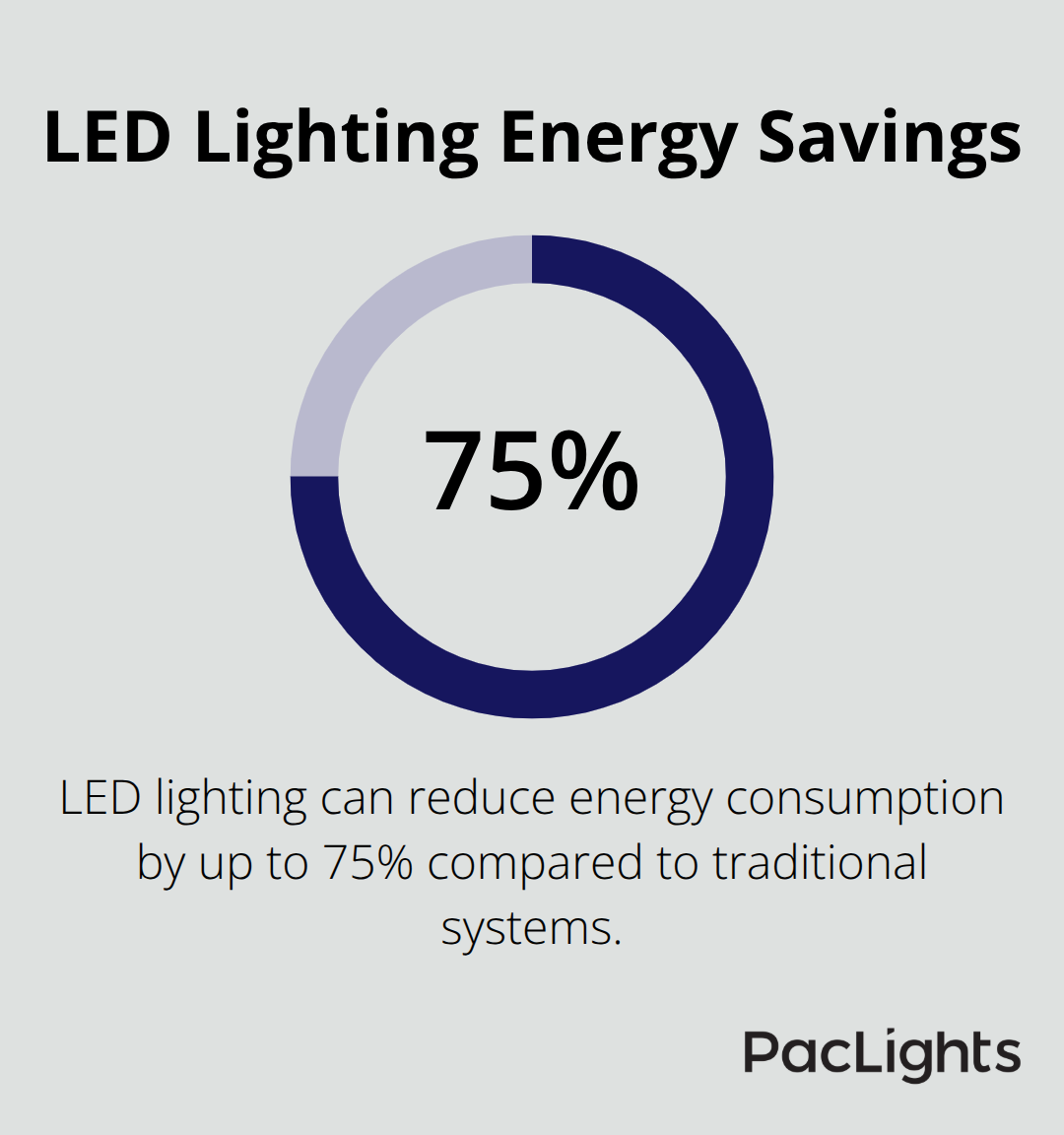
Energy efficiency should top your list of priorities when selecting low bay lighting. LED fixtures currently offer the most energy-efficient option on the market, with some models achieving over 150 lumens per watt. This efficiency translates directly into cost savings. A study by the U.S. Department of Energy found that LED lighting can reduce energy consumption by up to 75% compared to traditional lighting systems.
Evaluate Durability and Maintenance
In industrial and commercial settings, durability proves paramount. Look for fixtures with robust construction and high IP (Ingress Protection) ratings. An IP65 rating or higher ensures protection against dust and water, which is essential in many low bay applications. Additionally, consider the maintenance requirements of different lighting types. LED fixtures typically have a lifespan of 50,000 hours or more, significantly reducing the need for frequent replacements and maintenance.
Optimize Color Quality
The color quality of your lighting can significantly impact visibility and the overall atmosphere of your space. Two key metrics to consider are Color Temperature (CT) and Color Rendering Index (CRI):
- Color Temperature: For most industrial applications, a color temperature between 4000K and 5000K provides a crisp, clean light that enhances visibility.
- Color Rendering Index: Try to select fixtures with a CRI of 80 or higher to ensure that colors appear natural and vibrant (particularly important in retail or quality control environments).
The next chapter will explore the various types of low bay lighting fixtures available, including LED, fluorescent, and metal halide options, to help you make an informed decision for your specific needs.
Which Low Bay Lighting Type Is Best for You?
LED Low Bay Lights: The Modern Standard
LED technology has revolutionized the lighting industry. These fixtures offer unparalleled energy efficiency, with some models achieving over 150 lumens per watt. This translates to significant cost savings over time. A study by the U.S. Department of Energy found that LED lighting can reduce energy consumption by up to 75% compared to traditional lighting systems.
LEDs also boast an impressive lifespan, often exceeding 50,000 hours. This longevity means fewer replacements and lower maintenance costs. Additionally, LED fixtures provide instant-on lighting without warm-up time, making them ideal for spaces with frequent on-off cycles.
One potential drawback is the higher initial cost compared to other options. However, the long-term savings in energy and maintenance often justify this investment. A cost analysis by the National Electrical Manufacturers Association (NEMA) showed that LED fixtures can provide a return on investment in as little as two to three years (depending on usage patterns and energy costs).
Fluorescent Low Bay Fixtures: A Familiar Option
Fluorescent lighting has been a staple in commercial and industrial settings for decades. These fixtures offer good energy efficiency, though not as high as LEDs. A typical T5 or T8 fluorescent fixture can produce around 80-100 lumens per watt.
The lifespan of fluorescent bulbs is shorter than LEDs, usually ranging from 10,000 to 20,000 hours. This means more frequent replacements and higher maintenance costs over time. Fluorescent lights also contain small amounts of mercury, which requires special disposal procedures.
On the plus side, fluorescent fixtures generally have a lower upfront cost than LEDs. They also provide good color rendering, with CRI values typically in the 80-85 range. However, their performance can degrade in cold temperatures, making them less suitable for unheated spaces.
Metal Halide Low Bay Lights: High Output, High Maintenance
Metal halide lamps are known for their high light output and good color rendering. They can produce up to 100 lumens per watt, making them more efficient than traditional incandescent bulbs but less so than LEDs or modern fluorescents.
The main drawbacks of metal halide lights are their short lifespan (typically 10,000 to 15,000 hours) and high maintenance requirements. They also have a long warm-up time, taking several minutes to reach full brightness. This makes them unsuitable for areas requiring instant illumination.
Metal halide lamps contain mercury and require special handling for disposal. They’re also more sensitive to vibration and position, which can affect their performance and lifespan in certain industrial settings.
While metal halide lights can provide high-quality illumination, their drawbacks in efficiency, lifespan, and maintenance requirements make them less popular for new installations compared to LED options.

Final Thoughts
Selecting the right low bay lighting involves several key factors. Ceiling height, light output requirements, energy efficiency, durability, and color quality all influence the decision. Professional assessment provides tailored recommendations based on specific needs, ensuring optimal light distribution and energy efficiency.
The right low bay lighting system offers substantial long-term benefits. Energy-efficient options like LED fixtures can lead to significant cost savings, reducing both energy consumption and maintenance expenses. Proper lighting enhances the overall work environment, potentially boosting employee productivity and well-being.
We at PacLights understand the importance of finding the perfect low bay lighting solution for your unique space. Our range of energy-efficient lighting products includes versatile options designed to meet diverse industrial and commercial needs (with features like optional daylight and motion controls). Our fixtures offer not just illumination but also the potential for further energy optimization.
Disclaimer: PacLights is not responsible for any actions taken based on the suggestions and information provided in this article, and readers should consult local building and electrical codes for proper guidance.