

Flush mount downlights have become the standard for modern interiors, and finding the best flush mount downlight for your space matters more than you’d think. The right fixture balances energy efficiency, brightness, and durability while fitting seamlessly into your ceiling.
At PacLights, we’ve tested countless options to help you cut through the noise. This guide walks you through what separates quality downlights from mediocre ones, then shows you our top picks for different rooms and spaces.
What Separates Quality Flush Mount Downlights from Average Ones
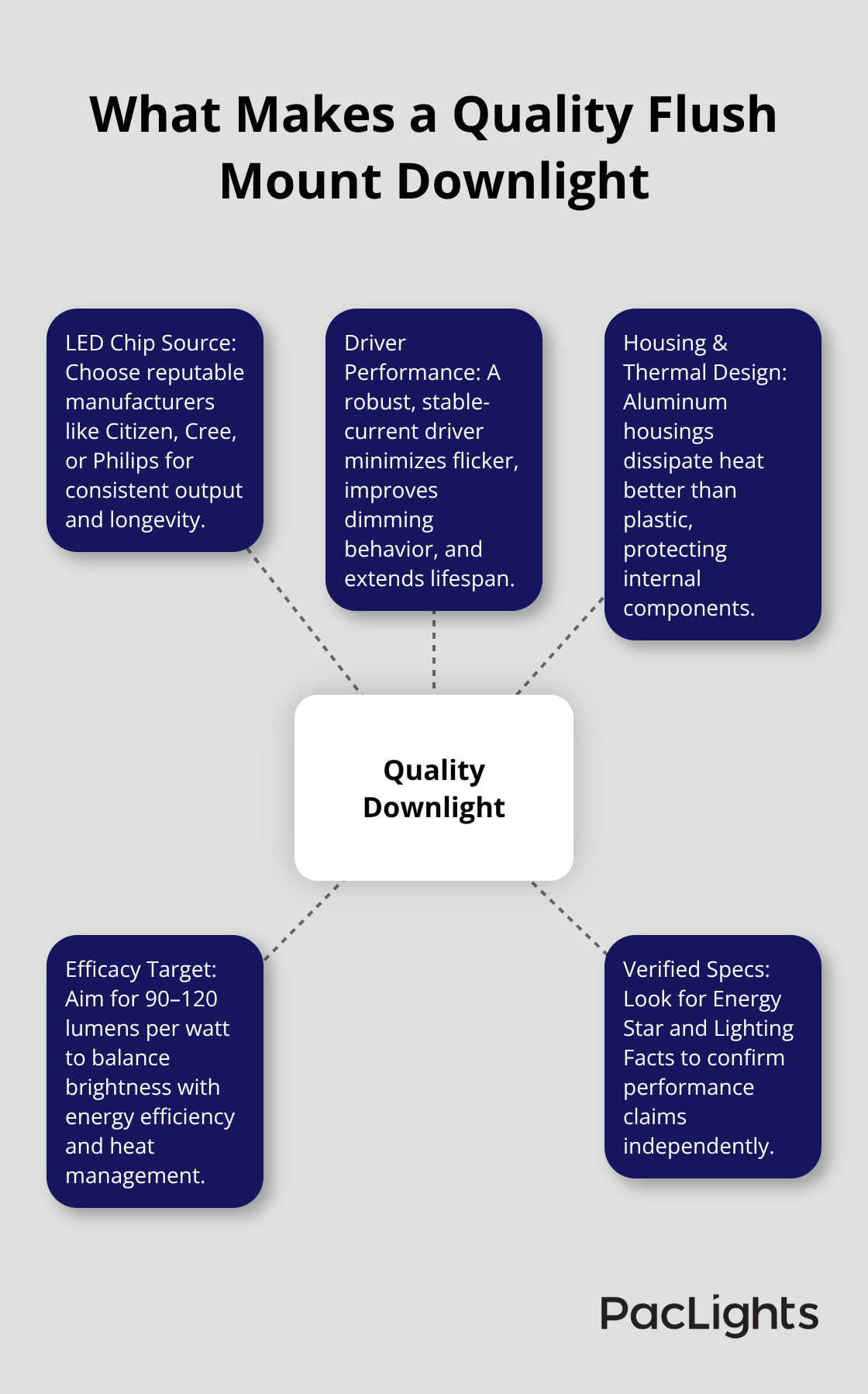
LED downlights that perform well share three measurable traits: they consume minimal power while delivering consistent brightness, they maintain their output across a wide range of color temperatures without flickering, and they’re built with components that last. The U.S. Department of Energy reports LED flush mount downlights reduce energy use by up to 90% compared with incandescent cans, but this only matters if the fixture itself is engineered properly. A quality downlight uses a reputable LED chip from manufacturers like Citizen, Cree, or Philips, paired with a robust driver that maintains stable current. This combination prevents the dimming and color shifts that plague cheaper fixtures. Look specifically for downlights rated between 90–120 lumens per watt, which indicates efficient LED chip technology and proper heat management.
A 4-inch LED downlight typically delivers 600–1100 lumens, while 6-inch versions deliver 900–1800 lumens, so choose your size based on actual room requirements rather than guessing. For a 10 square meter living room, try for about 2,500 lumens total, which usually requires multiple fixtures for even coverage rather than relying on a single oversized unit.
The Driver Controls Performance and Longevity
The driver is where most cheap downlights fail. It’s the electronic component that regulates power to the LED, and a poor driver causes flickering, shortened lifespan, and incompatibility with dimmer switches. Quality fixtures use drivers with high power factor ratings and warranties spanning at least 5 years. The housing material matters equally-aluminum dissipates heat far more effectively than plastic, allowing thinner, more elegant designs without sacrificing longevity. Passive cooling designs with no moving parts deliver silent operation and eliminate maintenance headaches that come with fan-equipped fixtures.
Color Temperature and Color Rendering Shape the Light Quality
Color temperature options should span at least 2700K to 4000K, giving you flexibility to match warm residential spaces or cooler task-focused kitchens. A Color Rendering Index of 90 or above ensures colors appear natural and vibrant, which is non-negotiable if the fixture will light artwork, textiles, or food preparation areas. Energy Star certification and the Lighting Facts label verify these specifications independently, so don’t rely on manufacturer claims alone.
What to Look for When Comparing Fixtures
When you evaluate downlights, focus on three components: the LED chip source (Citizen, Cree, or Philips rank highest), the driver warranty (5 years minimum), and the housing material (aluminum outperforms plastic). These three factors determine whether a fixture will perform reliably for 25,000 to 50,000 hours or fail prematurely. Specifications matter more than brand reputation alone-two fixtures from different manufacturers can vary dramatically in actual performance based on their internal components. Once you understand what separates quality from mediocrity, you can match the right downlight to your specific room type and lighting needs.
Matching Downlights to Your Room’s Purpose
Living Rooms and Bedrooms
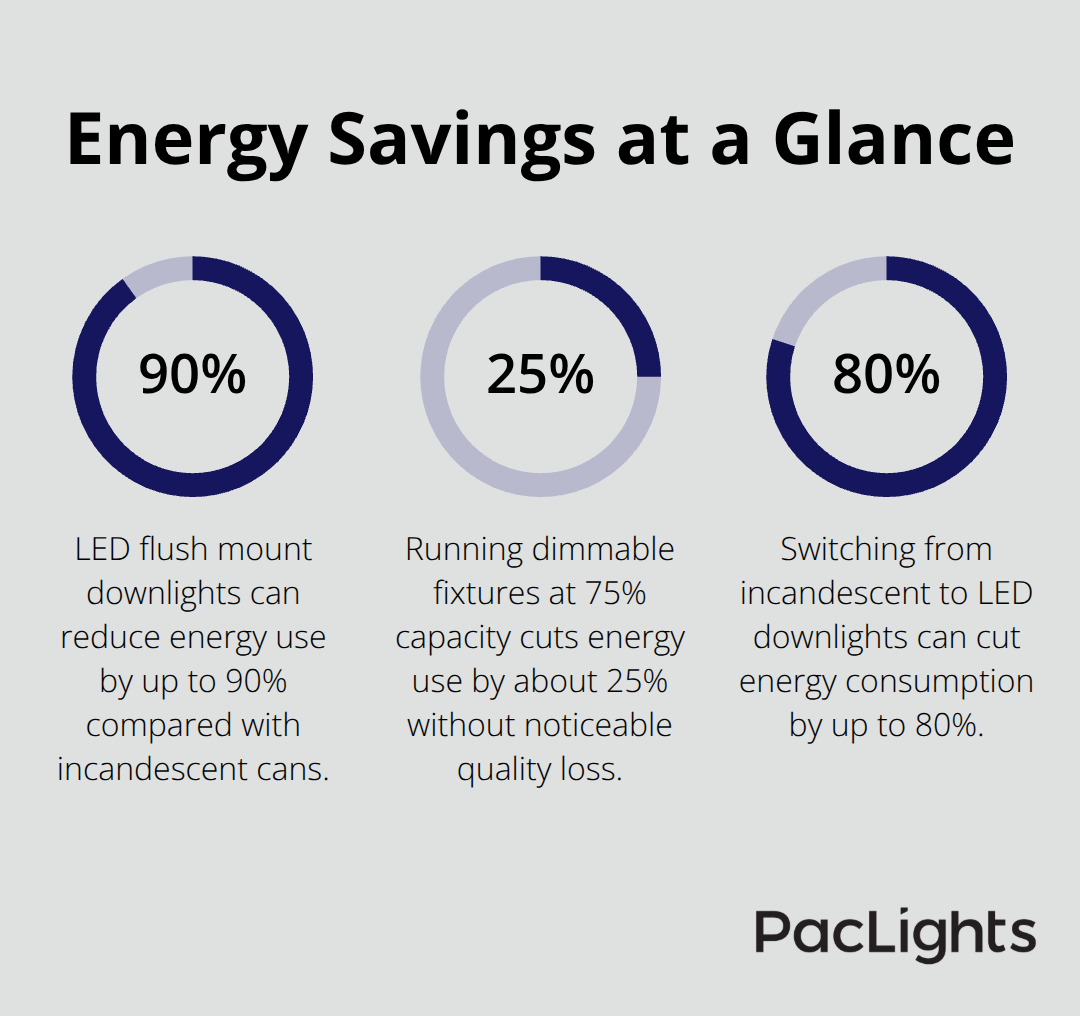
Living rooms demand warmth and flexibility. A 12×15 ft living room performs best with 4–6 fixtures spaced 6–8 ft apart, each delivering 2,000–2,500 lumens at 2700K to eliminate dark corners while maintaining a welcoming atmosphere. Dimmable fixtures matter here more than raw brightness; running them at 75% capacity cuts energy use by roughly 25% without noticeably compromising light quality, according to residential lighting studies.
Bedrooms require the same warm color temperature but fewer lumens-try for 1,500–2,000 lumens total, positioned 3–4 ft from walls and away from the bed.
Bathrooms and Kitchens
Moisture-rated fixtures become mandatory in bathrooms, where humidity demands UL Damp or UL Wet ratings. Center these fixtures over vanities and showers, space them 4–6 ft apart, and deliver 1,500–2,000 lumens at 3000–4000K for flattering, glare-free illumination that won’t wash out skin tones. Kitchens are where brightness and color accuracy dominate. Install downlights 18–24 inches apart over countertops and islands, delivering 3,000+ lumens per fixture at 4000K or higher for clear task lighting and accurate food colors. A typical kitchen with 20 downlights used 5 hours daily consumes roughly 24,000 watt-hours less per year compared to incandescent fixtures-translating to savings around $240–$300 annually, or $2,400–$3,000 over a decade in that single room alone.
Commercial Spaces and Retail Environments
Commercial and office spaces require uniform, flicker-free light that supports productivity. Space fixtures 8–10 ft apart above workstations and aisles, targeting 2,500–3,500 lumens per fixture at 3,500–4,000K to minimize eye strain during extended work hours. Retail environments demand flexible positioning to highlight merchandise; use 6–8 ft spacing, 4,000–5,000K fixtures, and adjustable beam angles to control light precisely on products. Healthcare facilities and educational spaces need reliable, long-lasting fixtures spaced 6–8 ft apart at 4,000K with 2,500+ lumens to maintain concentration without flicker.
Hallways and Entryways
Hallways and entryways perform best with compact, low-profile downlights spaced 10–12 ft apart, often paired with motion sensors to reduce energy waste-smart controls cut hallway energy use by 70–80% by ensuring lights run only when occupied. The practical spacing formula divides room length and width by your chosen distance to determine fixture count. For example, a 20 ft by 16 ft kitchen with 4 ft spacing requires roughly 5 fixtures across and 4 deep, totaling around 20 fixtures.
Sizing and Spacing for Your Space
Color temperature decisions should match function: stick with 2700K for living areas, 4000K or higher for kitchens and bathrooms, and consider dimming capacity to adjust mood without changing fixture counts. When retrofitting existing spaces, ensure fixture size matches your recessed housings-4-inch versus 6-inch-since adapters create clutter and complicate installation. Once you select the right downlights for each room, proper installation and control options determine whether your fixtures deliver their full potential.
Installation, Dimming, and Long-Term Care for Flush Mount Downlights
Sizing and Installing Fixtures Correctly
Proper installation determines whether your downlights perform as designed or underdeliver from day one. Start by verifying ceiling box size matches your fixture diameter-4-inch downlights fit standard 4-inch recessed housings, while 6-inch fixtures require 6-inch boxes. Mismatches force you to use adapters that create visual clutter and complicate wiring, so measure twice before purchasing.
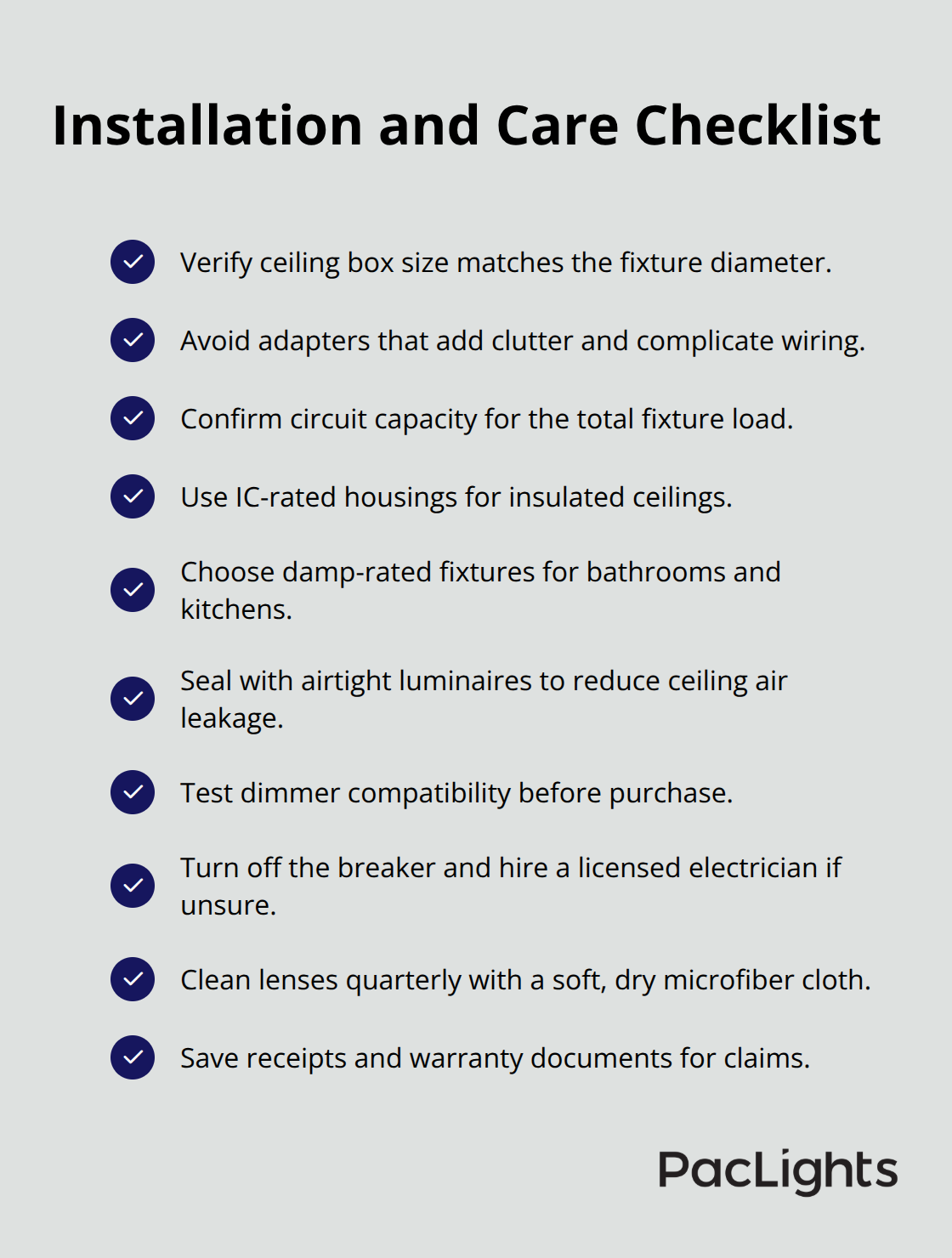
Confirm electrical load capacity with a licensed electrician; a 20-fixture kitchen installation drawing power from an undersized circuit will trip breakers repeatedly.
Check local building codes for ceiling type requirements-IC-rated housings are mandatory for insulated ceilings to prevent fire hazard, while damp-rated fixtures (IP44 or higher) become non-negotiable in bathrooms and kitchens where moisture is present. Airtight luminaire designs minimize air leakage through your ceiling, improving overall home energy efficiency beyond just the fixture itself. Turn off power at the breaker before touching any wiring, and if ceiling configuration looks complex or you lack electrical experience, hire a licensed electrician rather than risk improper installation that could void warranties or create safety issues.
Positioning Fixtures to Eliminate Dark Spots
Fixture placement matters as much as installation quality-mounting downlights too close to walls creates harsh shadows, while spacing them too far apart leaves dark patches. The practical approach divides room length and width by your chosen spacing distance. A 20-foot by 16-foot kitchen with 4-foot spacing needs roughly 20 fixtures total (5 across by 4 deep), positioned to avoid creating pools of light separated by darker zones.
Dimming and Smart Control Options
Dimmable LED downlights paired with a compatible dimmer enable smooth operation without flicker-this matters because cheap dimmers paired with budget LEDs create visible strobing that fatigues eyes during extended exposure. Test dimmer compatibility before finalizing your purchase; some LED drivers don’t play well with older dimmer technology. Smart controls add another layer of flexibility-networked lighting systems let you schedule fixtures to turn on or off automatically, adjust color temperature throughout the day to support circadian rhythm, and cut energy use in motion-sensor-equipped hallways by 70 to 80 percent.
Cleaning and Maintaining Your Fixtures
LED downlights demand minimal effort compared to older technologies. Clean fixtures quarterly using a soft, dry microfiber cloth to remove dust that reduces brightness output; avoid harsh chemicals that damage finishes. LED lifespans typically range from 25,000 to 50,000 hours, translating to roughly 10 to 20 years of normal residential use before replacement becomes necessary-far longer than incandescent bulbs that lasted 1,000 to 2,000 hours.
Warranty Coverage and Heat Management
Most quality fixtures carry 5 to 10 year warranties covering driver failure and premature dimming, so file your purchase receipt and warranty documentation immediately. If a fixture flickers or dims unexpectedly within the warranty period, contact the manufacturer rather than attempting repairs yourself. Long-term durability hinges on heat management, which is why aluminum housings outperform plastic alternatives-they dissipate heat effectively, keeping internal components within safe operating temperatures and extending overall fixture life substantially.
Final Thoughts
Quality flush mount downlights rest on three measurable foundations: efficient LED chips paired with robust drivers, aluminum housings that manage heat effectively, and color specifications that match your room’s function. The best flush mount downlight for your space balances these technical requirements with practical considerations like fixture size, spacing, and control options. A 2700K dimmable fixture in a living room performs differently than a 4000K non-dimmable unit in a kitchen, so matching specifications to actual room needs prevents costly mistakes and wasted energy.
Flush mount downlights transform modern spaces by delivering consistent brightness without the visual bulk of hanging fixtures, making them ideal for rooms with standard or low ceilings. Switching from incandescent to LED downlights cuts energy consumption by up to 80%, which translates to $240 to $300 annually in a single kitchen and substantially more across an entire home or commercial facility. These fixtures provide 25,000 to 50,000 hours of reliable operation, eliminating the frequent replacements that plague older lighting technologies.
Start by defining your room’s purpose and measuring ceiling dimensions, then select fixtures with verified specifications from reputable LED chip manufacturers. Confirm dimmer compatibility if you want flexibility, and verify that your electrical system can handle the load before installation. We at PacLights offer tailored lighting solutions with advanced controls and retrofit options designed to optimize energy use across residential and commercial spaces.
Disclaimer: PacLights is not responsible for any actions taken based on the suggestions and information provided in this article, and readers should consult local building and electrical codes for proper guidance.