

Modern offices demand lighting solutions that balance functionality with sophisticated design. Architectural sconces deliver both, transforming sterile workspaces into environments that inspire productivity and professionalism.
We at PacLights see how the right sconce selection can reduce energy costs by up to 40% while creating the perfect ambiance for focused work. Smart placement and cutting-edge LED technology make these fixtures game-changers for contemporary office design.
Why Architectural Sconces Transform Office Performance
Architectural sconces reshape office environments in ways that directly impact your bottom line. Harvard Business Review research shows employees in well-lit offices report 84% higher satisfaction rates, while companies see productivity increases of up to 23% when proper task lighting replaces harsh fluorescent overheads. These fixtures create visual depth that makes spaces appear larger and more professional, particularly important when 67% of potential clients form first impressions within the first 90 seconds of office entry.
Strategic Light Placement Drives Results
Wall sconces positioned at 60-65 inches from the floor along hallways and reception areas create the optimal blend of ambient and task lighting. The International Association of Lighting Designers found that workspaces with layered lighting reduce eye strain complaints by 51% compared to single-source overhead lighting. Wall-mounted LED sconces near workstations provide the 400-500 lumens needed for detailed tasks while they maintain the 300-lumen ambient baseline that prevents fatigue.
Energy Performance That Impacts Profit Margins
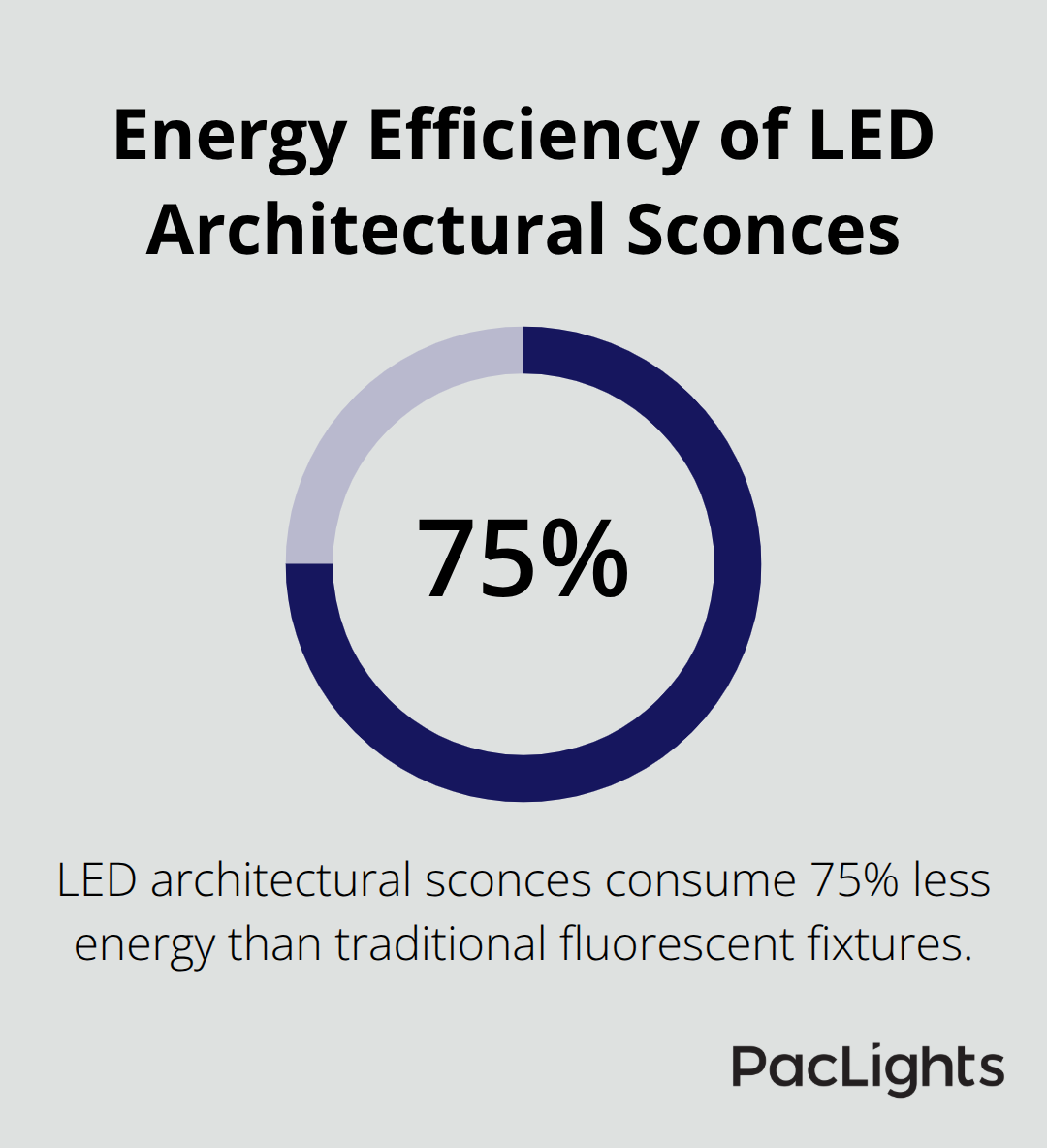
LED architectural sconces consume 75% less energy than traditional fluorescent fixtures while they last 25 times longer. The Department of Energy reports that offices which switch to LED wall sconces see average annual savings of $2,400 per 1,000 square feet. Motion sensors and daylight controls (when properly integrated) can push these savings even higher, with some facilities that achieve 85% reductions in lighting energy costs within the first year.
Professional Atmosphere Enhancement
Modern sconces eliminate the harsh shadows and glare that fluorescent lighting creates in conference rooms and client areas. Studies from the Lighting Research Center demonstrate that offices with architectural wall lighting score 40% higher in professional appearance ratings from visitors. These fixtures also reduce the stark institutional feel that drives away top talent in competitive hiring markets.
The next step involves selection of specific sconce types that match your office layout and functional requirements.
Which Architectural Sconces Work Best for Your Office
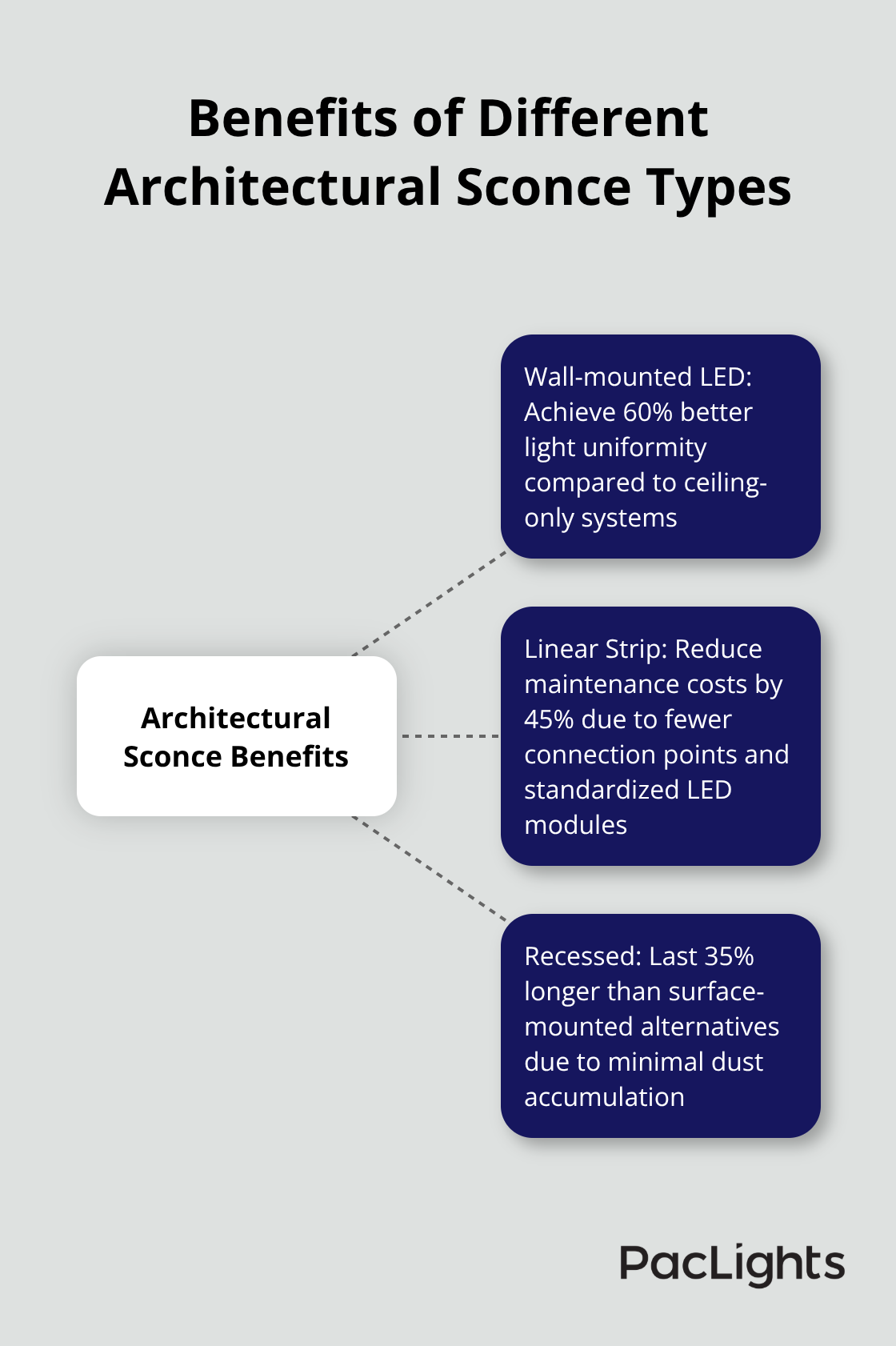
Wall-mounted LED sconces dominate modern office spaces because they deliver 2,800-3,200 lumens while they consume just 25-35 watts per fixture. The American Society of Interior Designers reports that offices with wall-mounted LEDs achieve 60% better light uniformity compared to ceiling-only systems. These fixtures perform best when you install them 8-12 feet apart along corridors and work areas, with controls that adjust output from 10% to 100% based on occupancy patterns. Smart sensors built into wall sconces can reduce energy consumption by an additional 30% through automatic daylight detection and occupancy response.
Linear Strip Solutions for High-Traffic Areas
Linear strip sconces transform reception areas and hallways into professional spaces that guide traffic flow naturally. These fixtures provide continuous wall illumination that eliminates the dark spots single-point sources create. The Illuminating Engineering Society found that linear strips reduce maintenance costs by 45% because they use fewer connection points and standardized LED modules. Installation at 72-84 inches height works best for 9-foot ceilings, while 10-12 foot ceilings require 96-108 inch heights for optimal coverage.
Recessed Architectural Integration
Recessed wall fixtures create the cleanest aesthetic for modern offices while they provide targeted task illumination where employees need it most. These fixtures mount flush with drywall surfaces and protect LED components from damage in high-traffic areas. The National Electrical Manufacturers Association data shows recessed sconces last 35% longer than surface-mounted alternatives because dust accumulation stays minimal (particularly important in busy corridors). We recommend 4-inch diameter fixtures for standard applications, with 6-inch units reserved for areas that require higher light output or specialized beam patterns.
Smart Control Integration Options
Modern architectural sconces integrate with advanced control systems that optimize energy use throughout the workday. Motion sensors detect occupancy and adjust brightness levels automatically, while daylight sensors reduce artificial light when natural light is sufficient. These control systems can cut total energy consumption by up to 50% compared to standard on/off switches (according to Department of Energy studies). The systems also provide data on usage patterns that help facility managers make informed decisions about future installations.
Proper installation techniques and placement strategies determine whether these sconce types deliver their full potential in your specific office environment.
How Do You Install Architectural Sconces for Maximum Impact
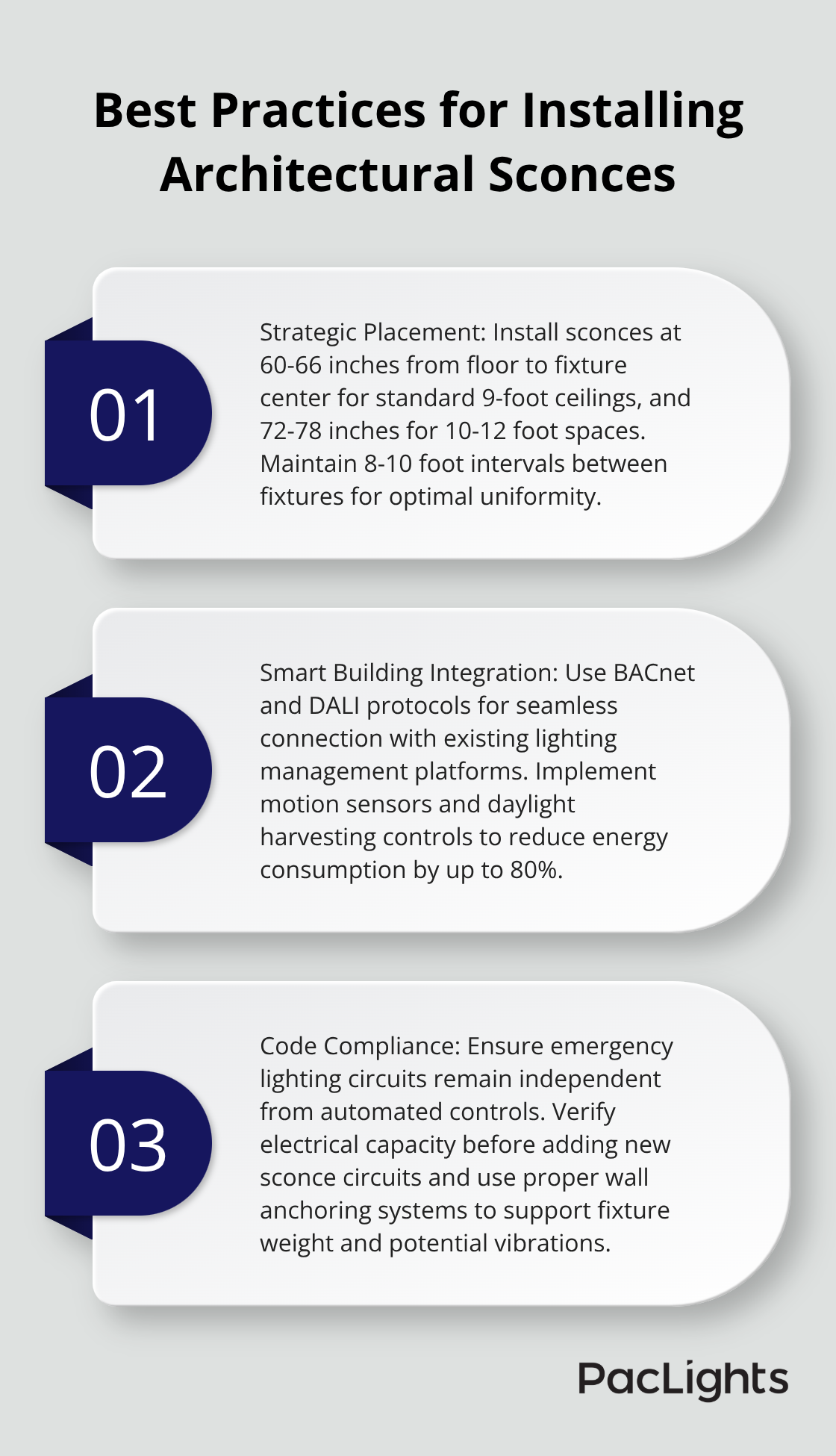
Strategic placement starts with heights that match ceiling dimensions and user needs. The National Institute for Occupational Safety and Health recommends 60-66 inches from floor to fixture center for standard 9-foot ceilings, with 72-78 inches for 10-12 foot spaces. Spacing between fixtures should never exceed 12 feet to prevent dark zones, while 8-10 foot intervals create optimal uniformity.
Reception areas require fixtures positioned 4-6 feet from seating areas to avoid glare. Hallway installations work best when staggered on alternating walls rather than directly opposite each other. The Americans with Disabilities Act mandates that wall-mounted fixtures cannot protrude more than 4 inches from walls when mounted below 80 inches (which affects sconce selection for ADA compliance).
Smart Building System Integration
Modern architectural sconces must connect seamlessly with existing lighting management platforms to maximize energy savings. BACnet and DALI protocols dominate commercial installations, with 78% of new office buildings using these systems according to the Building Owners and Managers Association.
Retrofitting older buildings requires compatible drivers that communicate with legacy 0-10V dimming systems. New construction should specify fixtures with built-in wireless mesh capabilities. Motion sensors paired with daylight harvesting controls can reduce sconce energy consumption by 65-80% compared to manual switches.
Code Compliance Requirements
The International Code Council requires emergency lighting circuits to remain independent from automated controls. This means sconces on emergency circuits need separate switching arrangements that maintain code compliance while preserving smart functionality. Emergency circuits must provide minimum illumination levels for 90 minutes during power outages (regardless of smart control integration).
Installation Best Practices
Professional installation teams should verify electrical capacity before adding new sconce circuits. Most architectural sconces draw 25-35 watts per fixture, but multiple units on single circuits require load calculations to prevent overloading. Wall anchoring systems must support fixture weight plus any vibration from HVAC systems or foot traffic in adjacent areas.
Final Thoughts
Architectural sconces represent the most effective lighting upgrade for modern offices, delivering measurable improvements in employee satisfaction, productivity, and energy costs. The data speaks clearly: 84% higher satisfaction rates, 23% productivity increases, and up to 40% energy savings make these fixtures essential investments rather than optional upgrades. The financial impact extends beyond energy savings to include reduced eye strain complaints by 51% and professional environments that score 40% higher in visitor appearance ratings.
Implementation success depends on selecting the right fixture types for your specific needs. Wall-mounted LED sconces work best for general office areas, linear strips excel in high-traffic zones, and recessed fixtures provide the cleanest aesthetic for modern spaces. Smart controls and proper placement at 60-66 inches height optimize performance while maintaining ADA compliance (particularly important for public access areas).
We at PacLights offer commercial lighting solutions that include architectural sconces, advanced controls, and lighting layout designs to help you achieve these results. Our LED retrofit options and ROI assessments make upgrading existing systems straightforward and cost-effective for any office environment. These improvements directly affect talent retention and client relationships in competitive markets.
Disclaimer: PacLights is not responsible for any actions taken based on the suggestions and information provided in this article, and readers should consult local building and electrical codes for proper guidance.