

Buying LED lights for your facility means making a choice that affects safety, performance, and your bottom line. NSF tested LED lights carry certification that proves they meet rigorous standards for electrical safety, material quality, and efficiency.
At PacLights, we know that facility managers need lighting solutions they can trust. That’s why understanding NSF certification matters before you make your next lighting investment.
What NSF Testing Actually Verifies
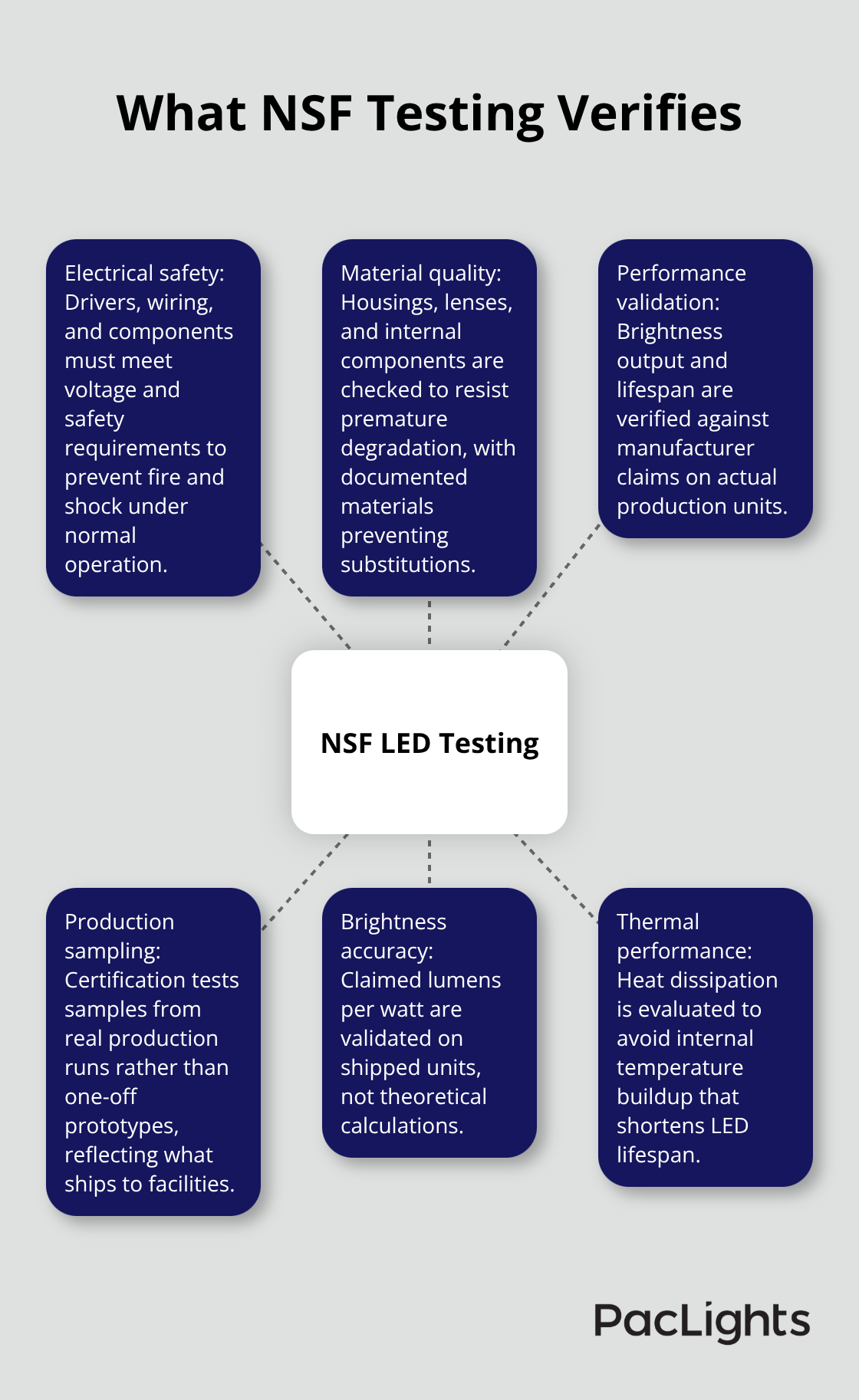
NSF International certification proves your LED lights have passed third-party testing that checks electrical safety, material durability, and performance specifications. NSF does not certify every LED product on the market-manufacturers must voluntarily submit their fixtures for evaluation. When an LED light carries NSF certification, it meets NSF/ANSI standards specific to lighting applications. For commercial and industrial facilities, this matters because NSF testing identifies defects that could create fire hazards, electrical failures, or premature burnout.
The certification process involves testing samples from production batches, not just one-off prototypes. This means you receive verification of what actually ships to your facility. NSF certification differs fundamentally from general compliance standards like UL or ETL, which focus primarily on electrical safety. NSF goes further by evaluating material quality, construction methods, and whether brightness output matches manufacturer claims.
Why NSF Certification Reduces Your Liability
A facility manager who purchases NSF tested LED lights reduces liability exposure because the certification provides documented proof that products meet established safety and performance benchmarks. If a lighting failure causes injury or property damage, having NSF certification on your fixtures strengthens your legal position. The independent verification creates a clear record that you selected products meeting recognized industry standards rather than relying on unverified vendor claims.
Performance Claims You Can Actually Trust
Manufacturers often claim their LEDs last 50,000 hours or deliver specific lumens per watt, but NSF testing validates these specifications rather than accepting vendor promises at face value. When you select NSF tested fixtures, you purchase products where independent testing confirmed the brightness output, color temperature consistency, and lifespan estimates. This verification matters for budgeting because you can accurately predict replacement cycles and calculate true cost per hour of operation.
Industrial facilities running 24/7 operations benefit most from this verification (a lighting system that burns out prematurely costs money in labor, replacement fixtures, and operational downtime). Facility managers need reliable performance data to support informed purchasing decisions and long-term planning. NSF certification provides the documentation that transforms manufacturer claims into verified facts.
Understanding what NSF testing actually covers helps you evaluate which certifications matter most for your specific facility needs and lighting applications.
What NSF Certification Delivers for Your Facility
Verified Performance Eliminates Budget Guesswork
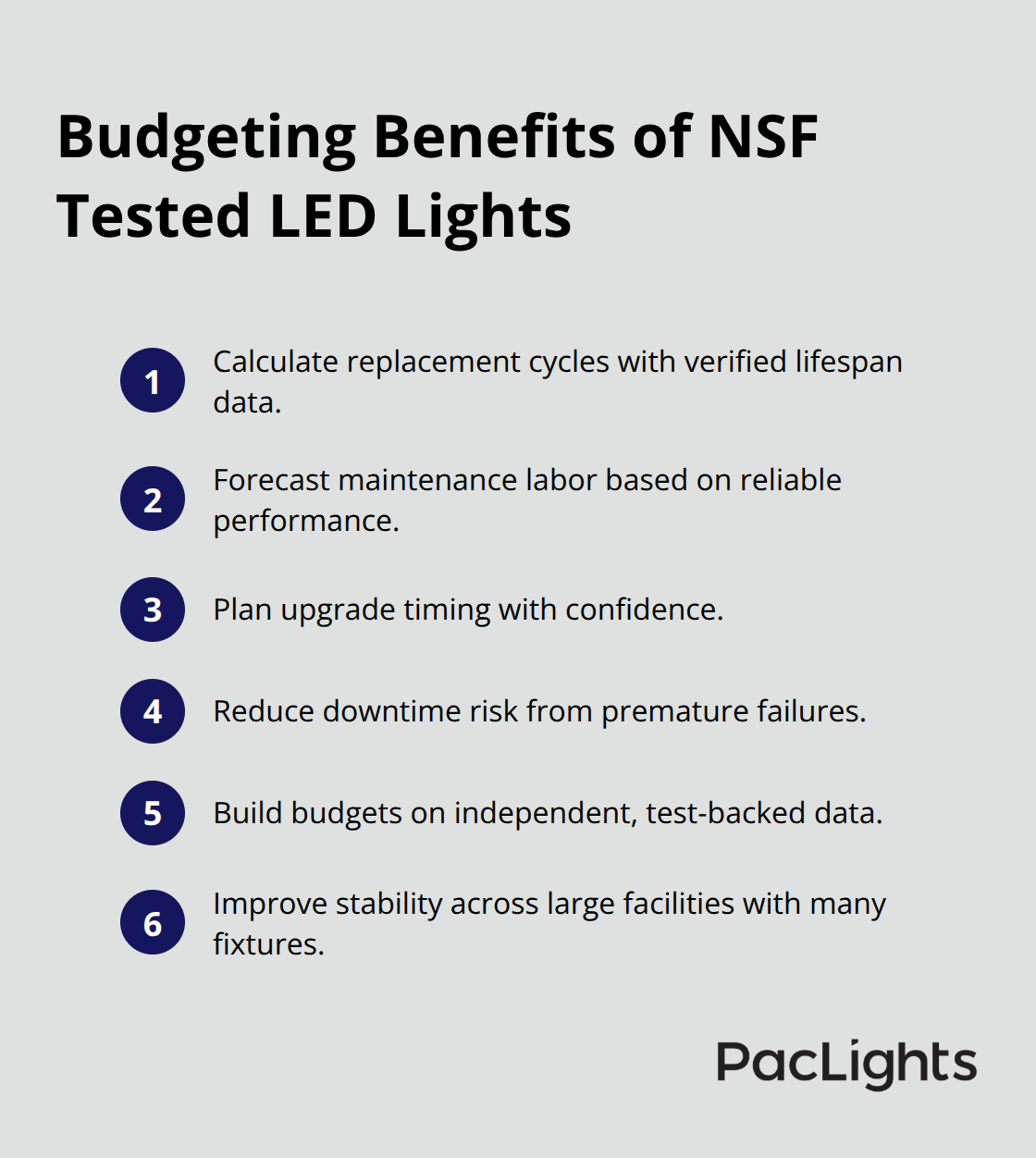
NSF tested LED lights eliminate guesswork from your lighting budget because you know exactly what performance you’re purchasing. When a manufacturer claims their fixture delivers 120 lumens per watt with a 50,000-hour lifespan, NSF certification means an independent laboratory verified those numbers on actual production units. This matters tremendously for cost projections-a facility manager can calculate replacement cycles accurately, forecast maintenance labor, and predict when fixtures will need upgrading.
Without NSF testing, you operate on hope rather than data.
Industrial facilities running continuous operations face real costs when lighting fails prematurely. One premature lighting failure costs money in replacement fixtures, labor to install them, and operational disruption. NSF certification eliminates this financial uncertainty because the third-party testing confirms the product will perform as specified. For a warehouse or manufacturing plant with hundreds of fixtures, this reliability difference translates directly to your maintenance budget and operational stability.
Legal Protection Through Documentation
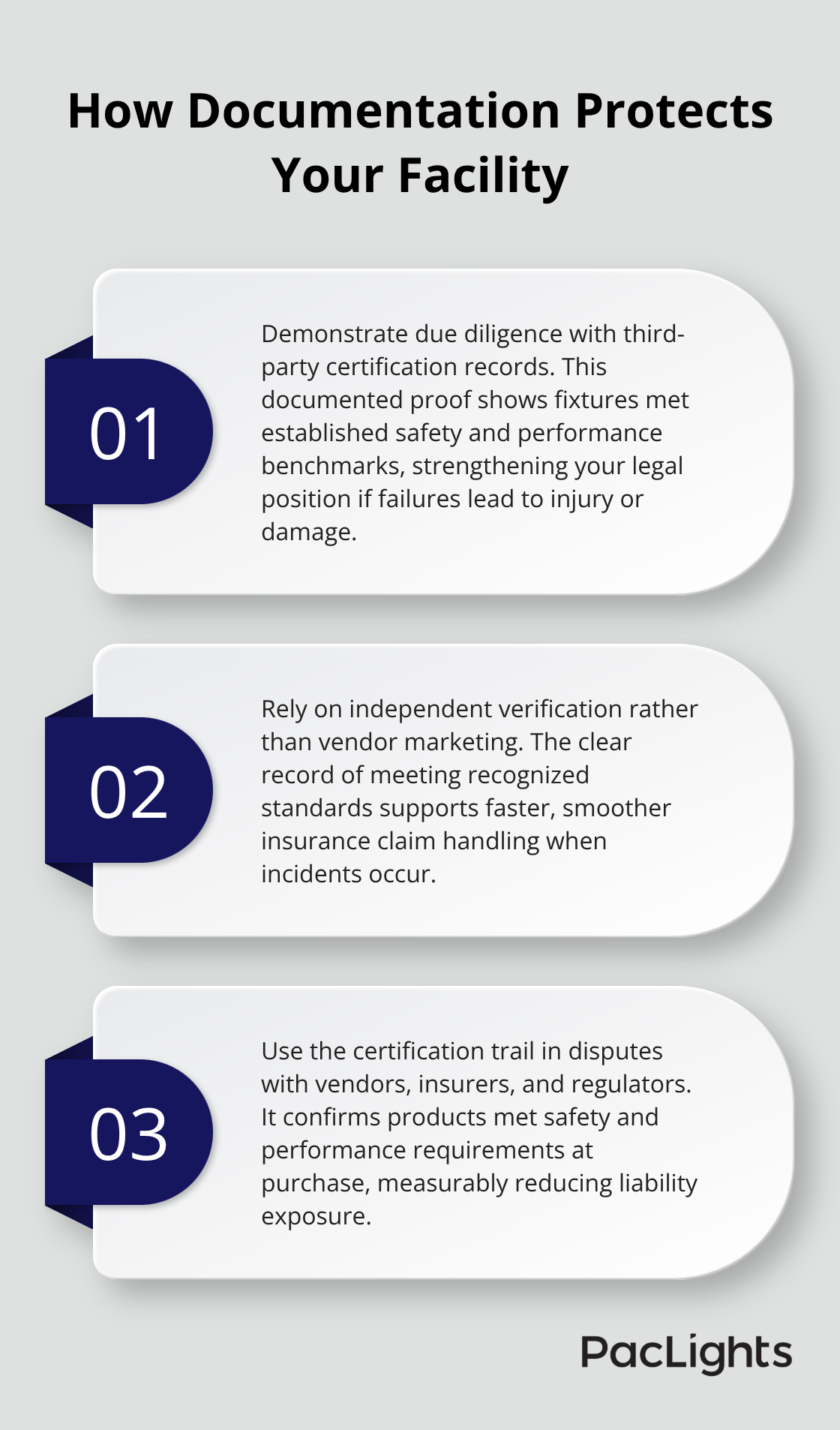
The liability protection NSF certification provides is equally concrete. If an electrical failure causes injury or property damage, your facility’s legal position strengthens significantly when you can document that fixtures met NSF/ANSI standards through independent verification. A facility manager who selected NSF tested products demonstrates due diligence in purchasing decisions-you selected products evaluated by recognized standards rather than relying on unverified vendor marketing.
Insurance carriers recognize this distinction. Some commercial liability policies offer reduced premiums or faster claim resolution when facilities use certified lighting products because the risk profile improves measurably. The documentation trail NSF certification creates protects you in disputes with vendors, insurance companies, and regulators. You possess written proof that products met established safety and performance benchmarks at the time of purchase.
Why Documentation Matters When Problems Arise
This documentation proves most valuable when something goes wrong and someone questions whether you selected appropriate fixtures for your facility’s requirements. The certification record demonstrates that you made informed purchasing decisions based on verified performance data rather than marketing claims alone. This distinction separates facilities that operate defensively from those that operate reactively when lighting issues occur.
What NSF Testing Actually Checks
NSF tested LED lights must pass rigorous evaluation across three distinct areas that directly impact whether your facility receives safe, reliable fixtures. Electrical safety testing confirms that LED drivers, wiring, and components meet voltage requirements and won’t create fire hazards or shock risks under normal operation. NSF tests samples from actual production runs, not laboratory prototypes, which means the fixtures arriving at your facility have undergone the same evaluation as the certified samples. Material quality standards verify that housing, lens materials, and internal components won’t degrade prematurely or release harmful substances into your facility environment. NSF requires manufacturers to document the specific materials used, which prevents cost-cutting substitutions that could compromise fixture lifespan or safety. Brightness output specifications demand that manufacturers deliver exactly what they claim-if a fixture is rated at 120 lumens per watt, NSF testing validates this number on actual units rather than accepting theoretical calculations.
Electrical Safety and Thermal Performance
The electrical safety component includes testing for thermal management, which directly affects LED lifespan and failure rates. NSF evaluates whether LED drivers maintain proper heat dissipation and whether the fixture design prevents internal temperature buildup that degrades components over time. A fixture that runs hot fails prematurely, costing your facility replacement labor and fixtures-NSF testing prevents this outcome through thermal performance validation. This verification matters because underperforming fixtures cost you money in additional fixtures needed to achieve adequate illumination, while overestimated brightness claims waste energy and budget on unnecessary lumen output.
Material Standards and Environmental Resistance
Material standards cover corrosion resistance, which matters for facilities in harsh environments like food processing plants, chemical storage areas, or outdoor installations. NSF certification confirms that fixture components won’t corrode or degrade when exposed to moisture, salt air, or chemical vapors. The certification process requires manufacturers to document specific materials used, preventing substitutions that compromise durability or safety. This protection proves especially valuable for industrial operations where environmental conditions accelerate component degradation.
Brightness Consistency Over Time
NSF verifies not just peak brightness but consistency-whether a fixture maintains its rated output throughout its lifespan rather than dimming gradually as components degrade. This consistency verification protects your long-term operating costs because you know your lighting investment performs reliably for years rather than declining steadily until replacement becomes necessary. The testing confirms that fixtures deliver sustained performance, eliminating the hidden costs associated with gradual performance loss.
Final Thoughts
NSF tested LED lights represent the most reliable path to reducing facility costs while protecting your investment and legal standing. The certification process eliminates guesswork by verifying electrical safety, material quality, and performance specifications through independent testing of actual production units. When you select NSF certified fixtures, you purchase documented proof that products perform as claimed rather than relying on manufacturer promises alone.
The financial case for NSF certification is straightforward-verified performance data lets you calculate replacement cycles accurately, forecast maintenance labor, and predict operational costs with confidence. Industrial facilities running continuous operations benefit most because premature lighting failures cost money in replacement fixtures, installation labor, and downtime. NSF certification prevents these hidden expenses by confirming that fixtures will deliver their rated lifespan and brightness output.
Beyond cost savings, NSF certification strengthens your legal position when problems arise. The documentation trail proves you selected products meeting recognized industry standards through independent verification. Insurance carriers recognize this distinction, and your facility’s liability exposure decreases measurably when you can demonstrate due diligence in purchasing decisions. Explore how NSF tested LED lights can improve your facility’s reliability and reduce long-term operating costs.
Disclaimer: PacLights is not responsible for any actions taken based on the suggestions and information provided in this article, and readers should consult local building and electrical codes for proper guidance.