

Modular turbine unit lighting is often overlooked, yet it directly impacts both worker safety and operational efficiency. At PacLights, we’ve seen firsthand how poor lighting choices lead to maintenance delays, safety incidents, and wasted energy.
The right lighting system isn’t just about visibility-it’s about selecting fixtures that survive extreme temperatures, vibration, and confined spaces while keeping costs down. This guide walks you through everything you need to know to get it right.
What Lighting Standards Apply to Modular Turbine Units
Modular turbine units operate in some of the harshest industrial environments on record. Ambient temperatures at fixture mounting heights can reach 392°F in certain zones, vibration levels are extreme, and explosive gases present constant hazards. Standard commercial lighting fails in these conditions. You must select fixtures rated for the specific classification of each zone within your turbine unit. For hazardous locations such as fuel handling and hydrogen areas, explosion-proof or hazardous-location LED fixtures are mandatory-never select fixtures by wattage alone. Instead, verify the Class/Division or Zone designation and temperature codes match your application. Nuclear-qualified LED lighting may be required in certain zones as well; coordinate with your engineering team on plant-specific qualification, radiation tolerance, and seismic considerations before ordering.
Foot-Candle Levels Match Task Requirements
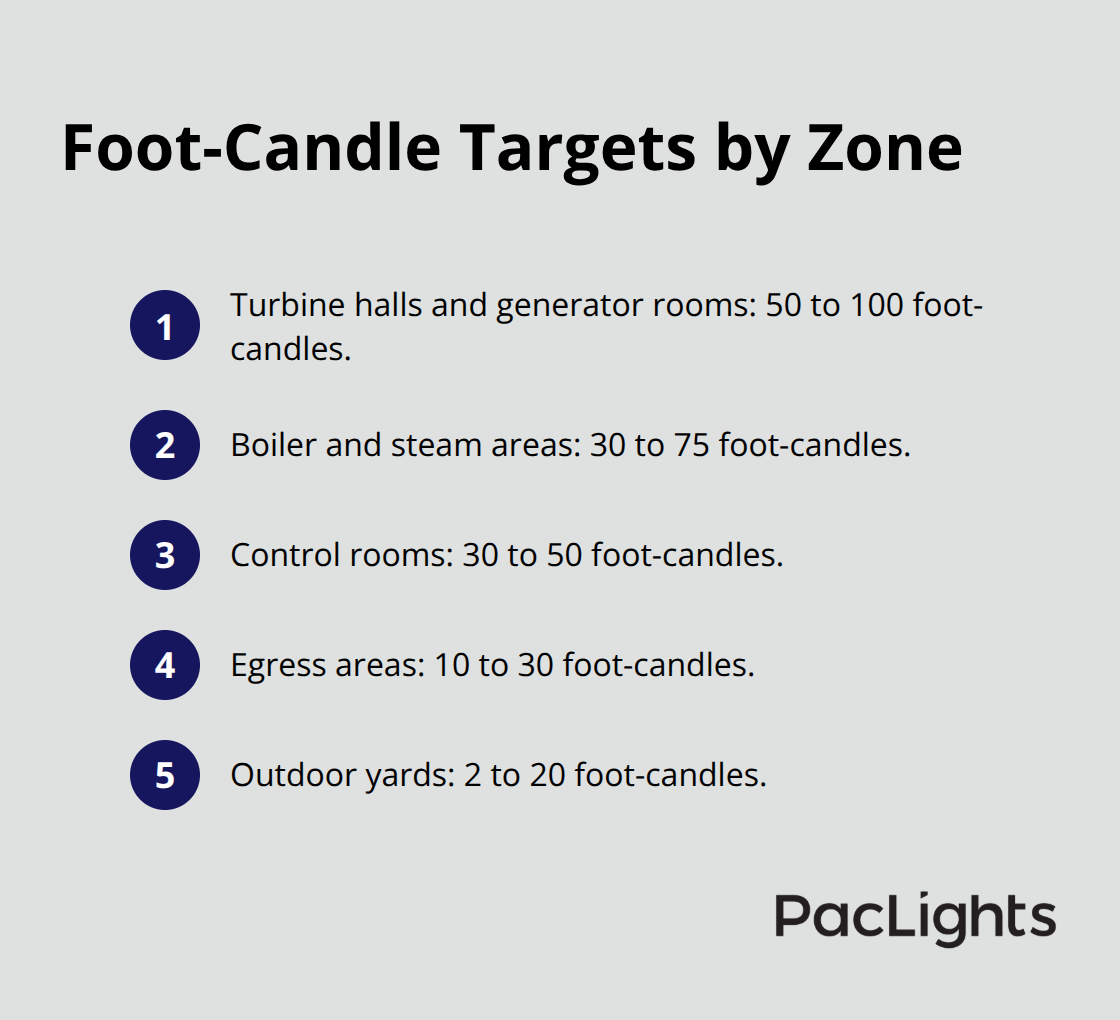
Turbine halls and generator rooms require 50 to 100 foot-candles of illumination. Boiler and steam areas typically need 30 to 75 foot-candles, while control rooms require 30 to 50 foot-candles. Egress areas should receive 10 to 30 foot-candles, and outdoor yards need 2 to 20 foot-candles. These levels reflect OSHA requirements for task-specific visibility and worker safety during maintenance and operation. They are not arbitrary figures but rather standards that protect your team and ensure compliance.
Temperature Exposure Demands Specialized Fixtures
High-temperature LED fixtures rated for extreme heat are non-negotiable in turbine and boiler areas. Conventional LED task lighting fails in these environments and violates OSHA compliance. Fiber-optic remote-source lighting systems keep the light engine outside the harsh environment while delivering illumination to interior work zones. Since 2016, this technology has received certification for use in more than 13 countries and delivered over 200 systems, proving both regulatory acceptance and practical scalability. The remote light engine tolerates ambient temperatures at the luminaire exceeding 150°C (302°F), enabling safe operation in extreme turbine enclosures. This method aligns with OSHA safety requirements by providing compliant task lighting inside hazardous spaces without exposing personnel to dangerous heat or vibrations at the luminaire itself. For your modular unit, prioritize fixtures with robust protection ratings of IP65 or higher for wet locations and IK08 or better for impact resistance.
Power Stability Supports Lighting Performance
Lighting stability depends on maintaining consistent power delivery from your turbine unit. Steam input should remain near 24 kiloliters per second for predictable power output. When you tune turbine inputs, maintain a consistent power profile by keeping voltage and frequency stable through gradual ramping and load balancing. Adjust inputs in small increments of no more than 5 to 10 percent to prevent overshoot and voltage fluctuations that degrade lighting performance. LED fixtures deliver instant-on operation and flicker-free light, making them far superior to older HID systems for this application.
Control Integration Optimizes Energy Use
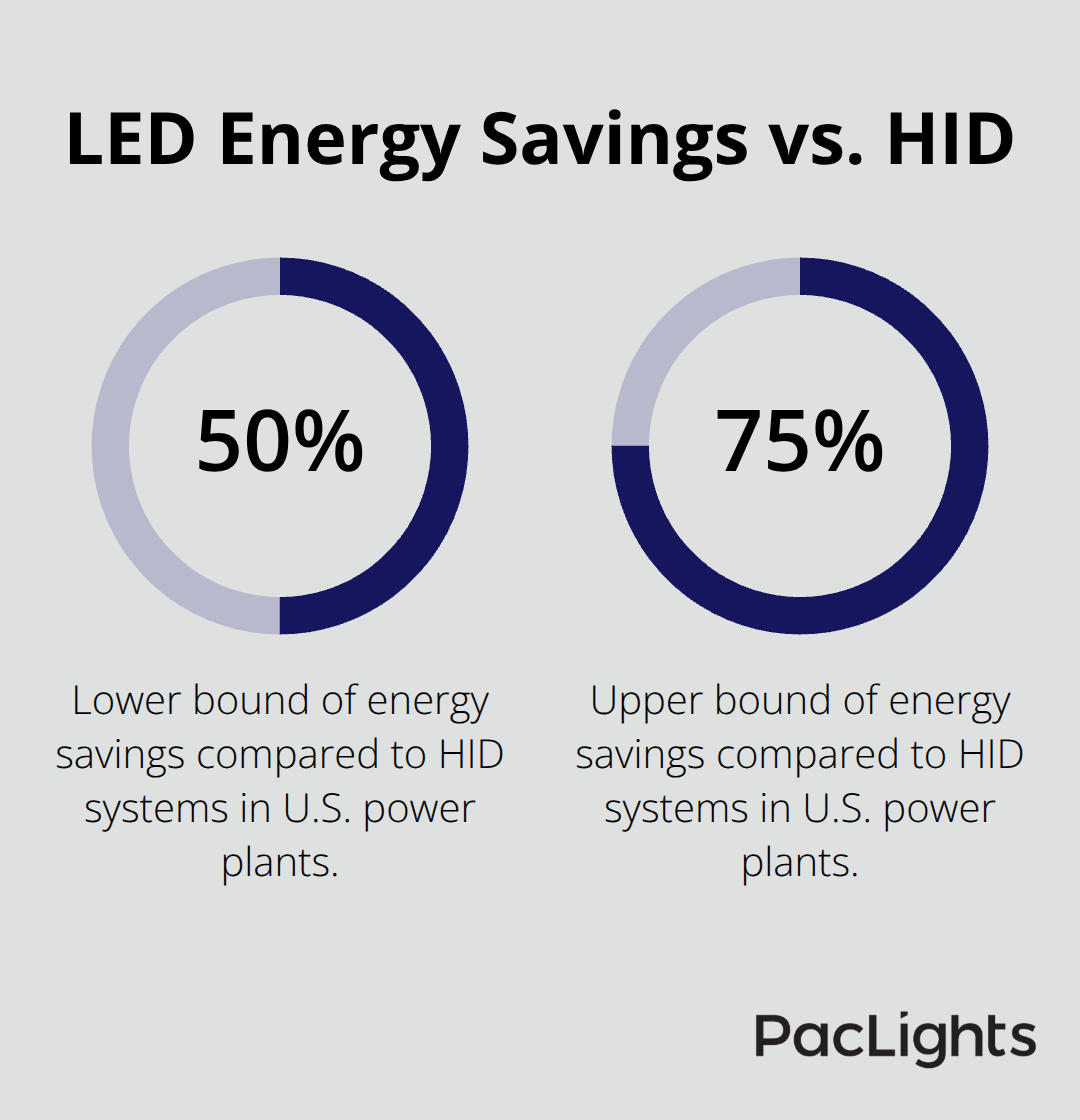
Integrate controls such as dimming and occupancy sensors into your lighting design, but ensure compatibility with your plant control systems and zone-based lighting strategies. LED technology in power plants achieves 50 to 75 percent energy savings compared to HID systems, with lifespans exceeding 50,000 hours, dramatically reducing maintenance exposure in hard-to-reach turbine and boiler spaces. These performance gains mean your modular unit operates more efficiently while your team spends less time on fixture maintenance.
With standards and fixtures in place, the next step involves planning the physical layout and electrical infrastructure that will support these systems reliably.
Integration Best Practices for Turbine Lighting Systems
Map Your Zones and Electrical Infrastructure
Designing a lighting layout for modular turbine units requires treating electrical infrastructure as inseparable from fixture placement. Start by mapping your turbine hall, boiler areas, control rooms, and maintenance platforms on a site plan, then assign foot-candle targets to each zone based on the requirements already outlined. Mounting heights vary significantly across zones: turbine halls need 20 to 60 feet, boiler and steam areas require 12 to 50 feet, control rooms demand 8 to 12 feet, maintenance platforms 8 to 25 feet, and outdoor yards 12 to 50 feet. Once you establish these heights and zones, run your electrical infrastructure with dedicated circuits for each area rather than daisy-chaining fixtures across multiple zones. This separation prevents a single fault from cascading across your entire lighting system and allows you to isolate vibration-sensitive zones from power-hungry high-bay installations.
Request a power-plant lighting review with product specialists before finalizing your design; they can tailor fixture selections to your specific heat zones, mounting heights, voltage requirements, and control needs.
Isolate Fixtures from Vibration and Thermal Stress
Vibration presents the second critical challenge in modular turbine installations. High-temperature LED fixtures must mount on vibration-isolating hardware, not directly to structural members that transmit machinery oscillation. Use rubber isolation pads rated for continuous operation at the ambient temperatures in your turbine enclosure, and ensure all fasteners are stainless steel or corrosion-resistant alloys to prevent loosening over time.
Fiber-optic remote-source lighting systems excel here because they eliminate the luminaire from the vibration zone entirely; the light engine sits outside the harsh environment while fiber cables deliver illumination to interior work areas. This approach has delivered over 200 installations since 2016 across 13 countries, proving both durability and regulatory acceptance in extreme turbine conditions. For conventional LED fixtures in high-vibration areas, specify IK08 or higher impact ratings and test mounting brackets under actual operating conditions before full deployment.
Wire Controls Through Your Plant Management System
Control systems must balance automation with operational reality. Integrate dimming and occupancy sensors into your modular unit’s electrical infrastructure, but wire them through your plant’s central building management system rather than relying on standalone controllers that cannot communicate with your turbine’s power management. LED fixtures achieve 50 to 75 percent energy savings over HID systems while maintaining flicker-free operation critical for both safety and task precision.
Occupancy sensors in turbine halls should use dual-technology (PIR and ultrasonic) rather than single-method detection, since machinery movement can trigger false positives and drain your power reserves. Daylight harvesting sensors are less practical in enclosed turbine spaces but highly effective in control rooms and outdoor yards; calibrate these sensors to prevent abrupt lighting changes when reflective surfaces or machinery movement interferes with photosensor readings.
Configure Dimming Protocols and Wireless Options
Implement DALI or 0-10V dimming protocols for precise, scalable control across individual fixtures or fixture groups, and maintain minimum brightness levels during critical maintenance tasks. Wireless dimming offers advantages for retrofitting existing modular units, enabling quick installation with minimal disruption to operations, though wired systems remain more reliable in electromagnetic-heavy turbine environments.
Commission your lighting controls under real-world operating conditions: test sensor coverage, verify dimming performance at full load and part load, and establish baseline scenes that match your operational procedures. Establish a maintenance schedule with defined responsibilities and inspection intervals to keep sensors clean and calibrated; dust and thermal cycling degrade sensor accuracy in modular turbine facilities, reducing energy savings and creating dark spots that compromise safety. With your layout finalized and controls integrated, the next phase focuses on selecting and deploying the specific LED technologies that deliver both efficiency and durability in these demanding applications.
Energy-Efficient LED Technology for Modular Turbine Lighting
LED Delivers Superior Performance Over Older Technologies
LED fixtures produce 50 to 75 percent energy savings compared to HID systems in power plants, a gap that widens dramatically when you factor in maintenance labor costs. HID bulbs fail every 10,000 to 20,000 hours; LED fixtures operate beyond 50,000 hours, meaning your team climbs into turbine enclosures and boiler areas far less often to replace burned-out lamps. This durability matters enormously in modular turbine units where access is tight and working conditions are hostile. LED fixtures turn on instantly without warm-up delay, critical for emergency lighting and rapid response to equipment failures. Flicker-free light eliminates the eye strain and visual confusion that plague older technologies, directly improving worker safety during complex maintenance tasks. The mercury-free design removes hazardous waste handling, reducing your environmental liability and disposal costs.
Occupancy Sensors Cut Energy Consumption Significantly
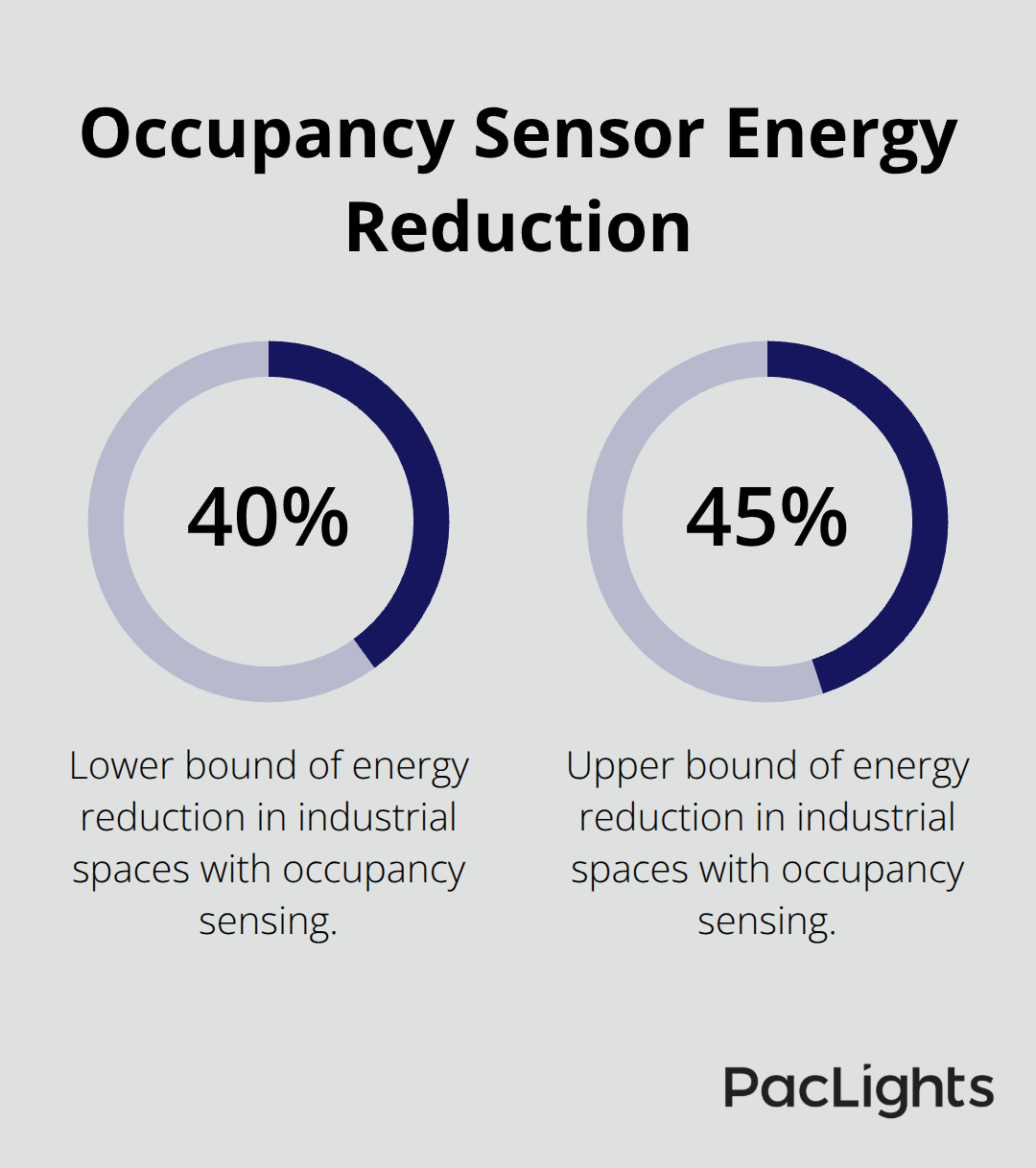
Occupancy sensors paired with LED fixtures reduce lighting energy consumption by 40 to 45 percent in industrial spaces, according to real-world deployments in corporate facilities that applied daylight harvesting and motion detection. In your modular turbine unit, dual-technology occupancy sensors using both PIR and ultrasonic detection prevent false triggers from machinery vibration that would waste power on unnecessary illumination.
Thermal cycling in turbine environments degrades sensor accuracy over time, so establish quarterly calibration checks and sensor cleaning schedules to preserve energy savings.
Control Integration Maximizes Efficiency and Reliability
Wireless dimming retrofits avoid expensive rewiring of existing modular units, cutting installation downtime to days rather than weeks. Implement DALI or 0-10V dimming protocols to scale control across fixture groups, maintaining minimum brightness thresholds during maintenance work while reducing power consumption during low-occupancy periods. Your lighting controls should integrate directly with your plant’s building management system rather than operating as isolated controllers; this integration allows your turbine’s power management logic to adjust lighting load dynamically, preventing voltage sags during generator ramps.
Long-Term Durability Transforms Maintenance Economics
LED fixtures tolerate the temperature swings and vibration that destroy conventional ballasts, with lifespans that typically guarantee five-year warranties and US-based support. The combination of long fixture life, high efficiency, and integrated controls transforms modular turbine lighting from a maintenance drain into a productivity asset. Lower energy bills and reduced labor exposure to hazardous zones deliver measurable returns on your lighting investment (often within two to three years depending on operational intensity and local electricity rates).
Final Thoughts
Successful modular turbine unit lighting hinges on three core principles: matching fixtures to environmental hazards, integrating controls with your plant’s power management, and selecting LED technology that survives extreme temperatures and vibration. The foot-candle standards, temperature ratings, and fiber-optic solutions outlined in this guide reflect decades of industrial practice and over 200 proven installations in hazardous turbine environments worldwide. Workers performing maintenance in turbine halls and boiler areas face genuine risks when visibility fails or fixtures vibrate loose, so OSHA-compliant task lighting at the correct foot-candle levels eliminates guesswork and reduces the likelihood of missed hazards during inspections.
Reliable lighting accelerates maintenance cycles and prevents accidents simultaneously. When your team can see clearly without climbing into poorly lit enclosures repeatedly, they complete repairs faster and with fewer errors, directly improving your unit’s uptime and operational efficiency. LED fixtures deliver 50 to 75 percent energy savings over HID systems, combined with occupancy sensors that cut consumption by 40 to 45 percent, generating measurable returns within two to three years (longer fixture lifespans also mean your maintenance team spends less time in hazardous zones replacing burned-out lamps).
Assess your current modular turbine unit lighting against the standards and fixture types covered here, then identify zones where temperature, vibration, or hazardous classifications demand specialized fixtures. Contact PacLights for a free lighting layout design and ROI assessment tailored to your specific turbine configuration, and their team will help you plan the electrical infrastructure, select appropriate fixtures for each zone, and integrate controls that work seamlessly with your plant’s power management system.
Disclaimer: PacLights is not responsible for any actions taken based on the suggestions and information provided in this article, and readers should consult local building and electrical codes for proper guidance.