

Vapor tight fixtures aren’t optional in certain environments-they’re mandatory. Moisture, dust, and chemical vapors can destroy standard lighting systems, but the right fixtures keep your facility running safely and efficiently.
At PacLights, we’ve seen firsthand how choosing the wrong fixture costs businesses thousands in premature replacements and downtime. This vapor tight fixtures guide walks you through selection, installation, and maintenance so you get it right the first time.
What Vapor Tight Fixtures Actually Protect
How Vapor Tight Sealing Works
Vapor tight fixtures seal internal components against moisture, dust, and chemical vapors through reinforced housings, gaskets, and latches that meet UL 1598 Wet Location standards. The core difference from standard fixtures lies in gasket design and housing integrity. When you open a vapor tight fixture for maintenance, the seal must be re-established properly-which is why gasket condition matters far more than most facility managers realize. IP65 and IP66 ratings indicate the level of ingress protection, but the rating alone doesn’t tell you whether the fixture will survive repeated opening cycles in a grease-laden environment or a freezing walk-in cooler.
Three Critical Factors Before Purchase
Evaluate three specific factors before you buy: the gasket material (silicone gaskets degrade faster in temperature cycling than EPDM), the latch design (stainless steel latches resist corrosion better than plated steel), and the lens material (polycarbonate withstands chemical cleaners better than acrylic in food processing areas). Food processing facilities, car wash bays, cold storage rooms, parking garages, and utility tunnels all demand vapor tight protection because standard fixtures fail within months when exposed to washdown spray, condensation, or salt-laden air.
Energy Savings You Can Measure
Replacing 458-watt metal halide fixtures with 150-watt LED vapor tight units cuts energy consumption by 67 percent, which translates to roughly 1,540 kilowatt-hours saved annually per fixture (assuming 8,760 operating hours). At an average industrial electricity rate of 0.12 dollars per kilowatt-hour, that equals about 185 dollars in annual savings per fixture. A typical car wash with 12 bays reaches payback in under two years after accounting for fixture cost and labor installation.
Design Lights Consortium listed fixtures often qualify for utility rebates ranging from 0.50 to 1.50 dollars per watt, which can reduce upfront cost by 20 to 40 percent depending on your local program. Cold storage facilities see even faster ROI because LEDs generate minimal heat, reducing refrigeration load. Some facilities report 10 to 15 percent lower cooling costs when switching from fluorescent to LED vapor tight fixtures.
Lifespan and Maintenance Advantages
LED vapor tight fixtures rated for 50,000 to 70,000 hours mean far fewer maintenance calls and less downtime than fluorescent systems that degrade rapidly in damp conditions. This extended lifespan directly impacts your bottom line through reduced labor costs and facility disruptions. The combination of sealed protection and long-term reliability makes vapor tight LED fixtures the practical choice for any facility where moisture or dust threatens standard lighting systems. Understanding these protection mechanisms and performance metrics positions you to select fixtures that match your specific operational demands.
Matching Fixtures to Your Operating Conditions
Map Your Operating Zone First
Specification sheets alone won’t tell you which fixture survives in your facility. Start by mapping your actual operating zone before requesting quotes. A car wash bay at 14 feet with 15-minute washdown cycles every two hours demands different gasket material and latch frequency than a cold storage room at -40°F with minimal opening. The limiting condition-the harshest single factor your fixture will face-determines everything else. For washdown environments, that’s spray intensity and chemical exposure. For freezers, it’s temperature cycling and condensation on gaskets. For parking garages, it’s vibration from traffic and salt spray from winter roads.
Name Your Limiting Condition in Writing
Write down this condition and demand that quotes address it specifically, not just reference an IP rating or wattage. IEC 60529 IP codes measure water and dust ingress, but they don’t account for how often you open the fixture, what cleaners you use, or whether gaskets degrade faster in your temperature swings. Request lumen maintenance data (LM-80 test results) and long-term life projections (TM-21 data) from your supplier. These follow IES standards and show actual performance under stress, not marketing claims. If a supplier can’t provide LM-79 photometric data, LM-80 lumen maintenance curves, and TM-21 projections, their fixture isn’t ready for industrial duty.
Select Materials That Match Your Environment
Cold storage facilities should specify fixtures rated to at least -40°F, with gaskets chosen for low-temperature flexibility. Food processing areas need documentation that lens and gasket materials resist your specific cleaners-silicone gaskets fail faster in grease-heavy washdowns, while EPDM holds up better. Stainless steel latches cost more upfront but eliminate corrosion that can lock fixtures shut during maintenance, creating safety and downtime risks. The most expensive mistake occurs when you treat maintenance access as an afterthought. If your 220-fixture facility requires 2.5 minutes per fixture to service gaskets and re-torque latches, that’s 9.2 hours of labor per maintenance cycle. Fixtures with tool-free latches and accessible gaskets cut this to under a minute per unit.
Calculate Total Cost of Ownership
Include maintenance labor in your ROI calculation, not just energy savings. Design Lights Consortium listed fixtures qualify for utility rebates, but verify your local program requirements before selecting a model-some programs require specific wattage ranges or color temperature options you may not need. Request samples that test your hardest condition: a washdown simulation for car washes, a temperature-cycling test for freezers, or a vibration trial for garages. Don’t rely on appearance or catalog photos. A fixture that looks sealed may fail when your maintenance team opens it weekly under time pressure.
Test Before You Commit to Scale
Demand that the sample proves performance in your exact operating environment before committing to scale. This approach costs more upfront but prevents the far greater expense of widespread failures after installation. Once you’ve selected fixtures that match your conditions and verified their performance through testing, the next step is ensuring proper installation so those seals and gaskets perform as designed.
Installation and Maintenance: Getting the Seals Right
Proper Installation Sets the Foundation
Proper installation determines whether your vapor tight fixture performs as designed or fails prematurely. Mount fixtures on a clean, dry surface using the provided grommets to maintain the IP seal. Orient lens seams away from direct spray paths in washdown environments so water does not pool along seams. Use sealed conduit with approved sealants at all cable entries, not standard PVC conduit. Unsealed conduit allows vapors to migrate toward non-rated electrical boxes downstream, creating safety and code violations that inspectors catch during final walkthrough.
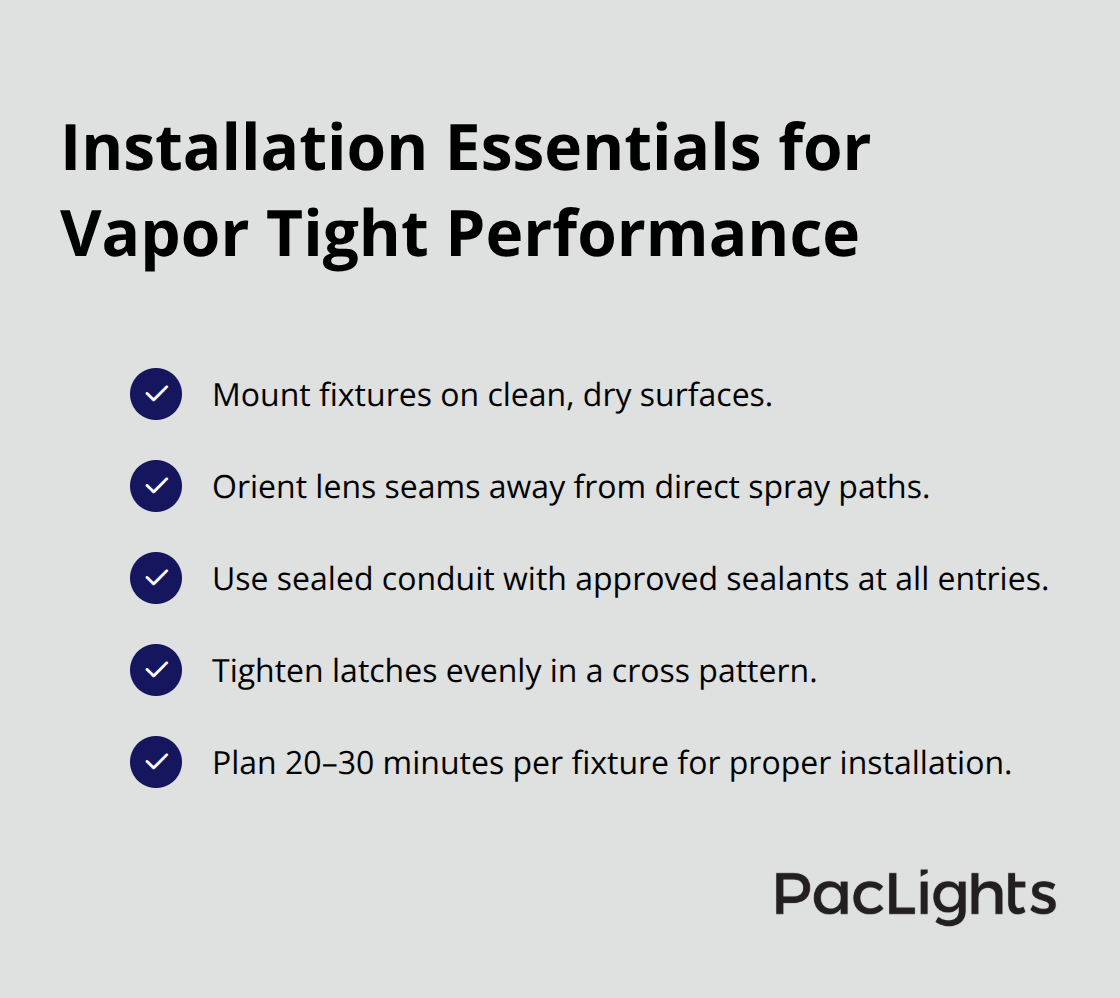
Tighten latches evenly using a cross pattern to avoid warping the housing and breaking the gasket seal. Over-tightening one side distorts the fixture and compromises the seal. For a typical 12-bay car wash, plan 20–30 minutes per fixture for proper installation, including conduit sealing and latch torquing. Rush this phase and you will spend double that time troubleshooting failures three months later.
Gasket Maintenance Prevents Seal Failure
Temperature cycling degrades gaskets faster than any other factor. A freezer at -40°F experiences stress that a 70°F garage never faces. Include gasket inspections and re-torquing of latches in your preventive maintenance schedule every 12 months, or every 6 months in extreme temperature swings. When you open a fixture, clean the gasket surface with a soft cloth to remove dust and debris that prevent a tight seal on reassembly.
Check for visible cracks, hardening, or permanent compression marks in the gasket material. If the gasket no longer returns to its original shape after removal, replace it-do not reuse it. Order replacement gaskets from your fixture manufacturer, not generic seals, because gasket profile and material composition matter for your specific environment. A food processing facility using alkaline wash-down chemicals needs different gasket material than a cold storage room.
Grease Environments Demand Material Verification
In grease-laden environments, verify that lens and gasket materials are documented as grease-resistant. Ordinary silicone gaskets absorb fats and oils, causing swelling and seal failure within months. When selecting cleaners for lens maintenance, verify compatibility with your fixture’s polycarbonate or acrylic lens. Do not assume all industrial cleaners are safe-some dissolve gasket material. Test any new cleaner on a spare fixture before deploying it across your facility.
For a 220-fixture installation, proper maintenance discipline cuts service time from 9.2 hours per cycle to under 4 hours. This reduction prevents gasket failures and stuck latches that force technicians to apply excessive force and risk damaging the fixture during reassembly.
Final Thoughts
Vapor tight fixtures solve a specific problem that standard lighting cannot address: protecting your facility and workforce when moisture, dust, and chemical exposure threaten equipment reliability. The fixtures you select determine whether your operation runs smoothly or faces repeated failures, safety risks, and unexpected downtime costs. Match your fixture to your actual operating conditions, not to generic product categories, because a car wash bay, cold storage room, and parking garage each demand different gasket materials, latch designs, and maintenance schedules.
The financial case is straightforward. Replacing legacy metal halide or fluorescent systems with LED vapor tight fixtures cuts energy consumption by 50 to 70 percent, delivering payback within two years for most facilities. Utility rebates reduce upfront cost by 20 to 40 percent when you select Design Lights Consortium listed models, and extended lifespan compounds your return through reduced maintenance labor.
Implementation starts with a single site condition meeting involving operations, maintenance, and your lighting supplier where you define your limiting condition in writing and request samples that prove performance in your exact environment. Proper installation with sealed conduit and even latch torquing sets the foundation, while regular gasket inspections and re-torquing every 6 to 12 months prevent seal failures that create safety and compliance risks. Contact us at PacLights to discuss your operating conditions and explore vapor tight fixture solutions tailored to your facility’s specific demands.
Disclaimer: PacLights is not responsible for any actions taken based on the suggestions and information provided in this article, and readers should consult local building and electrical codes for proper guidance.