

Wrap lights transform how modern spaces look and function. They combine energy efficiency with design flexibility, making them ideal for commercial and residential projects alike.
At PacLights, we’ve created this wrap lights design guide to help you understand layout, materials, and aesthetic choices that work for your space. The right approach saves money while elevating your environment.
What Wrap Lights Actually Are
Wrap lights are flush-mounted linear fixtures with a diffuser that deliver uniform, broad illumination across modern spaces without visible hotspots or dark zones. They sit directly against the ceiling or wall surface, creating a clean aesthetic while the diffuser spreads light evenly across the area. In commercial settings, a 4-foot by 6-inch wrap model outputs around 6,300 lumens at 45 watts, while smaller 2-foot by 6-inch versions produce approximately 1,700 lumens at 12 watts. The key advantage is efficiency: commercial wrap fixtures reach about 140 to 149 lumens per watt, meaning you cover wide areas with fewer fixtures and lower energy consumption. This efficiency matters because it directly reduces your electricity bills and carbon footprint over time. Wrap lights work best in offices, retail floors, corridors, light manufacturing facilities, and any space where uniform brightness matters. They eliminate the glare and visible dark bands that older fluorescent strips created, which is why architects increasingly prefer them for contemporary interiors.
Energy Savings That Actually Add Up
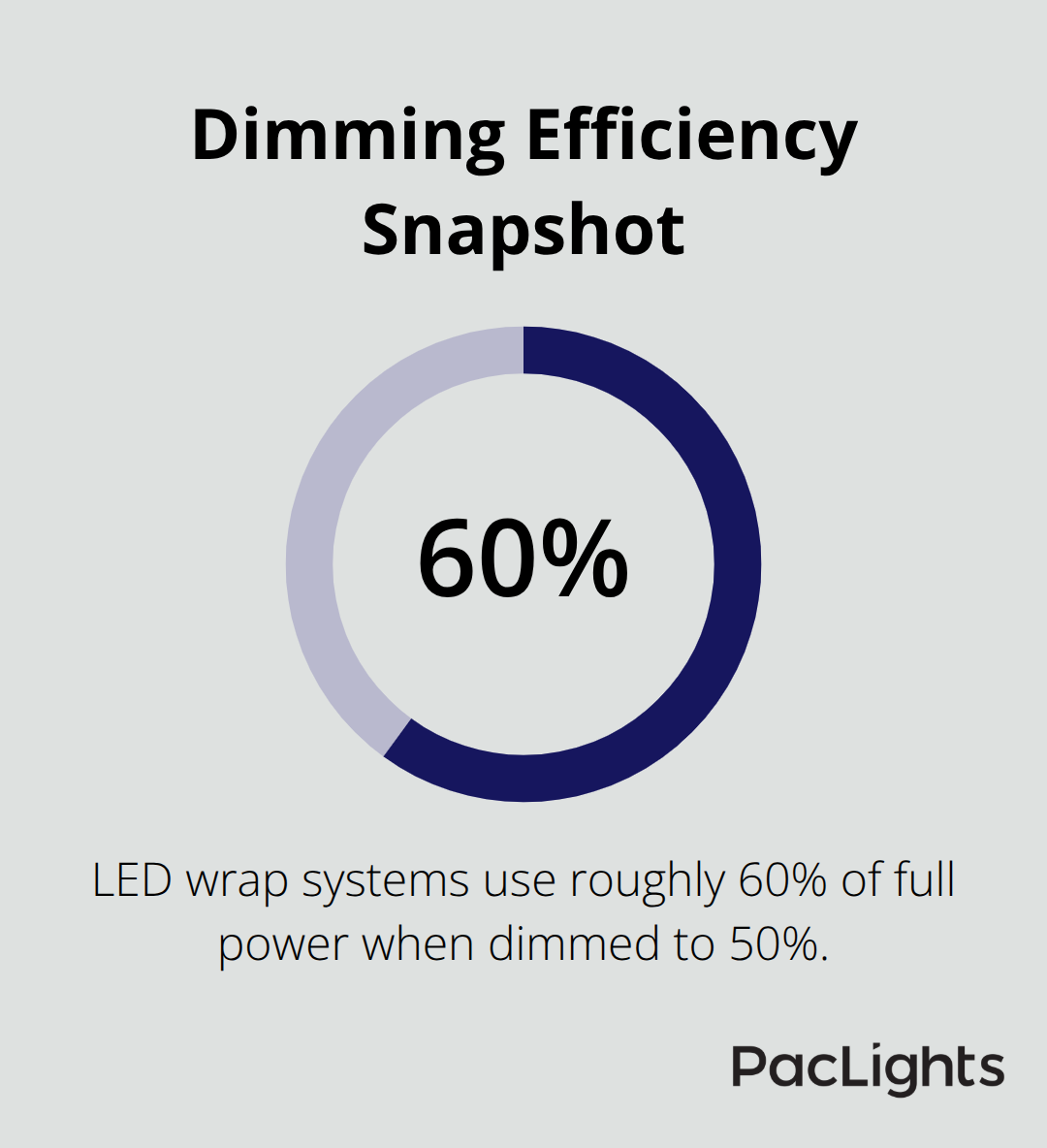
The efficiency numbers translate to real money. If you replace older fluorescent fixtures with wrap lights, you’ll see energy use drop significantly because LED-based wrap systems use roughly 60 percent of full power when dimmed to 50 percent, compared to older technologies that wasted far more energy at reduced brightness levels. Motion sensors or daylight harvesting cut energy use by an additional 30 to 50 percent in spaces with variable occupancy, like hallways or conference rooms.
Advanced networked lighting controls commonly achieve payback within three to five years through reduced energy costs alone. For a typical 5,000-square-foot office, switching to wrap lights with controls can save 40 to 60 percent on lighting energy annually. That’s not theoretical; those numbers come from commercial retrofit data. The initial investment pays for itself, and everything after that is pure savings.
Why Designers Choose Wrap Lights
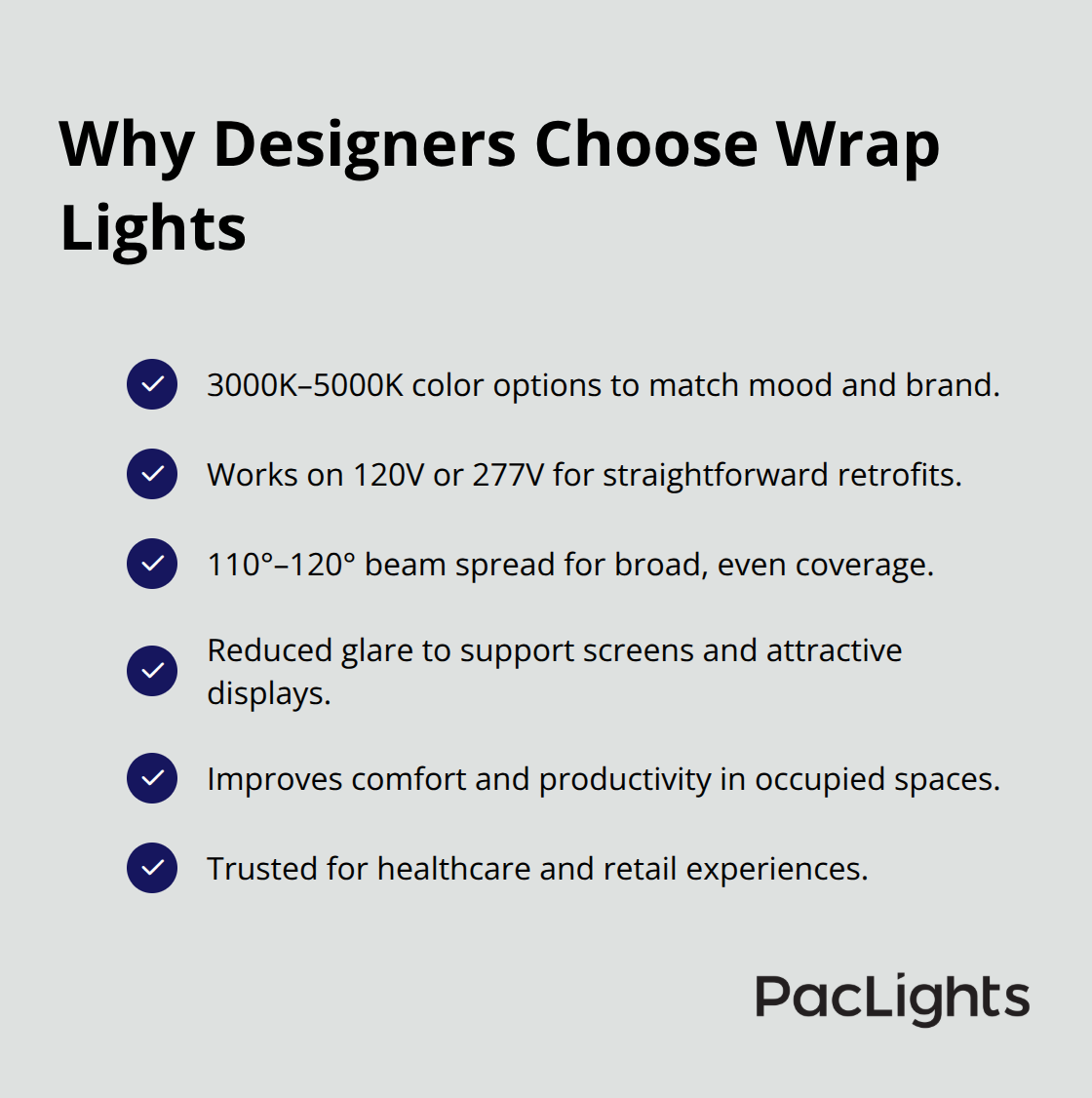
Architects and designers favor wrap lights because they align with current trends toward invisible, minimalist lighting that supports clean architectural lines. The Architect’s Newspaper has documented that hospitality-style lighting-warmer tones and dimmer levels-is now dominant across locker rooms, retail spaces, and offices, and wrap lights deliver exactly that aesthetic. You can specify color temperatures from 3000K (warm, retail-friendly) to 5000K (cool, technical), with 4000K perceived as brighter at the same lumen level, allowing you to match the mood of your space. Wrap lights also integrate seamlessly into existing electrical systems; most operate on standard 120-volt or 277-volt circuits, making retrofits straightforward in older buildings. The beam spread of 110 to 120 degrees creates broad, even distribution without harsh shadows, which improves both comfort and productivity. For spaces like healthcare facilities or retail environments where patient or customer experience matters, that uniform light quality makes a measurable difference in how people perceive and interact with the space.
What Comes Next
The aesthetic and efficiency benefits of wrap lights depend entirely on how you position and space them throughout your room. Layout decisions determine whether you achieve that uniform illumination wrap lights promise or end up with visible dark bands and wasted energy. The next section walks you through the specific placement strategies that work for different room types and how to calculate spacing that eliminates guesswork.
Layout and Installation Best Practices
Test Before You Commit to Full Installation
Spacing wrap lights correctly separates a professionally lit space from one with visible dark bands and wasted energy. The standard approach divides your room dimensions by the number of fixtures you plan to install, then tests the result before committing to a full layout. For a 40-foot corridor, installing four wrap lights spaced 10 feet apart might seem logical, but actual illumination depends on fixture output and room reflectance. Start with two fixtures positioned where you plan them, then measure brightness at the midpoint between them using a light meter or smartphone app. If that midpoint reads below 20 to 25 percent of the brightness directly under a fixture, move the fixtures closer together or upgrade to higher-lumen models. This method eliminates guesswork and prevents costly reinstallation.
Room shape and surface color matter enormously. White ceilings and high-reflectance walls reduce the spacing you need because light bounces back into the space; dark walls or narrow hallways demand tighter spacing or brighter fixtures. A 4-foot by 6-inch wrap producing 6,300 lumens works well for large retail floors or manufacturing spaces, while a 2-foot by 6-inch model at 1,700 lumens suits small offices or hallways. The beam spread of 110 to 120 degrees creates that broad distribution, but only if you account for 30 to 50 percent overlap between adjacent fixtures. Overlap prevents the dark zones that occur when light patterns fall short of meeting. Always document your final spacing plan on a ceiling layout drawing before ordering fixtures. On-site improvisation wastes time and money.
Match Spacing to Room Type and Task Requirements
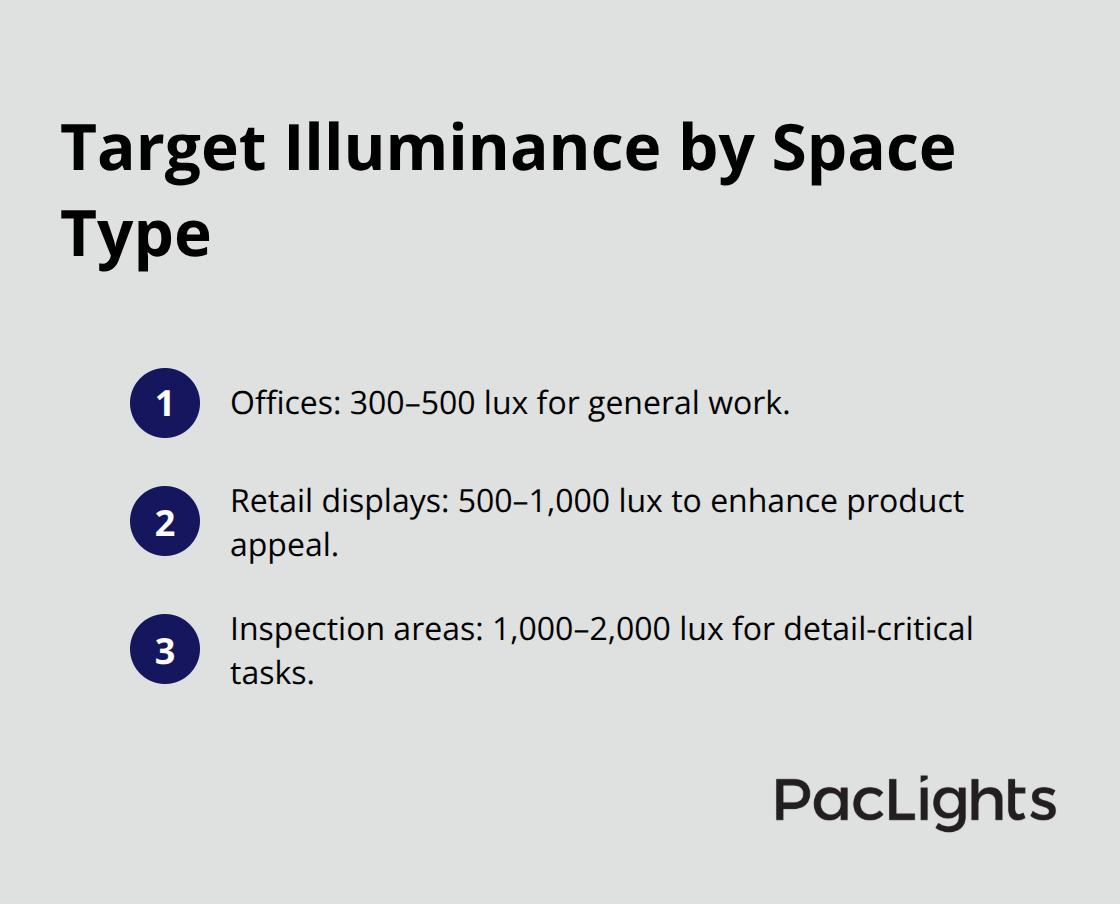
Different room types demand different strategies because task requirements vary dramatically. Offices need 300 to 500 lux for general work, retail displays demand 500 to 1,000 lux, and inspection areas require 1,000 to 2,000 lux.
Wrap lights excel in offices and retail because they deliver uniform coverage without the glare that makes screens harder to read or products less appealing. For hallways and corridors, position fixtures along the centerline (rather than spreading them wall-to-wall) because the beam spread handles lateral distribution effectively. Manufacturing floors benefit from wrap lights mounted perpendicular to work surfaces to minimize shadows.
Plan Electrical Integration Early
Integration with existing electrical systems determines installation cost and timeline. Most wrap lights operate on standard 120-volt or 277-volt circuits, which means retrofits in older buildings require minimal rewiring. For new construction, plan circuitry during the design phase so electricians run conduit before drywall closes. Motion sensors and daylight harvesting add 30 to 50 percent energy savings in spaces with variable occupancy, but they require separate control wiring or wireless connectivity. Advanced networked lighting controls typically achieve payback within three to five years through reduced energy costs alone, making the upfront control investment worthwhile in larger installations.
PacLights offers optional daylight and motion controls on wrap light fixtures, plus advanced networked lighting control options, so you can build efficiency into the system from the beginning rather than retrofitting controls later. This approach lets you optimize energy use without disrupting your space after installation completes.
The material choices and finishes you select determine how your wrap lights perform over time and how they integrate visually with your design intent. The next section covers the specific material options, color temperatures, and customization strategies that align wrap lights with your brand and functional requirements.
Materials, Finishes, and Design Options
Diffuser Materials Shape Performance and Durability
Wrap light performance depends on the materials you select, and this decision shapes both how long your fixtures last and how they integrate with your design vision. Acrylic or polycarbonate diffusers create focused, even distribution and work best in modern offices and healthcare facilities where clean aesthetics matter. High-impact plastic or glass wrap-around covers deliver softer, more extensive coverage and withstand impacts in warehouses, schools, and industrial settings where durability outweighs visual minimalism. Acrylic and polycarbonate fixtures cost less upfront and integrate seamlessly into contemporary interiors, but they’re lighter and less robust in rough environments. Wrap-around covers last longer and require less frequent maintenance, though they’re heavier and often demand professional installation for larger fixtures.
The real decision comes down to environment: choose lightweight diffusers for spaces prioritizing aesthetics and energy efficiency; choose durable covers for high-traffic areas where impacts and dust are constant concerns. Durable construction with IP65 ratings or better provides moisture and dust resistance suitable for semi-industrial spaces, retail environments, and high-traffic commercial areas. Regular cleaning prevents dust buildup that reduces light output, and inspecting for cracks or discoloration lets you replace fixtures before they fail completely.
Color Temperature Influences Perception and Productivity
Color temperature options range from 3000K (warm, retail-friendly tones that create welcoming atmospheres) to 5000K (cool, technical tones that enhance focus in inspection areas or data centers). The Architect’s Newspaper documented that 4000K is perceived as brighter at the same lumen level compared to warmer temperatures, making it ideal for office environments where perceived brightness improves productivity without excessive energy use. Warmer temperatures around 3000K dominate hospitality-style lighting trends in retail and commercial spaces, creating emotional experiences that influence how customers and occupants perceive the environment.
For brand identity and customization, specify color temperature during the design phase because retrofitting later costs significantly more. This approach aligns your lighting with your space’s functional and aesthetic goals from the start.
Output Levels Match Task Requirements and Room Size
Larger-output fixtures like 4-foot by 6-inch wraps produce 6,300 lumens and work for expansive retail floors or manufacturing spaces. Smaller 2-foot by 6-inch models at 1,700 lumens suit compact offices or hallways. This flexibility lets you match light output precisely to task requirements and room size rather than oversizing and wasting energy. Offices need 300 to 500 lux for general work, retail displays demand 500 to 1,000 lux, and inspection areas require 1,000 to 2,000 lux. Selecting the right output prevents both under-illumination and energy waste.
Final Thoughts
Wrap lights deliver measurable returns because they combine energy efficiency, design flexibility, and long-term durability. A 5,000-square-foot office switching to wrap lights with motion sensors and daylight harvesting sees energy use drop by 30 to 50 percent immediately, with advanced networked lighting controls paying back their upfront cost within three to five years. After that payback period, every dollar saved on electricity becomes pure profit.
The real value extends beyond energy savings. Wrap lights eliminate the glare and dark zones that reduce productivity and customer satisfaction, while offices with uniform 300 to 500 lux illumination see measurable improvements in focus and comfort. Retail environments with 500 to 1,000 lux coverage increase product appeal and dwell time, and manufacturing floors with proper spacing and 1,000 to 2,000 lux in inspection areas reduce errors and safety incidents. These outcomes translate to revenue protection and operational efficiency that outlasts the initial investment.
Start your wrap lights design guide project by documenting your room dimensions, identifying task requirements, and testing fixture spacing before full installation. We at PacLights offer free lighting layout designs and ROI assessments to help you understand exactly what your project will cost and how much you’ll save over time. Contact PacLights to discuss your wrap lights project and receive a customized layout and ROI assessment for your space.
Disclaimer: PacLights is not responsible for any actions taken based on the suggestions and information provided in this article, and readers should consult local building and electrical codes for proper guidance.