

Food service facilities face strict regulations around equipment and sanitation. NSF certified lighting options meet these standards and protect your operation from compliance issues.
At PacLights, we help facility managers navigate the certified lighting landscape. This guide walks you through what NSF certification means, which fixtures qualify, and how to select the right solution for your space.
Understanding NSF Certification and What It Actually Requires
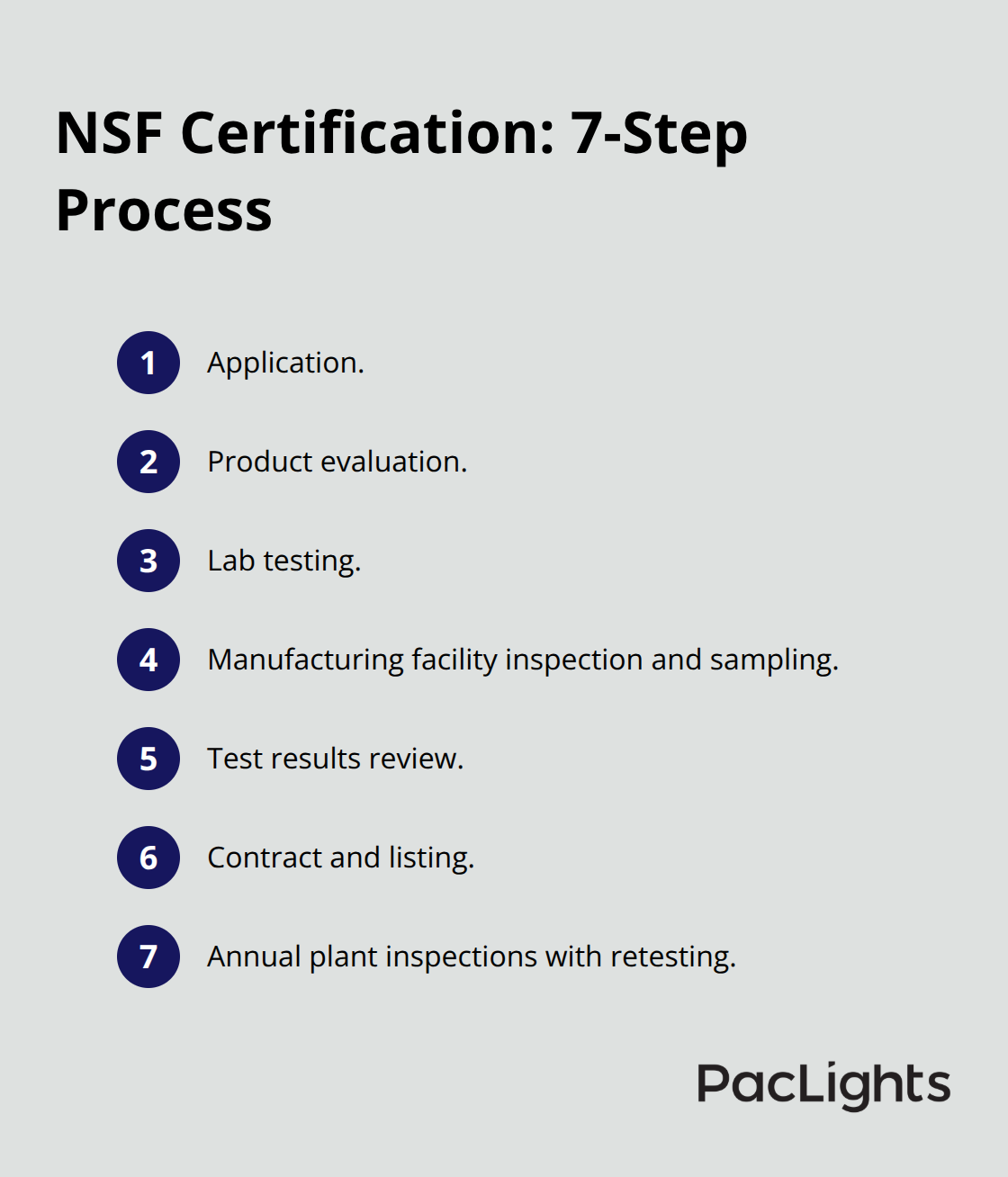
NSF certification exists because food facilities operate under federal regulations that demand specific standards for equipment safety and sanitation. The FDA Food Code and USDA requirements set minimum lighting levels depending on the area: at least 108 lux in walk-in refrigeration and dry storage, 215 lux in food prep and service areas, and 540 lux where employees directly handle food. NSF International certification confirms that lighting fixtures meet these visibility requirements while also satisfying sanitation demands. When a fixture carries NSF certification, it means the product passed rigorous third-party testing that verified its ability to withstand washdowns, resist corrosion, and prevent contamination. The NSF certification process includes seven distinct steps: application, product evaluation, lab testing, manufacturing facility inspection and sampling, test results review, contract and listing, and annual plant inspections with retesting. This ongoing verification keeps fixtures compliant year after year.
Material and Construction That Prevents Contamination
Non-certified lighting fixtures fail in food environments because they lack the specific construction that prevents bacterial growth and damage from cleaning chemicals. NSF-certified fixtures use polycarbonate lenses instead of glass, which eliminates shatter contamination risks entirely. The housings feature stainless steel hardware and corrosion-resistant aluminum bodies that withstand harsh sanitizers without degrading. Most importantly, NSF-certified fixtures achieve minimum IP65 ingress protection, with many reaching IP69K, the highest rating on the IEC scale. IP69K means dust-tight protection combined with resistance to high-pressure, high-temperature washdowns at 80 degrees Celsius. Non-certified fixtures typically lack sealed gaskets, have crevices that trap bacteria, and use materials that corrode quickly under repeated chemical exposure. Certified lighting prevents these failures through superior design.
Why Non-Compliance Creates Hidden Costs
Operating without NSF-certified lighting creates financial and operational exposure that extends far beyond the initial fixture purchase. Non-compliance with NSF, FDA, or USDA standards triggers violations, fixture removal orders, or facility shutdowns until compliance is achieved. A single inspection finding requires corrective action and documentation, which consumes management time and resources. NSF-certified LED fixtures offer a 25,000-hour lifespan compared to 1,000 hours for incandescent alternatives, which reduces replacement frequency and labor costs significantly. The upfront cost of certified fixtures is higher, but the favorable payback period driven by energy savings and reduced maintenance makes the investment practical. Facilities that select NSF-certified options from the start avoid the expense of retrofitting or replacing non-compliant systems later.
What Happens When You Choose the Right Fixtures
The decision to install NSF-certified lighting from the beginning protects your facility’s reputation and operational continuity. Certified fixtures meet the standards that inspectors verify during compliance audits, which means your facility passes inspections without costly corrections. Your team spends less time on maintenance because certified materials resist corrosion and bacterial buildup more effectively than standard fixtures. Energy-efficient LED options within NSF-certified lines reduce your electricity costs while meeting sanitation requirements simultaneously. The combination of compliance assurance, lower operating costs, and reduced maintenance burden makes certified lighting the practical choice for any food service operation.
Your facility’s specific needs determine which NSF-certified fixtures work best for your space-and that’s where the selection process becomes critical.
NSF-Certified Fixture Types for Food Service Facilities
High Bay and Linear Fixtures for Maximum Coverage
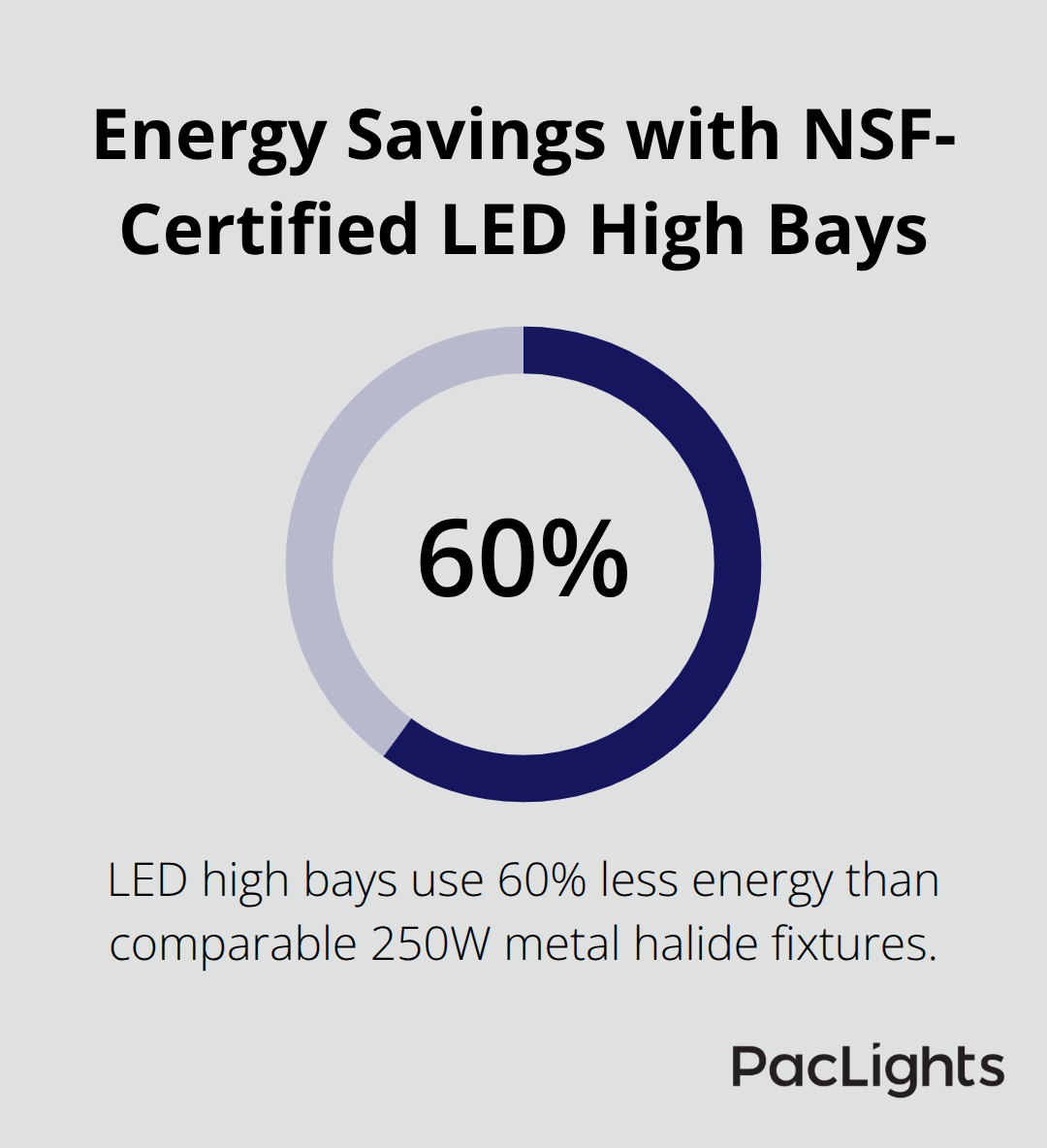
High bay and linear fixtures dominate NSF-certified installations in food service because they address the two most demanding lighting challenges: visibility and washdown resilience. A 100-watt LED NSF-certified high bay delivers approximately 15,000 lumens at 5,000 Kelvin, matching the output of a 250-watt metal halide fixture while consuming 60 percent less energy. A 200-watt version produces roughly 30,000 lumens, suitable for large processing areas and distribution centers.
Linear fixtures, such as 8-foot T8 LED tubes with NSF certification, operate at around 42 watts with Type A+B ballast compatibility at 4,000 Kelvin, making them direct replacements for existing fluorescent systems without rewiring. Linear fixtures fit existing infrastructure, reduce installation costs, and meet the FDA Food Code minimum of 540 lux in food handling zones. High bays excel in ceiling heights above 12 feet where linear fixtures cannot deliver adequate coverage.
Vapor-Tight and Specialty Solutions
Vapor-tight and specialty fixtures address specific challenges like freezer environments and wet processing areas. A 4-foot LED vapor-tight fixture with selectable color temperature operates at approximately 54 watts and handles temperature fluctuations without condensation damage, critical for cold storage where temperature swings cause standard fixtures to fail. Specialty fixtures also include washdown-rated options rated to IP69K, designed to survive 80-degree Celsius high-pressure sprays without lens fogging or seal degradation. These fixtures protect your operation in the harshest sanitation conditions that food facilities encounter.
Material Choices That Ensure Durability
Material choices determine whether a fixture survives repeated sanitation cycles or degrades within months. Polycarbonate lenses replace glass entirely, eliminating shatter risk and the contamination that follows broken fixtures in food zones. Stainless steel hardware and corrosion-resistant aluminum housings resist the sodium hypochlorite and quaternary ammonium sanitizers used in commercial kitchens and processing plants. Sealed gaskets and seamless exterior surfaces prevent bacterial crevices from forming, directly supporting the NSF requirement for easy cleaning and minimal buildup.
Why Material Quality Matters More Than Price
The difference between a certified and non-certified fixture becomes obvious during the first washdown cycle: certified fixtures shed water efficiently and maintain seal integrity, while non-certified fixtures trap moisture, corrode rapidly, and require replacement within 18 to 24 months. Selecting fixtures based on material durability and washdown rating, rather than price alone, prevents the false economy of replacing fixtures every two years. Your facility’s long-term operational success depends on fixtures that withstand rigorous sanitation demands without performance degradation.
The specific requirements of your facility-ceiling height, temperature conditions, and washdown intensity-determine which certified fixtures deliver the best performance and value for your investment.
Selecting NSF Fixtures That Match Your Facility’s Demands
Map Your Physical Space and Operational Conditions
Start with your facility’s physical characteristics and operational realities rather than assumptions about what you need. Measure ceiling heights in each zone because this single factor eliminates entire categories of fixtures from consideration. Spaces under 12 feet typically require linear fixtures or low-profile options, while areas above 12 feet benefit from high bay designs that concentrate light efficiently downward. Document your current lighting levels using a lux meter in critical zones: walk-in coolers, food prep surfaces, and packaging areas. Compare your readings against FDA Food Code minimums of 108 lux in storage, 215 lux in prep areas, and 540 lux where staff handle food directly. This data prevents you from overspecifying fixtures in low-demand zones or underestimating requirements in high-traffic areas.
Assess Washdown Intensity and Temperature Requirements
Next, evaluate your washdown frequency and intensity. Facilities that perform daily sanitization with standard pressure washers need IP65-rated fixtures at minimum, while those that use 80-degree Celsius high-pressure sprays demand IP69K-rated equipment to maintain seal integrity and prevent condensation damage. Temperature stability matters significantly: freezer and cooler environments require vapor-tight fixtures specifically rated for low-temperature operation, as standard sealed fixtures develop internal condensation that degrades performance within months.
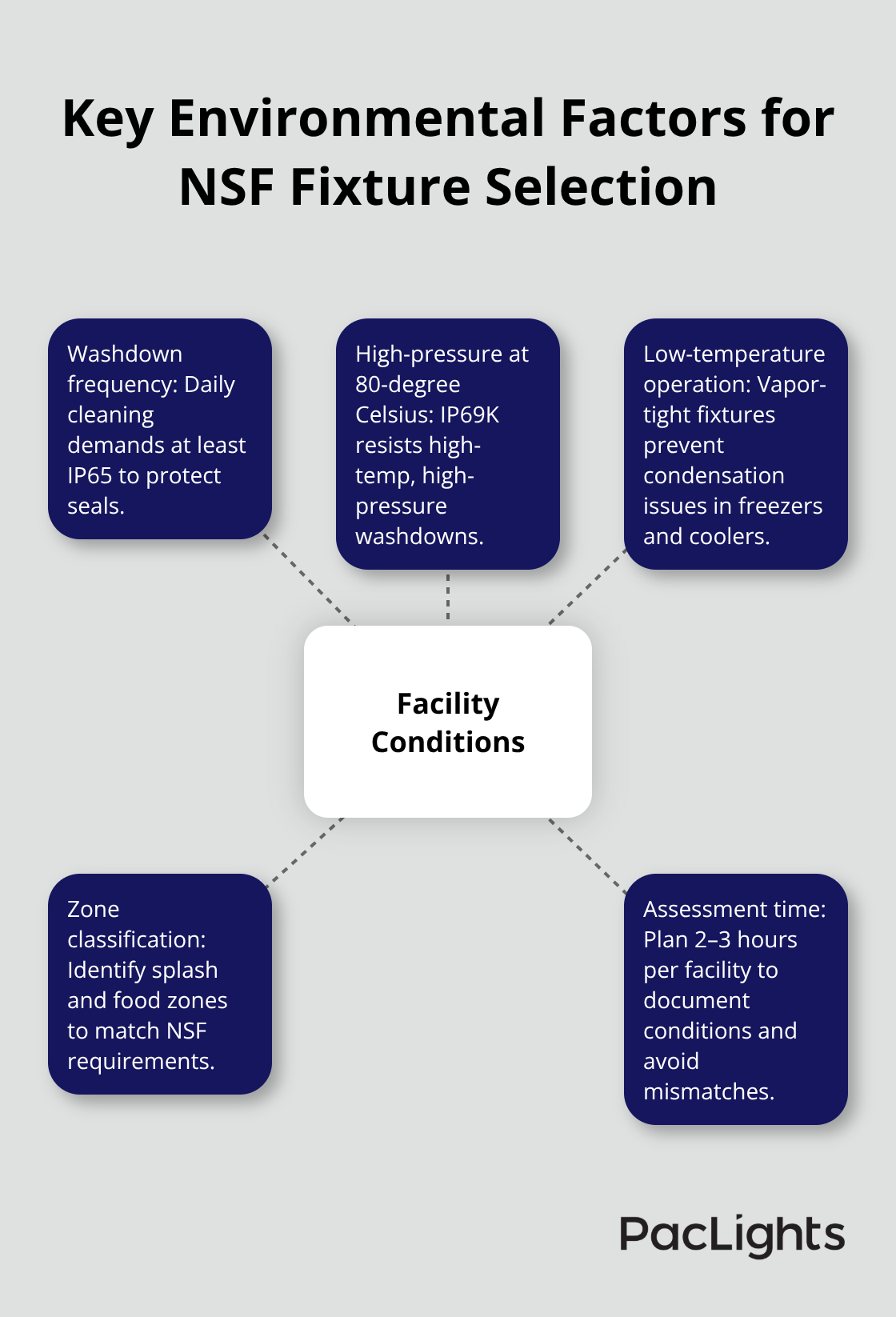
Document whether you operate in splash zones near liquid handling or food zones where contamination risk exists, since NSF defines three distinct zones with different certification requirements. This assessment process takes two to three hours per facility but eliminates costly fixture mismatches later.
Compare Performance and Total Cost of Ownership
Performance comparison should focus on lumen output per watt and total cost of ownership rather than fixture price alone. A 100-watt NSF-certified LED high bay that delivers 15,000 lumens at 5,000 Kelvin costs more upfront than a 250-watt metal halide fixture, but the LED consumes 60 percent less energy and lasts 25,000 hours versus 2,000 hours for metal halide, reducing replacement labor and downtime significantly. Calculate your payback period by dividing the fixture price difference by annual energy savings; most NSF-certified LED upgrades pay for themselves within three to five years through electricity reduction alone. Request formal NSF listings and certification numbers from suppliers rather than accepting general claims about compliance, then verify each product on NSF International’s certified products database before finalizing orders.
Verify Supplier Credentials and Request Detailed Specifications
When working with suppliers, demand transparent specifications including exact lumen output, color temperature options, IP rating, material composition, and warranty coverage. Suppliers who resist providing detailed NSF documentation or avoid third-party verification typically offer fixtures that won’t survive your sanitation demands. Request samples of polycarbonate lenses and housing materials so you can verify corrosion resistance and inspect gasket quality before committing to large orders. PacLights provides free lighting layout designs and ROI assessments that quantify energy savings and payback periods for your specific facility, helping you compare options objectively.
Implement a Phased Upgrade Strategy
Establish a phased upgrade approach by prioritizing high-usage areas first, which allows you to validate performance and measure actual energy savings before expanding to other zones. This strategy reduces financial risk and provides concrete data to justify additional investments to facility management.
Final Thoughts
NSF certified lighting options protect your facility from compliance violations while reducing operational costs simultaneously. The certification process verifies that fixtures withstand washdowns, resist corrosion, and prevent contamination through superior materials and design. Your facility avoids costly shutdowns, inspection failures, and fixture replacements when you select certified lighting from the start.
Start your upgrade by mapping your physical space and documenting current light levels against FDA Food Code minimums. Measure ceiling heights, assess washdown intensity, and identify temperature requirements in each zone (this assessment takes minimal time but prevents expensive fixture mismatches). NSF-certified LED fixtures cost more upfront but deliver 25,000-hour lifespans and 60 percent energy savings compared to metal halide alternatives, creating payback periods of three to five years through electricity reduction alone.
Request formal NSF listings and certification numbers from suppliers, then verify each product on NSF International’s certified products database before ordering. Contact PacLights today to schedule your facility assessment and receive a customized upgrade plan that meets your compliance requirements and budget constraints.
Disclaimer: PacLights is not responsible for any actions taken based on the suggestions and information provided in this article, and readers should consult local building and electrical codes for proper guidance.