

Most facilities waste energy through poor lighting design. Surface mount reflectors redirect light exactly where it’s needed, cutting energy use significantly while lowering utility bills.
At PacLights, we’ve seen firsthand how the right reflector technology transforms facility lighting. This guide shows you how reflector materials, designs, and applications deliver real savings across retail, warehouse, and office spaces.
How Surface Mount Downlight Reflectors Work
Light Redirection and Beam Control
Surface mount downlight reflectors capture light that would otherwise scatter and redirect it toward target areas. Aluminum reflectors with high polish or dielectric coatings achieve reflectivity rates above 90%, meaning most emitted light reaches where you need it instead of being absorbed or wasted. Parabolic reflector designs create sharp, focused beams ideal for task lighting in retail or manufacturing, while elliptical designs deliver broader coverage for general ambient illumination. The geometry of the reflector directly determines beam angle and distribution pattern.
Specular finishes produce clean, well-defined beams with minimal spill, whereas diffuse finishes soften light for spaces requiring gentler ambient conditions. Hybrid designs combine both properties, giving you flexibility when spaces have mixed lighting needs.
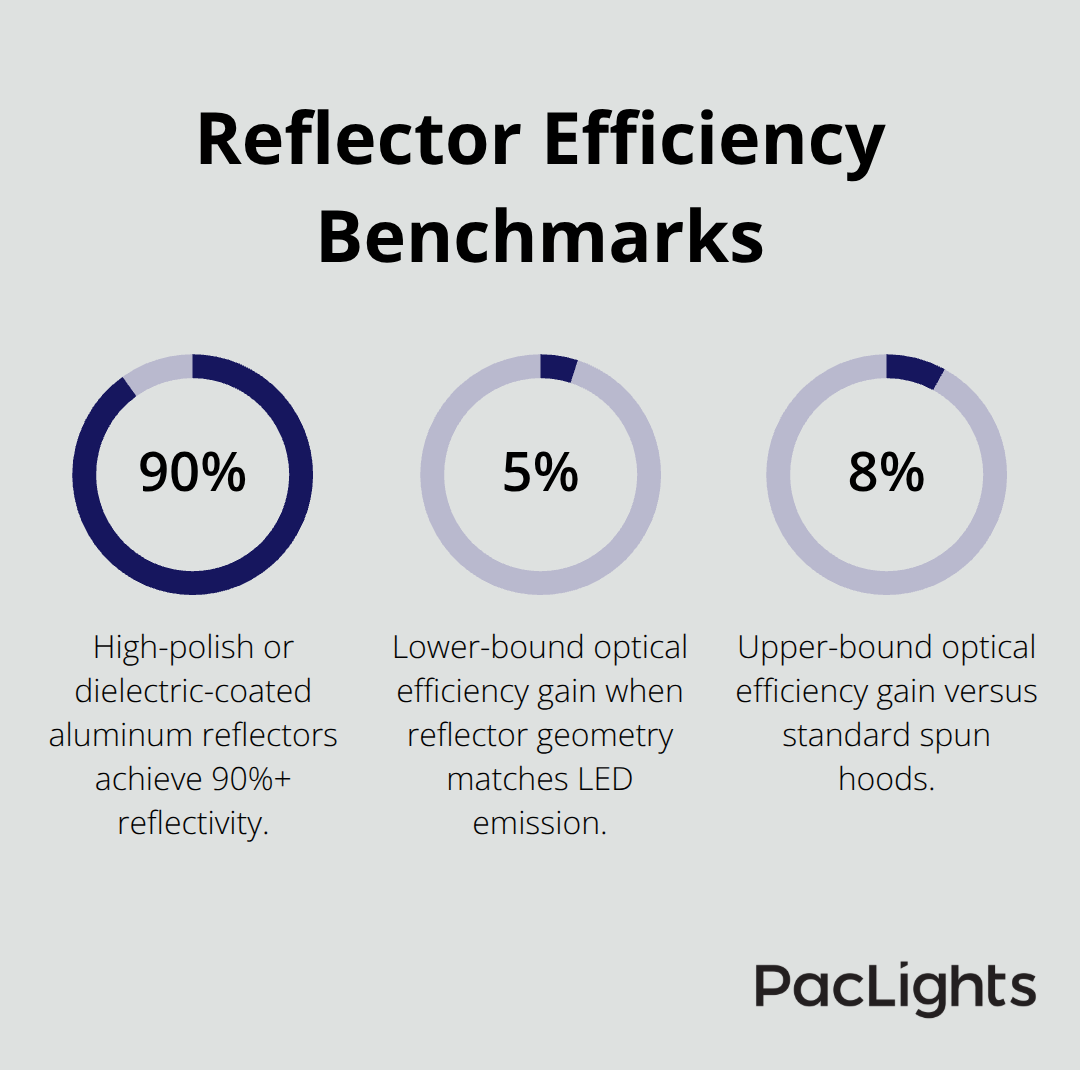
LED integration demands precise reflector geometry because LEDs emit light directionally, not omnidirectionally like traditional bulbs. When reflector design aligns with LED emission patterns, you minimize wasted light and maximize optical efficiency by 5 to 8 percent compared to standard spun hoods.
Material Selection Drives Real Performance Gains
Aluminum reflectors dominate commercial applications because they deliver consistent reflectivity above 90 percent at reasonable cost. Silver reflectors can exceed aluminum performance but tarnish quickly without protective coatings, adding maintenance burden. Dielectric coatings protect reflector surfaces from environmental degradation and boost reflectivity further, extending fixture lifespan and maintaining light output over years of operation.
Thermal management matters more than most facility managers realize. Poor reflector design or mounting that blocks heat dissipation from LED chips causes output loss and color drift, defeating the efficiency gains reflectors provide. Emerging heat-dissipating plastics and advanced ceramics offer promise for applications where traditional aluminum creates thermal bottlenecks (though aluminum remains the practical standard for most installations). Computer-aided design and ray-tracing simulations let manufacturers optimize reflector performance before production, eliminating costly guesswork.
Selecting Reflectors That Match Your Facility Needs
When you evaluate fixtures, look for specifications showing reflectivity ratings and thermal management details, not just marketing claims about brightness. The right reflector selection depends on your space type, beam angle requirements, and thermal constraints. Parabolic designs work best for focused task areas, while elliptical or hybrid reflectors suit open-plan spaces needing uniform coverage. Thermal performance specifications matter as much as optical ratings-a reflector that looks efficient on paper but restricts airflow will underperform in real conditions.
Understanding these material and design factors positions you to make informed decisions about which reflector technology delivers actual savings for your facility. The next section examines how these efficiency gains translate into measurable cost reductions and extended equipment life across your operations.
Energy Savings and Cost Reduction Benefits
Reflector Efficiency Translates to Real Dollar Savings
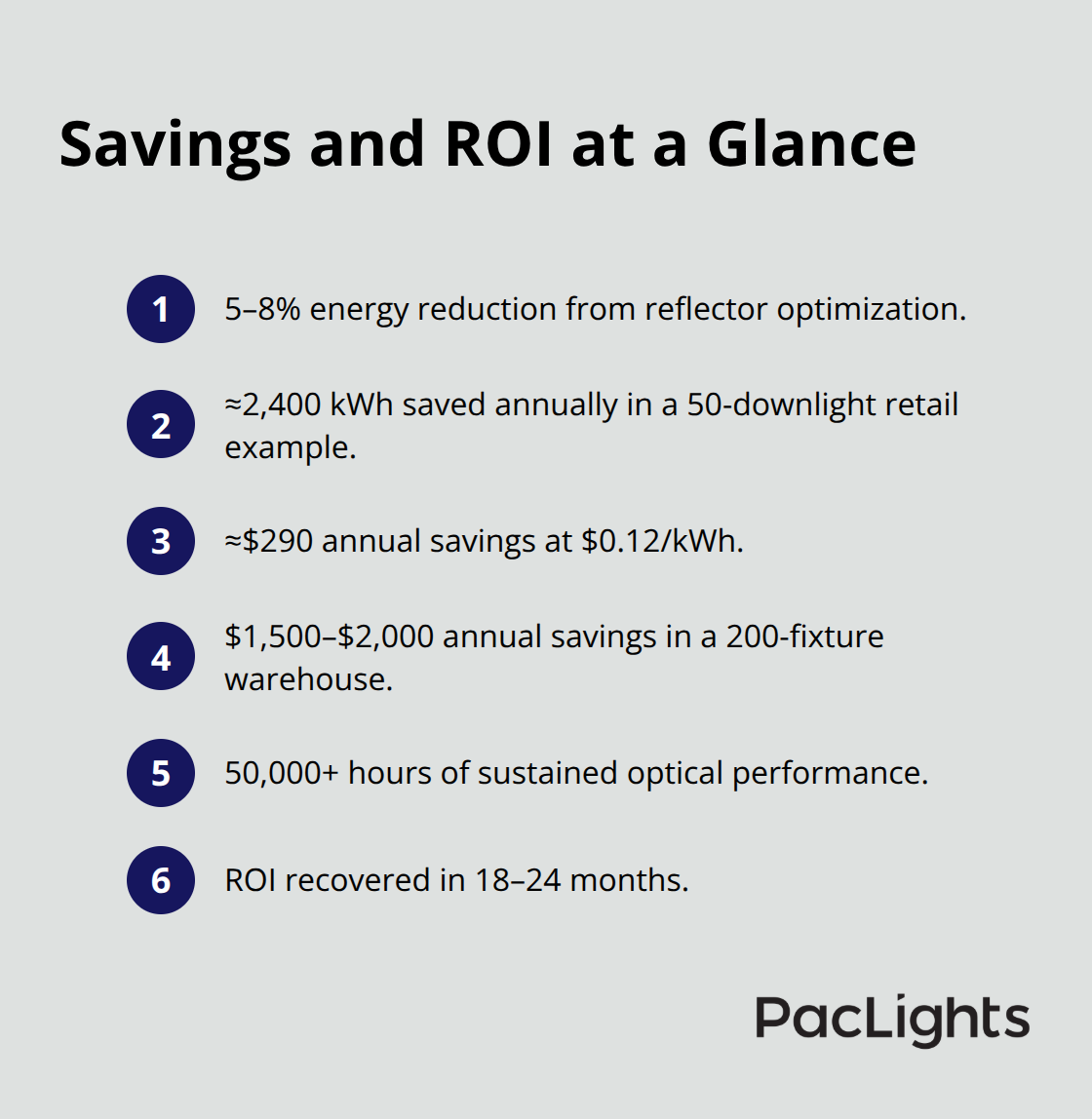
Surface mount reflectors with proper thermal management and beam control cut energy consumption by 5 to 8 percent compared to standard fixtures, according to performance data from high-efficiency reflector manufacturers. For a mid-sized retail space using 50 downlights running 12 hours daily, that efficiency gain translates to roughly 2,400 kilowatt-hours saved annually, worth approximately $290 at average US commercial rates of $0.12 per kilowatt-hour. Larger facilities see proportionally higher savings. A warehouse with 200 fixtures operating 16 hours daily recovers $1,500 to $2,000 annually through reflector optimization alone, without replacing existing lighting infrastructure.
Global Impact of Lighting Efficiency
The International Energy Agency reports that lighting accounts for roughly 20 percent of global electricity consumption and approximately 1,500 megatons of CO2 emissions annually. Reflector efficiency improvements offer a practical way to reduce both operational costs and environmental impact in your facility. When you upgrade to reflector-equipped fixtures, you address a significant portion of your building’s energy footprint while lowering monthly utility expenses.
Extended Equipment Life Reduces Replacement Costs
The real financial advantage emerges when you factor in extended equipment lifespan and reduced maintenance frequency. Aluminum reflectors with dielectric coatings maintain their optical performance over 50,000+ hours of operation, meaning you replace fixtures less often and avoid the labor costs associated with frequent maintenance. Manufacturing facilities particularly benefit because downtime for maintenance disrupts production schedules, and reflectors that sustain consistent light output eliminate the need for premature lamp replacements.
ROI Timeline and Long-Term Value
Most facilities recoup reflector upgrade costs within 18 to 24 months through combined energy savings and deferred replacement expenses. When you upgrade to reflector-equipped fixtures with integrated thermal management, you build a lighting system that performs reliably for years without degradation. The next section examines how these efficiency gains apply across different facility types, from retail showrooms to manufacturing floors.
Applications Across Commercial and Industrial Settings
Retail and Showroom Lighting Solutions
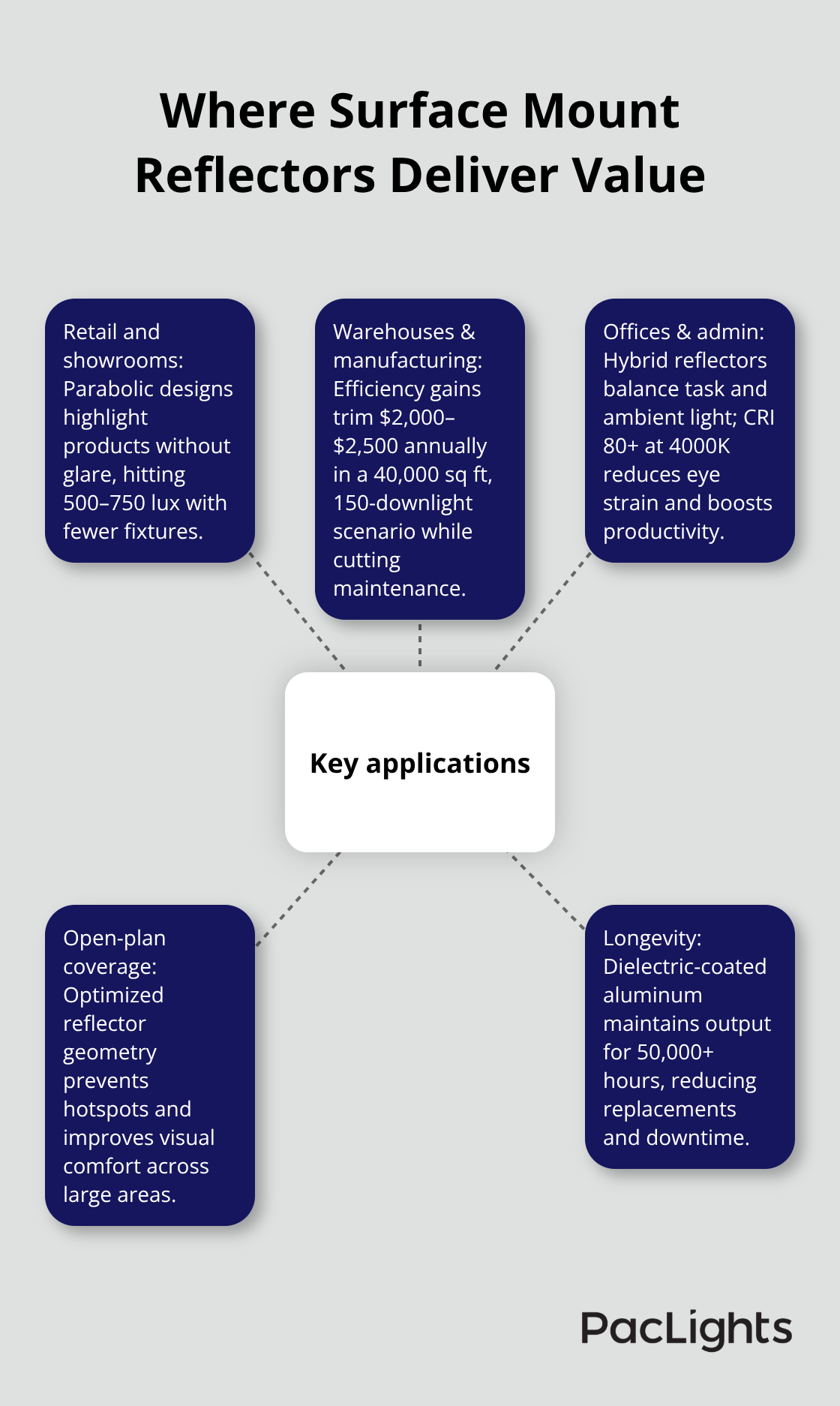
Retail environments demand precise light control that highlights merchandise without creating glare or color distortion. Surface mount reflectors with parabolic designs focus light exactly where products sit, making colors appear more vibrant and accurate while reducing the number of fixtures needed to achieve target illuminance levels of 500 to 750 lux. A showroom with 40 parabolic reflector downlights spaced strategically achieves uniform coverage that would require 50 to 60 standard fixtures, cutting both installation costs and ongoing energy consumption.
Specular reflector finishes eliminate the dead spots and harsh shadows that drive customers away from poorly lit display areas. Optimized reflector-based lighting increases perceived product quality and encourages longer browsing times, directly affecting sales performance. The combination of reduced fixture count and lower energy draw makes reflector upgrades one of the fastest payback investments in retail facility management.
Warehouse and Manufacturing Facilities
Warehouse and manufacturing operations run on tight margins where every utility dollar counts. A 40,000-square-foot warehouse with 150 downlights operating 16 hours daily saves $2,000 to $2,500 annually through reflector efficiency gains alone, and that calculation excludes the dramatic reduction in maintenance labor.
Manufacturing floors generate heat, dust, and chemical vapor that degrade standard reflectors quickly, but aluminum reflectors with dielectric coatings resist environmental degradation and maintain output consistency over 50,000 hours of operation. Durable reflector designs eliminate the need for frequent cleaning and replacement, reducing unplanned downtime that disrupts production schedules. Industrial facilities particularly benefit because production interruptions cost far more than the reflector upgrade itself.
Office and Administrative Spaces
Office and administrative spaces benefit from hybrid reflector designs that balance task lighting for workstations with softer ambient illumination in break areas and hallways. Color rendering index above 80 combined with reflectors tuned to 4000K color temperature reduces eye strain during extended screen work, lowering employee fatigue and improving productivity metrics.
Open-plan offices require uniform coverage across large areas, and optimized reflector geometry with proper spacing delivers consistent illuminance without the hotspots that occur with poorly designed fixtures. Reflector-equipped fixtures reduce energy consumption while improving occupant comfort, creating measurable gains in both utility bills and workforce performance.
Final Thoughts
Surface mount reflectors deliver measurable advantages that compound across months and years, reducing utility costs while maintaining consistent light output without the performance degradation that plagues standard fixtures. Aluminum reflectors with dielectric coatings sustain their optical performance over 50,000 hours of operation, meaning your facility avoids the expense and disruption of frequent replacements. The 5 to 8 percent efficiency gains translate directly to lower monthly bills and extended equipment lifespan.
When your facility cuts energy consumption through reflector optimization, you reduce both operational costs and carbon emissions simultaneously. Global lighting accounts for roughly 20 percent of electricity use and 1,500 megatons of CO2 annually, so upgrading to reflector-equipped fixtures addresses a significant portion of your building’s environmental footprint. A warehouse or manufacturing facility that invests in surface mount reflectors recovers costs within 18 to 24 months through energy savings and deferred maintenance, then enjoys years of reliable performance with minimal intervention.
We at PacLights provide free lighting layout designs and ROI assessments to help you understand exactly how reflector upgrades impact your bottom line. Our team evaluates your space, calculates realistic energy savings, and recommends fixture configurations tailored to your operations. Contact PacLights today to schedule your facility assessment and discover how surface mount reflector technology transforms your lighting performance and operating costs.
Disclaimer: PacLights is not responsible for any actions taken based on the suggestions and information provided in this article, and readers should consult local building and electrical codes for proper guidance.