

Suspended cylinder pendant lighting transforms overhead spaces into focal points that command attention. At PacLights, we’ve seen firsthand how the right fixtures combine striking aesthetics with practical performance benefits.
Whether you’re outfitting a commercial showroom, warehouse, or industrial facility, cylinder pendants deliver both visual impact and reliable illumination. This guide covers everything from design choices to installation specifics.
Suspended Cylinder Pendant Lighting: Visual Impact and Material Selection
The Vertical Form Commands Attention
Cylinder pendants create overhead drama through their vertical geometry, which naturally draws the eye upward and makes ceilings feel more expansive. The geometric simplicity of a cylinder works across modern, industrial, and contemporary spaces without requiring elaborate design justification. In open-plan commercial environments, this vertical emphasis defines zones without physical barriers, guiding movement and attention toward specific areas like reception desks or product displays. Glass cylinders scatter light evenly across a space, making rooms feel more open, while metal matte finishes reduce ongoing cleaning demands and suit high-traffic areas better.
Color Temperature Shapes Perception
A warm 2700K cylinder with a frosted diffuser feels 15 to 20 percent more inviting than a 4000K neutral option, according to lighting research-a meaningful difference when you’re trying to influence how visitors perceive a space. For retail environments, cylinder pendants paired with high-CRI LEDs render merchandise colors accurately, directly reducing returns and customer dissatisfaction. This accuracy matters because color perception drives purchasing decisions and customer confidence in product quality.
Material Choices Drive Both Aesthetics and Maintenance
Brushed nickel and stainless steel finishes offer durability and a modern look that resists fingerprints, making them practical for spaces where appearance matters but constant polishing doesn’t. Brass or copper tones add warmth but require more frequent cleaning to maintain their luster. Glass cylinders show dust readily and work best in lower-traffic dining areas or display zones where cleaning schedules are realistic. For kitchen islands and commercial prep areas, satin finishes keep their appearance longer between cleanings.
Sizing Proportions and Task Lighting Output
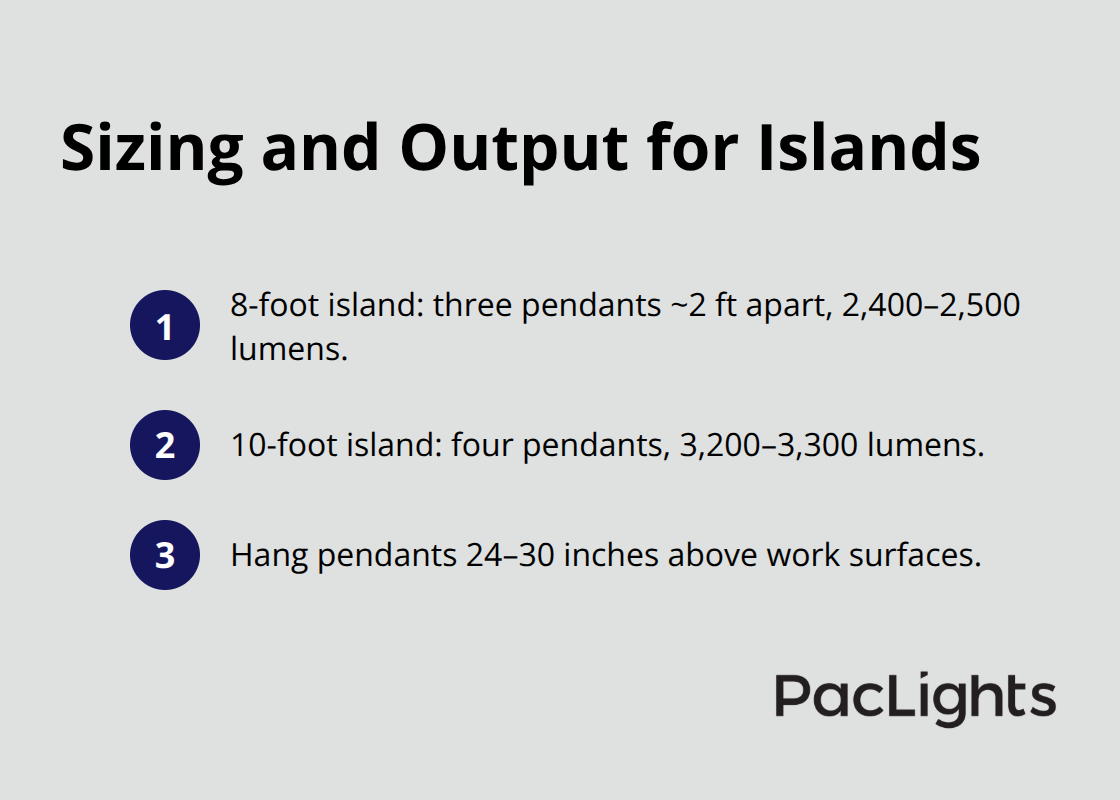
Sizing matters proportionally: in a 10-by-12-foot room, a 22-inch pendant works well; in a 14-by-16-foot space, jump to a 30-inch diameter. For an eight-foot kitchen island, install three pendants spaced roughly two feet apart centerline-to-centerline to deliver 2,400 to 2,500 lumens of focused task lighting. A ten-foot island needs four pendants to deliver 3,200 to 3,300 lumens and prevent dark zones where shadows undermine work visibility. Hang these fixtures 24 to 30 inches above work surfaces to optimize task lighting while keeping sightlines clear.
Positioning for Different Applications
In dining applications, position one large cylinder or two to three smaller pendants 18 to 20 inches above the surface to frame the table without blocking conversation. Proper spacing and height eliminate shadows and dark gaps that compromise both function and aesthetics. The next section explores how these design choices translate into measurable performance advantages in commercial and industrial settings.
Why LED Cylinder Pendants Cut Operating Costs in Commercial Spaces
Energy Savings That Compound Across Multiple Fixtures
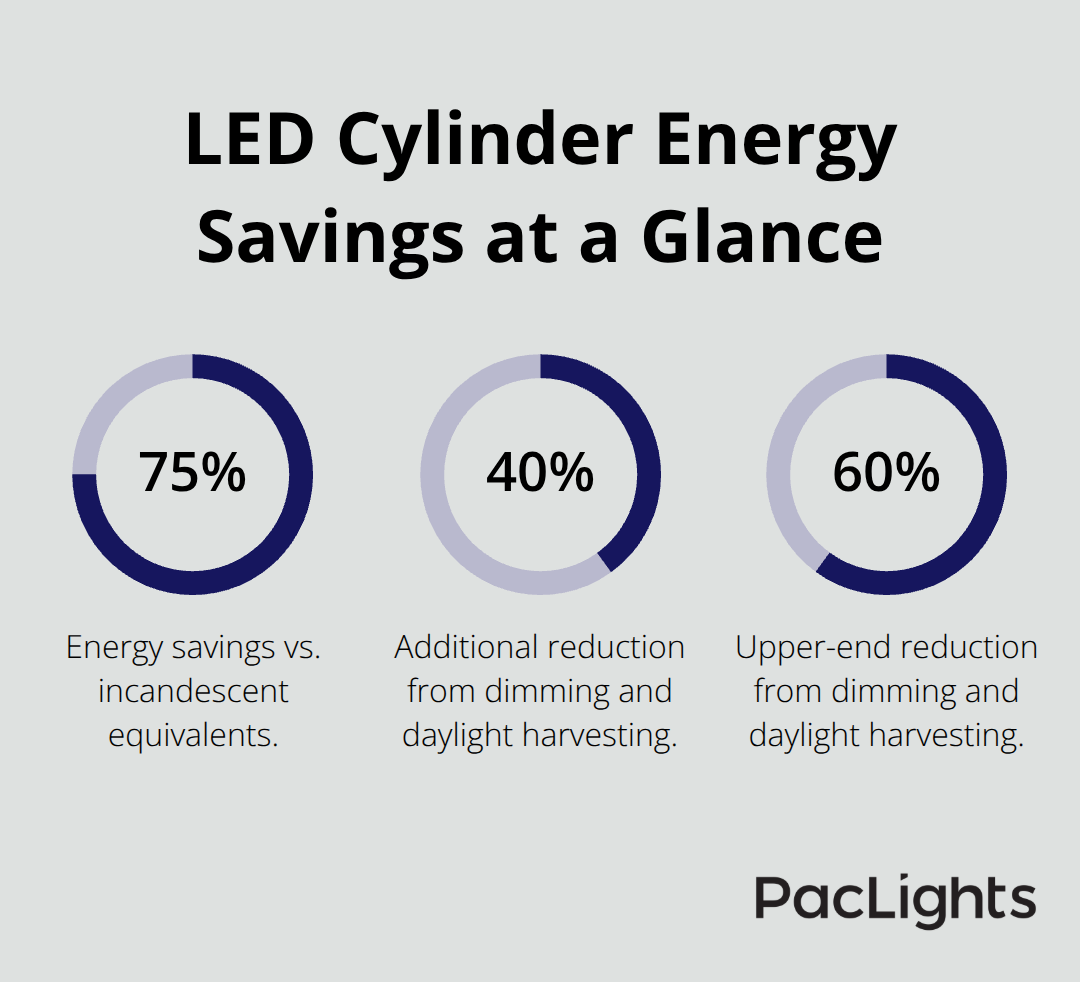
LED cylinder pendants deliver approximately 75 percent energy savings compared to incandescent equivalents, a difference that compounds quickly across multiple fixtures. A 10W LED cylinder produces roughly 800 lumens, matching a 60W incandescent-meaning four pendants on a typical commercial install save around 180 dollars annually in electricity alone. For facilities operating 16 hours daily, that translates to 720 dollars saved over four years before accounting for reduced maintenance labor. In retail environments where lighting runs continuously, the payback window shrinks to 18 to 24 months when paired with networked controls and occupancy sensors.
Dimming and Daylight Harvesting Extend Savings Further
Dimming technology combined with daylight harvesting cuts energy consumption by an additional 40 to 60 percent, particularly effective in spaces with significant window exposure or variable occupancy patterns. LED lifespans of 25,000 to 50,000 hours mean fewer bulb replacements and dramatically lower maintenance costs-critical in high-ceiling commercial facilities where accessing fixtures requires lift platforms and technician time.
Light Distribution Patterns Eliminate Shadows and Wasted Energy
Light distribution patterns from cylinder designs matter operationally because poor spacing creates shadows that undermine task visibility and force workers to compensate with additional localized lighting. For an eight-foot kitchen island or prep counter, three pendants spaced two feet apart centerline-to-centerline deliver 2,400 to 2,500 lumens of focused task lighting; a ten-foot counter requires four pendants to reach 3,200 to 3,300 lumens and eliminate dark zones. In commercial spaces, hanging pendants at 24 to 30 inches above work surfaces with 4000K color temperature and high-CRI LEDs ensures accurate color rendering for merchandise inspection and reduces costly returns.
Materials and Finishes Reduce Maintenance Demands
Glass and crystal diffusers scatter light evenly across retail floors, while metal matte finishes in warehouse applications resist fingerprints and dust accumulation, lowering cleaning frequency and extending appearance longevity. Satin or brushed finishes maintain their appearance through frequent cleaning cycles without requiring polishing or special treatments.
Productivity Gains Justify Fixture Investment Rapidly
Research from the Ergonomics International Journal found that well-designed overhead lighting boosts workplace productivity by approximately 6 percent and creative output up to 15 percent-gains that justify fixture investment rapidly in labor-intensive facilities. Durable cylinder designs withstand vibration and thermal stress in industrial settings when properly anchored, making them reliable performers in demanding environments. Installation and customization decisions directly influence whether these performance advantages translate into real operational results.
Installation and Customization Considerations
Mounting Height Sets the Foundation for Task Lighting
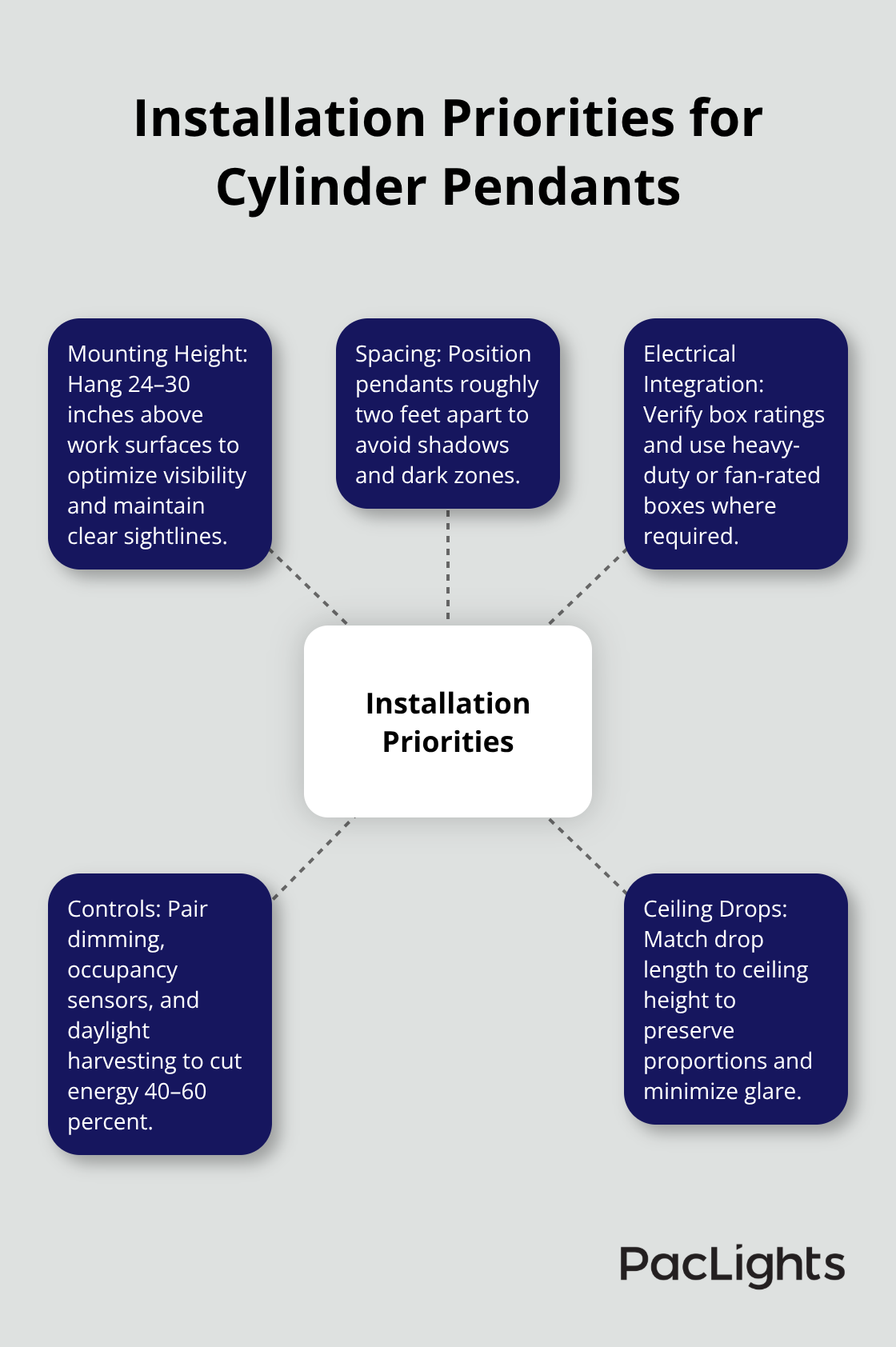
Correct mounting height determines whether your cylinder pendants deliver focused task lighting or create shadows that force workers to compensate with additional fixtures. For commercial prep areas and kitchen islands, hang pendants 24 to 30 inches above work surfaces-this range optimizes visibility without creating glare or blocking sightlines across the space. Nine-foot ceilings typically accommodate 12 to 18 inch pendant drops; twelve-foot ceilings need 24 to 30 inch drops to maintain proper visual proportions and prevent the fixtures from feeling cramped or disconnected from the room.
Spacing Eliminates Dark Zones and Wasted Energy
Spacing matters equally because poor placement creates shadows that undermine work quality and force staff to use supplemental lighting, wasting the energy savings you gained from switching to LED. For an eight-foot counter, position three pendants roughly two feet apart centerline-to-centerline to eliminate dark zones where task visibility drops. A ten-foot counter requires four pendants spaced the same way to deliver 3,200 to 3,300 lumens of consistent illumination. In retail environments, use 4000K color temperature with glass or crystal diffusers mounted at 28 to 34 inches above display surfaces-this height frames merchandise without blocking customer sightlines and renders colors accurately enough to reduce returns.
Electrical Integration Requires Professional Assessment
Electrical integration demands honesty about your existing infrastructure before installation begins. Residential wiring typically supports pendant drops up to 24 inches without reinforcement, but commercial installations often require load calculations that account for fixture weight, mounting hardware, and dynamic loads like vibrations. Hire a licensed electrician to verify that your ceiling box meets the fixture weight rating and upgrade to a heavy-duty or fan-rated box if necessary-skipping this step creates safety hazards and code violations that establish liability. Adjustable cable suspension lets you fine-tune height after fixtures are mounted, giving you flexibility to correct spacing issues without rewiring.
Controls and Smart Integration Maximize Energy Performance
Networked controls using DALI-2 or wireless protocols cut energy consumption by 40 to 60 percent when paired with occupancy sensors and daylight harvesting, paying back in 18 to 24 months through reduced electricity and maintenance labor. If you’re using dimmers, select dimmable LED bulbs to prevent flicker or buzz and confirm dimmer compatibility before installation. Smart cylinder systems with adaptive lighting capabilities require coordination between electrical, IT, and structural teams to plan power distribution and network infrastructure properly. PacLights offers advanced lighting controls and optional daylight or motion control features designed to integrate smoothly with your existing systems while maximizing energy performance across commercial facilities.
Final Thoughts
Suspended cylinder pendant lighting transforms commercial spaces through striking visual presence and measurable operational returns that compound across multiple installations. The vertical geometry commands attention while proper fixture specifications eliminate shadows, reduce energy consumption by 75 percent compared to incandescent alternatives, and lower maintenance demands through extended LED lifespans. These benefits justify fixture investment rapidly, with networked controls and occupancy sensors paying back in 18 to 24 months through reduced electricity and labor costs.
Well-designed overhead lighting boosts workplace productivity by approximately 6 percent and creative output up to 15 percent according to the Ergonomics International Journal, making suspended cylinder pendant lighting one of the highest-impact solutions available for retail showrooms, kitchen islands, and warehouse environments. Professional installation with load calculations and code compliance prevents safety hazards and establishes reliable performance across demanding applications. Selecting the right solution requires honest assessment of your space dimensions, ceiling height, existing electrical infrastructure, and performance priorities.
We at PacLights help commercial facilities select fixtures that match specific requirements while maximizing energy efficiency and operational returns. Contact our team for free lighting layout designs and ROI assessments tailored to your facility’s needs. Whether you upgrade existing systems or design new installations, cylinder pendant lighting delivers both aesthetic impact and financial advantage.
Disclaimer: PacLights is not responsible for any actions taken based on the suggestions and information provided in this article, and readers should consult local building and electrical codes for proper guidance.