

Blank walls waste valuable opportunities to create visual impact and atmosphere. Architectural wall washers offer a powerful solution to transform ordinary surfaces into stunning focal points.
We at PacLights see how proper wall washing techniques can completely change a space’s character. The right lighting approach turns flat surfaces into dynamic architectural features that captivate visitors and enhance any environment.
How Do Architectural Wall Washers Actually Work
Architectural wall washers create asymmetric light distribution that spreads illumination evenly across vertical surfaces. These fixtures mount at specific distances from walls-typically 36 to 48 inches for optimal coverage-and use specially designed reflectors or lenses to produce uniform light patterns without hot spots or shadows. The asymmetric beam pattern directs more light toward the far edge of the illuminated area, which compensates for the natural light falloff that occurs with distance.
Essential Performance Characteristics
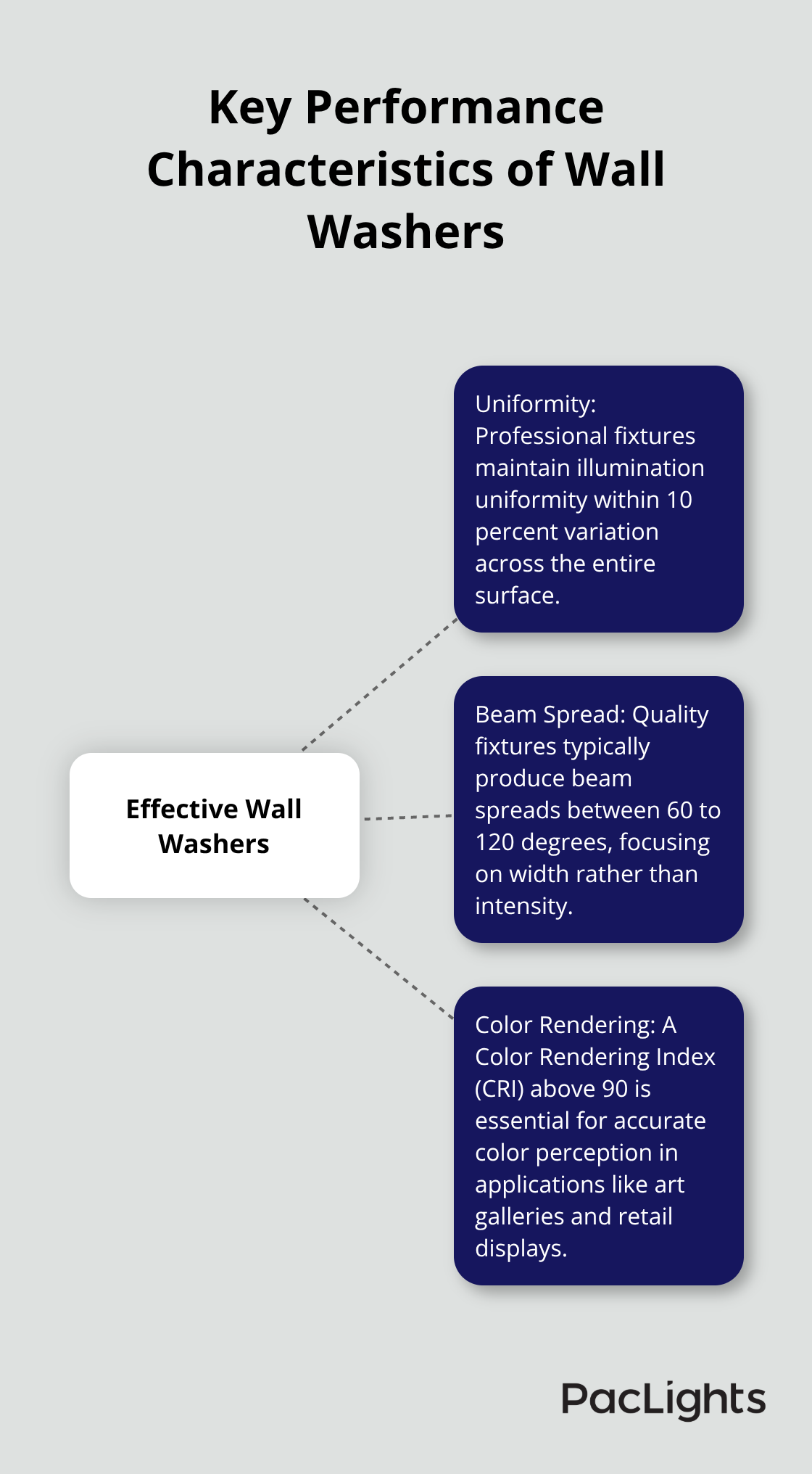
Effective wall washers deliver consistent illuminance ratios across the entire surface, with professional fixtures that maintain uniformity within 10 percent variation. The photometric design focuses on beam width rather than intensity, with most quality fixtures that produce beam spreads between 60 to 120 degrees. Color rendering index above 90 becomes essential for applications where accurate color perception matters, such as art galleries or retail displays where merchandise appearance directly impacts sales.
Track-Mounted Solutions
Track-mounted wall washers offer maximum flexibility for repositioning and aiming adjustments, which makes them ideal for galleries and retail spaces that frequently change displays. These systems allow designers to modify light positions without electrical work (a significant advantage during renovations). The track infrastructure supports multiple fixtures while maintaining clean sight lines throughout the space.
Recessed and Surface Options
Recessed linear fixtures provide clean architectural integration but require precise planning during construction phases. Surface-mounted options work well for retrofit projects where ceiling modifications present challenges. LED wall washers now dominate the market due to their 50,000-hour lifespan and energy consumption rates 75 percent lower than traditional halogen alternatives, with dimming capabilities that extend from 1 to 100 percent for complete atmosphere control.
These technical foundations set the stage for understanding the key features that separate professional-grade wall washers from basic lighting solutions.
Where Wall Washers Create Maximum Visual Impact
Textured surfaces transform completely under strategic wall washer placement. Stone walls, brick facades, and cast concrete surfaces reveal hidden depth when fixtures mount 24 to 36 inches from the surface at shallow angles between 15 to 30 degrees. This technique emphasizes surface irregularities that remain invisible under standard conditions. Museums like the Getty Center use this approach to highlight their travertine walls, which creates dramatic shadow play that changes throughout different angles.
Retail Environments That Drive Sales
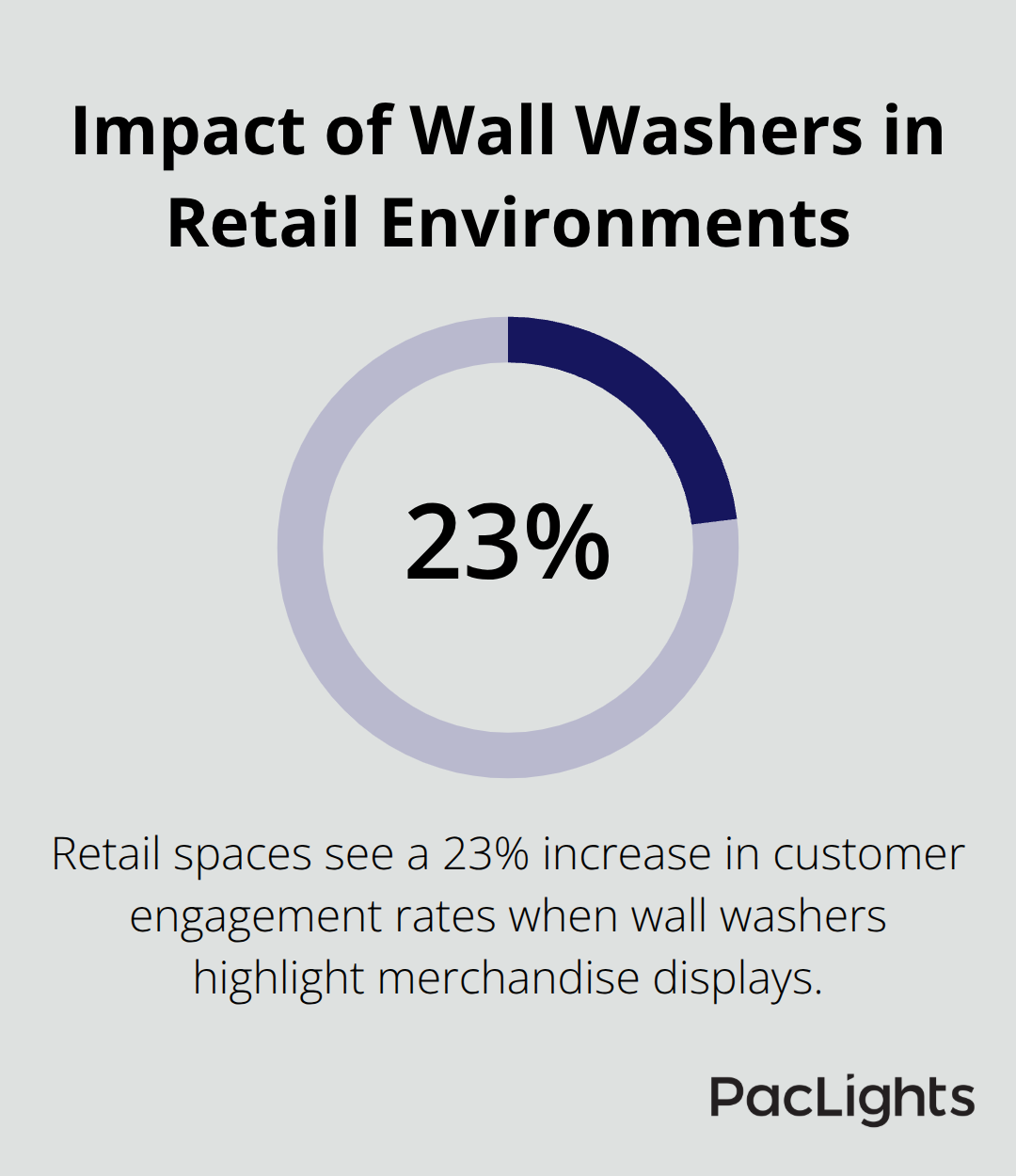
Retail spaces gain 23 percent higher customer engagement rates when wall washers highlight merchandise displays according to Lighting Research Center studies. Fashion retailers position wall washers 42 inches from featured walls to eliminate shadows on apparel while they maintain color accuracy above 95 CRI. Restaurants benefit from warm 2700K wall washers that make food appear more appetizing while they create intimate atmospheres. Hotels use cool 4000K temperatures in lobbies to convey cleanliness and modernity, with controls that adjust intensity from 20 percent during evening hours to full brightness for daytime operations.
Exterior Architecture Excellence
Building facades require high-output fixtures with 4000 to 8000 lumens positioned 6 to 12 feet from surfaces to achieve uniform coverage across large areas. Corporate headquarters use wall washers to establish brand presence during nighttime hours, with programmable controls that create dynamic color changes for special events. Landscape applications work best with narrow beam angles between 25 to 40 degrees for tree uplighting while wide 80-degree spreads illuminate garden walls effectively. Energy costs drop 60 percent when LED wall washers replace metal halide systems, with maintenance intervals that extend from annual to every five years.
Gallery and Museum Applications
Art galleries require precise color temperature control between 3000K to 4000K to maintain artwork integrity while they enhance visual appeal. Wall washers eliminate harsh shadows that distract from displayed pieces, with fixtures that maintain consistent illuminance ratios across entire surfaces. Professional installations use multiple fixtures spaced at regular intervals to avoid dark spots or overly bright areas which can damage sensitive artwork over time.
The technical specifications and visual impact capabilities of wall washers directly influence fixture selection decisions that determine project success.
How Do You Choose the Perfect Wall Washer
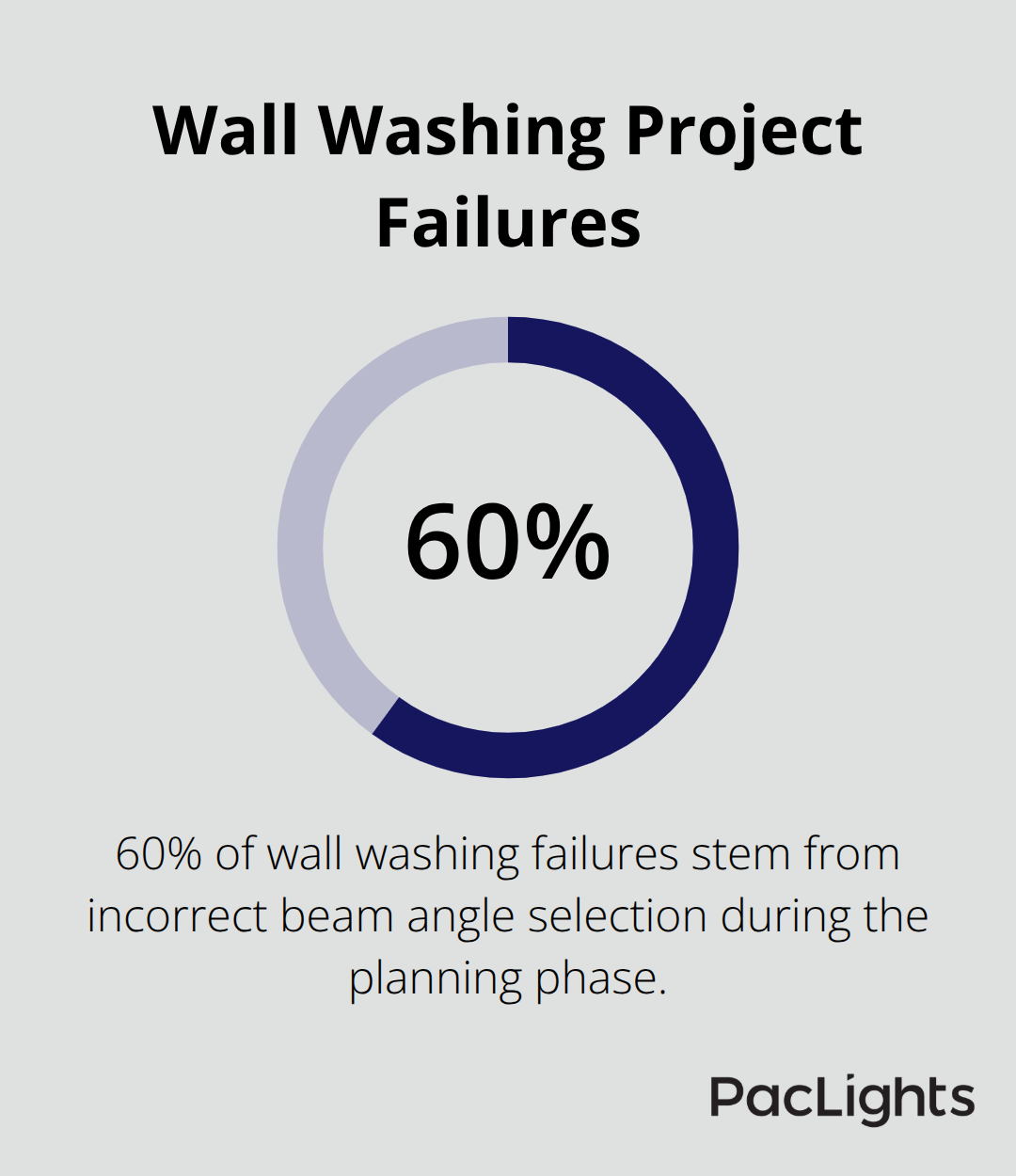
Beam angle selection determines success or failure in wall washing projects. Narrow 25-degree beams work best when you highlight specific architectural features or artwork from distances that exceed 10 feet, while wide 80-degree spreads provide uniform coverage for large surfaces when fixtures mount closer than 6 feet. Medium 45-degree angles offer the most versatility for standard commercial applications with 8-foot ceilings. The International Association of Lighting Designers reports that 60 percent of wall washing failures stem from incorrect beam angle selection during the planning phase.
Color Temperature Strategy for Different Environments
Warm 2700K temperatures create intimate atmospheres in restaurants and hospitality spaces, making food appear more appetizing while they encourage longer customer stays. Cool 4000K to 5000K options work best in corporate environments and retail spaces where productivity and alertness matter most. Art galleries require precise 3000K to 3500K temperatures that maintain color accuracy without they shift artwork tones. Tunable white fixtures with ranges from 2700K to 6500K cost 40 percent more than fixed temperature alternatives but provide flexibility for spaces with multiple functions throughout the day.
Dimming Control Requirements
Dimming capabilities from 1 to 100 percent become essential when you create different moods and meet various requirements across different times and activities. Professional installations use 0-10V dimming protocols for smooth transitions without flicker (particularly important in hospitality environments). Smart controls allow you to program different scenes for various events while they maintain consistent performance over time.
Installation Methods That Determine Performance
Track mounting offers maximum flexibility with repositioning capabilities but requires 18-inch minimum ceiling heights for proper light distribution. Recessed installations provide clean aesthetics but demand precise planning during construction phases, with junction box placement that affects beam positioning accuracy. Surface-mounted fixtures work well for retrofit applications where ceiling modifications present challenges, though they create more visible hardware. Linear fixtures require continuous runs with power connections every 8 feet for optimal performance, while individual spots allow more targeted control with independent switching. Professional installations maintain fixture distances between 36 to 48 inches from walls for standard applications.
Final Thoughts
Architectural wall washers represent one of the most effective ways to transform ordinary spaces into visually compelling environments. The investment pays dividends through enhanced aesthetics, improved spatial perception, and increased property values that benefit both commercial and residential applications. Energy savings reach 75 percent when LED wall washers replace traditional systems, with operational lifespans that extend to 50,000 hours.
These fixtures reduce maintenance costs while they deliver consistent performance across decades of use. Smart controls add another 20 percent energy reduction through automated schedules and occupancy sensors. Professional design support becomes essential for optimal results, particularly when you calculate proper fixture placement, beam angles, and distances (incorrect installations waste money and fail to achieve desired visual effects).
We at PacLights provide free consultation and technical support to help you make informed decisions about your wall washer projects. Our team assists with fixture selection and layout design to optimize both performance and energy efficiency. PacLights offers comprehensive solutions for commercial and industrial facilities, with durable fixtures that deliver reliable performance while they reduce operational costs.
Disclaimer: PacLights is not responsible for any actions taken based on the suggestions and information provided in this article, and readers should consult local building and electrical codes for proper guidance.