

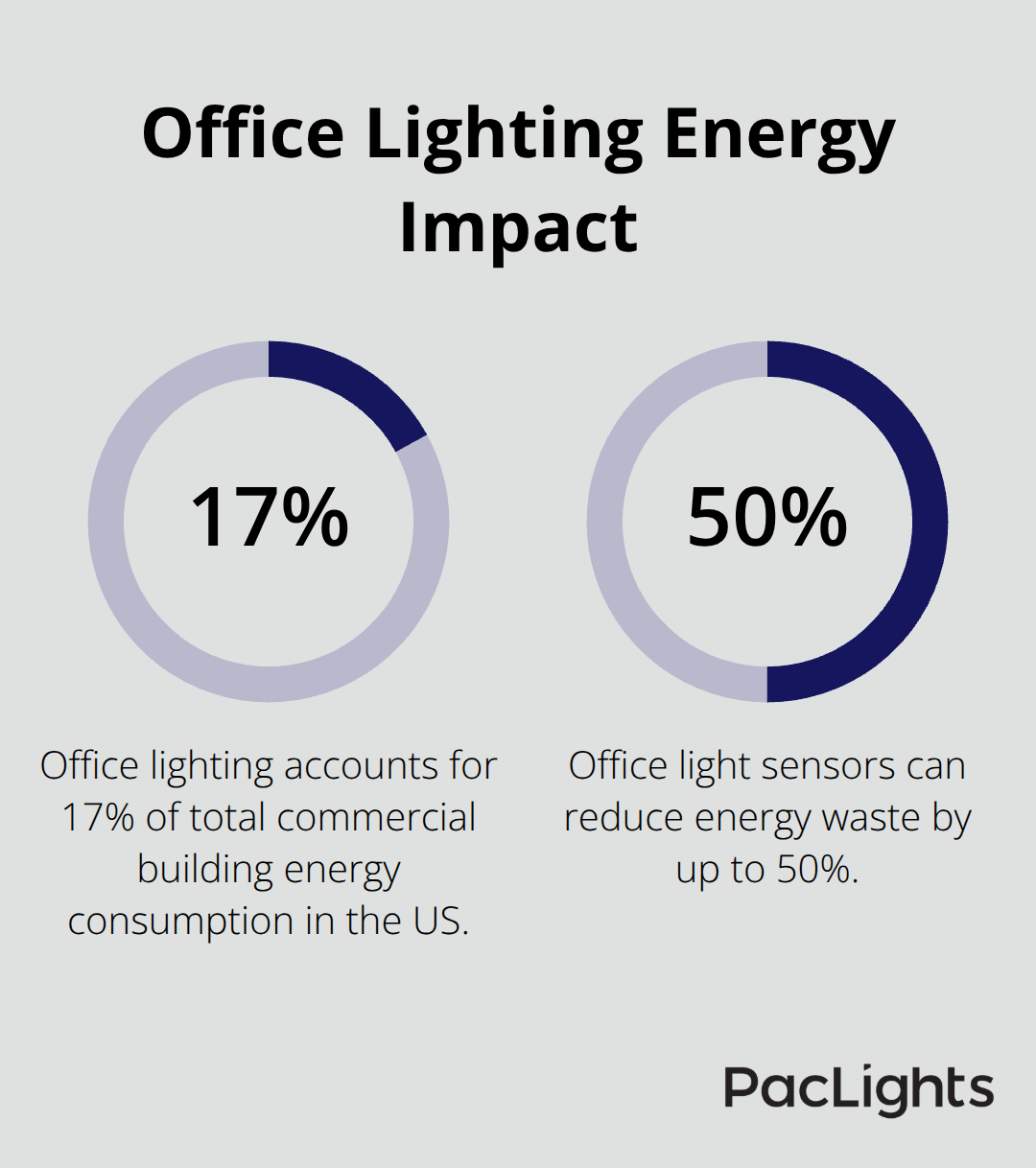
Office lighting accounts for 17% of total commercial building energy consumption in the United States. Traditional lighting systems waste significant energy by running continuously, regardless of occupancy or natural light availability.
Office light sensors offer a proven solution to reduce energy waste by up to 50%. We at PacLights have seen businesses cut their lighting costs dramatically through strategic sensor implementation.
Which Light Sensor Types Work Best for Offices
Occupancy Sensors Transform Energy Waste
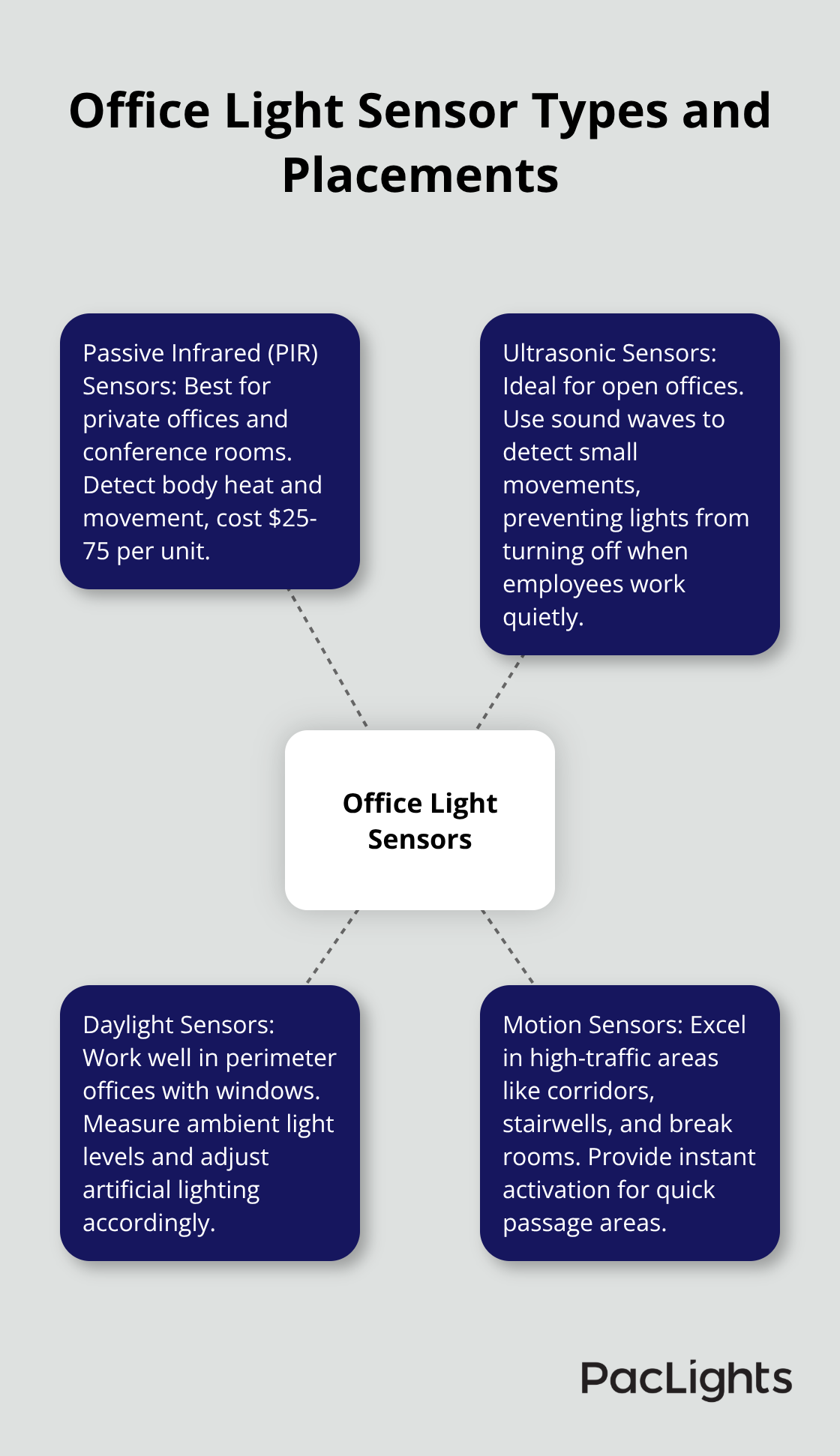
Passive Infrared sensors detect body heat and movement. They switch lights on automatically when someone enters a room and turn them off after 20 minutes of vacancy. The California Title 24 standard mandates this 20-minute shutoff requirement, and compliance delivers immediate energy reductions of 30% in typical office environments. PIR sensors cost between $25-75 per unit and work best in private offices, conference rooms, and enclosed spaces where occupancy patterns are predictable.
Ultrasonic sensors use sound waves to detect the smallest movements. This makes them ideal for open offices where people remain seated for extended periods. These sensors prevent lights from turning off when employees work quietly at their desks. Installation requires strategic ceiling placement away from air vents, which can trigger false readings and reduce sensor effectiveness.
Daylight Sensors Cut Artificial Light Usage
Photocells measure ambient light levels and automatically dim or brighten artificial lights to maintain consistent illumination. Buildings equipped with daylight sensors reduce lighting energy costs by up to 50% according to industry studies. These sensors work particularly well in perimeter offices with windows (they automatically compensate for changing natural light throughout the day).
Advanced daylight sensors can differentiate between artificial and natural light sources. This prevents the system from dimming lights when neighboring offices turn on their fixtures. This technology requires initial calibration to set optimal light levels for different tasks and times of day.
Motion Sensors Excel in High-Traffic Areas
Motion sensors provide instant activation in corridors, stairwells, and break rooms where people pass through quickly. These areas benefit from immediate lighting response rather than the delayed activation typical of occupancy sensors. Microwave motion sensors detect movement through walls and partitions (making them suitable for warehouse spaces and loading docks where obstacles might block traditional PIR sensors).
Strategic placement focuses on main walkways and congregation areas to maximize detection coverage while avoiding unnecessary activations from external movement sources.
The next step involves calculating the actual financial returns these sensor types deliver in real office environments.
How Much Money Do Office Light Sensors Save
Real Energy Reduction Numbers
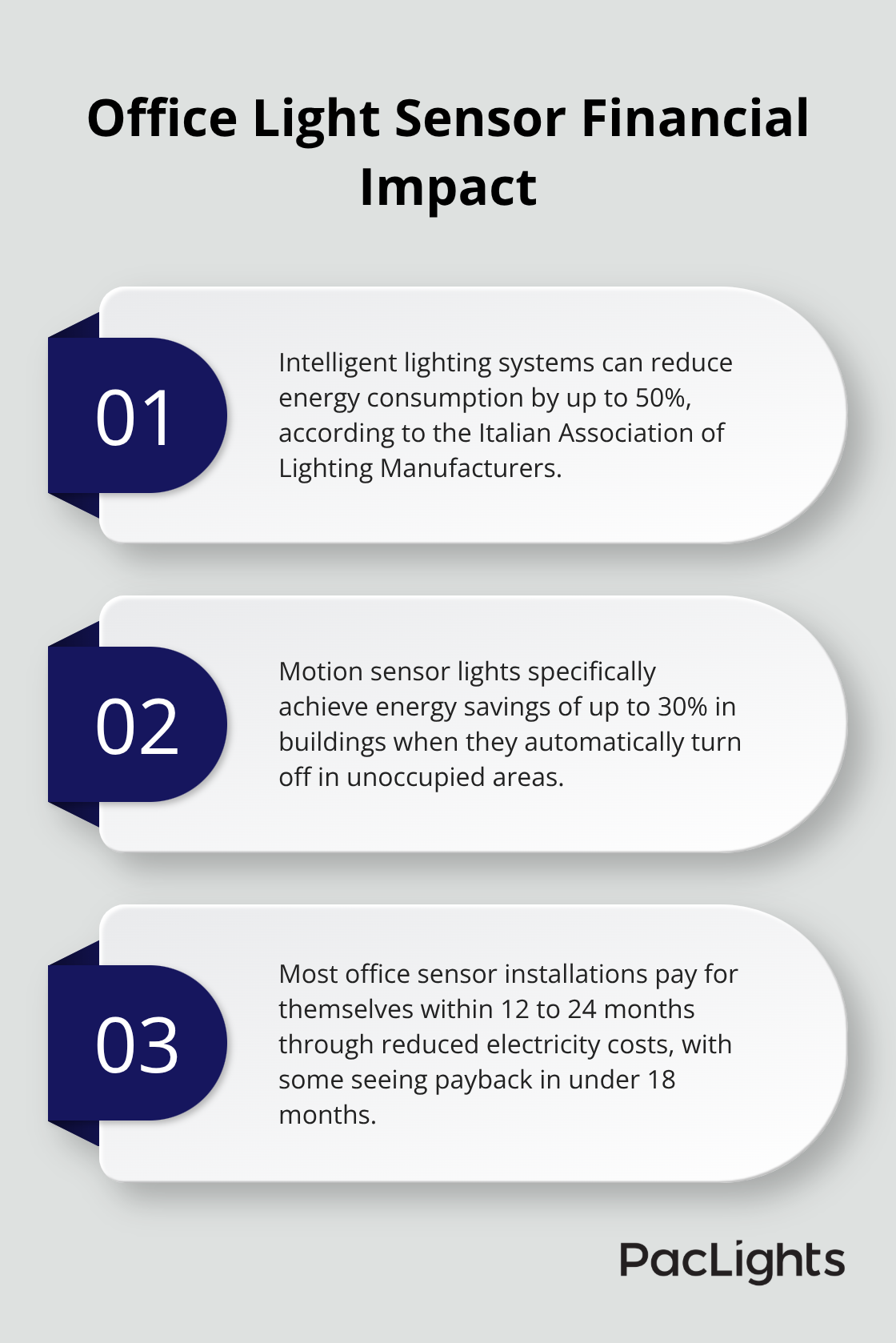
Office light sensors deliver measurable energy reductions that translate directly to lower utility bills. The Italian Association of Lighting Manufacturers reports that intelligent systems reduce energy consumption by up to 50%. Motion sensor lights specifically achieve energy savings of up to 30% in buildings when they automatically turn off in unoccupied areas. These percentages apply to costs only, but office illumination represents 17% of total commercial building energy consumption (making the overall impact substantial).
Buildings with integrated occupancy sensors and daylight harvesting systems see the highest returns. A CBRE study found that 50% of workplace spaces may be passively occupied, meaning traditional timers miss significant energy-saving opportunities that smart sensors capture. The most effective installations combine multiple sensor types, with PIR sensors handling private offices while ultrasonic sensors manage open floor plans where people remain seated.
Payback Periods Favor Quick Implementation
Most office sensor installations pay for themselves within 12 to 24 months through reduced electricity costs. PIR sensors that cost $25-75 per unit typically recover their investment in under 18 months when properly installed in frequently used spaces like conference rooms and private offices. Daylight sensors require higher upfront investment but deliver faster payback in perimeter offices with significant natural exposure.
The payback calculation depends heavily on local electricity rates and usage patterns. Offices that run illumination 12+ hours daily see payback periods closer to 12 months, while facilities with existing energy-efficient practices may require 24 months. Installation costs remain minimal since most sensors integrate with existing infrastructure without rewiring requirements.
Long-term Financial Returns Compound
Smart sensor systems deliver cumulative savings that increase over time through reduced maintenance costs and extended fixture lifespans. Buildings equipped with occupancy sensors experience lower replacement rates for fixtures and HVAC equipment because systems operate only when needed. These extended equipment lifecycles reduce capital expenditure requirements and minimize disposal costs.
The financial benefits extend beyond direct energy savings through reduced demand charges from utility companies. Commercial buildings often pay peak demand charges based on their highest 15-minute power usage period, and smart sensors help flatten these demand spikes when they prevent simultaneous loads across unused areas.
These financial returns depend heavily on proper installation and strategic placement to maximize sensor effectiveness across different office environments.
How Do You Install Office Light Sensors Effectively
Zone Planning Determines Sensor Success
Effective sensor installation starts with office zone mapping based on usage patterns and occupancy requirements. Private offices and conference rooms need PIR sensors mounted on ceilings 8-10 feet high, positioned to cover entire rooms without dead zones near doorways. Open office areas require ultrasonic sensors placed every 600-800 square feet to detect seated workers who remain motionless for extended periods. Corridors demand motion sensors at all access points with 30-second timeout settings for safety, while break rooms benefit from instant-on PIR sensors with 10-minute shutoff delays. Perimeter offices with windows need daylight sensors positioned away from direct sunlight to prevent false readings that cause constant adjustments.
Integration With Existing Systems Saves Installation Costs
Modern sensors integrate directly with existing circuits through line-voltage connections that eliminate rewiring requirements. Most installations connect sensors between circuit breakers and light fixtures through standard electrical boxes already present in drop ceilings. Advanced installations link multiple sensors to centralized control panels that manage entire floor zones simultaneously. The ASHRAE 2019 standard requires lights to turn off within 20 minutes of vacancy, and proper integration programs this timing automatically without manual adjustment. Retrofit installations work with LED fixtures, fluorescent systems, and HID lights (though LED compatibility provides the best performance and longest sensor lifespan).
Calibration Requirements Prevent System Failures
Initial calibration sets sensitivity levels that prevent false activations while maintaining reliable occupancy detection. PIR sensors require 24-hour adjustment periods to establish baseline temperature readings that distinguish between occupants and environmental heat sources. Ultrasonic sensors need frequency tuning to avoid interference from HVAC systems, computers, and other electronic equipment that operate at similar frequencies. Daylight sensors require monthly recalibration to account for seasonal light changes and maintain consistent illumination levels throughout the year (professional installation teams typically complete initial setup and provide three-month follow-up calibration to optimize performance based on actual usage patterns).
Final Thoughts
Office light sensors deliver proven energy reductions of 30-50% while they pay for themselves within 12-24 months through lower utility bills. The combination of occupancy sensors, daylight harvesting, and motion detection creates comprehensive energy management that reduces both operational costs and carbon footprints. Strategic zone planning matches sensor types to specific office areas for maximum effectiveness.
PIR sensors work best in private offices and conference rooms, while ultrasonic sensors handle open floor plans where employees remain seated. Daylight sensors maximize savings in perimeter offices with natural light exposure. Proper calibration and integration with existing infrastructure determines success (most installations connect directly to current circuits without rewiring).
We at PacLights offer comprehensive lighting solutions that help businesses optimize their energy use through advanced fixtures and controls. Our team provides lighting layout designs and assessments to help calculate savings potential before implementation. Office light sensors represent essential components of modern energy management strategies that deliver immediate and long-term value.
Disclaimer: PacLights is not responsible for any actions taken based on the suggestions and information provided in this article, and readers should consult local building and electrical codes for proper guidance.