

Picking the wrong lighting fixtures can cost you thousands in compliance violations and energy waste. NSF certified lighting options aren’t just about meeting regulations-they’re about protecting your facility, your staff, and your bottom line.
At PacLights, we’ve helped countless facilities navigate certification requirements and find fixtures that actually deliver results. This guide walks you through what NSF certification means and how to select the right solutions for your space.
What NSF Certification Actually Protects
NSF International certification for lighting fixtures represents a third-party verification that products meet specific safety, sanitation, and performance standards established for commercial and industrial environments. The NSF sets rigorous requirements across multiple categories, with NSF/ANSI 2 being the standard most relevant to food service facilities, NSF/ANSI 51 addressing equipment used in food operations, and NSF/ANSI 169 covering commercial equipment for non-food environments. These standards aren’t arbitrary-they’re built from decades of field data showing exactly where non-certified fixtures fail in demanding settings.
The Real Cost of Non-Compliance
A facility operating without NSF certified lighting in a food service area faces potential violations from health departments, with fines ranging from $500 to $10,000 per violation depending on your state and the severity of the infraction. Beyond compliance, NSF certification confirms that fixtures meet durability requirements, resist corrosion in high-moisture environments, prevent water and debris contamination, and maintain consistent performance under heavy use. A fixture that fails prematurely in a commercial kitchen or industrial warehouse doesn’t just disrupt operations-it creates safety hazards and forces emergency replacements that cost far more than proper specification upfront.
Why Compliance Costs More Than You Think
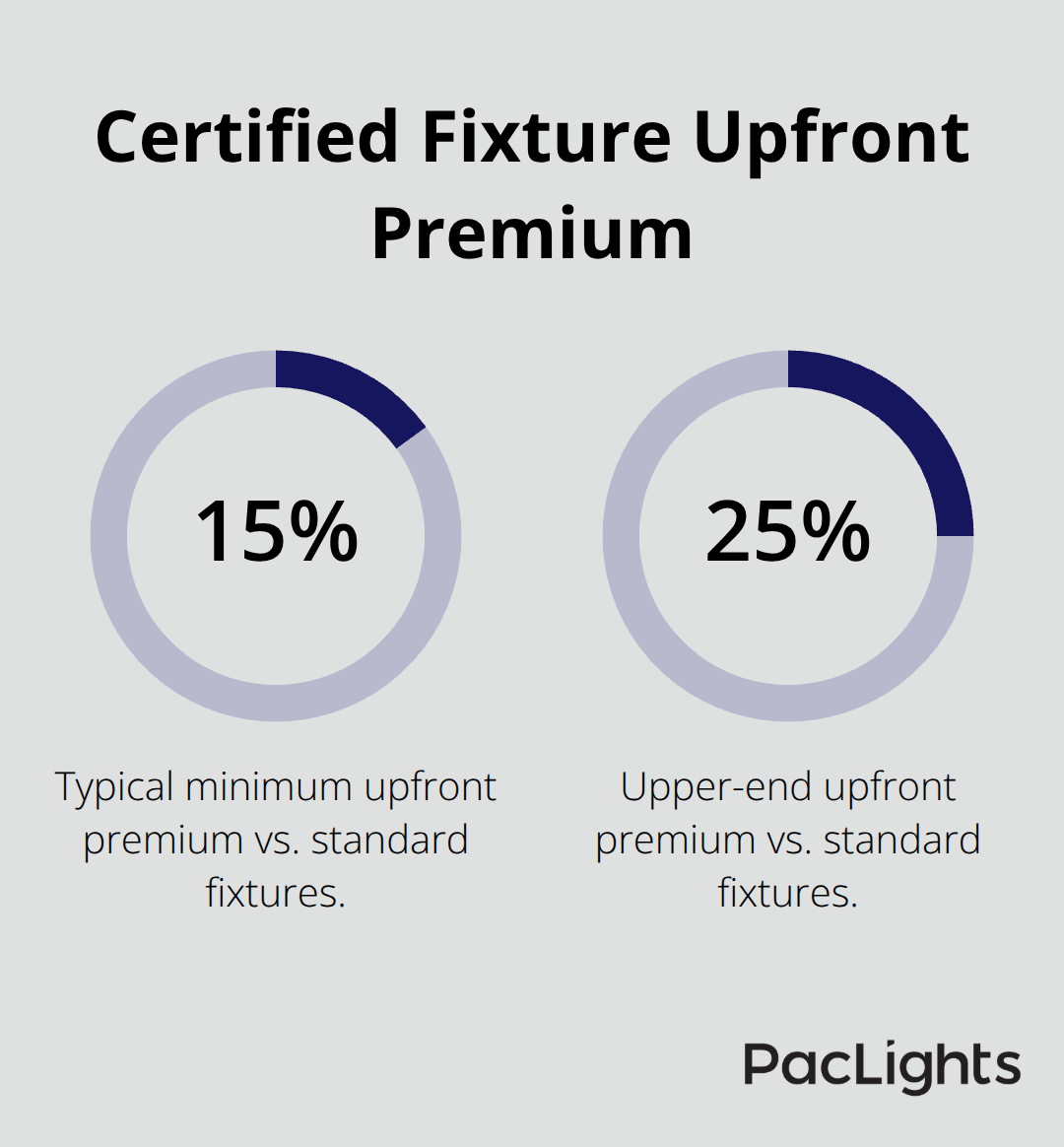
Facilities that skip NSF certification often discover the hidden costs when inspections occur. Health department violations for non-compliant lighting can trigger mandatory facility closures, equipment replacement orders, and follow-up inspections that consume management time. Industrial facilities face similar pressures, with OSHA and insurance carriers increasingly scrutinizing lighting systems in hazardous locations. A certified fixture costs more upfront-typically 15 to 25 percent higher than standard alternatives-but eliminates compliance risk, insurance surcharges, and the operational disruption of forced replacements. NSF certification also signals to customers, auditors, and regulatory bodies that your facility maintains professional standards.
For food service operations, this certification appears on inspection reports and builds customer confidence. Industrial facilities using NSF certified hazardous location lighting reduce liability exposure significantly, since certified products have been tested to prevent ignition sources in explosive atmospheres.
Performance Standards That Actually Matter
NSF certification requires testing for impact resistance, thermal stability, corrosion resistance, and hygiene performance that standard fixtures simply don’t undergo. Fixtures must resist staining, harbor no crevices where bacteria accumulate, and maintain structural integrity after repeated washdowns with high-pressure equipment and caustic cleaners. In food service, this means fixtures won’t become reservoirs for contamination. In industrial hazardous locations, certification confirms the fixture won’t create sparks or heat sources that could ignite flammable vapors or dust. The certification process includes documentation of materials, construction methods, and performance validation-records that facilities can produce during inspections to demonstrate compliance immediately.
Moving Forward With the Right Selection
Understanding what NSF certification protects is only the first step. Your facility needs fixtures that match both your regulatory environment and your operational demands, which means knowing exactly which types of NSF certified lighting solutions exist and how they perform in different settings.
Types of NSF Certified Lighting Fixtures
Food Service and Hygiene-Grade Lighting
Food service facilities require lighting that withstands constant washdowns, caustic chemicals, and moisture without harboring bacteria or food particles. NSF/ANSI 2 certified fixtures are specifically designed for this environment, featuring sealed construction, smooth surfaces without crevices, and materials that resist corrosion from sanitizers like bleach and quaternary ammonia solutions. Stainless steel housings and epoxy-coated components prevent rust and degradation that standard aluminum or painted steel would experience.
Commercial kitchens operating under health department inspection need fixtures that survive nightly high-pressure washdowns, and NSF certified options guarantee this performance. The certification confirms that fixtures won’t develop pinhole leaks or micro-gaps where Listeria or Salmonella could accumulate-a distinction that matters because food contamination traced to facility infrastructure creates liability extending far beyond equipment replacement costs. Non-certified fixtures fail in these conditions, forcing emergency replacements that disrupt operations and trigger additional compliance scrutiny.
Industrial and Hazardous Location Lighting
Industrial facilities operating in hazardous locations face entirely different demands. NSF/ANSI 169 certified fixtures for non-food industrial environments and hazardous location lighting must prevent ignition sources in atmospheres containing flammable gases, vapors, or combustible dust. These fixtures undergo explosion-proof testing, thermal monitoring, and surface temperature verification to confirm they won’t create sparks or heat that could trigger fires.
A facility storing volatile organic compounds or operating in grain storage environments cannot compromise on this certification because a single non-compliant fixture creates liability that insurance carriers won’t cover and regulatory agencies will cite immediately. Hazardous location lighting represents the most stringent category of NSF certification, and facilities in these environments must treat it as non-negotiable.
Energy-Efficient Certified Fixtures
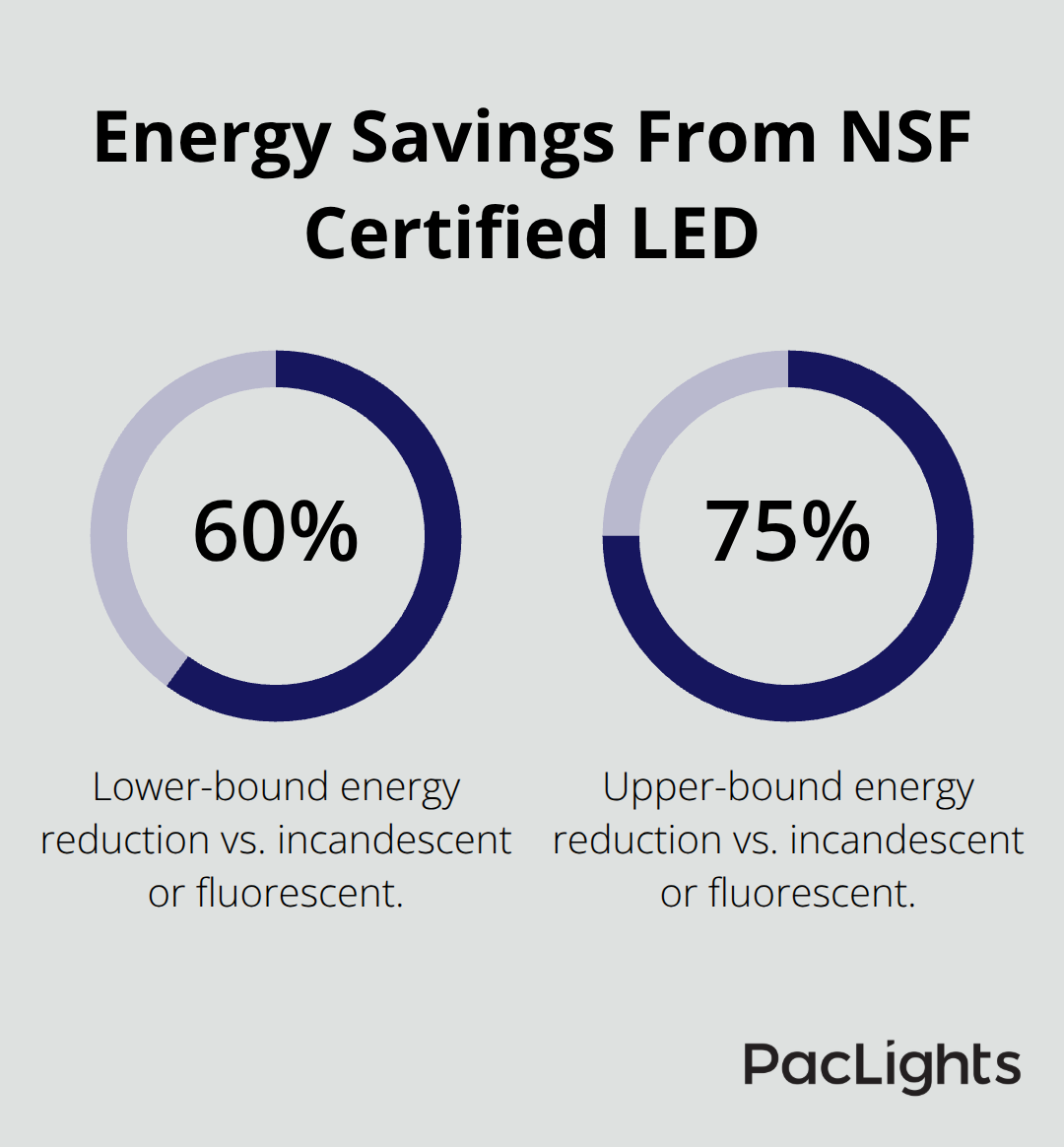
LED fixtures achieving NSF certification deliver the same compliance protection as traditional options while consuming 60 to 75 percent less energy than older incandescent or fluorescent alternatives. A food service operation retrofitting with NSF certified LED fixtures typically sees energy cost reductions of $3,000 to $8,000 annually depending on facility size and operating hours, according to the U.S. Department of Energy.
Industrial facilities benefit similarly, with high-bay LED fixtures rated for hazardous locations cutting energy consumption while maintaining the durability and safety certifications that non-LED alternatives provide.
The key difference is that certified LED fixtures in both food service and industrial settings must meet the same rigorous standards as their traditional counterparts, meaning you don’t trade compliance for efficiency. Selecting between these three categories depends on your specific regulatory environment and operational demands-which requires honest assessment of what your facility actually encounters daily and what compliance obligations apply to your operations.
How to Select the Right NSF Certified Fixtures for Your Facility
Assess Your Space and Document Current Performance
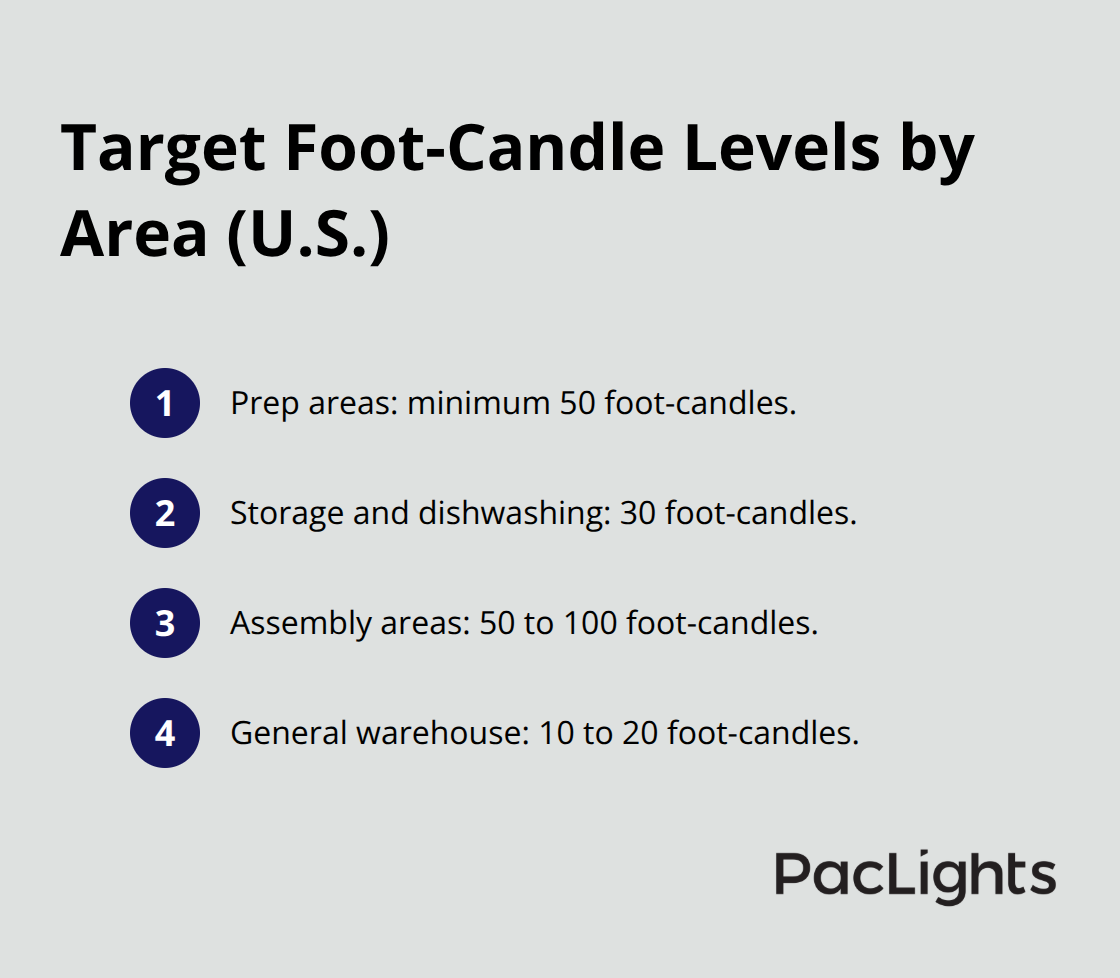
Measure your space dimensions and document current lighting performance issues rather than making assumptions about what you need. Walk through your facility during peak operating hours and note where shadows occur, where staff struggle to see details, and where equipment or product quality suffers from inadequate illumination. In food service kitchens, poor lighting directly impacts food safety-prep areas need minimum 50 foot-candles according to FDA guidelines, while storage and dishwashing areas require 30 foot-candles. Industrial facilities have similar specificity: assembly areas typically need 50 to 100 foot-candles depending on task precision, while general warehouse spaces function adequately at 10 to 20 foot-candles.
Document these requirements in writing because vague specifications lead to incorrect fixture selection and wasted budget. Count your existing fixture locations and measure ceiling heights, then photograph problem areas. This data becomes your selection baseline and prevents oversizing or undersizing your lighting system, which wastes both installation costs and ongoing energy expenses.
Identify Your Applicable NSF Standards
Identify which NSF standards actually apply to your operations. A food service facility needs NSF/ANSI 2 certification minimum, while manufacturing environments with flammable materials require hazardous location certification that goes far beyond basic NSF standards. Contact your local health department or OSHA office directly and request written documentation of lighting requirements for your specific industry and facility type-don’t rely on what competitors told you or what you assume applies.
Request this documentation in writing so you have proof during inspections. This step eliminates guesswork and protects your facility from selecting fixtures that don’t meet your actual regulatory obligations.
Compare Technical Specifications and Performance Data
Examine the technical specifications for lumen output, color temperature, and corrosion resistance ratings rather than relying on vendor descriptions. A fixture rated for washdown environments should specify materials, coating thickness, and seal design rather than simply stating it’s food-safe. Industrial fixtures must include explosion-proof certification documentation from recognized testing laboratories like UL or FM Approvals.
Calculate your total installed cost including labor, not just fixture cost, because complex installation in hazardous locations or high-bay spaces adds significant expense. NSF certified LED fixtures use 60 to 75 percent less energy than fluorescent alternatives, meaning a facility spending $15,000 annually on lighting energy could reduce that to $3,750 to $6,000 with LED retrofits according to the U.S. Department of Energy.
Factor in Long-Term Maintenance and Energy Costs
Energy consumption matters substantially over your fixture’s lifespan. LED fixtures rated for 50,000 hours reduce replacement frequency dramatically compared to traditional options, eliminating both parts costs and labor disruption from frequent maintenance visits. Factor in maintenance costs too-a facility that replaces fixtures less often saves thousands annually in labor and parts expenses.
When you compare upfront costs against energy savings and maintenance reduction, NSF certified LED fixtures typically deliver faster payback than standard alternatives. PacLights offers LED retrofit solutions and free ROI assessments to help you calculate these long-term savings for your specific facility, allowing you to make decisions based on actual numbers rather than estimates.
Final Thoughts
NSF certified lighting options protect your facility from compliance violations, operational disruption, and hidden costs that emerge during inspections. The certification confirms your fixtures meet rigorous safety and performance standards, whether you operate a food service kitchen requiring washdown-resistant construction or an industrial facility in a hazardous location. Selecting the right fixtures means matching your regulatory environment to the appropriate NSF standard, assessing your actual lighting requirements with foot-candle measurements, and comparing total installed costs against long-term energy savings and maintenance reduction.
The decision to upgrade your lighting system should rest on concrete data, not assumptions. You document your current performance issues, identify your applicable NSF standards through direct contact with regulatory agencies, and calculate your ROI based on energy consumption and replacement frequency. LED fixtures that achieve NSF certification deliver compliance protection while reducing energy costs by 60 to 75 percent compared to traditional alternatives, meaning facilities typically recover their investment within three to five years through energy savings alone.
Your facility deserves lighting that performs reliably, meets regulatory requirements, and reduces operational costs simultaneously. Visit PacLights to explore NSF certified lighting options and request a free lighting layout design for your space.
Disclaimer: PacLights is not responsible for any actions taken based on the suggestions and information provided in this article, and readers should consult local building and electrical codes for proper guidance.